Want to Own a Tech Company? Get a 30-Year Mortgage

Bridging Loan Canada

In the tech world, you will hear terms like “platform” and why they are so valued by investors. These are the Amazons and Facebooks of the world and it's because once they cover their fixed costs, as their revenue grows, so does their profitability. It’s also called operating leverage.

In a way, so is owning an investment property with a 30-year fixed-rate mortgage. Your fixed costs are flat for 30 years (and if rates fall, you can refinance to a lower rate), but rental income and property values increase over time.

Rental prices, in particular, have been rising considerably, especially during the last 12 months, despite a rise in interest rates given the lack of property supply and also the marginal buyer who cannot own at 7% mortgage rates is forced to rent.

In a perverse way, the rate increases have made it a better environment to own an investment property, especially in states like Texas and Florida, where families prefer to migrate to, given low state taxes and affordable cost of living.

Here is a visual to explain this important point:
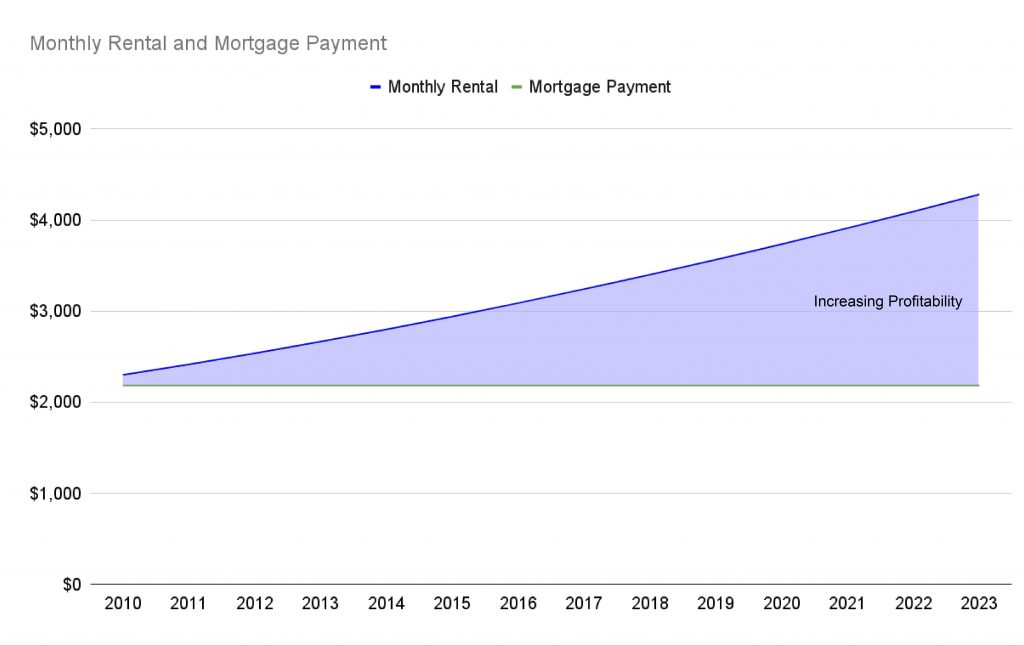
Amy, a savvy homebuyer living in Hong Kong, purchased her dream investment home in Los Angeles back in 2010. Recognising the benefits of a 30-year fixed-rate mortgage, she secured a loan at an interest rate of 5.25%. This meant that her monthly mortgage payment would be approximately $2,185.

  • Home price in 2010: $500,000
  • Rental price in 2010: $2,300/month
  • Monthly mortgage payment in 2010: $2,185/month
  • Home price in 2023: $2,000,000
  • Rental price in 2023: $4,500/month
  • Monthly mortgage payment in 2023: $2,185/month

As you can see, Amy's monthly mortgage payments have remained the same over the years, while rental prices have steadily increased. This has resulted in a significant financial advantage for Amy.

Only in the U.S.!

The United States is the only country in the world that offers homeowners a 30-year fixed-rate mortgage, which provides stability and predictability. This means that your monthly mortgage payments will remain the same for the entire loan term, even if interest rates fluctuate. This can be a huge advantage, as it gives you peace of mind and financial security. When interest rates do go down in the future, you can refinance your mortgage and take advantage of the lower rate. This could save you a significant amount of money over the life of your loan.

What are 30-Year Fixed Interest Rates?

A 30-year fixed interest rate is a mortgage loan with an interest rate that remains constant throughout the loan's entire term, typically three decades. This stability and predictability make it an attractive option for many homebuyers.

Advantages of 30-Year Fixed Rates:

  • Predictable Payments: Homebuyers benefit from knowing their mortgage payments will remain consistent over the long term. This predictability allows for better financial planning and budgeting.
  • Long-Term Stability: A 30-year fixed-rate mortgage offers homeowners extended stability. In uncertain economic times, this type of mortgage shields borrowers from sudden fluctuations in interest rates.
  • Protection from Market Volatility: Homebuyers can take advantage of historically low-interest rates when they lock in their mortgage for 30 years, safeguarding themselves from potential future rate hikes.

Key Takeaways

  • Foreign nationals can purchase homes in the United States, but they may face additional challenges, such as obtaining a mortgage.
  • A 30-year fixed-rate mortgage can provide stability and predictability for foreign nationals who are buying homes in the United States.
  • The cost of renting can increase over time, while the cost of a mortgage payment can remain the same.

Amy's case study shows that a 30-year fixed-rate mortgage can be a wise financial decision for foreign nationals who are buying homes in the United States. By locking in a fixed interest rate, Amy was able to protect herself from market volatility and ensure that her monthly mortgage payments would remain the same for 30 years. This gave her peace of mind and financial security, even as rental prices in her area increased.

Global Mortgage Group is a leading international mortgage originator specialising in offering customised financial solutions for residential real estate in the U.S., Canada, Mexico, U.K., France, Portugal, Spain, Italy, Dubai, Hong Kong, Singapore, Thailand, Philippines, Japan, and Australia.

Contact us at [email protected] to learn more. Visit www.gmg.asia for more information.

Join our Global Affiliate Program today!

Mortgage Loan Canada

Are you a current or former client advisor or private banker?

Do you have a substantial social media following or a strong network of contacts?

Do you want to make significant commissions with simple referrals?

With bank lending becoming more difficult globally, there is an urgent need for alternative lending options!

This is where we can help your clients!

When banks say NO, we say YES!

Our Global Affiliate Program is an exciting opportunity for you to monetize your relationships to earn a significant income.

About Us:

Global Mortgage Group is a Singapore-based real estate financing brokerage servicing the needs of our international clients. We specialize in financing solutions where banks are unable or unwilling to lend AND have a wide range of solutions to fit the needs of almost any borrower looking for financing globally.  

Our Products include:  

1 - Global Residential Real Estate Financing in:

USA, UK, Canada, Mexico, France, Spain, Portugal, Italy, Dubai, Singapore, Philippines, Thailand, Japan, and Australia (adding more regularly).  

2 - Short Term Bridging Loans in:

USA, UK, Canada, Australia, Singapore, Hong Kong, and Thailand 

3 - Structured Real Estate Credit in:

USA, UK, and most Asian countries 

4 - Listed Share Financing in:

HK, Singapore, Malaysia, Philippines, Indonesia, Thailand, Japan, Australia.

APPLY NOW! Become one of our exclusive Affiliate Partners today.

Next Steps:

Joining our affiliate program is effortless, with no upfront costs. Once enrolled, you'll receive a distinctive affiliate link that you can use to promote our specialized mortgage products and services. When someone clicks on your link and secures a mortgage with us, you'll earn a commission.

The commission structure is designed to reward your efforts with varying rates based on the type of financing obtained. 

But it doesn't stop there. Our affiliate program boasts numerous benefits that set you up for success:

• Quick and hassle-free registration

• No upfront costs

• Significant commission potential

• Wide range of products and services to promote

• Strong marketing team to help you promote our products and services

Whether you have a finance-related website, a real estate blog, or a significant social media following, our affiliate program is tailor-made for you. 

The Global Affiliate Program is your gateway to financial success.

Visit our website to learn more about our affiliate program and how you can get started or reach out to us at [email protected] today.

www.gmg.asia

The RICO: A New Mortgage Program that Qualifies Borrowers Based on Rental Income

Global Mortgage Group

The RICO

Global Mortgage Group launched “The RICO” (Rental Income, COverage) program, which uses the borrower’s capacity to service or repay the yearly debt payment to the amount of net operating income (NOI) generated by the property. 

Simply put, if the current or projected rental income covers its mortgage payments and other costs - you qualify! 

There is NO need to provide income documents, and the process is simple, quick, and easy.

Foreign Buyers can use The RICO program to build a portfolio of investment properties quickly and easily. 

Important takeaways of “The RICO”

  • The RICO Ratio shows how much net cash flow is available to pay the mortgage; typically, it is a 1:1 coverage.
  • Possible to qualify on interest-servicing only
  • The DSCR might fluctuate yearly, but the approval will be based on the current/project rental income

The greater the RICO Ratio, the higher the net operating income available to service the debt.

RICO Ratio Formula

  • RICO Ratio = Net Operating Income / Debt Service

For instance, if a rental property generates $6,600 in rent monthly and the monthly mortgage payment is $6,600 (principal and interest), the debt service coverage ratio would be:

  • RICO Ratio = NOI / Debt Service
  • $79,200 Annual NOI / $79,200 Annual Debt Service = 1:1

A RICO Ratio of 1:1 indicates the property makes sufficient income to service the monthly debt.

While there is no industry standard for a substantial debt service coverage ratio in real estate, many lenders and real estate investors will strive for at least a 1:1 coverage. This indicates that, at the very least, the asset covers the minimal amount to service all debt payments.

While the debt service coverage ratio isn’t the only metric assessed when obtaining a RICO loan, it is an essential part of the approval process.

Why should you use “The RICO”?

Self-employed borrowers often have complicated tax returns or income statements. Instead of a long-drawn-out dissection of your income, you can now simply qualify off the rental income. Period. We won’t ask for tax returns, pay statements, etc. If the property qualifies, the loan is normally approved. If you currently own U.S. property with positive cash flow but are concerned your personal income won’t allow you to release equity or apply for a lower rate, you can now qualify for a loan with your rental income! What better time than now to refinance your property? If these reasons have yet to convince you, here are a few more:

  • Applying for a new loan? Qualify for a higher-yielding property using The RICO
  • Investing in Commercial Property? Qualify with The RICO
  • Identify profitable rental properties based on rental income. Qualify with The RICO

www.gmg.asia

5 Reasons Why U.S. Housing Prices will not Crash but Surprise us!

International Mortgages

1. Lack of investment by homebuilders

According to data from the U.S. Census Bureau, fewer homes were built in the U.S. in the 10 years following the 2008 financial crisis than in any decade since the 1960s.

From 2010 to 2019, a total of 6.8 million new privately-owned housing units were completed in the U.S., significantly lower than the 9.7 million units completed in the 2000s and the 8.6 million units completed in the 1990s.

A major reason for the drop in new housing construction following the 2008 financial crisis was partly due to the housing market crash, which led to a decline in demand for new homes and tighter lending standards (Dodd-Frank).

2. Higher input costs

Additionally, builders faced various challenges during this period, including higher land and labor costs, regulatory hurdles, and a shortage of skilled workers for construction.

These issues are only more pronounced now with higher wages, higher input prices such as lumber, concrete, etc., and of course, financing costs as of last year!

3. Massive lack of housing supply to meet demand

Last year, Freddie Mac published an article, “Housing Supply: A Growing Deficit,” noting as of the fourth quarter of 2020, the U.S. had a housing supply deficit of 3.8 million units.”

Meanwhile, the National Association of Realtors projects that the housing deficit is closer to 6.8 million homes.

Lastly, a report published by the Fed last year, “Volatility in Home Sales and Prices: Supply or Demand?” find that a 30% increase in the monthly number of homes coming onto the market would have been necessary to keep up with the pandemic-era surge in demand​.

4. TikTokers need more space at home

However, there is a new dynamic that has arisen over the past 3 years, which is how labor is defined and its impact on housing. Many workers are now choosing to work from home, and also, the younger entrants into the labor force are now earning income from alternative methods, all requiring some “extra space” at home and not an office to go to (TikTok, Amazon sales, Crypto trading, etc.) – this is all very supportive of housing demand.

5. Stability

The stability of the U.S. housing market cannot be underestimated. Post-COVID, when mortgage rates were lowered to historically low levels, most homeowners took the opportunity to refinance their homes to take advantage of the interest rate savings. Fast forward to today, 50% of all mortgages outstanding are under 4%, fixed for 30 years​; 40% of all homes are owned free and clear, and nearly 100% of all borrowers have mortgages lower than the current rate!

Will we see a crash? NO!

We feel given the structure of the supply-demand landscape, there is no impending crash, but we feel the market will be supported faster than expected.

In summary, whether you say we are 4M units short, 6M units short, or 30% short – we are short, making this a great opportunity to start building your U.S. rental portfolio, given rental income and yields will continue to rise.

How will Singapore’s & Hong Kong’s property markets develop in 2023, & what other factors will determine the two cities’ appeal as financial hubs?

Global Mortgage Group

Singapore and Hong Kong’s property market will do well in 2023 for similar as well as different reasons.  

For Hong Kong, a place where my family is originally from and where I spent over 20 years of my career, I feel like the market is coming from a low base of price, sentiment, and liquidity as a result of many reasons that we all know about. 

I think a small uptick in sentiment will get local buyers to become active again, and the political overhang during COVID seems to have been lifted with the new pro-active administration.  

At the end of the day, Hong Kong’s competitive strengths is from its long history of promoting free trade and open markets. Capital markets will pick up, foreign companies and executives will move back, providing support for the overall property sector. 

Singapore’s reputation has benefitted greatly from having a systematic approach to dealing with COVID. 

Its pragmatic and meritocratic approach to running the country is its core strength, and the world is taking notice. 

It’s no secret how well Singapore has created an environment for top overseas talent and families to be attracted to safety, ease of travel, good schools, true multi-cultural society, attractive living options, and great food! 

With recent programs to attract top foreign talent and family offices, the top end of the real estate market has been very hot, with new record prices being mentioned almost every day. This will continue to support the real estate market, and now with the countries all opening up, prices will continue to remain strong as affluent families look for options to move here – company setups, employment, education, and at the very high-end, setting up family offices.   

Prices for high-end residential homes in Singapore are around $3,000 psf which is really what Hong Kong was in the late-90s, so there is a considerable amount of upside for Singapore real estate if that is how you want to look at the 2 markets. 

My personal opinion is the competition portrayed often by media between Hong Kong, and Singapore is unwarranted. Once all countries in Asia open up in earnest, Hong Kong and Singapore will be connected more so than ever and will part of one ecosystem with China, in my opinion. 

The custodial and wealth management business will continue to move to Singapore, and families will move here and take advantage of the strong school systems and safe environment to raise a family. 

Meanwhile, Hong Kong will still be the centre for capital markets. The biggest market cap companies in Asia ex-Japan are Chinese companies, and naturally, they will be listed in Hong Kong given that the HKD is a freely traded currency as China’s capital account is still closed, all things equal. However, Singapore is at the cutting edge of many industries like healthcare and medical research, blockchain, education, and much more. 

For more information, get in touch with us at [email protected]

“Ex-post, Ex-ante” + Family Office uses bridge loan to buy Retail/Office building

Mortgage Loan Canada
"Ex-post, Ex-ante" + Family Office uses bridge loan to buy Retail/Office building

Ex-post

The worsening energy crisis in Europe has taken the front page of most media channels this week as the Nord Stream 2 pipeline, a 1,200 km natural gas pipeline from Russia to Germany, remains close, which is driving the Euro to a 20-year low vs. USD. The BBC reports that the annual energy bill for a typical UK household is £1,971. From 1 October, however, that's due to rise 80% - to £3,549!!! Can you imagine paying USD4,000 a month for electricity?! The new incoming PM, Ms. Truss, will certainly be making this a top priority. We really hope for a mild winter in Europe for everyone's interest. 

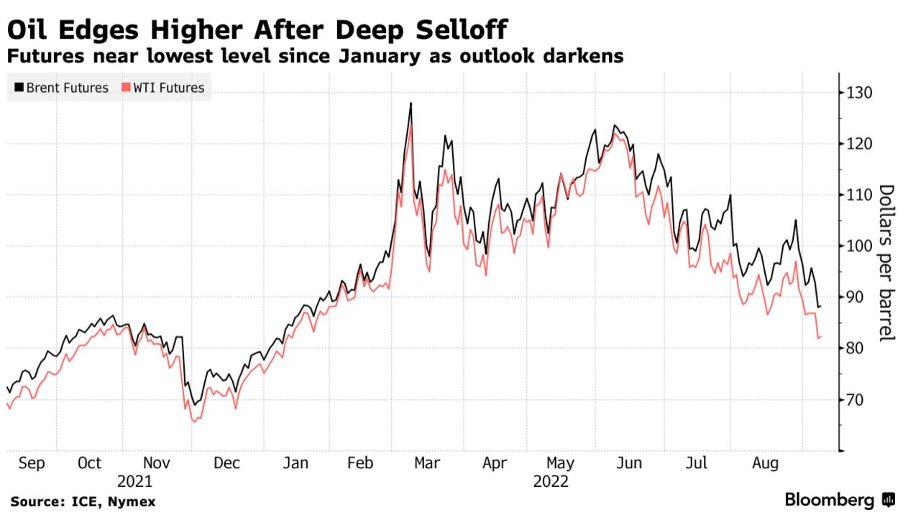
Meanwhile, the Yen is now close to a mind-boggling ¥145 vs. USD, a 24-year low! Oil at $82 is a very critical level and, technically speaking, could break lower, which could give some breathing room to the economy. Seeing Oil go from $120 a barrel in May 2022 to $85 now shows how volatile the world is and also how quickly demand can fall for the most popular commodities.

In the US, Nonfarm payrolls were +315,000 in August (seasonally slow) vs. +526,000 in September, slightly lower than expected but a big month-on-month decline. Meanwhile, unemployment is at +3.7%, slightly higher than expected. The tight labour market while companies are announcing hiring freezes is peculiar. Could this be a recession where employment is less affected? ISM Manufacturing for August was 52.8, unchanged from July – not the decline I was hoping for to give us a little breathing room. 

* Reference only. These rates are Conforming rates, not applicable to Foreign Nationals. 

Ex-ante

I'm really keeping an eye on oil prices…I have a sinking feeling that Oil is such a consensus overweight for most hedge funds (and institutions) that technical breakthrough support (say $80) will see a further decline in oil prices which is good news for everyone! European energy prices are now generally 15-20% of GDP, and someone has to pay for it – the public or private sector. If the public pays for it, it will have to run a fiscal deficit of 15-20% of GDP, so more debt on top of the already growing debt problem. The private sector gets tricky, especially for countries that have piled on loads of debt in a short period of time. One country that sticks out is Sweden, with over 150% of private debt to GDP. Nationally, Sweden's debt service ratio is 27% (highest on record). It appears Sweden, France, and South Korea are the most interest-rate sensitive countries, relatively speaking, according to BIS data. Watch this space. The negative soundbites on the European banking sector are going to get louder and more frequent.  

Buy now! Why now? 

We are in a perverse cycle where rising rates are actually squeezing up rental yields. The marginal buyer cannot afford to own given rate rises, and the Millennials also cannot afford and must rent – AND, to add to that, there is a 3.8M housing shortage according to the Fed. If you read last week's "Ex-post, Ex-ante," places like New York are seeing double-digit percentage increases in rents, BUT 39% of residents are looking to move given the high cost of living. It won't be long where we are in a world where rates are 7-8%, BUT rental yields could be 15-20% (some parts of Texas can net you low teens yield already).

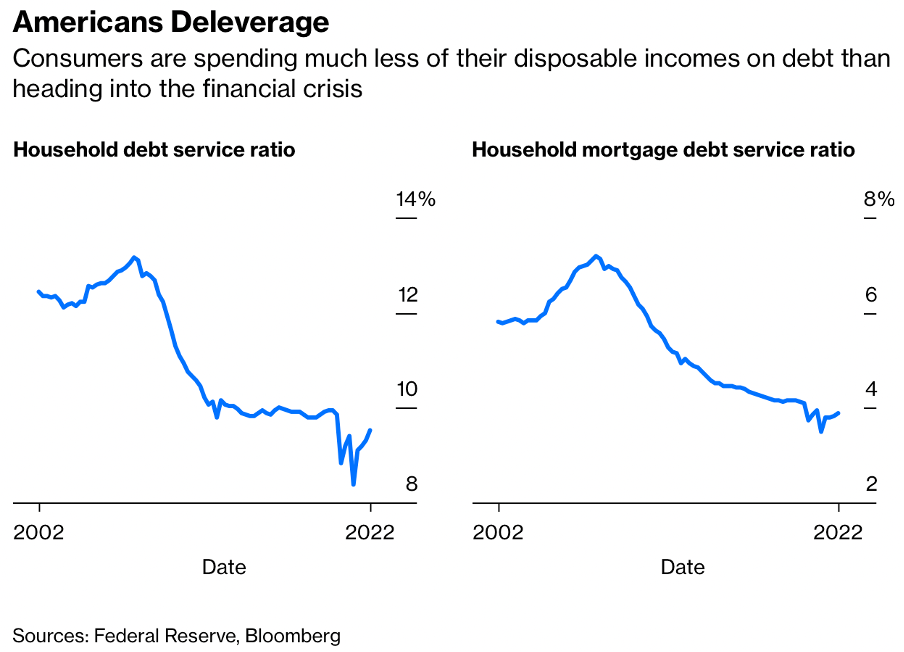
Look at this chart below from a Bloomberg article (7 September) US household debt service ratio has fallen from around 13% at the time of the last housing crisis to 10% now, according to the Fed. The amount households are spending to service their mortgage debt has been cut almost in half, from 7.18% in 2007 to a recent 3.89%! 

LOANS OF THE WEEK!

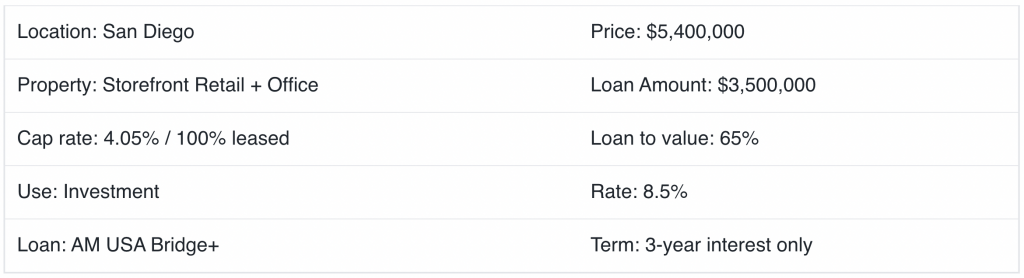
1. Indonesia family uses bridge loan to purchase $5.4M Retail/Office to maximize cash flow

- Client was offered a bank loan at 5.75% but given that it is cash-flow based he would not be able to cover the 1.25x cash flow coverage typically required and would be able to get around 40% LTV. Our knowledge was valuable. We knew that California is a tough market as it is with very low CAP rates but the added increase in interest rates is making it even harder to achieve higher loan amounts.

- Our solution: Use a bridge loan with higher leverage, interest-only payment to get into the property. Then position the tenants for renewal of their lease agreements and refinance when rates come back, allowing for more leverage to be supported by the cash flow. Good news is the client is using this strategy to purchase more yielding assets in the US. Loan managed by our Head of Sales, [email protected]

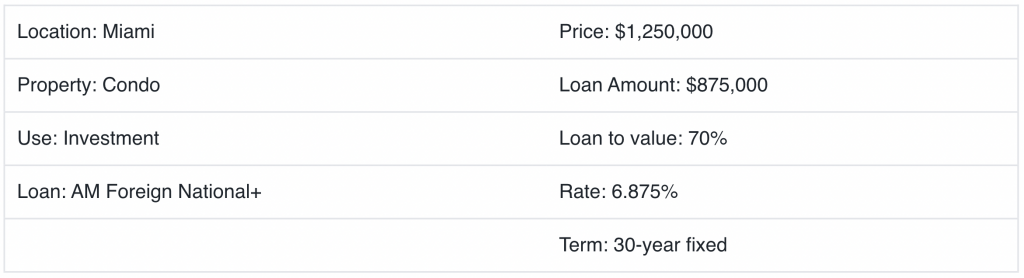
2. Canada tech entrepreneur buys $1.25M condo in Miami

- Client wanted to start building rental portfolio in the US to earn income and to begin developing a credit footprint for future family and business opportunities. Given the nature of his business, he was not able to find bank financing in Canada and we were able to find a mortgage which used his Canada credit and income to qualify.  Funded in 43 days with the help of our Canada-based loan officer, [email protected]

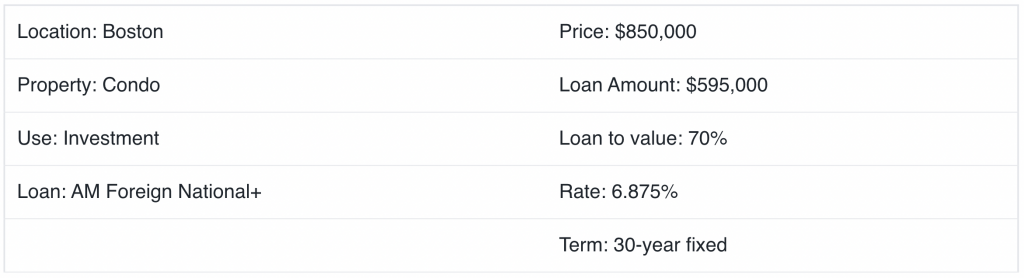
3. UK family buys $850K Boston condo in son’s name to develop credit

- Client bought condo in son’s name to rent out while his son attends boarding school on the East Coast.  The intention is for him to stay in the condo upon graduation from university in 4-5 years or continue to rent out to bolster his income while starting out on his career, meanwhile developing US credit for himself.  Our UK-based loan officer provided a hassle-free experience throughout their mortgage journey, [email protected]

Schedule a call with us at [email protected] to find out more! 

www.gmg.asia

Hong Kong Businessman required financing for a private jet

Hong Kong Businessman finances private jet

The Client

Given the COVID-19 pandemic, our client decided to invest in a private jet for his future travels when countries begin to open travel restrictions. Referred to us by a former customer of GMG, the client required US$10M to purchase a G550 normally valued at US$20M.

How We Helped

Given the slowdown in global travel, the agent was offering the pre-owned 2011 vintage plane at a steep discount of US$13M, which would normally be unavailable.

Our team found aviation financing from a specialist lender at favorable terms of 3.5% on a 5-year loan. The entire transaction was completed in 30 days.

NationalityResidenceIndustryAsset ValueLoan Amount
Hong Kong Citizen​​Hong Kong​ ManufacturingUS$20,000,000​US$10,000,000

Introducing “BREFI” (pronounced /brèːfè/), a New Loan Programme by GMG

New Loan Program by GMG Asia

Over the past 12 months, the most common funding problem is the lack of financing options at the early stages of a real estate project: land acquisition, initial development, real estate purchase before the renovation, equity cash out towards new development, etc.

GMG receives high-value financing requests in almost all major countries, and it’s been very clear that traditional banks are less willing to take on the risk of financing the early stages of a real estate development or project. There has never been a greater need for non-bank alternatives than now.

Many of our High-net-worth clients have relied on the ‘long relationship’ with their banks (Implicit Put option) to be their lender of last resort, and when they are not, there is a scramble for financing options in a short period of time, which we see now. A separate issue is that banks, in general, may require recapitalization from losses due to Covid-19 and are looking to preserve capital.

Bridge Lending (the B part of BREFI).

As many of you know, one of the advantages of bridge loans is that they allow the borrower to secure opportunities that you would otherwise miss. Another advantage is bridge loans allow for flexible payment terms depending on the loan agreements. You can choose to start paying off the loan before or after securing long-term financing.

Also, qualifying and getting approved for a bridge loan takes less time than a traditional loan, giving the borrower the convenience of quickly owning the asset and begin getting the project off the ground with the intention of replacing the bridge loan with a more permanent construction loan, as an example.

GMG BREFI (short for Bridge + Refi).

We created the BREFI to combine 2 types of mortgage origination effort into one single offering to help clients with their initial bridge and onto the next stage of funding, usually a construction or development loan.

For example, in some cases, the initial bridge loan is used to purchase the property or land and prepare it to be “Shovel-ready.” That is land or structure that has plans, zoning, and issued permits in place. Having these ready allows for construction to begin immediately after closing.

A major difference between these two is that new construction loans fund the construction of a new structure, whereas bridge loans allow investors to purchase land or property but typically do not fund any construction costs. A GMG BREFI combines them both into one service offering.

Investors who obtain a bridge loan will usually begin construction after they have refinanced out into their long-term loan.

Typical Bridge Loan

  • Used to purchase “shovel-ready” land or land with an existing structure for a quick flip
  • Used to pay off the existing loan by refinancing into another loan
  • Not normally used to fund construction

Typical Construction Loan

  • Used purchase "shovel-ready" land or land with an existing structure to tear down and rebuild
  • Used to pay off the loan upon selling the property
  • Always used to fund construction

Our team uses GMG BREFI by finding lenders that will take both portions of the funding stack, Bridge + Construction.

Some common uses of GMG BREFI

Purchasing a plot of land to build a new development

Investors looking to purchase a plot of “shovel-ready” land would normally use a construction loan which is not available in this market environment. A BREFI will allow you to acquire the desired land and finance the new development on the property.

Purchasing an existing property (IE en bloc in Singapore) to tear down and build a new one

For clients planning to tear down and rebuild a structure on a piece of land, a BREFI can be used as a financing option.

Financing required to purchase land and begin construction immediately

Property developers who have the required documentation to begin construction on a piece of land can use the BREFI, where typical construction loans are not available with traditional banks. The hardest part of any new construction is getting the needed permits; once this is done, our lenders can disperse the funds in “construction draws” to start building.

We have many Case Studies for the GMG BREFI for transactions globally.

Please contact your GMG International Loan Specialist for more information: [email protected]

Great Real Estate Reshuffling

Great Real Estate Reshuffling

According to a survey by Zillow, 1 in 10 Americans has moved in the past 12 months. With the COVID-19 vaccine implementation and the economy and housing market recovering, Zillow predicts that this number could increase to more than 40 percent in 2021; this means that millions of households could enter the housing market in 2021.

What prompted the Great Reshuffling?

A significant cause of the Great Reshuffling is due to the fact that work-from-home became a norm during the pandemic. Homebuyers quickly caught on to the fact that they can live and work in their dream home and location as long as they have an internet connection. Approximately 75% of those surveyed reported moving for positive reasons, such as being closer to their family, friends, or simply living in their desired part of the country.

Many cities, known as "secondary cities" across the country, have seen a massive influx of movers looking to take advantage of bigger homes with lower prices. According to Zillow, there has been an uptick in the number of people moving to the South over the past year.

The rise in people moving to more affordable areas has triggered a wave of first-time buyers. This is especially true in Phoenix, Charlotte, N.C., and Austin. Zillow's data also showed the highest for-sale inventory climb in 4 major real estate areas – Los Angeles, Chicago, San Francisco, and New York.

We see this as an excellent opportunity for real estate investors, as over the past couple of months, the housing markets outside of the urban areas have flourished. "We have created a process specifically for our overseas clients which is easier, faster, and more transparent than international banks." Robert Chadwick, Co-Founder of GMG and America Mortgages.

At GMG, we understand our global clients' needs, and we provide solutions to match their needs. We make investing in U.S. real estate easy. Schedule a call with our mortgage specialists today.

Sources: Housingwire.com & Realtrends