Shareholder Buyouts and Corporate Recapitalisation: Using Private Credit for Ownership Transitions in Asia Pacific

Private credit financing structure supporting a shareholder buyout and corporate ownership transition in Asia Pacific

How private credit enables business owners to restructure equity, buy out partners, and manage ownership transitions without selling the business or seeking external equity. 

Published by 

Donald Klip | Co-Founder, Global Mortgage Group | Head, GMG Capital Advisory 

30 years of institutional finance. Former hedge fund founder. Senior roles at top global investment banks. GMG Capital Advisory arranges private credit and special situations finance of $10M–$100M for operating companies across Asia Pacific. 

[email protected] | +65 9773 0273 | Singapore · Hong Kong | Asia-Pacific 

One of the most complex and sensitive corporate finance situations a business owner faces is a change in ownership structure. A partner who wants to exit. A family succession where one branch wants to be bought out. A management buyout where the operating team wants to acquire the business from current owners. 

The best ownership transitions happen quietly, quickly, and with capital that does not require you to explain your business to a committee that has never heard of it. 

When Ownership Transition Finance Is Needed 

Partner or co-founder buyout: A founding partner or minority shareholder wants to exit. The remaining owners want to buy them out without bringing in external equity or selling the business. 

Family succession buyout: One branch of a family business wants to be bought out by another. Private credit can be structured around the business's asset base and cash flows without requiring a third-party equity partner. 

Management buyout (MBO): The operating management team wants to acquire the business. Private credit provides the debt component, allowing management to acquire a controlling stake with relatively modest personal equity contribution. 

Recapitalisation: A business owner wants to extract a portion of the value built in the business without selling it. The business borrows against its assets and cash flows to return capital to shareholders. 

Pre-sale recapitalisation: An owner preparing to sell wants to extract some value ahead of the formal sale process. 

PE exit bridge: A private equity fund approaching the end of its investment horizon needs to return capital to fund investors while managing the remaining position to a more favourable exit. 

Common Structures 

Leveraged recapitalisation: A term loan secured against the business's assets and cash flows, with proceeds distributed to shareholders. 

Acquisition facility: Senior secured facility covering the consideration payable to exiting shareholders. 

Unitranche: A blended facility allowing higher leverage, reducing the equity contribution required from acquiring shareholders. 

Bridge to recapitalisation: Short-term capital to fund the ownership transition immediately while a longer-term facility is being arranged. 

Discretion and Process 

Ownership transitions are among the most sensitive corporate finance transactions. Information about a potential ownership change, if it reaches employees, customers, competitors, or suppliers prematurely, can disrupt the business and complicate the transaction itself. 

Private credit lenders are experienced in managing this sensitivity. Transactions are arranged confidentially, term sheets are non-binding and limited in distribution, and the due diligence process is conducted discretely. GMG Capital Advisory has structured ownership transition finance across Asia Pacific for family businesses, management teams, and high-net-worth individuals. 

About GMG Capital Advisory 

Donald Klip | Co-Founder, Global Mortgage Group | Head, GMG Capital Advisory 

Donald Klip has 30 years of institutional finance experience spanning hedge fund management and senior roles at the world’s top global investment banks. GMG Capital Advisory specialises in arranging and structuring corporate debt financing of $10M–$100M for operating companies, asset owners, and project sponsors where conventional bank lending is unavailable, insufficient, or too slow. We operate across 23+ jurisdictions in Asia Pacific. 

www.gmg.asia | [email protected] | +65 9773 0273 | Singapore · Hong Kong 

The Debt Desk 

Corporate private credit intelligence for Asia Pacific’s $10M–$100M middle market. Published by GMG Capital Advisory. Part of the Private Credit Asia content series. 

www.gmg.asia | Read all 41 articles in the series

Corporate Working Capital Solutions When Your Bank Cuts Your Facility

Corporate finance executive reviewing private credit and working capital solutions after a bank facility reduction

What to do when your bank reduces or withdraws your working capital facility, and how to replace it with private credit faster than you think. 

Published by 

Donald Klip | Co-Founder, Global Mortgage Group | Head, GMG Capital Advisory 

30 years of institutional finance. Former hedge fund founder. Senior roles at top global investment banks. GMG Capital Advisory arranges private credit and special situations finance of $10M–$100M for operating companies across Asia Pacific. 

[email protected] | +65 9773 0273 | Singapore · Hong Kong | Asia-Pacific 

Your bank has just called. Your revolving credit facility is being reduced. Your overdraft is not being renewed. Your trade finance lines have been tightened. Or — worst case — your entire facility is being withdrawn with 90 days' notice. 

This is happening to operating companies across Asia Pacific right now. Not because their businesses are failing. Because the regulatory and profitability pressures bearing down on bank balance sheets have made mid-market corporate credit economically unattractive to the banks that once provided it willingly. 

When a bank cuts a working capital facility, the business that moves fastest has the most options. Private credit can replace a bank line in weeks, not months. 

Immediate Steps When Your Facility Is Cut 

Move quickly: The earlier you start, the more options you have. 90 days' notice gives you far more leverage than 30 days. 

Quantify the gap precisely: Calculate exactly how much working capital you need. Know your peak and trough requirements across the calendar year. 

Map your security: Identify assets and cash flows available to support a replacement facility. Trade receivables, inventory, real property, contracts, personal guarantees. 

Document your business: Prepare current financials, management accounts, cash flow forecasts, customer list, and key contracts. 

Contact a specialist immediately: Not another bank. A private credit specialist can give you a preliminary view within days. 

Private Credit Working Capital Solutions 

Asset-backed revolving facility: A revolving credit line secured against trade receivables and inventory. The most direct replacement for a bank trade finance or invoice discounting facility. 

Term working capital loan: A fixed-term facility providing a lump sum of working capital for a defined period, repaid from operating cash flows. 

Receivables purchase: An outright purchase of trade receivables at a discount, providing immediate cash against invoiced but uncollected revenues. 

Supply chain finance: Funding payments to key suppliers, allowing you to extend effective payment terms and improve working capital dynamics. 

Working capital bridge: Short-term capital to cover a specific gap while a longer-term facility is being arranged. 

Collateral by Industry 

Manufacturing and industrial: Trade receivables, raw material and finished goods inventory, confirmed purchase orders, and export contracts. 

Distribution and logistics: Inventory in transit, warehouse receipts, confirmed delivery contracts, and fleet assets. 

Healthcare and professional services: Patient receivables, insurance receivables, and long-term service contracts. 

Hospitality and retail: Forward booking revenues, membership fees, food and beverage receivables, and real property. 

Technology and services: Contracted subscription revenues, SaaS receivables, and long-term service agreements. 

If your bank has reduced or withdrawn your working capital facility, contact GMG Capital Advisory today. We will assess your situation quickly and tell you exactly what replacement options are available and on what timeline. 

About GMG Capital Advisory 

Donald Klip | Co-Founder, Global Mortgage Group | Head, GMG Capital Advisory 

Donald Klip has 30 years of institutional finance experience spanning hedge fund management and senior roles at the world’s top global investment banks. GMG Capital Advisory specialises in arranging and structuring corporate debt financing of $10M–$100M for operating companies, asset owners, and project sponsors where conventional bank lending is unavailable, insufficient, or too slow. We operate across 23+ jurisdictions in Asia Pacific. 

www.gmg.asia | [email protected] | +65 9773 0273 | Singapore · Hong Kong 

The Debt Desk 

Corporate private credit intelligence for Asia Pacific’s $10M–$100M middle market. Published by GMG Capital Advisory. Part of the Private Credit Asia content series. 

www.gmg.asia | Read all 41 articles in the series
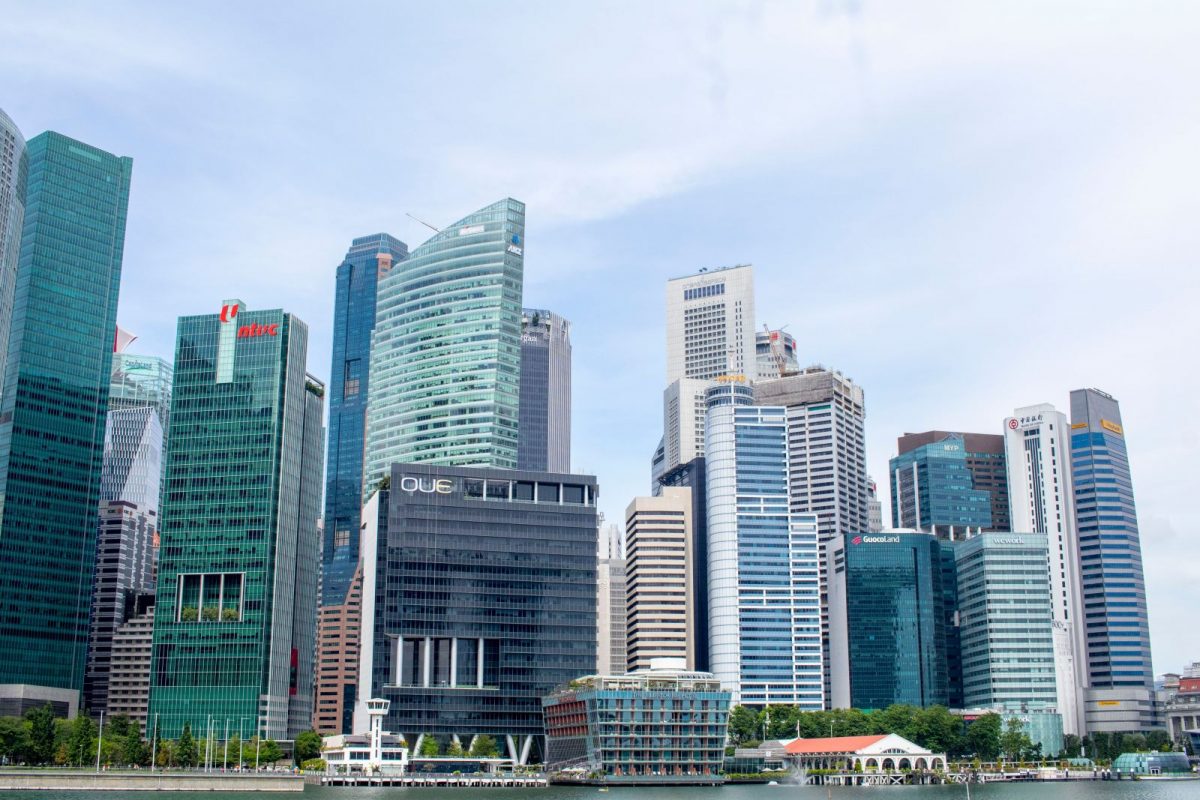
Acquisition Finance Without a Bank: How Private Credit Closes Corporate Deals in Asia Pacific

Corporate executives negotiating an acquisition while arranging private credit financing for a cross-border business purchase in Asia Pacific.

Why private credit has become the preferred acquisition finance solution for mid-market corporate buyers in Asia Pacific and how to structure a deal your bank cannot fund.

Published by

Donald Klip  |  Co-Founder, Global Mortgage Group  |  Head, GMG Capital Advisory

30 years of institutional finance. Former hedge fund founder. Senior roles at top global investment banks. GMG Capital Advisory arranges private credit and special situations finance of $10M–$100M for operating companies across Asia Pacific.

[email protected]   |   +65 9773 0273   |   Singapore · Hong Kong   |   Asia-Pacific  

Acquisition finance is one of the most time-sensitive and structurally demanding forms of corporate debt. Deals have hard closing dates. Sellers have other buyers. The difference between a transaction that completes and one that falls over is often not the quality of the business being acquired, it is the speed and certainty of the financing.

In mid-market M&A, the acquirer who can demonstrate certain, fast financing wins. Private credit delivers both. 

Why Banks Struggle with Mid-Market Acquisition Finance

Bank credit processes take 8–14 weeks. Most mid-market acquisitions have exclusivity periods of 4–8 weeks. The timeline mismatch alone kills deals.

Banks apply conservative leverage multiples that frequently leave acquirers with insufficient total capital to close at the agreed price.

Banks require extensive historical financials on the target, creating problems for privately held, regionally structured, or non-standard businesses.

Cross-border acquisitions often exceed any single bank's regional risk appetite or require multi-bank syndication, adding cost and complexity.

Banks increasingly apply sector restrictions that exclude entire categories of acquisition target regardless of specific deal quality.

Private Credit Acquisition Finance Structures

Senior acquisition bridge: A fully committed facility covering the acquisition price, structured for 12–24 months with a clear refinancing or exit plan. Fast to arrange, single lender decision, minimal syndication risk.

Unitranche: A blended senior and mezzanine facility. Eliminates layered capital structure complexity, allows higher leverage, and provides a clean single-lender relationship.

Acquisition bridge plus working capital: Many acquisitions require not just purchase price financing but additional capital to fund the acquired business's immediate working capital requirements.

Vendor finance complement: Where the seller takes back a vendor note, private credit can layer senior debt on top, maximising total leverage while keeping the structure clean.

Cross-Border Acquisitions: GMG's Particular Strength

Cross-border acquisitions represent a disproportionate share of mid-market M&A activity in Asia Pacific. A Singapore family office acquiring a Thai hospitality asset. An Australian business buying an Indonesian manufacturing operation. A Hong Kong conglomerate expanding into Philippine logistics.

These transactions are exactly where bank financing most consistently fails. GMG Capital Advisory operates across 23+ Asia Pacific jurisdictions with established legal relationships in each. We have structured and arranged cross-border acquisition finance transactions across the region and understand the specific requirements of multi-jurisdiction security packages and cross-border cash flow structures.

The mid-market acquisition that closes is rarely the one with the cheapest financing. It is the one with the most certain financing. 

About GMG Capital Advisory

Donald Klip  |  Co-Founder, Global Mortgage Group  |  Head, GMG Capital Advisory

Donald Klip has 30 years of institutional finance experience spanning hedge fund management and senior roles at the world’s top global investment banks. GMG Capital Advisory specialises in arranging and structuring corporate debt financing of $10M–$100M for operating companies, asset owners, and project sponsors where conventional bank lending is unavailable, insufficient, or too slow. We operate across 23+ jurisdictions in Asia Pacific.

www.gmg.asia   |   [email protected]   |   +65 9773 0273   |   Singapore · Hong Kong 

The Debt Desk

Corporate private credit intelligence for Asia Pacific’s $10M–$100M middle market. Published by GMG Capital Advisory. Part of the Private Credit Asia content series.

www.gmg.asia   |   Read all 41 articles in the series

Corporate Bridge Financing in Asia Pacific: Short-Term Capital for Operating Companies

Corporate executives reviewing bridge financing solutions to fund acquisitions, refinancing, and time-sensitive business opportunities in Asia Pacific.

What corporate bridge loans are, when operating companies use them, how they are structured, and how to access them when your bank cannot move fast enough.

Published by

Donald Klip  |  Co-Founder, Global Mortgage Group  |  Head, GMG Capital Advisory

30 years of institutional finance. Former hedge fund founder. Senior roles at top global investment banks. GMG Capital Advisory arranges private credit and special situations finance of $10M–$100M for operating companies across Asia Pacific.

[email protected]   |   +65 9773 0273   |   Singapore · Hong Kong   |   Asia-Pacific  

A corporate bridge loan is a short-term debt facility designed to fund an operating company through a defined gap between now and a future event. That event might be an asset sale, a property refinancing, a new long-term bank facility, a capital raise, or the resolution of a specific corporate situation. The bridge is the financing that gets you from here to there.

A corporate bridge loan is precision finance capital deployed for a specific purpose with a specific exit, on a timeline that banks cannot match. 

When Operating Companies Need Bridge Finance

Acquisition timing: A business owner has agreed terms on an acquisition. The acquisition closes in six weeks. The bank process takes fourteen. Private credit closes the gap.

Asset sale bridge: A company is selling a significant asset and needs capital now against the proceeds of the sale.

Bank refinancing gap: An existing facility is maturing, the business is refinancing, but the new facility will not be in place before the old one expires.

Corporate event bridge: Capital needed while a capital raise, PE transaction, or significant contract execution completes.

Distressed but recoverable: A business facing sudden liquidity crisis needs short-term capital to stabilise while a longer-term solution is arranged.

Opportunity capture: A time-sensitive commercial opportunity that cannot wait for a conventional bank process.

How Corporate Bridge Loans Are Structured

Tenor: Typically 6 to 24 months with a clear, contracted exit event.

Security: Usually secured against identifiable assets real property, contracted cash flows, business assets, or a combination. Personal guarantees from HNWI business owners are common.

Repayment: Structured around the specific exit event sale proceeds, new facility drawdown, or capital raise completion.

Interest: Can be current pay, rolled up (accrued to principal and payable at exit), or a combination.

Speed: The defining advantage. A well-prepared transaction can receive a term sheet within five days and fund within three to four weeks.

Corporate vs Property Bridge Finance

Corporate bridge finance is a distinct product from property bridge lending. A corporate bridge is secured against a business and its assets, not just a single property. The underwriting focuses on the business's cash flows, corporate structure, specific use of proceeds, and clarity of the repayment event. For operating companies in Asia Pacific, corporate bridge finance is available for a much broader range of situations than many business owners assume.

What Lenders Look for in a Corporate Bridge

Clarity of exit: The single most important factor. A bridge with a clearly defined, credible, time-bound exit is significantly easier to underwrite and price.

Quality of security: The collateral package needs to provide meaningful coverage of the loan amount under stress scenarios.

Business quality: Lenders want to understand the underlying business, its revenue profile, margin structure, customer concentration, and management quality.

Borrower track record: Business owners with a history of successfully executing similar transactions are viewed significantly more favourably.

Structure coherence: The purpose, security, tenor, and exit need to be internally consistent and credible.

About GMG Capital Advisory

Donald Klip  |  Co-Founder, Global Mortgage Group  |  Head, GMG Capital Advisory

Donald Klip has 30 years of institutional finance experience spanning hedge fund management and senior roles at the world’s top global investment banks. GMG Capital Advisory specialises in arranging and structuring corporate debt financing of $10M–$100M for operating companies, asset owners, and project sponsors where conventional bank lending is unavailable, insufficient, or too slow. We operate across 23+ jurisdictions in Asia Pacific.

www.gmg.asia   |   [email protected]   |   +65 9773 0273   |   Singapore · Hong Kong 

The Debt Desk

Corporate private credit intelligence for Asia Pacific’s $10M–$100M middle market. Published by GMG Capital Advisory. Part of the Private Credit Asia content series.

www.gmg.asia   |   Read all 41 articles in the series

What Is a Special Situations Loan? A Corporate Finance Guide for Asia Pacific Business Owners

Business owners and finance executives reviewing complex financing structures for a special situations loan in Asia Pacific.

Private credit solutions for transactions that fall outside every standard lending template and why Asia Pacific's mid-market produces more of them than any other region.

Published by

Donald Klip  |  Co-Founder, Global Mortgage Group  |  Head, GMG Capital Advisory

30 years of institutional finance. Former hedge fund founder. Senior roles at top global investment banks. GMG Capital Advisory arranges private credit and special situations finance of $10M–$100M for operating companies across Asia Pacific.

[email protected]   |   +65 9773 0273   |   Singapore · Hong Kong   |   Asia-Pacific  

A special situations loan is a corporate debt facility arranged for a business in circumstances that conventional bank lending cannot accommodate. Not because the business is failing. Not because the deal is too risky. But because the transaction falls outside the standardised templates that banks use to approve and process credit.

A special situations loan is not a loan for broken companies. It is a loan for complex situations that banks are not built to handle. 

What Makes a Situation 'Special'?

Time pressure: A corporate transaction with a hard deadline that a bank's 8–14 week credit process cannot meet.

Complex ownership or corporate structure: Businesses with multi-jurisdiction holding structures, cross-border operating subsidiaries, or unconventional shareholder arrangements.

Non-standard collateral: Transactions secured by assets that banks cannot or will not accept operating cash flows, project revenues, specialist equipment, intellectual property, or offshore-held assets.

Sector restrictions: Banks maintain growing lists of restricted sectors. A business in hospitality, energy, or cross-border manufacturing may face a sector-level policy regardless of individual deal quality.

Distress or time-critical refinancing: A business facing a debt maturity, covenant breach, or facility withdrawal requiring rapid replacement.

Bridge to a future event: A financing need that exists only until a specific future event: an asset sale, equity raise, or regulatory approval.

Turnaround and recovery: A business emerging from underperformance that cannot yet satisfy bank backward-looking criteria despite a credible forward case.

Special Situations in Asia Pacific: Why This Market Generates So Many

Cross-border complexity: Operating companies spanning multiple jurisdictions create structures that no single bank can underwrite consistently.

Foreign ownership restrictions: Multiple markets impose restrictions that banks treat as a risk multiplier. Private credit lenders with regional expertise can structure around these.

Bank sector exclusions: Growing excluded sector lists affect businesses regardless of individual credit quality.

Family business succession: Asia Pacific has a large population of family-owned businesses undergoing ownership transitions that banks are not structurally equipped to handle.

Infrastructure and project finance gaps: Data centres, power generation, renewables, and logistics generate project-level financing needs between institutional project finance and conventional corporate lending.

Common Special Situations Structures

Senior secured bridge: Short-term facility (12–24 months) secured against identifiable assets, structured around a defined repayment event. The most common special situations structure in the region.

Unitranche: A blended facility combining senior and subordinated debt. Simpler to execute than traditional leveraged structures. Well-suited to mid-market acquisitions and MBOs.

Asset-backed term loan: Medium-term facility (2–4 years) secured primarily against specific assets.

Cash flow-based lending: Facilities sized around EBITDA and free cash flow rather than hard asset collateral. Available for strongly cash-generative businesses.

Mezzanine: Subordinated debt behind senior facilities. Higher yield, more flexible covenants, often used alongside senior debt in acquisitions or recapitalisations.

Collateral in Special Situations Finance

Private credit lenders assess the totality of the security package, not individual line items. Real property across multiple jurisdictions, operating business cash flows, specialist equipment, trade receivables, intellectual property, personal guarantees from HNWI business owners, and offshore-held assets can all be incorporated into a coherent security structure. A transaction combining real property, contracted revenues, personal guarantee, and strong business cash flow can access significantly better terms than the sum of its parts might suggest.

About GMG Capital Advisory

Donald Klip  |  Co-Founder, Global Mortgage Group  |  Head, GMG Capital Advisory

Donald Klip has 30 years of institutional finance experience spanning hedge fund management and senior roles at the world’s top global investment banks. GMG Capital Advisory specialises in arranging and structuring corporate debt financing of $10M–$100M for operating companies, asset owners, and project sponsors where conventional bank lending is unavailable, insufficient, or too slow. We operate across 23+ jurisdictions in Asia Pacific.

www.gmg.asia   |   [email protected]   |   +65 9773 0273   |   Singapore · Hong Kong 

The Debt Desk

Corporate private credit intelligence for Asia Pacific’s $10M–$100M middle market. Published by GMG Capital Advisory. Part of the Private Credit Asia content series.

www.gmg.asia   |   Read all 41 articles in the series

Alternative Corporate Finance in Asia Pacific: Every Option Your Bank Doesn’t Tell You About

Business leaders evaluating multiple non-bank financing options including private credit, asset-based lending, and mezzanine finance across Asia Pacific.

A comprehensive guide to the full landscape of non-bank corporate finance solutions available to operating companies across Asia Pacific.

Published by

Donald Klip  |  Co-Founder, Global Mortgage Group  |  Head, GMG Capital Advisory

30 years of institutional finance. Former hedge fund founder. Senior roles at top global investment banks. GMG Capital Advisory arranges private credit and special situations finance of $10M–$100M for operating companies across Asia Pacific.

[email protected]   |   +65 9773 0273   |   Singapore · Hong Kong   |   Asia-Pacific  

When a bank says no, the conversation does not end. The capital market is significantly broader than the banking system, and operating companies across Asia Pacific have access to a wider range of financing solutions than most CFOs and business owners have been told about.

The banking system is one financing channel among many. The CFO who understands all the channels has a significant advantage over the one who only knows one. 

Private Credit: The Primary Alternative

Private credit corporate debt arranged through non-bank lenders including private debt funds, family offices, and specialist finance firms is the most comprehensive and flexible alternative to bank lending for mid-market operating companies. It covers the broadest range of transaction types, deal sizes, industries, and structures of any single alternative financing category. It is covered in depth throughout this series.

Asset-Based Lending (ABL)

Receivables financing: Credit advanced against outstanding trade receivables. The facility grows and shrinks with the business's receivables book, making it well-suited to seasonal or growth businesses.

Inventory financing: Credit secured against raw material or finished goods inventory. Common in manufacturing, distribution, and retail businesses with significant inventory positions.

Equipment financing: Loans or leases secured against specific plant, machinery, or equipment assets. Particularly relevant for capital-intensive industries.

Sale and leaseback: The operating company sells an asset typically real property or equipment to a finance provider and leases it back, releasing equity capital while retaining operational use of the asset.

Mezzanine Finance

Mezzanine finance sits in the capital structure between senior debt and equity. It carries a higher yield than senior debt and is typically used to bridge a gap between what senior lenders will provide and what equity investors require. In Asia Pacific mid-market transactions particularly leveraged buyouts and management buyouts mezzanine can enable deals that would otherwise be impossible to capitalise.

Family Office and High-Net-Worth Direct Lending

Singapore, Hong Kong, and increasingly other regional centres host a large and growing population of family offices and HNW investors who allocate directly to private credit and direct lending opportunities. These investors can be highly flexible; they have no regulatory capital constraints and can accommodate structures that institutional lenders cannot.

Government-Backed and Development Finance

Most major Asia Pacific markets operate government-backed lending schemes that provide subsidised or guaranteed credit to qualifying businesses. Enterprise Singapore, the SME Corporation in Malaysia, Indonesia's KUR programme, and Australia's various state and federal business finance schemes are among the better-known examples.

Export Credit and Trade Finance

Operating companies with significant export activity have access to export credit agency (ECA) financing in their home markets. ECAs in Australia, Singapore, Korea, Japan, and Taiwan provide loans, guarantees, and insurance for export transactions that domestic banks may be reluctant to finance.

The Right Solution Depends on the Situation

No single alternative finance solution is right for every operating company or every situation. The appropriate solution depends on the specific capital requirement, the business's asset base, its cash flow profile, its industry, its jurisdictional footprint, and the urgency of the need. GMG Capital Advisory works across the full spectrum of alternative corporate finance solutions. Speak to us first.

About GMG Capital Advisory

Donald Klip  |  Co-Founder, Global Mortgage Group  |  Head, GMG Capital Advisory

Donald Klip has 30 years of institutional finance experience spanning hedge fund management and senior roles at the world’s top global investment banks. GMG Capital Advisory specialises in arranging and structuring corporate debt financing of $10M–$100M for operating companies, asset owners, and project sponsors where conventional bank lending is unavailable, insufficient, or too slow. We operate across 23+ jurisdictions in Asia Pacific.

www.gmg.asia   |   [email protected]   |   +65 9773 0273   |   Singapore · Hong Kong 

The Debt Desk

Corporate private credit intelligence for Asia Pacific’s $10M–$100M middle market. Published by GMG Capital Advisory. Part of the Private Credit Asia content series.

www.gmg.asia   |   Read all 41 articles in the series

Private Credit for Operating Companies in Asia Pacific: A Plain-English Guide for CFOs and Business Owners

Chief financial officer reviewing private credit financing options for a growing operating company in Asia Pacific.

Everything you need to know about how private credit works, who it is for, what determines pricing, what collateral looks like across industries, and how to access it.

Published by

Donald Klip  |  Co-Founder, Global Mortgage Group  |  Head, GMG Capital Advisory

30 years of institutional finance. Former hedge fund founder. Senior roles at top global investment banks. GMG Capital Advisory arranges private credit and special situations finance of $10M–$100M for operating companies across Asia Pacific.

[email protected]   |   +65 9773 0273   |   Singapore · Hong Kong   |   Asia-Pacific  

Private credit is one of the fastest-growing segments of global finance. In Asia Pacific alone, assets under management in private credit strategies exceeded $150 billion in 2024 a figure that has more than doubled in five years. Yet for most business owners and CFOs, private credit remains poorly understood.

Private credit is not a last resort. For a growing number of Asia Pacific businesses, it is the first call. 

What Is Private Credit?

Private credit is lending provided by non-bank institutions, a dedicated private debt fund, a family office, an insurance company, a specialist finance firm, or a high-net-worth investor group. The word 'private' refers to the nature of the transaction: a direct, bilateral agreement between borrower and lender, negotiated privately rather than arranged through a public market.

Because private credit lenders are not subject to the same regulatory capital framework as banks, they can lend in situations banks cannot, move faster, accept more complex collateral, and price for deal-specific risk rather than applying blanket sector restrictions.

Private Credit vs a Bank Loan: The Key Differences

Speed: Bank credit process typically 8–14 weeks. Private credit: 2–4 weeks. For time-sensitive acquisitions or working capital crises, this is decisive.

Deal size: Banks are raising minimum commercial deal sizes. The $10M–$100M range is precisely the segment most systematically abandoned.

Structure: Banks apply standardised templates. Private credit lenders structure around your specific transaction, collateral profile, and cash flow cycle.

Sector access: Banks maintain growing excluded sector lists. Private credit lenders assess each transaction on its own merits.

Relationship: With a bank, your credit decision is made by a committee that has never met you. With private credit, you deal directly with the principals making the decision.

Covenants: Bank covenants are maintenance-based, tested regularly. Private credit covenants are incurrence-based, triggered only if you take a specific action. Significantly more business-friendly.

What Determines Private Credit Pricing?

Collateral quality and liquidity: The single most important pricing driver. Strong, liquid, easily realisable collateral commands significantly better pricing than illiquid or specialised assets.

Loan-to-value ratio: The lower the LTV relative to collateral value, the better the pricing.

Clarity of repayment source: A transaction with a clearly defined, contracted exit price better than one with a vague refinancing plan.

Business cash flow quality: Contracted, recurring revenues from creditworthy customers price better than project-based or lumpy cash flows.

Tenor: Shorter-term transactions typically price tighter than longer ones.

Jurisdiction: Markets with reliable contract enforcement and efficient security registration price better than those with legal uncertainty.

Deal complexity: Cross-border structures, complex ownership, and regulatory complications add to the cost of underwriting and are reflected in pricing.

Collateral Across Industries

Data centres and digital infrastructure: Physical infrastructure, long-term power purchase agreements, co-location and hyperscaler offtake contracts, land and building assets.

Power generation and energy: Project cash flows underpinned by PPAs, plant and equipment, land rights, environmental permits, and carbon credit streams.

Biofuels and sustainable fuels: Feedstock supply contracts, processing plant, product offtake agreements, carbon credits, and land assets.

Hospitality and hotels: Real property value, brand licence agreements, management contracts, forward booking revenues, and F&B income streams.

Manufacturing and industrial: Plant and equipment, real property, raw material inventory, finished goods, trade receivables, and export contracts.

Real estate development: Land value, development approvals, pre-sales contracts, construction contracts, and developer equity.

Healthcare and medical: Licensed premises, specialist equipment, patient receivables, insurance receivables, and long-term service agreements.

Logistics and supply chain: Warehousing assets, vehicle and equipment fleets, long-term client contracts, and cold chain infrastructure.

Agribusiness and food production: Land and plantation assets, processing facilities, equipment, harvest offtake agreements, and export contracts.

Operating companies generally: Trade receivables, inventory, intellectual property, cross-company guarantees, and personal guarantees from HNWI business owners.

The right private credit lender does not just provide capital. They provide certainty and in business, certainty of funding is often worth more than the cheapest rate. 

The Private Credit Process

Step 1: Initial conversation (Days 1–5)

A private credit lender will want to understand the business, the capital requirement, the repayment source, and the collateral available. Good private credit lenders form a preliminary credit view within days.

Step 2: Term sheet (Days 5–14)

If the lender has appetite, they issue a non-binding term sheet. Most terms are negotiable through direct dialogue.

Step 3: Due diligence (Weeks 2–4)

Financial, legal, and asset due diligence. Well-prepared borrowers with clean financials move through this stage quickly.

Step 4: Documentation (Weeks 3–5)

Documentation is negotiated directly between legal teams and can be completed in days for straightforward transactions.

Step 5: Funding (Weeks 4–6)

Once conditions precedent are satisfied, funds are drawn. For urgent transactions, some private credit lenders can move from first conversation to funding in under three weeks.

About GMG Capital Advisory

Donald Klip  |  Co-Founder, Global Mortgage Group  |  Head, GMG Capital Advisory

Donald Klip has 30 years of institutional finance experience spanning hedge fund management and senior roles at the world’s top global investment banks. GMG Capital Advisory specialises in arranging and structuring corporate debt financing of $10M–$100M for operating companies, asset owners, and project sponsors where conventional bank lending is unavailable, insufficient, or too slow. We operate across 23+ jurisdictions in Asia Pacific.

www.gmg.asia   |   [email protected]   |   +65 9773 0273   |   Singapore · Hong Kong 

The Debt Desk

Corporate private credit intelligence for Asia Pacific’s $10M–$100M middle market. Published by GMG Capital Advisory. Part of the Private Credit Asia content series.

www.gmg.asia   |   Read all 41 articles in the series

Why Banks Across Asia Pacific Are Tightening Corporate Lending: A Country-by-Country Breakdown

Map of Asia Pacific highlighting corporate lending trends and credit tightening across major regional markets.

The specific regulatory, structural, and market forces driving corporate credit tightening in each major Asia Pacific market and what operating companies can do about it.

Published by

Donald Klip  |  Co-Founder, Global Mortgage Group  |  Head, GMG Capital Advisory

30 years of institutional finance. Former hedge fund founder. Senior roles at top global investment banks. GMG Capital Advisory arranges private credit and special situations finance of $10M–$100M for operating companies across Asia Pacific.

[email protected]   |   +65 9773 0273   |   Singapore · Hong Kong   |   Asia-Pacific  

The headline story that bank corporate lending is tightening across Asia Pacific is well understood by most CFOs and business owners who have tried to access or renew credit facilities in the past two years. What is less well understood are the specific forces at work in each market.

Bank credit tightening in Asia Pacific is not one story, it is fourteen stories with a common theme. Understanding the specific dynamics in your market is essential to navigating them.

Singapore

Singapore’s three major local banks DBS, OCBC, and UOB have responded to the Basel III and IV environment by prioritising three categories of business: wealth management and private banking, large institutional corporate and trade finance, and retail mortgages. The consequence for mid-market operating companies is that credit decisions are increasingly made at specialist credit business unit level, timelines have extended significantly, minimum ticket sizes have risen, and sector restrictions have expanded. Foreign-owned businesses and cross-border structures face particular scrutiny.

Australia

The Banking Royal Commission triggered a wholesale tightening of credit standards across Australia’s big four banks. They have since systematically reduced commercial lending exposure in favour of residential mortgages. Regional and rural businesses, hospitality, retail, and property development have been disproportionately affected.

Malaysia

Bank Negara Malaysia has implemented progressive tightening of provisioning requirements. Domestic banks have concentrated their corporate lending books on government-linked companies and large established corporations. Independent operating companies particularly those without GLC affiliations or with foreign ownership face significantly longer credit timelines and higher collateral requirements.

Indonesia

Indonesia’s banking system is dominated by state-owned banks that prioritise state-linked enterprises. Foreign ownership restrictions create structural barriers to collateral registration and enforcement that make domestic banks reluctant to lend to foreign-affiliated entities regardless of credit quality. Private credit arranged through offshore holding entities is often the only practical route.

Thailand

Thailand’s banking system is concentrated and centralised. The Land Code and Business of Foreigners Act create specific constraints on collateral registration for non-Thai entities. Private credit arranged through appropriate offshore structures has become the dominant financing channel for foreign-owned operating companies in Thailand.

Philippines

The Philippine banking system is dominated by family-controlled conglomerates whose affiliated banks prioritise lending within their own corporate ecosystems. Independent mid-market companies and foreign-owned businesses sit outside these ecosystems and face limited options, slow processes, and conservative terms.

India

India’s public sector banks accumulated enormous NPA books, triggering a prolonged period of extremely conservative corporate lending standards. Foreign-owned businesses and internationally structured entities face additional barriers: FEMA compliance requirements, RBI approval for certain cross-border debt structures, and domestic bank unfamiliarity with international corporate structures.

Japan

Japan’s banking system is characterised by keiretsu relationships. For businesses outside a keiretsu including virtually all foreign-owned or foreign-managed businesses the domestic banking system is effectively closed for meaningful corporate credit.

South Korea

Korea’s banking system allocates the majority of corporate credit to chaebol-affiliated companies and large domestic corporations. Mid-market independents particularly those without chaebol or government affiliations are chronically underserved.

Taiwan

Taiwan’s banking system prioritises government-linked and large corporate relationships. The export-oriented manufacturing and technology base that forms the backbone of the Taiwanese economy is chronically underfunded, particularly for cross-border expansion and international acquisition financing.

Hong Kong

Hong Kong’s banking system is overwhelmingly focused on real estate, trade finance, and large corporate lending. Mid-market operating company credit particularly for businesses without significant property collateral is difficult to access. Hong Kong is most valuable as a cross-border financing hub for businesses with offshore holding structures.

New Zealand

New Zealand’s four major banks are all subsidiaries of Australian parents and apply substantially similar credit frameworks. As the Australian parents have tightened, so have their New Zealand subsidiaries. Businesses outside agricultural and residential property sectors face increasing difficulty accessing corporate credit at meaningful scale.

What Operating Companies Should Do

The common thread across all markets is that mid-market operating companies particularly those with foreign ownership, cross-border structures, or operations in restricted sectors can no longer rely on domestic bank credit as their primary corporate financing channel. Private credit, arranged through experienced specialists with genuine regional presence, is the most effective alternative.

About GMG Capital Advisory

Donald Klip  |  Co-Founder, Global Mortgage Group  |  Head, GMG Capital Advisory

Donald Klip has 30 years of institutional finance experience spanning hedge fund management and senior roles at the world’s top global investment banks. GMG Capital Advisory specialises in arranging and structuring corporate debt financing of $10M–$100M for operating companies, asset owners, and project sponsors where conventional bank lending is unavailable, insufficient, or too slow. We operate across 23+ jurisdictions in Asia Pacific.

www.gmg.asia   |   [email protected]   |   +65 9773 0273   |   Singapore · Hong Kong 

The Debt Desk

Corporate private credit intelligence for Asia Pacific’s $10M–$100M middle market. Published by GMG Capital Advisory. Part of the Private Credit Asia content series.

www.gmg.asia   |   Read all 41 articles in the series

The $10M–$100M Corporate Lending Blind Spot: Why Mid-Market Companies Fall Between Every Lender’s Criteria

Asia Pacific business executives evaluating financing options after being declined by traditional banks despite strong corporate performance.

The structural gap in Asia Pacific corporate lending that leaves profitable, creditworthy businesses without access to the capital they need and what to do about it.

Published by

Donald Klip  |  Co-Founder, Global Mortgage Group  |  Head, GMG Capital Advisory

30 years of institutional finance. Former hedge fund founder. Senior roles at top global investment banks. GMG Capital Advisory arranges private credit and special situations finance of $10M–$100M for operating companies across Asia Pacific.

[email protected]   |   +65 9773 0273   |   Singapore · Hong Kong   |   Asia-Pacific  

There is a gap in the corporate lending market that most business owners and CFOs only discover at the worst possible moment when they need capital and cannot get it. The gap is not random. It is structural, predictable, and widening. And it sits precisely at the $10M–$100M range that represents the heartland of Asia Pacific’s operating company economy.

The $10M–$100M corporate borrower is too large to be served by SME products and too small to attract institutional capital. Private credit was built to serve exactly this market.

The Three Tiers of Corporate Lending

  • Tier 1 — SME lending (below $5M): This market is well-served. Government guarantee schemes, fintech lenders, trade finance platforms, and standardised bank SME products all compete for this segment.
  • Tier 2 — Institutional corporate lending (above $100M): Also well-served. Large corporates access syndicated loan markets, investment-grade bond markets, bilateral bank facilities with dedicated corporate banking coverage.
  • Tier 3 — Mid-market (the gap: $10M to $100M): Systematically underserved. Too large for automated SME underwriting. Too small for syndicated markets. Too complex for standardised bank templates. Too unprofitable per unit of regulatory capital for banks under Basel III and IV constraints.

Why Banks Have Effectively Exited the Mid-Market

  • Regulatory capital cost: Under Basel III and IV risk-weighting frameworks, corporate loans to mid-market businesses require banks to hold substantially more regulatory capital than retail mortgages or government securities.
  • Origination cost: Mid-market corporate loans require significant credit analysis, relationship management, legal documentation, and ongoing monitoring. The cost of originating a $20M facility is not materially lower than a $200M facility.
  • Covenant and monitoring complexity: Mid-market businesses are complex. Managing the ongoing compliance of a mid-market credit facility is operationally intensive relative to the revenue generated.
  • Sector and concentration restrictions: As banks manage portfolio exposures more actively, sector and geographic concentration limits increasingly exclude entire categories of mid-market borrowers regardless of individual credit quality.

The Characteristics of a Mid-Market Lending Gap Borrower

  • Revenue typically between $10M and $200M, with EBITDA generating meaningful but not institutional-scale debt capacity
  • Profitable and operationally sound, with a track record of meeting obligations, but unable to satisfy increasingly conservative bank credit criteria
  • Often owner-managed or family-controlled, with non-standard governance relative to listed company peers
  • Frequently operating across multiple Asia Pacific jurisdictions, creating cross-border complexity that exceeds any single bank’s regional appetite
  • Asset-rich relative to earnings significant real property, equipment, or contracted revenue streams that represent strong collateral but are assessed conservatively under bank frameworks

What Private Credit Offers the Mid-Market

  • Deal-by-deal underwriting: Every transaction is assessed individually by an experienced credit team. No sector exclusion lists. No automated scoring models that cannot accommodate complexity.
  • Speed: Without bank committee processes, private credit lenders can move from initial assessment to term sheet in days and from term sheet to funding in weeks.
  • Structural flexibility: Private credit facilities are structured around the borrower’s specific situation: the collateral available, the cash flow profile, the repayment source.
  • Appropriate pricing: Private credit carries a higher cost than bank lending. For mid-market borrowers who have been unable to access bank credit at any price, private credit pricing is not expensive; it is the market rate for capital they cannot otherwise access.

GMG Capital Advisory was built for the mid-market gap. Our $10M–$100M focus is not a positioning statement, it is a precise description of the market we serve because it is the market that needs us most.

About GMG Capital Advisory

Donald Klip  |  Co-Founder, Global Mortgage Group  |  Head, GMG Capital Advisory

Donald Klip has 30 years of institutional finance experience spanning hedge fund management and senior roles at the world’s top global investment banks. GMG Capital Advisory specialises in arranging and structuring corporate debt financing of $10M–$100M for operating companies, asset owners, and project sponsors where conventional bank lending is unavailable, insufficient, or too slow. We operate across 23+ jurisdictions in Asia Pacific.

www.gmg.asia   |   [email protected]   |   +65 9773 0273   |   Singapore · Hong Kong

The Debt Desk

Corporate private credit intelligence for Asia Pacific’s $10M–$100M middle market. Published by GMG Capital Advisory. Part of the Private Credit Asia content series.

www.gmg.asia   |   Read all 41 articles in the series