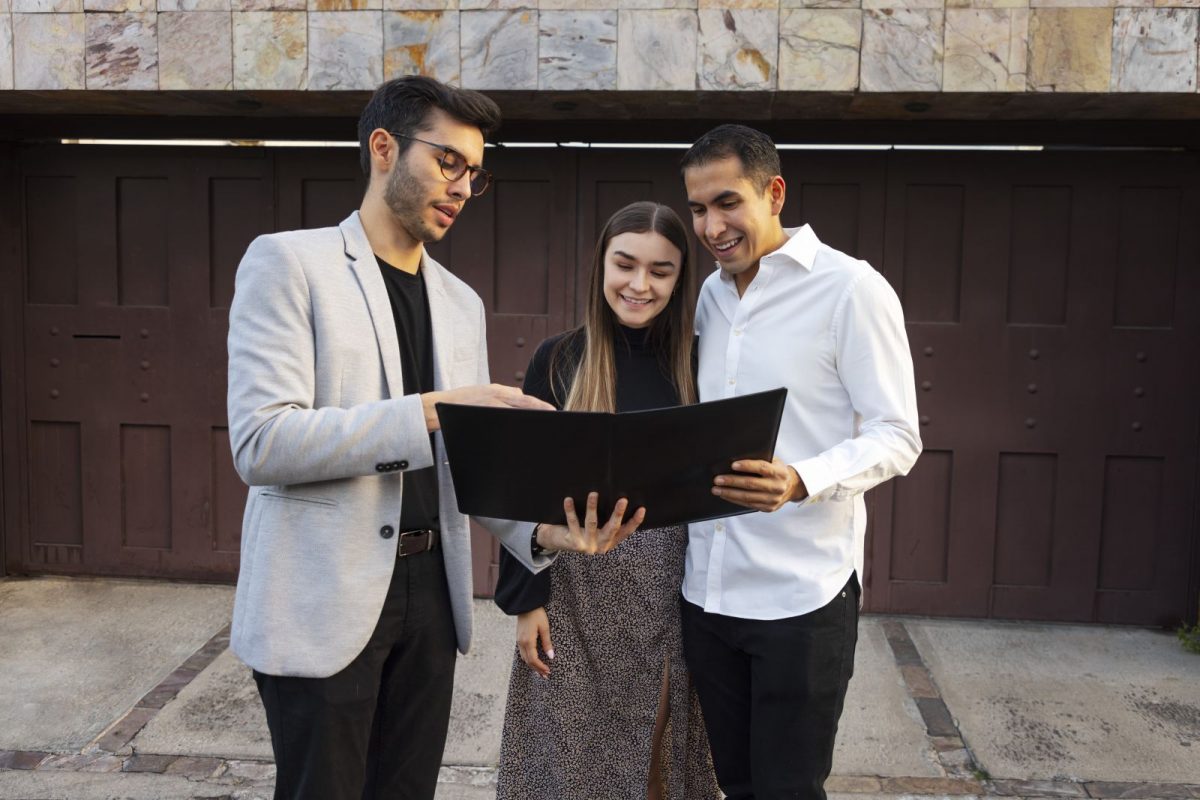
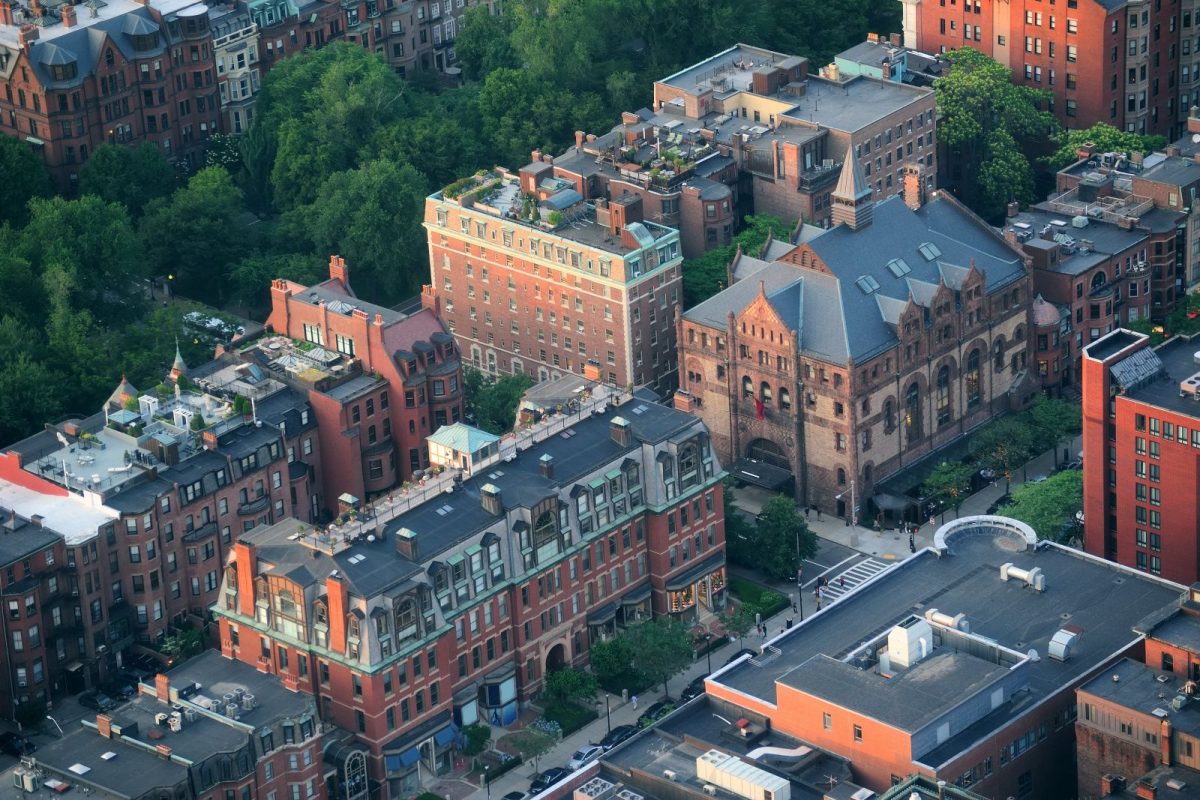
How global high-net-worth families from China, Korea, India, the Middle East, the United Kingdom, Canada, Singapore, Hong Kong, Taiwan, Israel, France, Italy, Brazil, and across the world who purchased property near America's elite universities for their children, in Cambridge, New Haven, Princeton, Palo Alto, Evanston, Charlottesville, Ann Arbor, Nashville, Providence, and other university towns, have built decades of untapped equity in some of America's most supply-constrained residential markets, and how international equity release finance finally makes that wealth accessible without selling
The phone call that starts this conversation usually goes something like this.
A family in Seoul, or Singapore, or Hong Kong, or London, or São Paulo is reviewing their global asset portfolio. Someone, a private banker, a family office advisor, or simply a family member who has been thinking about the question, raises the property near Harvard that was purchased in 1997 when their eldest child was accepted into the Kennedy School. Or the condominium near Columbia bought in 2003 for a son studying at the business school. Or the townhouse in Princeton acquired in 1999 for a daughter completing her PhD. Or the apartment near MIT that was purchased in 2001 for a child studying computer science and that has been rented to graduate students ever since.
The property has been there, quietly, for twenty or twenty-five years. It has been managed by a local property manager. It has generated modest rental income. It has barely been thought about as a financial asset, because when it was purchased, it was not primarily a financial asset. It was a practical solution to a practical problem: where will my child live while they are studying at one of the world's great universities?
But twenty-five years of appreciation in one of America's most supply-constrained residential markets has transformed that practical purchase into something else entirely. The Harvard-area condominium purchased for USD 380,000 in 1997 is now worth USD 1.8 million. The Columbia-adjacent apartment bought for USD 420,000 in 2003 is now worth USD 2.1 million. The Princeton townhouse acquired for USD 340,000 in 1999 is now worth USD 1.2 million. The MIT-area property purchased for USD 450,000 in 2001 is now worth USD 2.3 million.
The equity is real. The appreciation has been consistent. And for the internationally mobile high-net-worth family reviewing their global portfolio, the realisation that this property, which they have barely thought about as a financial asset, represents USD 1.5 to 2 million of accessible capital that has been sitting idle for two decades is frequently the beginning of a conversation with Global Mortgage Group.
This is the Unlocked in America: College Towns guide — part of the Unlocked in America series by Global Mortgage Group and America Mortgages, the only US mortgage lender focused exclusively on overseas borrowers.
Why US University Town Real Estate Is a Distinct and Underappreciated Equity Release Opportunity
American university town real estate has several characteristics that make it a genuinely distinct equity release opportunity, different from the residential markets covered in the broader UNLOCKED IN AMERICA series and different from the commercial markets covered in the commercial property guide.
Permanent supply constraint driven by university land ownership
America's elite universities are among the largest institutional landowners in their respective communities. Harvard owns approximately 200 acres in Cambridge and an additional 4,800 acres in Allston. Yale owns significant portions of New Haven's most desirable residential land. Princeton's campus and adjacent university-owned properties constrain the residential development potential of Princeton Borough and Princeton Township in ways that no zoning regulation alone could replicate.
The combination of university land ownership, historic district designations that limit new development in the oldest and most desirable neighbourhoods, and the consistent demand pressure from the university community, faculty, staff, graduate students, and the families of undergraduate students, creates a supply-demand imbalance that has driven consistent long-term appreciation in virtually every elite US university town.
The international high-net-worth parent community creates a specific and recurring buyer base
Elite American universities draw international students from virtually every country in which serious private wealth exists. The international parent community that accompanies those students, visiting, attending graduation, maintaining a connection to where their child studied, creates a consistent and specific demand for residential property in university towns that is entirely distinct from the domestic American demand that drives most US residential markets.
This international parent buyer community has specific characteristics that distinguish it from other international high-net-worth US property buyer segments: the purchase is motivated by personal connection rather than pure investment logic, the holding period tends to be very long because the emotional attachment to the property persists long after the practical need has passed, and the equity release opportunity is frequently triggered not by a change in the property's investment fundamentals but by a change in the family's broader capital needs or by the belated recognition that a long-forgotten asset has become one of their most significant holdings.
The "forgotten asset" phenomenon
Of all the equity release use cases that GMG encounters across the UNLOCKED IN AMERICA series, the forgotten asset phenomenon is most concentrated in the university town category. Internationally mobile high-net-worth families who purchased near Harvard or Princeton or Columbia in the 1990s and early 2000s for their child's university years frequently have not given serious thought to that property as a financial asset since the child graduated. It has been managed by a local property manager, rented to graduate students or young professionals, generating modest income that is remitted to a local US bank account, and essentially ignored as the family's attention and capital management focus has been directed elsewhere.
The realisation, triggered by a portfolio review, a conversation with a private banker, or simply by someone in the family asking the question, that this property has appreciated dramatically and represents significant accessible equity is frequently one of the most financially significant moments in a GMG client conversation. The equity release opportunity exists not because the family has been unable to access their equity, but because they have not thought of the property as an equity asset at all.
Student rental income and the US mortgage underwriting challenge
Many university town properties owned by internationally mobile high-net-worth families are rented to students, either individually or in groups, generating rental income that is real, consistent, and in many cases sufficient to service a conventional mortgage many times over. But student rental income, frequently paid in cash, managed through informal arrangements, or documented in ways that do not conform to US mortgage underwriting standards, is assessed by conventional US home equity lenders with significant haircuts or excluded entirely.
GMG's asset-led equity release assessment accommodates student rental income without requiring it to be reformatted into conventional US mortgage documentation standards, focusing instead on the property value, the loan-to-value ratio, and the exit strategy credibility.
University by University: The International High-Net-Worth Parent Community and the Equity Release Opportunity
Harvard University — Cambridge and Boston, Massachusetts
Harvard is the most globally recognised university brand in the world, and the residential real estate market of Cambridge, Massachusetts, the city immediately across the Charles River from Boston where Harvard's main campus is located, has delivered appreciation over the past three decades that is exceptional even by the standards of the broader Boston metropolitan area.
The Harvard-area residential market spans several distinct neighbourhoods. Cambridge's Brattle Street corridor, known informally as Tory Row for its historic colonial mansions, represents the most prestigious residential address in the Harvard community, with properties that have been owned by faculty, administrators, and university-connected families for generations. The surrounding neighbourhoods of Avon Hill, Huron Village, and North Cambridge have attracted the international high-net-worth parent community that has purchased near Harvard since the 1980s.
The international high-net-worth parent community near Harvard reflects the extraordinary global reach of Harvard's admissions. Chinese and Hong Kong high-net-worth families are among the most significant international buyer communities near Harvard, reflecting the extraordinary concentration of Chinese students at Harvard's graduate schools, the Business School, the Kennedy School, the Law School, and the Faculty of Arts and Sciences. Korean high-net-worth families represent one of the most historically established and most consistently present international buyer communities in the Harvard area, reflecting Korea's deep cultural relationship with Harvard as the most prestigious destination for Korean students studying in the United States. Indian high-net-worth families, particularly those with children at Harvard's medical school, law school, and business school, are significantly represented. Canadian high-net-worth families are consistently present, reflecting the proximity of Canada to Boston and the strong Canadian representation in Harvard's student body. British high-net-worth families with Harvard connections are well-represented, particularly in the more established residential streets adjacent to the main campus. Middle Eastern high-net-worth families, Saudi Arabian, Emirati, Kuwaiti, have maintained significant Cambridge and Boston property positions reflecting the long-standing relationship between Gulf state royalty and Harvard's academic and policy community. Singaporean and Hong Kong family offices with Harvard-educated principals have maintained property positions near Harvard that in many cases predate their current use as investment assets.
Cambridge residential properties purchased in the 1990s for USD 350,000 to 600,000 are now worth USD 1.5 to 3 million in comparable locations. Properties in the Brattle Street corridor and the most prestigious Cambridge addresses purchased for USD 800,000 to 1.5 million in the early 2000s are now worth USD 3 to 6 million. For international high-net-worth families who purchased at 1990s or early 2000s prices, the equity release opportunity from a single Cambridge property can represent USD 1 to 4 million of accessible capital.
Massachusetts Institute of Technology — Cambridge, Massachusetts
MIT shares the Cambridge, Massachusetts residential market with Harvard, the two universities are located approximately one mile apart along Massachusetts Avenue, and their combined demand for residential real estate in Cambridge and the adjacent Boston neighbourhoods of Back Bay, Beacon Hill, and the South End has been one of the most consistent and most powerful drivers of appreciation in the Massachusetts residential market.
The MIT international high-net-worth parent community has a specific character that reflects MIT's academic profile: Chinese and Taiwanese high-net-worth families with children in MIT's engineering, computer science, and management programmes are the largest international buyer community. Indian high-net-worth technology and entrepreneurship families, reflecting the extraordinary concentration of Indian-origin students at MIT's engineering and Sloan School programmes, are the second largest. Israeli high-net-worth technology founders and business families, reflecting the deep Israel-MIT research and entrepreneurship relationship, are significantly represented. Korean high-net-worth families with MIT student connections are consistently present. Singaporean and Hong Kong high-net-worth families with children in MIT's science and engineering programmes are well-represented.
Yale University — New Haven, Connecticut
Yale University's residential real estate market has a distinct character shaped by New Haven's position as a mid-sized Connecticut city with a complex social and economic geography. The most sought-after residential neighbourhoods for international high-net-worth Yale families are concentrated in the areas immediately adjacent to Yale's campus, East Rock, Westville, and the historic Wooster Square neighbourhood, as well as in the suburban communities of Woodbridge, Orange, and Hamden that offer larger properties and better school districts for families with younger children alongside a Yale parent.
The international high-net-worth Yale parent community reflects the extraordinary breadth of Yale's global admissions reach. Chinese high-net-worth families, with children across Yale's undergraduate, law school, medical school, and graduate programmes, are the most significant international buyer community near Yale. Korean high-net-worth families are among the most established international communities, reflecting Korea's strong Yale tradition. British high-net-worth families with Yale connections, particularly those whose children are in the Yale Drama School, the School of Music, or the School of Architecture, are consistently represented. Middle Eastern high-net-worth families with Yale connections are significantly present. Indian high-net-worth families with children in Yale's medical and law programmes are well-represented. Latin American high-net-worth families — Brazilian, Colombian, Argentine, with Yale student connections are consistent buyers.
New Haven residential properties purchased in the early 2000s for USD 250,000 to 500,000 are now worth USD 600,000 to 1.5 million in the most desirable Yale-adjacent neighbourhoods. While the appreciation percentages are strong, the absolute values remain materially below the Cambridge and Palo Alto markets, making New Haven one of the most accessible university town equity release opportunities for international high-net-worth families who purchased at relatively modest prices.
Princeton University — Princeton, New Jersey
Princeton, the small New Jersey borough that is home to one of the world's most celebrated universities, has a residential property market that is among the most supply-constrained of any US university town. The combination of Princeton University's significant land ownership in the borough, the historic district designation that covers much of the most desirable residential area, and the consistent international demand from the Princeton parent and faculty community has driven appreciation that is exceptional in percentage terms.
International high-net-worth Princeton parent communities include Chinese high-net-worth families, consistently the largest international buyer community given China's extraordinary representation in Princeton's graduate school and undergraduate programmes. Korean high-net-worth families are among the most established and most historically consistent international Princeton buyers. Indian high-net-worth families with children in Princeton's engineering, physics, and mathematics programmes are significantly represented. British high-net-worth families with Princeton connections are consistently present. Middle Eastern high-net-worth families, particularly those from Saudi Arabia, the UAE, and Kuwait — have maintained Princeton property positions reflecting the long-standing relationship between Gulf state families and Princeton's Woodrow Wilson School of Public and International Affairs.
Princeton Borough residential properties purchased in the 1990s for USD 300,000 to 500,000 are now worth USD 900,000 to 2 million in comparable locations. Properties on the most prestigious streets, Library Place, Prospect Avenue, Stockton Street, purchased for USD 600,000 to 1.2 million in the early 2000s are now worth USD 1.5 to 3.5 million.
Columbia University — Morningside Heights and the Upper West Side, New York City
Columbia University's Morningside Heights campus, located at the northern end of Manhattan's Upper West Side, overlooking Riverside Park and the Hudson River, occupies one of the most dramatically situated university settings in the United States. The residential market surrounding Columbia spans the Morningside Heights neighbourhood immediately adjacent to the campus, the broader Upper West Side to the south, and the Washington Heights neighbourhood to the north.
Columbia's extraordinary graduate and professional school profile, the Business School, the Law School, the Medical Center, the School of International and Public Affairs, the Graduate School of Arts and Sciences, draws an international high-net-worth parent community that is as globally diverse as any university in the world.
Chinese and Hong Kong high-net-worth families are the most significant international buyer community near Columbia, reflecting the extraordinary concentration of Chinese students across Columbia's graduate and professional programmes. Korean high-net-worth families are among the most established international communities in the Columbia residential market. Middle Eastern high-net-worth families, with children in Columbia's law school, business school, and SIPA programme, are significantly represented. Latin American high-net-worth families, Brazilian, Colombian, Venezuelan, Argentine, represent a particularly significant and historically established international buyer community near Columbia, reflecting Latin America's long relationship with Columbia as the preferred New York university for children of Latin American elite families. French and Italian high-net-worth buyers with Columbia connections are consistently represented, particularly given Columbia's strong relationship with European students in its arts and humanities programmes. Israeli high-net-worth families with Columbia student connections are well-represented.
Columbia-area properties have benefited from the broader Manhattan and Upper West Side appreciation that has characterised the New York market over the past three decades. Morningside Heights condominiums purchased in the 1990s for USD 250,000 to 450,000 are now worth USD 900,000 to 2 million. Upper West Side apartments purchased for educational purposes in the early 2000s for USD 400,000 to 700,000 are now worth USD 1.5 to 3.5 million.
Stanford University — Palo Alto and the San Francisco Peninsula
Stanford University's residential real estate market: Palo Alto, Menlo Park, Los Altos, and the surrounding Peninsula communities, has already been covered extensively in the Unlocked in America: California guide as part of the Silicon Valley section. The appreciation story in the Stanford area is among the most dramatic of any US university town, properties purchased for USD 800,000 to 1.2 million in the early 2000s now regularly trade above USD 3.5 to 5 million, and the international high-net-worth parent community reflects Stanford's global academic excellence and its position at the heart of Silicon Valley's technology ecosystem.
Chinese, Indian, Israeli, Singaporean, Taiwanese, Korean, and Australian high-net-worth families are the most significant international buyer communities in the Stanford residential market. For Stanford-area equity release enquiries, GMG refers readers to the Unlocked in America: California guide for detailed market and nationality coverage alongside the general framework of this article.
University of Chicago — Hyde Park, Chicago
The University of Chicago's Hyde Park neighbourhood, a historic South Side Chicago community that has been home to some of America's most distinguished academic and intellectual life since the university's founding in 1890, has seen consistent appreciation driven by the university's international reputation and its consistent draw of global academic talent.
Chinese, Korean, Indian, and Middle Eastern high-net-worth families are the most significant international buyer communities near the University of Chicago, reflecting the university's extraordinary global reputation in economics, law, and the social sciences. Israeli high-net-worth academics and business families, reflecting the deep relationship between the University of Chicago economics department and Israeli academic institutions, are significantly represented.
Hyde Park properties purchased in the early 2000s for USD 300,000 to 600,000 are now worth USD 700,000 to 1.5 million in the most desirable blocks adjacent to the university campus.
Northwestern University — Evanston, Illinois
Northwestern University's Evanston campus, immediately north of Chicago on the Lake Michigan shoreline, has attracted a consistent international high-net-worth parent community drawn by the university's excellent Kellogg School of Management, its School of Law, and its strong engineering and science programmes.
Chinese, Korean, Indian, and Canadian high-net-worth families are the most significant international buyer communities in Evanston's premium residential market. Middle Eastern high-net-worth families with Northwestern connections are consistently present. Evanston lakefront properties purchased in the 1990s for USD 400,000 to 700,000 are now worth USD 900,000 to 1.8 million for well-positioned lakefront and near-lakefront holdings.
Georgetown University — Washington DC
Georgetown University's location in Washington DC's historic Georgetown neighbourhood, one of the most prestigious and most supply-constrained residential markets in the American capital, has attracted a deeply international high-net-worth parent community drawn by both the university's academic reputation and the political and diplomatic significance of Washington DC as a global capital.
Latin American high-net-worth families: Brazilian, Colombian, Mexican, Argentine, Venezuelan, are among the most significant international buyer communities near Georgetown, reflecting the university's strong Latin American student tradition and its position as a training ground for Latin American political and diplomatic leadership. Korean high-net-worth families are among the most established international communities, reflecting Korea's strong Georgetown tradition. Middle Eastern high-net-worth families with connections to Georgetown's School of Foreign Service, one of the most globally recognised schools of international affairs, are significantly represented. Chinese high-net-worth families are increasingly active in the Georgetown residential market. European diplomatic and business families maintaining Washington DC property positions are consistently present.
Georgetown neighbourhood properties purchased in the 1990s for USD 500,000 to 900,000 are now worth USD 1.5 to 4 million for comparable Federal-style townhouses and premium condominiums.
Duke University — Durham, North Carolina
Duke University, consistently ranked among America's top research universities, has attracted a significant international high-net-worth parent community drawn by its
Fuqua School of Business, its School of Medicine, its School of Law, and its strong science and engineering programmes.
Chinese, Korean, Indian, and Middle Eastern high-net-worth families are the most significant international buyer communities in the Durham and Research Triangle Park residential market surrounding Duke. Canadian high-net-worth families are consistently represented. The broader Research Triangle area, encompassing Durham, Chapel Hill, and Raleigh, has seen some of the strongest residential appreciation of any mid-Atlantic university market over the past decade, driven by a technology and pharmaceutical industry migration that has brought significant domestic and international capital to the region.
University of Virginia — Charlottesville, Virginia
The University of Virginia, Thomas Jefferson's architectural masterpiece and one of America's most distinguished public universities, has attracted a significant international high-net-worth parent community drawn by its Darden School of Business, its School of Law, and its strong undergraduate reputation.
Chinese, Korean, Indian, and Middle Eastern high-net-worth families are the most consistently present international buyer communities in Charlottesville's premium residential market. British high-net-worth families with UVA connections are consistently represented, reflecting the university's Anglophile architectural and cultural traditions. Charlottesville residential properties purchased in the early 2000s for USD 250,000 to 450,000 are now worth USD 600,000 to 1.2 million in the most desirable neighbourhoods adjacent to the university.
Vanderbilt University — Nashville, Tennessee
Nashville's emergence as one of America's fastest-growing and most economically dynamic cities has dramatically elevated the residential real estate values surrounding Vanderbilt University, one of the South's most distinguished research universities. The combination of Vanderbilt's consistent international draw and Nashville's extraordinary broader appreciation, driven by the city's music industry, its growing technology sector, and its zero state income tax environment, has produced appreciation rates in the Vanderbilt residential market that rival coastal university towns.
Chinese, Korean, Indian, and Middle Eastern high-net-worth families are the most significant international buyer communities near Vanderbilt. Canadian high-net-worth buyers are consistently represented. Properties in the Hillsboro Village and West End neighbourhoods adjacent to Vanderbilt purchased in the early 2000s for USD 300,000 to 500,000 are now worth USD 900,000 to 1.8 million, exceptional appreciation for what was once considered a secondary university town market.
University of Michigan — Ann Arbor, Michigan
Ann Arbor, one of America's most consistently ranked university towns for quality of life, has a residential real estate market that has benefited from the University of Michigan's extraordinary global academic reputation and from the broader economic dynamics of the Great Lakes region's technology and automotive industry transformation.
Chinese, Korean, Indian, and Middle Eastern high-net-worth families are the most significant international buyer communities near the University of Michigan. Canadian high-net-worth families, for whom Michigan is the most accessible elite US university given geographic proximity, are among the most historically consistent international buyers. Ann Arbor residential properties purchased in the early 2000s for USD 300,000 to 500,000 are now worth USD 700,000 to 1.2 million in the most desirable Burns Park and Old West Side neighbourhoods adjacent to campus.
The College Town Equity Release Barrier
International high-net-worth owners of US university town properties face the full range of barriers that affect all internationally mobile US property owners, no US credit history, foreign income in unassessable formats, and offshore holding structures that the conventional US equity release market will not accommodate.
University town-specific complexity adds additional layers:
Student rental income documentation: Properties rented to students, frequently under informal arrangements, with multiple individual tenants sharing a property, and with income managed by local property managers who may use cash and informal payment methods, generate rental income that is difficult to document in the format that US mortgage underwriters require. GMG's asset-led equity release assessment accommodates student rental income without requiring it to be reformatted.
Long-held properties with outdated holding structures: Many university town properties were purchased in the 1990s and early 2000s using holding structures that were appropriate at the time but that may have become complex or outdated, offshore entities that are no longer actively maintained, family trusts that have not been updated to reflect changes in the family structure, or individual US personal ownership by a family member who is no longer US-resident. GMG works with international high-net-worth families to assess equity release options across a range of holding structures.
The forgotten asset challenge: Properties that have been managed remotely for twenty years and that have not been actively considered as financial assets may have incomplete or informal documentation, property management agreements that are not formalised, rental income that has been managed informally, or property maintenance records that are incomplete. GMG's initial assessment process is designed to identify what documentation exists and what additional information is needed to support an equity release term sheet, rather than requiring a complete documentation set before engaging with the opportunity.
GMG's University Town Equity Release Solution
Global Mortgage Group provides senior secured equity release facilities against qualifying US university town residential property for international high-net-worth foreign nationals, overseas investors, and globally mobile high-net-worth property owners, assessed on property value and exit strategy rather than US income documentation or credit history.
Key equity release parameters for US university town property:
- Loan size: USD 500,000 to USD 100,000,000+
- Term: 6 to 24 months
- LTV: Up to 65–70% of independently appraised university town market value
- Interest: Retained or rolled up — no monthly payment obligation in most structures
- Security: Residential properties in Cambridge Massachusetts, New Haven Connecticut, Princeton New Jersey, Morningside Heights and Upper West Side New York, Palo Alto and the San Francisco Peninsula, Hyde Park Chicago, Evanston Illinois, Georgetown Washington DC, Durham North Carolina, Charlottesville Virginia, Nashville Tennessee, Ann Arbor Michigan, and all other major US university town premium residential markets
- Student rental income: Accommodated within GMG's asset-led assessment framework without requiring standard US rental documentation
- Borrower: Chinese, Korean, Indian, Middle Eastern, British, Canadian, Singaporean, Hong Kong, Taiwanese, Israeli, French, Italian, Brazilian, Colombian, Venezuelan, Argentine, Australian, and all international high-net-worth foreign nationals and non-US residents; offshore holding companies; family trusts; US LLCs
- No SSN, no US credit history, no US income documentation required
- Long-held properties with informal documentation: GMG works with international high-net-worth families to establish the documentation needed for equity release assessment — contact us to discuss your specific situation
- Timeline: Indicative equity release term sheet 24–48 hours; drawdown 10–20 business days
For long-term financing after the equity release period, America Mortgages provides Foreign National mortgages and DSCR investment property mortgages for university town residential investment properties, available across all 50 US states.
Is University Town Equity Release Right for You?
This solution is most relevant if one or more of the following applies:
- Your family owns residential property in a US university town — near Harvard, MIT, Yale, Princeton, Columbia, Stanford, Georgetown, Duke, UVA, Vanderbilt, University of Michigan, Northwestern, University of Chicago, or any other elite American university, that was originally purchased for a child's or grandchild's university years
- That property has been held for ten, twenty, or thirty years and has appreciated significantly from its original purchase price
- The property is currently rented to students or young professionals and generates rental income that has never been used as the basis for equity release or mortgage finance
- You are Chinese, Korean, Indian, Middle Eastern, British, Canadian, Singaporean, Hong Kong, Taiwanese, Israeli, French, Italian, Brazilian, or any other internationally mobile high-net-worth nationality whose family has a connection to an elite American university
- Your university town property is held through an offshore company, family trust, or other structure
- You have a capital need, a property acquisition, a business opportunity, estate planning, or a family financial need, that the equity in your university town property could fund without requiring a sale
- The property has personal and emotional significance to your family beyond its financial value and you want to retain it while still accessing the equity it represents
If you are an international high-net-worth owner of US university town real estate and want to explore equity release against your property, contact Donald Klip directly.
Email: [email protected]
Phone: +65 9773-0273
Website: gmg.asia
America Mortgages: americamortgages.com
To receive an indicative equity release term sheet, we need only: property address and university town location, estimated current market value, any existing mortgage balance, approximate equity release amount required, desired loan term, and a brief description of the intended use of funds and repayment plan. If the property has been managed informally or documentation is incomplete, please mention this, GMG is experienced in working with long-held international properties where the documentation history is not straightforward.
No tax returns. No W-2 forms. No Social Security Number. No US credit history required at the initial stage. Learn more.Continue reading the Unlocked in America series at gmg.asia.