UNLOCKED IN SINGAPORE: I Own Singapore Property and Need Cash. What Are My Options?

Own Singapore Property and Need Cash? Borrow against Singapore property

A plain-English guide for Singapore property owners who need to access their property's value without selling, whatever you call it, however you searched for it, this is where you find the answer 

You own property in Singapore. Maybe a condominium in Orchard, a shophouse in Tanjong Pagar, a landed home in Bukit Timah, or a Good Class Bungalow that has been in the family for years. The property is worth a lot of money. You need cash, for a business opportunity, an overseas investment, school fees, a family commitment, or simply to rebalance a personal balance sheet that has become very heavily weighted toward real estate. And you do not want to sell. 

You may have already spoken to your bank and been told no. You may be just starting to look. Either way, this article explains every option available to you in plain language, no jargon, no assumption that you know what TDSR or LTV means, just a clear map of what is possible and how to access it. 

First: What Is This Called? 

The product you are looking for goes by many different names. All of them describe the same thing, getting money out of your Singapore property without selling it. 

Some people call it equity release. Some call it a home equity loan. Some call it a bridging loan, a cash-out refinancing, an asset-backed loan, or a property-backed loan. If you work with a private bank they might call it a Lombard loan. If you searched online you might have typed 'unlock my Singapore property value', 'borrow against my condo', or simply 'I need cash from my Singapore property'. 

All of these searches, all of these terms, lead to the same place. The product is a loan secured against the value of your Singapore property. You keep the property. You receive the cash. You repay the loan later, either through monthly payments, or at the end of a fixed period from a property sale or other funds. 

The only question is which type of loan is right for your specific situation. This guide explains each one. 

Why Did My Bank Say No? 

If you have already approached a Singapore bank: DBS, OCBC, UOB, HSBC, Standard Chartered, or any other, and been declined, the reason is almost certainly the same. It is called the TDSR, which stands for Total Debt Servicing Ratio. 

Singapore banks are required by law to check that your total monthly loan repayments do not exceed 55% of your verified monthly income. This rule was introduced to prevent people from borrowing more than they can afford. It is a sensible rule for the average borrower. But it creates a serious problem for high-net-worth property owners, because it looks only at your income, not at how much your property is worth or how strong your overall financial position is. 

Here is what this means in practice. If you are retired and your main income is CPF Life payouts of S$2,000 per month, the bank's system will tell you that you can only support a very small loan repayment. Even if your property is worth S$8 million and you have zero debt. Even if you have S$5 million in investments. The bank's formula sees only the income figure. The property value does not help you pass the test. 

The same problem affects business owners whose income goes through their company rather than a personal salary. It affects Indonesians, Malaysians, Chinese nationals, and other foreigners whose income is earned outside Singapore, the bank applies a 30% penalty to overseas income, reducing the amount they can borrow. It affects Singaporeans who live and work abroad. It affects anyone whose income is complex, irregular, or not easily documented on a Singapore payslip. 

If any of this sounds familiar, you are not alone. It is one of the most common situations GMG encounters. And there is a solution. 

The Solution: A Bridging Loan or Asset-Backed Loan Against Your Singapore Property 

Outside the conventional bank system, there is a category of lenders, private credit providers, asset-backed lenders, and specialist mortgage companies, who assess loans differently. Instead of focusing primarily on your income and running the TDSR calculation, they focus on two things: how much your Singapore property is worth, and how you plan to repay the loan. 

This type of loan is called a bridging loan, an asset-backed loan, or a home equity loan alternative. It is not a product the big retail banks offer. It is provided by specialist lenders like Global Mortgage Group, who are set up specifically to serve property owners whose profiles fall outside what the conventional bank system can accommodate. 

Here is how it works in simple terms. GMG lends you money against the value of your Singapore property, typically up to 65 to 70 percent of what the property is worth. You use the money for whatever you need it for. At the end of the loan term, usually between six months and two years, you repay the full amount. The repayment typically comes from selling the property, refinancing through a bank once your income situation changes, or from business proceeds or investment returns. 

If you cannot make monthly repayments, because you are retired, because your income is irregular, or for any other reason, GMG offers a retained interest structure. This means the total interest for the loan is calculated upfront and deducted from the money you receive. You get the cash you need, and you have nothing further to pay until the loan matures. 

Who Is This For? 

You are retired or semi-retired and your bank says your income is not enough 

This is the most common situation GMG encounters. You spent your career building up property in Singapore. The property is paid off or nearly paid off. You need access to some of that value but your bank's system cannot accommodate it because your CPF Life payout or investment income does not pass the TDSR test. GMG's assessment is based on the property value and your exit plan, not on your monthly income. 

You own a business and your income goes through your company 

You are the founder or majority shareholder of a Singapore business. Your personal income might be a director's fee that does not reflect what you actually earn. The bank's TDSR calculation looks at that director's fee and tells you that you qualify for far less than your property value would support. GMG looks at your overall financial position, the business, the property, the balance sheet, not just the director's fee on paper. 

You are Indonesian, Malaysian, Chinese, Indian, or from elsewhere — and your income is outside Singapore 

You bought a Singapore condominium or shophouse as an investment. Your income is in Jakarta, Kuala Lumpur, Hong Kong, Mumbai, or somewhere else. Singapore banks penalise overseas income, they apply a 30% haircut, or exclude it entirely. The result is that you cannot borrow against a property you own outright simply because your money is earned in the wrong country. GMG provides asset-backed bridging loans to foreign nationals and non-residents assessed on the Singapore property value, not on where the income comes from. 

You are a Singaporean living abroad 

You have been living in London, Sydney, New York, or elsewhere for years. You still own property in Singapore. You want to access some of its value. Your Singapore bank treats your overseas salary the same way it treats a foreign national's income, with a 30% penalty. GMG's bridging loan is assessed on the Singapore property's value, not on where you are based. 

Your property is a shophouse, Good Class Bungalow, or commercial asset 

Banks are conservative about lending against these property types. Conservation shophouses carry restrictions. Good Class Bungalows have limited buyer pools. Commercial strata units fall outside residential mortgage products. GMG's asset-backed facility is designed for these property types, including shophouses, GCBs, landed homes, prime condominiums, commercial strata units, and hospitality assets. 

You need the money quickly 

A bank home equity loan takes four to eight weeks and may still be declined at the end. GMG's typical timeline from first conversation to money in your account is two to four weeks. If you have a time-sensitive investment opportunity, a business commitment, or any other situation requiring speed, the bridging loan route is significantly faster. 

What Can You Use the Money For? 

There are no restrictions on what you use the funds for. The most common purposes among GMG's Singapore clients are: 

  • Funding a business opportunity or acquisition without involving the business's existing bank relationships 
  • Buying a property overseas, in Australia, the UK, the US, or Thailand, without selling the Singapore asset first 
  • Funding children's overseas education at boarding schools and universities in the UK, US, and Australia 
  • Rebalancing a personal balance sheet that is heavily concentrated in Singapore real estate 
  • Providing capital for estate planning or family wealth distribution without forcing a property sale 
  • Consolidating higher-cost debt into a lower-cost property-secured facility 
  • Covering a short-term capital need while a longer-term financing arrangement is put in place 

How Much Can You Borrow? 

GMG lends from S$500,000 to S$100 million and above against Singapore private property. The amount you can borrow depends on the value of your property, the loan-to-value ratio applied, and whether there is an existing mortgage outstanding. 

As a general guide: if your Singapore property is worth S$5 million and is fully paid off, you could potentially borrow up to S$3.25 million on a first-charge bridging loan at 65% LTV. If your property is worth S$10 million, the potential facility is up to S$6.5 million. These are indicative figures, the actual amount is determined by a valuation and full assessment of your situation. 

How Does the Process Work? 

The process is straightforward and significantly simpler than a conventional bank home equity loan application. 

  • Step one: you contact Donald Klip at GMG, by email or phone, and describe your situation. Property type, approximate value, how much you need, and what you need it for. 
  • Step two: GMG provides an indicative terms letter within a few days, the likely loan amount, LTV, interest rate, term, and structure. No obligation at this stage. 
  • Step three: if you wish to proceed, a formal valuation of the property is arranged. GMG manages this process. 
  • Step four: legal documentation is prepared and signed. GMG's legal team handles this efficiently. 
  • Step five: the loan is drawn down. Funds are in your account. Total timeline from first contact to drawdown is typically two to four weeks. 

To start the conversation: Donald Klip | Founder | [email protected] | +65 9773-0273 | www.gmg.asia 

For Private Bankers, Wealth Managers, and Client Advisors 

If you are a private banker, wealth manager, client advisor, relationship manager, financial planner, or wealth planner with a client who owns Singapore property and cannot access equity release, a home equity loan, or a bridging loan through your institution, GMG works discreetly alongside financial professionals to solve exactly this problem. 

We offer a formal referral arrangement with referral compensation, and a white-label model where GMG funds the solution while you remain the client's primary relationship. Your client stays your client. You become the advisor who found the answer their institution could not. Contact Donald Klip directly to discuss a referral or partnership arrangement. 

Donald Klip | Founder | [email protected] | +65 9773-0273 | www.gmg.asia 

Speak with Donald directly to discuss your Singapore property equity release, home equity loan, or bridging loan requirements. The conversation is confidential and there is no obligation.

UNLOCKED IN SINGAPORE: Your Singapore Property Is Worth Millions. Your Bank Won’t Lend Against It. Here Is Exactly Why — and What To Do.

Luxury Singapore property owner reviewing equity release and bridging loan options

The complete guide to the TDSR barrier in Singapore, why it blocks so many high-net-worth property owners from accessing their equity, every profile it affects, and every solution that exists outside the conventional bank framework

Every week, property owners across Singapore are told by their bank that they cannot borrow against their property. The property may be worth S$3 million, S$8 million, or S$20 million. It may be completely paid off. The owner may have zero other debt and a net worth that most people would consider extraordinary. And the bank still declines the home equity loan, the equity release application, the bridging loan request, or the cash-out refinancing. This article explains the precise mechanism behind that refusal, the TDSR, identifies every borrower profile it systematically blocks, and maps the complete landscape of asset-backed and bridging loan solutions that exist outside the conventional Singapore bank framework.

This Solution Has Many Names — Here Is What They All Mean

One reason Singapore property owners struggle to find the right solution is that the same product category, borrowing against the equity in your Singapore property without selling, goes by a different name depending on who is describing it and what financial background the searcher comes from.

Home equity loan Singapore

The most commonly searched term. A loan secured against your Singapore private property equity. Available from banks, subject to TDSR income assessment, and from non-bank asset-backed lenders assessed on property value and exit strategy rather than income.

Bridging loan Singapore property

A short-term asset-backed loan secured against Singapore private property. Typically 6 to 24 months. Assessed on property value and exit strategy. The primary non-bank alternative for owners blocked by TDSR. Repaid in a bullet at maturity.

Equity release Singapore

The broad term for any structure allowing a Singapore property owner to access accumulated property value without selling. Covers home equity loans, cash-out refinancing, and bridging loans.

Cash-out refinancing Singapore

Replacing your existing Singapore mortgage with a larger one and receiving the difference as cash. Subject to TDSR and bank income requirements, not available for most complex-income or non-resident borrowers through conventional bank channels.

Asset-backed loan Singapore

Any loan where Singapore real estate is the primary basis of the lender's credit assessment. The correct description for non-TDSR private credit and bridging facilities, where the asset value, not monthly income, governs the lending decision.

Property-backed loan Singapore

Interchangeable with asset-backed loan. Used by private banks, family offices, and non-bank lenders to describe property-secured credit assessed primarily on asset value.

Private credit Singapore property

Non-bank financing secured against Singapore property. Not subject to MAS retail bank lending constraints in the same way. Used for larger transactions, complex ownership structures, and borrowers outside conventional bank criteria.

Term loan Singapore property

The term Singapore banks use for a home equity loan, a lump sum secured against private property. Subject to TDSR. The standard bank product that most complex-income and non-resident borrowers are declined for.

Lombard loan Singapore real estate

A private bank term for an asset-secured loan for ultra-high-net-worth and family office clients. Assessed on overall asset base rather than income alone.

Unlock or monetise Singapore property

Plain-English informal terms used by property owners and advisors to describe the outcome, converting locked equity into usable capital, rather than the specific product delivering it.

What Is the TDSR and Why Does It Block So Many High-Net-Worth Owners?

TDSR stands for Total Debt Servicing Ratio. Introduced by the Monetary Authority of Singapore in June 2013 and updated subsequently, it is the regulatory framework governing how every Singapore-licensed bank assesses a borrower's eligibility for a property loan, including home equity loans, cash-out refinancing applications, and term loans secured against private property.

The rule is straightforward: a borrower's total monthly debt repayments across all credit facilities, including the proposed new loan, cannot exceed 55% of their verified gross monthly income. Every Singapore bank applies this threshold. It is not subject to discretion or override for retail mortgage and home equity loan products.

The framework was designed to prevent household over-leveraging among retail property buyers in a rising market. As consumer protection for that specific audience, it is sound policy. The problem arises when the same framework is applied, automatically and without distinction, to high-net-worth equity release. This is a transaction with almost nothing in common with the overleveraged first-home buyer the regulation was designed to protect.

A retired Singapore citizen owning a fully paid Good Class Bungalow worth S$15 million, with a S$25 million investment portfolio and zero existing debt, is assessed by the same TDSR formula as a young family stretching to buy their first condominium. The formula sees only the verified monthly income, CPF Life payouts, perhaps some dividends, against the proposed loan repayment. The result is a failing score. The home equity loan is declined. The bridging loan alternative is not offered because the bank does not have one.

How TDSR Is Calculated — Step by Step

To understand precisely why your bank declined your home equity loan, bridging loan, or equity release application, here is the step-by-step calculation every Singapore bank performs.

  • Step one: establish verified gross monthly income. Banks require payslips, CPF contribution statements, or IRAS Notice of Assessment. Variable income receives a 30% haircut, only 70% counts. Foreign-sourced income receives an additional 30% haircut on top of that. Rental income counts at 70% of gross. CPF Life payouts count in full but are typically modest. Investment dividends are treated inconsistently — many lenders exclude them entirely.
  • Step two: total all existing monthly debt obligations. Every current loan is included, other property loan repayments, car loans, personal loans, and credit card balances at 5% of outstanding per month.
  • Step three: calculate the proposed new loan's monthly repayment, based on loan quantum, tenure, and indicative interest rate.
  • Step four: apply the 55% test. Existing obligations plus the new loan repayment must not exceed 55% of verified gross monthly income. If the combined figure exceeds 55% by any amount, the application is declined. The bank has no discretion on this threshold for retail mortgage and home equity loan products.

To make this concrete: a retired Singapore citizen owns a Good Class Bungalow worth S$12 million. The property is fully paid, zero mortgage outstanding. Net worth is approximately S$22 million including investments. CPF Life income is S$2,400 per month. The owner applies for a S$3 million home equity loan. The bank's TDSR calculation produces a proposed monthly repayment of S$17,000 against a verified income of S$2,400, a TDSR of 708%. The bank declines. The property value, the net worth, and the zero existing debt are irrelevant to the formula.

This is not a hypothetical. It is among the most common Singapore property equity release situations GMG encounters. The bank's system sees a failing income ratio. The reality is one of Singapore's most financially secure individuals, seeking access to less than 25% of a fully owned asset.

Why Every Major Income Type Fails TDSR for High-Net-Worth Borrowers

Director's fees and drawings

A 70% haircut is applied. A two-year average is typically required. Retained earnings in the company are not counted at all, regardless of how large they are.

Dividends from a private company

Treated inconsistently by banks. Many exclude dividends entirely. The primary income source for business-owning high-net-worth borrowers is frequently excluded from TDSR income assessment.

Foreign-sourced income

An additional 30% haircut is applied on top of any variable income deduction. A borrower earning the equivalent of S$1 million offshore may qualify for less than S$700,000 in TDSR income, if the lender accepts foreign income at all.

Rental income

Counted at 70% of gross. Mortgage repayments, maintenance costs, and property tax are not deducted first. Net rental yield after costs is typically far lower than the 70% gross figure suggests.

CPF Life payout

Counted in full, but for most retirees the monthly figure is S$700 to S$2,200. This severely limits borrowing capacity regardless of property value or net worth.

Business sale proceeds

One-off, non-recurring, not counted as income at all under TDSR. The owner who just sold their business for S$15 million has zero TDSR-qualifying income from that event.

Investment portfolio and dividend income

Frequently excluded by banks. The primary component of family office and ultra-high-net-worth income, and the most consistently rejected from TDSR income assessment.

Trust and family office distributions

Typically excluded. Not verifiable as regular monthly income to the bank's required standard. The most common ultra-high-net-worth income structure, and the one most systematically rejected by TDSR.

The Eight Singapore Property Owner Profiles Most Blocked by TDSR

The TDSR barrier does not affect every Singapore property owner equally. For a salaried professional in their 40s with verifiable Singapore employer income and a S$1.5 million condominium, a bank home equity loan can work. The system fails specifically and systematically for the following eight profiles, which represent a disproportionate share of Singapore's most valuable property ownership.

Profile 1: The Retired or Semi-Retired Owner

The single most common blocked profile in Singapore equity release. A citizen or permanent resident who built property wealth over a career, retired with a fully paid or near-paid private property, condominium, landed home, Good Class Bungalow, or shophouse, and now has limited active income. CPF Life payouts, dividends, and rental income rarely combine to satisfy TDSR at the loan level required. The bank sees insufficient income. The reality is one of Singapore's most financially secure individuals, seeking to access a fraction of their own accumulated wealth.

Profile 2: The Business Owner and Entrepreneur

Singapore's business-owning class is among the most asset-rich, bank-underserved segments in the private property market. Income through director's fees, dividends, retained earnings, and business sale proceeds is systematically discounted or excluded by TDSR. The actual financial capacity of the business owner is dramatically understated by the formula. An asset-backed bridging loan or home equity loan alternative assessed on the property's value and exit strategy is the structurally correct product for this borrower.

Profile 3: The Foreign National or Non-Resident Owner

Foreign nationals who own Singapore private property and earn their income entirely outside Singapore face a near-insurmountable TDSR barrier. Singapore banks apply a 30% haircut to foreign-sourced income. Some lenders exclude non-Singapore income entirely. An Indonesian business owner earning the equivalent of S$800,000 annually in Jakarta, a Malaysian professional earning RM 600,000 in Kuala Lumpur, or a Hong Kong executive earning HKD 3 million, all find that their TDSR-qualifying income is a fraction of their economic reality. A non-bank Singapore property bridging loan or asset-backed home equity loan alternative, assessed on the property's value, removes this barrier entirely.

Profile 4: The Overseas Singaporean

Singapore citizens living and working abroad who own Singapore property face the same 30% foreign income haircut as non-citizen foreign income earners, because TDSR governs the income source, not the citizenship. A Singapore citizen earning GBP 350,000 annually in London may qualify for far less home equity loan capacity than their Singapore property would logically support. A bridging loan assessed on the asset value rather than offshore income resolves this.

Profile 5: The Self-Employed Professional

Lawyers, doctors, architects, consultants, and financial advisors operating through their own firms face the same income documentation barriers as business owners. Project-based and irregular income is discounted by TDSR averaging. An asset-backed bridging loan removes the income documentation barrier and assesses the transaction on the Singapore property's value and a clear exit strategy.

Profile 6: The High-Net-Worth Individual With Complex Income

Private equity partners with carried interest income, hedge fund managers with performance fees, individuals living off investment portfolios, and owners who have recently completed a business sale, all have large balance sheets and low TDSR-qualifying income. A home equity loan or cash-out refinancing through a bank is structurally impossible for this profile. An asset-backed bridging loan or private credit facility assessed on the property's value and overall financial position is the correct product.

Profile 7: The Family Office Principal or Ultra-High-Net-Worth Owner

Family office principals typically hold minimal personal TDSR-qualifying income, their wealth is held in trusts, holding companies, and family structures. Their monthly declared income may be a director's fee from the family holding company, representing a small fraction of their economic reality. The TDSR calculator is simply the wrong instrument for this financial profile. Lombard-style property-backed lending and private credit facilities assessed on the overall asset base are the appropriate products. GMG works with this profile across Good Class Bungalows, shophouse portfolios, and Singapore commercial property holdings.

Profile 8: The Owner With a Complex Holding Structure

Singapore properties held in private limited companies, family trusts, offshore holding vehicles, or joint ownership arrangements create documentation complexity that most bank home equity loan products cannot accommodate. The equity is real, the property is real, and the borrower is creditworthy, but the bank's retail mortgage system requires personal name ownership and cannot process a loan where the registered owner is a BVI holding company or a family trust. Non-bank asset-backed lenders and bridging loan providers are significantly more flexible on ownership structure, and GMG regularly structures equity release and bridging loans against Singapore properties held in companies, trusts, and offshore vehicles.

To discuss your situation in confidence: Donald Klip  |  [email protected]  |  +65 9773-0273  |  gmg.asia

Six Real Scenarios: Why the Bank Said No and What GMG Did

The following are representative of the equity release, home equity loan, and bridging loan mandates GMG handles for Singapore property owners. Details are composite and no individuals are identified.

Scenario 1 — Retired Good Class Bungalow Owner, Bukit Timah

A Singapore citizen, aged 71, owns a Good Class Bungalow in Bukit Timah valued at S$14 million. The property is fully paid with zero mortgage outstanding. Net worth is approximately S$22 million. CPF Life income is S$2,100 per month. The owner required S$3 million in equity release to fund a capital commitment to a family business and applied to two major Singapore banks for a home equity loan.

The TDSR calculation produced a proposed monthly repayment of S$18,200 against a verified income of S$2,100, a TDSR of 867%. Both banks declined at the income assessment stage. The property value, net worth, and zero existing debt were irrelevant to the formula.

GMG structured a Singapore property bridging loan of S$3 million against the Good Class Bungalow at 60% LTV with a retained interest structure, no monthly repayments required. Interest for the 18-month term was deducted from proceeds at drawdown. The exit strategy was the planned sale of the Good Class Bungalow as part of an estate restructuring at the end of the term. Drawdown was completed in 19 days from mandate.

Scenario 2 — Indonesian Shophouse Owner, Tanjong Pagar

An Indonesian national, resident in Jakarta, owns a conservation shophouse in the Tanjong Pagar area purchased in 2016 for S$5.8 million, now valued at S$9.2 million. There is no existing Singapore mortgage. Income is earned entirely from an Indonesian family property and hospitality group. The owner required S$2.5 million for business reinvestment in Jakarta and applied to three Singapore banks for a home equity loan or equity release facility.

All three banks declined. Two applied the 30% foreign income haircut and concluded that Indonesian business income documented through PT company financial statements did not meet their TDSR income verification requirements. The third bank declined because the shophouse was a commercial property and fell outside their residential home equity loan product scope.

GMG arranged an asset-backed Singapore bridging loan of S$2.5 million at 62% LTV on first charge. Assessment was based entirely on the shophouse valuation and the exit strategy, long-term refinancing through a Singapore bank following completion of a permanent residency application. No TDSR income calculation was applied. Drawdown was completed in 23 days.

Scenario 3 — Business Owner, District 10 Condominium

A Singapore permanent resident, aged 52, owns a District 10 condominium valued at S$4.8 million with an outstanding mortgage of S$600,000. He is the founder and majority shareholder of a Singapore SME with annual revenues of S$7 million. His declared director's fee is S$8,000 per month. Retained earnings in the company are S$4.2 million. He required S$1.8 million for a business acquisition and applied to DBS for a home equity loan.

The bank's TDSR qualifying income was S$8,000 per month at the 70% haircut, equalling S$5,600 per month. The existing mortgage repayment was S$3,200 per month. The proposed home equity loan repayment on S$1.8 million over 20 years was approximately S$10,800 per month. Total obligations of S$14,000 per month against qualifying income of S$5,600 per month produced a TDSR of 250%. The application was declined.

GMG provided a second-charge bridging loan of S$1.8 million. The exit strategy was a company dividend distribution within 14 months following a successful business acquisition. Assessment was based on the overall asset and business position, not the director's fee TDSR figure. Drawdown was completed in 17 days.

Scenario 4 — Overseas Singaporean, Novena Condominium

A Singapore citizen, aged 44, has lived and worked in London for 11 years. She owns a fully paid condominium in the Novena area valued at S$2.4 million and earns GBP 280,000 annually from a UK employer. She required S$700,000 to fund a UK property purchase alongside a UK mortgage and applied to two Singapore banks for a home equity loan.

Both banks applied the 30% foreign income haircut. After conversion and haircut, qualifying TDSR income was approximately S$11,400 per month. The proposed repayment would have been within TDSR limits, but both banks declined because the property had not been owner-occupied for more than five years and fell outside their non-resident home equity loan product parameters.

GMG structured a Singapore property bridging loan of S$700,000 at 63% LTV. Assessment was based on the Singapore property value and the exit strategy, UK mortgage drawdown within nine months to repay the Singapore bridging facility. No TDSR income haircut was applied. Drawdown was completed in 14 days.

Scenario 5 — Family Office, Good Class Bungalow Portfolio

A Singapore family office manages approximately S$80 million for a founding family. The portfolio includes two Good Class Bungalows and a Sentosa Cove condominium with a combined value of S$38 million and zero mortgages. The family principal's declared personal income is S$15,000 per month in director's fees from the family holding company. The family required a S$12 million asset-backed facility against two of the properties to fund a co-investment in a Southeast Asian private equity deal.

The family's existing private bank was unable to accommodate the facility within its Singapore home equity loan product framework, the loan quantum and income-to-loan ratio under TDSR were both outside product parameters. The private bank relationship manager introduced the family to GMG.

GMG structured a S$12 million private credit facility secured against the two Good Class Bungalows at 58% LTV with a 24-month term and bullet repayment. Assessment was entirely asset-based, the family's S$80 million portfolio, zero-debt property position, and private equity deal exit timeline were the basis of credit assessment. TDSR was not the governing framework. Drawdown was completed in 28 days. The referring private banker retained the family relationship throughout.

Scenario 6 — Self-Employed Professional, Sentosa Cove

An Australian national and Singapore permanent resident, aged 48, owns a Sentosa Cove condominium purchased in 2012 for S$4.2 million, now valued at S$5.8 million. There is no existing mortgage. Income is through a Singapore-registered professional consulting firm with irregular project billings averaging S$420,000 per year. He required S$1.5 million to fund the deposit on a Queensland investment property and applied to UOB for a home equity loan.

UOB's TDSR assessment produced a qualifying income of approximately S$14,700 per month after applying the two-year average and 70% haircut to project income. The proposed home equity loan repayment of S$10,900 per month just failed TDSR when existing credit card commitments were added. A second bank declined on the basis that self-employed income documentation did not meet their standard verification requirements.

GMG provided a Singapore property bridging loan of S$1.5 million against the Sentosa Cove condominium at 60% LTV. The exit strategy was long-term refinancing through a Singapore bank once two further years of consistent business income had established the documentation track record needed for TDSR purposes. A retained interest structure meant no monthly repayments were required during the bridging period. Drawdown was completed in 16 days.

The Solution: Singapore Property Bridging Loans and Asset-Backed Private Credit

For every profile described in this article, the retired owner, the business founder, the foreign national, the overseas Singaporean, the self-employed professional, the family office principal, the complex-structure holder, the same family of solutions exists outside the conventional bank framework.

A Singapore property bridging loan, home equity loan alternative, or asset-backed private credit facility from a non-bank lender is assessed on the value of the property and the credibility of the exit strategy. Monthly income is reviewed as context. It is not the governing criterion. The TDSR threshold does not apply in the same way.

How a Singapore Bridging Loan Differs From a Bank Home Equity Loan

A bank home equity loan in Singapore is governed by TDSR, the 55% monthly income test is applied strictly, foreign income receives a 30% haircut, business and complex income is discounted or excluded, ownership structures other than personal name create complexity, and monthly repayments are required throughout the term. The application process typically takes four to eight weeks and may still be declined at the end of it.

GMG's Singapore property bridging loan and asset-backed facility assesses the transaction on the property value and exit strategy. Income is reviewed holistically, not through a fixed formula that penalises foreign earnings or corporate income structures. Good Class Bungalows, shophouses, commercial strata, and hospitality assets are all eligible. Companies, trusts, family offices, and offshore holding vehicles are accommodated. A retained interest structure means no monthly repayments are required. The timeline from mandate to drawdown is typically two to four weeks with outcome certainty agreed upfront.

The Retained Interest Structure — Equity Release With No Monthly Repayments

For retired Singapore property owners, or for any borrower without regular monthly cash flow to service a conventional home equity loan, GMG's retained interest structure makes equity release practically available.

In a retained interest Singapore bridging loan, the total interest for the full loan term is calculated upfront and deducted from loan proceeds at the point of drawdown. The borrower receives the net proceeds immediately and has no ongoing monthly repayment obligation. The full principal is repaid in a single bullet payment at maturity, from the property sale, long-term bank refinancing, business proceeds, or investment liquidity that forms the exit strategy.

A conventional bank home equity loan requires monthly repayments that trigger the TDSR calculation. The retained interest bridging loan replaces monthly obligations with a single final repayment, removing the mechanism that blocks most retired and complex-income borrowers from accessing their Singapore property equity.

GMG Singapore Equity Release Facility — Key Terms

  • Loan size: S$500,000 to S$100 million and above
  • Loan term: 6 to 24 months, extendable by agreement
  • LTV: up to 65 to 70 percent on first charge, adjusted for property type, second charge, and overall position
  • TDSR: does not govern this facility, property value and exit strategy are the primary assessment criteria
  • Repayment: bullet at maturity, or retained interest with no monthly repayments required
  • Eligible properties: Good Class Bungalows, conservation shophouses, landed homes, prime condominiums, commercial strata, hospitality assets
  • Eligible borrowers: Singapore citizens, permanent residents, foreign nationals, non-residents, companies, trusts, family offices, and offshore holding structures
  • Timeline: typically 2 to 4 weeks from mandate to drawdown
  • Currency: SGD, USD, GBP, AUD, HKD, EUR

Frequently Asked Questions

Q1: Can I get a home equity loan on my Singapore property if I am retired?

A: Through a conventional Singapore bank, almost certainly not if your CPF Life and investment income does not satisfy the 55% TDSR threshold for the loan repayment required. Through GMG's Singapore property bridging loan and asset-backed facility, yes — the assessment is based on your property value and exit strategy, not on monthly income. A retained interest structure means no monthly repayments are required.

Q2: I am a foreign national who owns a Singapore condominium. Can I get equity release or a home equity loan?

A: Singapore banks will apply a 30% haircut to your foreign income and may decline your application entirely. GMG provides Singapore property bridging loans and asset-backed equity release facilities to foreign nationals of any nationality, assessed on the Singapore property value and exit strategy. Your income source and nationality are not disqualifying factors in GMG's assessment framework.

Q3: What is the difference between a bridging loan and a home equity loan in Singapore?

A: A home equity loan in Singapore is a bank retail product governed by TDSR, with monthly repayments required, and primarily available for residential private properties. A Singapore property bridging loan is a short-term asset-backed facility from a non-bank lender, assessed on property value and exit strategy without TDSR governing the income test, available on a wider range of property types including shophouses and commercial assets, and repayable as a bullet at maturity with an optional retained interest structure requiring no monthly payments. For most high-net-worth borrowers blocked by TDSR, the bridging loan is the correct product.

Q4: Can I borrow against a shophouse or Good Class Bungalow in Singapore?

A: Banks apply conservative LTV and stringent income requirements to both. GMG provides bridging loans and asset-backed private credit facilities against both property types, assessed on the property's market value and a defined exit strategy. Good Class Bungalows and conservation shophouses are among GMG's most common Singapore equity release mandates.

Q5: How quickly can I get a Singapore property bridging loan or equity release facility?

A: GMG's typical timeline from mandate to drawdown is two to four weeks. This is significantly faster than a Singapore bank home equity loan, which typically takes four to eight weeks and may still be declined at the end of that process. Speed of execution is one of the primary reasons high-net-worth borrowers with time-sensitive capital requirements choose a bridging loan over a bank home equity loan application.

Q6: Do I need to make monthly repayments on a GMG Singapore bridging loan?

A: Not necessarily. GMG offers a retained interest structure for Singapore property bridging loans where appropriate. The total interest for the loan term is deducted from proceeds at drawdown and no monthly repayment is required. The full principal is repaid in a bullet at maturity. This structure is particularly suitable for retired owners and borrowers without regular income to service a conventional home equity loan.

Q7: I am a financial advisor with a client who needs Singapore property equity release. How do I work with GMG?

A: Contact Donald Klip directly. GMG works with private bankers, wealth managers, client advisors, relationship managers, financial planners, and all client-facing financial professionals through both a formal referral arrangement with referral compensation and a white-label model where your client relationship is maintained throughout.

For Private Bankers, Wealth Managers, and Client-Facing Financial Professionals

If you are a private banker, wealth manager, client advisor, relationship manager, financial planner, or wealth planner, and you have a client who owns Singapore property and has been declined for, or cannot access, a home equity loan, equity release facility, or bridging loan through your institution, this section is written for you.

The TDSR barrier affects your clients as much as it affects self-directed borrowers. A high-net-worth client whose bank declines their Singapore home equity loan application does not stop needing the capital. They begin searching for alternatives. If their trusted financial professional cannot point them to a credible solution, they will find one independently, and the relationship suffers. If their financial professional makes the introduction to GMG, they become the advisor who solved the problem the institution could not.

What GMG Provides That Your Institution Cannot

  • Singapore property bridging loans and asset-backed facilities outside the TDSR framework, for retired clients, foreign national clients, business owner clients, and family office clients declined by bank income assessment
  • Home equity loan alternatives for clients whose income is foreign-sourced, corporate-structured, or investment-based
  • Equity release against Good Class Bungalows, conservation shophouses, commercial strata, and hospitality assets that most bank home equity loan products cannot accommodate
  • Retained interest bridging loans, no monthly repayments, for retired clients or those without income to service a conventional home equity loan
  • Fast drawdown, typically 2 to 4 weeks, for clients with time-sensitive capital requirements
  • Flexible ownership structure accommodation, companies, trusts, family offices, and offshore holding vehicles

How the Referral Relationship Works

Under a referral arrangement, you introduce your client to Donald Klip at GMG. GMG conducts a confidential assessment, structures the bridging loan or home equity loan alternative, and manages the transaction through to drawdown. You receive a formal referral fee agreed in advance of the introduction.

Under the white-label model, GMG structures and funds the Singapore equity release or bridging loan discreetly. You remain the client's primary relationship and the professional who found the solution. Your client stays your client. GMG does not make unsolicited contact with your clients and does not compete for wealth management, private banking, or investment advisory relationships. Our focus is exclusively on the Singapore property equity release, home equity loan, and asset-backed bridging facilities your institution cannot provide.

Donald Klip |  Founder  [email protected]  |  +65 9773-0273  |  www.gmg.asia

Speak with Donald directly to discuss your Singapore property equity release, home equity loan, or bridging loan requirements, or to explore a referral or partnership arrangement. The conversation is confidential and there is no obligation. GMG's assessment is based on your property value and exit strategy, not on the TDSR formula that produced your bank's refusal.

UNLOCKED IN SINGAPORE: The Complete Guide to Releasing Equity From Your Singapore Property

Foreign investor reviewing U.S. mortgage financing options for real estate investment

How Singapore property owners: residents, foreign nationals, retirees, business owners, and family offices, can access the equity locked in their Singapore real estate without selling, and without being blocked by TDSR

Singapore property owners are among the most asset-rich people on earth. The city-state's private real estate market has produced extraordinary wealth, Good Class Bungalows worth S$20 million and more, conservation shophouses that have appreciated tenfold in twenty years, prime district condominiums that have doubled or tripled since purchase. And yet for a very large proportion of those owners, local business families, overseas investors, retired professionals, foreign nationals, and globally mobile high-net-worth individuals, that wealth sits completely locked inside the property. The bank says the income is not sufficient. The TDSR calculation produces a failing score. The offshore ownership structure creates documentation the lender will not accept. The retirement income does not qualify. This guide explains what equity release from Singapore property actually is, how every route to it works, who it is available to, and how Global Mortgage Group helps Singapore property owners access the capital that is already theirs.

The Singapore Equity Paradox: Asset-Rich, Bank-Blocked

Singapore consistently ranks among the top countries in the world for mean household net worth. The primary reason is property. Private residential prices have risen substantially across two decades, and for owners who bought in the 1990s, early 2000s, or before 2013, the appreciation has been transformative. A condominium in District 10 purchased in 2004 may now be worth three times its original price. A freehold conservation shophouse acquired in 2008 for S$3 million may be worth S$12 million today. A Good Class Bungalow bought at S$8 million in 2011 may have reached S$20 million or more.

That wealth is real. It shows on personal balance sheets and estate valuations. Private bankers reference it. Family office advisors include it in net worth calculations. But for a significant share of the owners who hold it, it cannot be accessed through the conventional Singapore banking system. The reason is structural.

The Total Debt Servicing Ratio framework, TDSR, introduced by the Monetary Authority of Singapore in 2013, requires that a borrower's total monthly debt repayments do not exceed 55% of their verified gross monthly income. For a salaried Singapore resident with a stable employer and a standard condominium, this works reasonably well. For a retired professional, a business owner, a foreign national, an overseas Singaporean, or a family office principal, it produces a systematic failure: the person who owns the most valuable property, with the strongest overall financial position, is denied the home equity loan, bridging loan, or equity release facility they need, because their income profile does not map onto the formula the bank is required to apply.

The result is a paradox that defines Singapore's private property market: some of the most valuable real estate in Southeast Asia, owned by sophisticated and wealthy individuals, with equity that cannot be touched through conventional channels. This guide explains what to do about it.

What Is Singapore Property Equity Release? Every Term Explained.

Equity release from Singapore property goes by many names depending on who is describing it and what financial background the property owner comes from. All of the following terms refer to the same outcome, borrowing against the value built up in a Singapore private property without selling it, but through different products with different structures, costs, eligibility criteria, and use cases.

Equity release

The broad term. Any financing structure allowing a Singapore property owner to access accumulated property value without a sale. Delivered through a home equity loan, cash-out refinancing, or bridging loan. The most widely used search term for this category of finance.

Home equity loan Singapore

A loan secured against the equity in a Singapore private property. Available from banks — subject to TDSR income assessment, and from non-bank private credit lenders assessed on property value and exit strategy rather than income. HDB flats are not eligible. Private property only.

Cash-out refinancing Singapore

Replacing an existing Singapore mortgage with a larger one and receiving the difference as cash. Subject to TDSR income qualification through conventional bank channels.

Bridging loan Singapore property

A short-term asset-backed loan, typically 6 to 24 months, secured against Singapore private property. Assessed on property value and exit strategy, not income and TDSR. The primary non-bank equity release product for high-net-worth owners blocked by conventional bank criteria. Repaid as a bullet at maturity from the exit event.

Asset-backed loan Singapore

Any loan where the Singapore property asset is the primary basis of security and credit assessment. Assessment is weighted toward the asset value rather than monthly income flows. The correct term for non-TDSR private credit and bridging facilities.

Property-backed loan Singapore

Interchangeable with asset-backed loan. Used by private banks, family offices, and non-bank lenders to describe property-secured credit where the asset value, not monthly income, governs the lending decision.

Private credit Singapore property

Non-bank financing provided by private credit funds or family office capital, secured against Singapore property. Not subject to MAS retail bank lending constraints in the same way. Used for larger transactions, complex ownership structures, and borrowers outside conventional bank criteria.

Term loan Singapore property

The term Singapore banks use internally for a home equity loan, a lump-sum loan secured against private property. Subject to TDSR income assessment. The standard bank product that most complex-income and non-resident borrowers are declined for.

Lombard loan Singapore real estate

A private bank term for an asset-secured loan for ultra-high-net-worth and family office clients. Assessed on overall asset base rather than income alone. The product language used by private banks and family office advisors for this category.

Retained interest structure

A bridging loan feature where total interest for the full term is calculated upfront and deducted from loan proceeds at drawdown. No monthly repayments are required. The full principal is repaid as a bullet at maturity from the exit event. Particularly valuable for retired owners and those without regular monthly cash flow.

Unlock or monetise Singapore property

Informal plain-English terms used widely by property owners and advisors. Describe the outcome, converting locked property equity into usable capital, rather than the specific product delivering it.

Singapore Property Types: Equity Available and Why Banks Struggle

The equity release opportunity and the barriers to accessing it vary meaningfully by property type. Good Class Bungalows, conservation shophouses, prime district condominiums, landed homes, commercial strata units, and hospitality assets each present a different ownership profile, a different lending complexity, and a different solution pathway.

Good Class Bungalows — S$10M to S$80M and above

GCBs are restricted to Singapore citizen ownership, which creates a specific borrower profile: typically a Singapore citizen with complex income, business owner, family office principal, holding company distributions, and a bank that cannot or will not lend against the property at the LTV required. GMG provides bridging loans and private credit facilities against GCBs from S$5 million to S$50 million and above, assessed on the property value and exit strategy rather than income.

Conservation Shophouses — S$5M to S$40M and above

Conservation shophouses are one of Singapore's most asset-rich, finance-underserved property categories. Freehold shophouses have appreciated substantially. Owners are typically business families, Chinese diaspora families holding inherited property, foreign nationals who bought as investments, or sophisticated investors. Banks apply conservative LTV on shophouses due to commercial use designation and conservation restrictions. Foreign national and corporate ownership further limits bank appetite. GMG's asset-backed bridging loan is assessed on the shophouse valuation and exit strategy, not on the income of the owner.

Landed Property — Terrace, Semi-Detached, Detached — S$2M to S$15M

A large segment of Singapore property owners in the landed category have paid down or fully paid off their mortgages and are sitting on substantial equity. The most common blocker is TDSR, particularly for retirees, self-employed owners, or those with offshore income who cannot demonstrate sufficient Singapore-sourced income against the 55% threshold. GMG's bridging loan with retained interest structure removes the monthly repayment obligation entirely, making equity release practically available for this group.

Prime District Condominiums — D9, D10, D11, and Sentosa Cove — S$1.5M to S$20M and above

The highest search volume property segment for Singapore equity release. The Sentosa Cove sub-segment is particularly notable because these condominiums are predominantly owned by foreign nationals, buyers who purchased under pre-2012 rules or as permanent residents, creating an internationally mobile owner profile that most Singapore banks will not serve with equity release products. GMG provides asset-backed equity release facilities for all ownership profiles in this segment.

Commercial Property — Office, Retail, Industrial — S$1M to S$30M and above

Office units, retail strata properties, and industrial assets are almost exclusively owned by business operators or investors. The intersection of commercial property ownership with business income complexity makes bank equity release particularly difficult. GMG provides asset-backed bridging loans against commercial strata assets assessed on property value, not on the business income of the owner.

Hospitality Assets — Hotels, Serviced Apartments — S$5M to S$100M and above

Boutique hotel owners, serviced apartment operators, and F&B landlords have income tied to the property's trading performance, making conventional mortgage underwriting impossible. GMG's private credit facility assessed on asset value and exit strategy is the only viable product for this segment.

Who Needs Singapore Property Equity Release — and Why Their Bank Cannot Help

Singapore's private property market is one of the most internationally owned in Asia. Understanding the ownership landscape explains why equity release demand is so large and why the conventional bank home equity loan product fails so many of the people who need it.

Retired and Semi-Retired Singapore Property Owners

Many of Singapore's most long-term property owners, citizens and permanent residents who bought landed homes, condominiums, and shophouses in the 1990s and 2000s, are now retired or semi-retired. Their properties have appreciated dramatically. Their mortgages are paid off. And their ability to access that wealth through a conventional bank home equity loan is almost zero, because their TDSR-qualifying income, CPF Life payouts, investment dividends, rental income, does not generate the debt service ratio the bank requires. This is the single most common equity release profile in Singapore, and the one the conventional system fails most completely.

Business Owners and Entrepreneurs

Singapore's business-owning class is among the most asset-rich, bank-underserved segments in the private property market. Income flows through corporate structures, director's fees, dividends, retained earnings, and business sale proceeds, that are systematically discounted or excluded under TDSR. A bridging loan or asset-backed home equity loan alternative assessed on the property value and exit strategy is the structurally correct product for this borrower.

Foreign Nationals and Non-Resident Owners

Indonesians, Malaysians, Hong Kong residents, Chinese nationals, Indians, British, Australians, and others are substantial owners of Singapore private property. For all of them, income earned outside Singapore is subject to a 30% TDSR haircut, and some Singapore lenders exclude non-Singapore income entirely. Non-bank asset-backed bridging loans and home equity loan alternatives assessed on the Singapore property value are the natural solution.

Overseas Singaporeans

Singapore citizens living and working abroad who own Singapore property face the same 30% foreign income haircut as non-citizen foreign income earners. The bank's TDSR formula treats the income source, not the citizenship, as the governing variable. A Singapore citizen earning GBP 300,000 in London may qualify for far less home equity loan capacity than their Singapore property would logically support.

Self-Employed Professionals

Lawyers, doctors, architects, consultants, and financial advisors operating through their own firms face the same income documentation barriers as business owners. Project-based and irregular income is discounted by TDSR averaging. An asset-backed bridging loan removes the income documentation barrier and assesses the transaction on the property value and a clear exit strategy.

Family Offices and Ultra-High-Net-Worth Principals

Singapore's 1,500-plus registered Single Family Offices represent a growing and distinctive segment of property-backed lending demand. Family office principals typically hold minimal personal monthly income for TDSR purposes, their wealth is in trusts, holding companies, and family structures. Lombard-style property-backed lending and private credit facilities assessed on the overall asset base are the appropriate products, and GMG works with this group across Good Class Bungalows, shophouse portfolios, and commercial property holdings.

To discuss your situation in confidence: Donald Klip  |  [email protected]  |  +65 9773-0273  |  gmg.asia

The Five Routes to Singapore Property Equity Release

There are five primary routes to releasing equity from Singapore private property. Each has different eligibility criteria, costs, timelines, and suitability. Understanding all five is essential before deciding which approach fits your property, your financial profile, and your purpose.

Route 1 — Bank Home Equity Loan or Term Loan

The conventional route. A Singapore-licensed bank lends against the equity in your private property up to 75% LTV on a fully paid property, subject to TDSR income assessment. Available from DBS, OCBC, UOB, HSBC, Standard Chartered, Maybank, and others. Best suited to Singapore residents with verifiable, Singapore-sourced income and a property valued up to approximately S$5 million. TDSR applies, total debt service cannot exceed 55% of verified monthly income. Fails systematically for retirees, business owners, foreign nationals, overseas Singaporeans, and complex ownership structures.

Route 2 — Cash-Out Refinancing

Replacing an existing Singapore mortgage with a larger one and receiving the difference as cash. Suitable when the existing mortgage lock-in period is ending and the owner wants to adjust their interest rate while extracting equity simultaneously. TDSR income qualification applies in the same way as a bank home equity loan.

Route 3 — Singapore Bridging Loan Against Property

A short-term asset-backed facility, typically 6 to 24 months, secured against the Singapore property and assessed on its value and the borrower's exit strategy, not on income and TDSR. The primary solution for high-net-worth owners who cannot access conventional bank home equity loans or equity release facilities. Best suited to business owners, retirees, foreign nationals, non-residents, family offices, and any owner whose income does not satisfy TDSR. Repayment is either a bullet at maturity or a retained interest structure with no monthly repayments required. Timeline is typically 2 to 4 weeks from mandate to drawdown. Eligible property types include Good Class Bungalows, shophouses, landed homes, prime condominiums, commercial strata, and hospitality assets.

Route 4 — Private Credit or Asset-Backed Facility

For larger transactions, typically S$5 million and above, private credit funds and family office capital provide flexible, bespoke financing structures outside the conventional bank framework entirely. Assessment is based on asset value, exit strategy, and overall creditworthiness rather than TDSR income ratios. This route accommodates the full range of complex ownership structures, offshore holding vehicles, and income profiles that conventional bank products cannot serve.

Route 5 — Lombard-Style Property-Backed Lending Through Private Banking

For existing private banking clients with assets under management at the lending institution, property-backed lending can be structured through the private bank's lending desk rather than the retail mortgage department, bypassing TDSR constraints and allowing flexible assessment of complex financial profiles. This route requires an active private banking relationship and is not available to new clients without existing AUM at the institution.

What Singapore Property Equity Release Can Be Used For

Singapore property bridging loans, home equity loans, and asset-backed facilities do not restrict the use of proceeds. The capital is available for any legitimate purpose. The following are the most common applications among GMG's Singapore equity release clients.

Business Capital and Working Capital

The most frequent use case among business-owning borrowers. A Singapore entrepreneur or business founder uses equity released from a shophouse, landed property, or condominium to fund business growth, an acquisition, or working capital, without involving the business's existing banking relationships or triggering a review of company credit facilities.

Overseas Property Acquisition

Using Singapore equity to fund the acquisition of property in Australia, the United Kingdom, the United States, Thailand, or elsewhere, without selling the Singapore asset. Singapore equity release funds the deposit or full purchase of an overseas property, with the Singapore bridging loan repaid from the proceeds of a long-term overseas mortgage arranged through GMG's international network. The Singapore asset is retained and the overseas portfolio is expanded.

Investment Diversification and Portfolio Rebalancing

For family offices and high-net-worth individuals whose net worth is heavily concentrated in Singapore real estate, equity release provides liquidity for diversification into financial assets, private equity, or global real estate, without triggering Additional Buyer's Stamp Duty on a new Singapore property purchase or incurring the transaction costs of a full asset sale.

Education Funding

Singapore families funding children's university and boarding school education in the United Kingdom, United States, Australia, and Switzerland face substantial multi-year costs. A property equity facility, particularly a retained interest bridging loan with no monthly repayments, provides lower-cost, asset-backed capital without disrupting the family's investment portfolio or requiring a property sale.

Estate Planning and Generational Wealth Transfer

Multi-generational Singapore families using equity release to equalise distributions among heirs, fund charitable giving, restructure family balance sheets, or provide liquidity for an estate event, without forcing a property sale at a time or price determined by the estate timetable rather than market conditions.

Debt Consolidation and Balance Sheet Optimisation

Replacing higher-cost unsecured debt, business credit lines, personal loans, shareholder loans, with a lower-cost property-secured facility. The interest differential between unsecured commercial debt and a Singapore property bridging loan can be substantial, and the balance sheet simplification has compounding value over time.

GMG's Singapore Equity Release Facility — How It Works

Global Mortgage Group is headquartered in Singapore. Our Singapore equity release, home equity loan alternative, and property bridging loan practice is our home market, built over years of working with the full spectrum of Singapore private property owners, from local business families and retired professionals to regional family offices, foreign national investors, and globally mobile high-net-worth individuals.

Our Assessment Framework — Three Questions, Not TDSR

  • What is the property worth? Independent valuation establishes the security value and maximum available loan quantum.
  • What is the exit strategy? How does the facility get repaid, property sale, long-term bank refinancing, business proceeds, investment liquidity, or estate event? The exit must be clearly defined and credible. This is the primary credit criterion.
  • What is the borrower's overall financial position? Not just income, assets, liabilities, property portfolio, business interests, and international financial profile. The full picture is reviewed.

Facility Parameters

  • Loan size: S$500,000 to S$100 million and above
  • Loan term: 6 to 24 months, extendable by agreement
  • LTV: up to 65 to 70 percent on first charge, adjusted for property type, second charge, and overall position
  • TDSR: does not govern this facility, income is reviewed as context, not as the primary qualification criterion
  • Repayment: bullet at maturity, or retained interest, total interest deducted at drawdown with no monthly repayments required
  • Timeline: typically 2 to 4 weeks from mandate to drawdown
  • Eligible properties: Good Class Bungalows, conservation shophouses, landed homes, prime condominiums in D9, D10, D11, and Sentosa, commercial strata, hospitality assets
  • Eligible borrowers: Singapore citizens, permanent residents, foreign nationals, non-residents, companies, trusts, family offices, and offshore holding structures
  • Currency: SGD, USD, GBP, AUD, HKD, EUR

Regional and International Owners of Singapore Property

Singapore's private property market is one of the most internationally owned in Asia. The following regional ownership groups each face specific barriers to equity release through conventional bank channels, and are all well served by GMG's asset-backed bridging loan and private credit facilities.

Indonesian Owners

Indonesian families and investors are among the largest groups of foreign-owned private Singapore property, concentrated in prime district condominiums and conservation shophouses. Income through Indonesian holding structures, PT companies, family business groups, is systematically discounted or excluded by Singapore banks under TDSR. GMG's bridging loan and asset-backed facilities are assessed on the Singapore property value, not on Rupiah-denominated Indonesian business income.

Malaysian Owners

Malaysian investors, many holding Singapore permanent residency, own across the full Singapore private property spectrum. Specific barriers include foreign income haircuts on Malaysian-sourced earnings and TDSR failures for business owners with Malaysian corporate income structures. GMG serves Malaysian owners through both resident and non-resident channels.

Hong Kong and Chinese National Owners

Post-2019, significant capital relocated from Hong Kong to Singapore into condominiums, shophouses, and commercial assets. Chinese national investors have been buyers of prime Singapore property for two decades. HKD and RMB income documentation, complex holding structures, and Singapore bank caution around PRC-sourced income create systematic equity release barriers that GMG's asset-backed facilities resolve.

Indian and NRI Owners

Indian nationals and non-resident Indians are a significant and growing segment of Singapore property ownership, particularly in the technology and corporate professional community. Income in USD or INR through complex corporate structures creates TDSR documentation challenges. GMG assesses Indian and NRI borrowers on their Singapore property value and overall financial position.

Family Offices — Singapore-Based and Regional

Singapore-based family offices managing Southeast Asian, Chinese, Indian, and Middle Eastern family wealth hold significant Singapore private property as part of their asset allocations. For this group, the product is not a retail home equity loan, it is a private credit facility or Lombard-style property-backed structure, assessed on the family's overall asset base and exit framework. GMG works directly with family offices and with the private bankers and wealth managers who serve them.

For Private Bankers, Wealth Managers, and Client Advisors

If you are a private banker, wealth manager, client advisor, relationship manager, financial planner, or wealth planner with a client who owns Singapore property and cannot access equity release, a home equity loan, or a bridging loan through your institution, GMG works discreetly alongside financial professionals to solve exactly this problem.

We offer a formal referral arrangement with referral compensation, and a white-label model where GMG funds the solution while you remain the client's primary relationship. Your client stays your client. You become the advisor who found the answer their institution could not.

Contact Donald Klip directly to discuss a referral or partnership arrangement.

Donald Klip |  Founder  [email protected]  |  +65 9773-0273  |  www.gmg.asia

Speak with Donald directly to discuss your Singapore property equity release, home equity loan, or bridging loan requirements. The conversation is confidential and there is no obligation. GMG's assessment is based on your property value and exit strategy, not on the TDSR formula that produced your bank's refusal.

UNLOCKED IN SINGAPORE: GMG’s Complete Guide to Singapore Property Equity Release, Bridging Loans, and Asset-Backed Finance

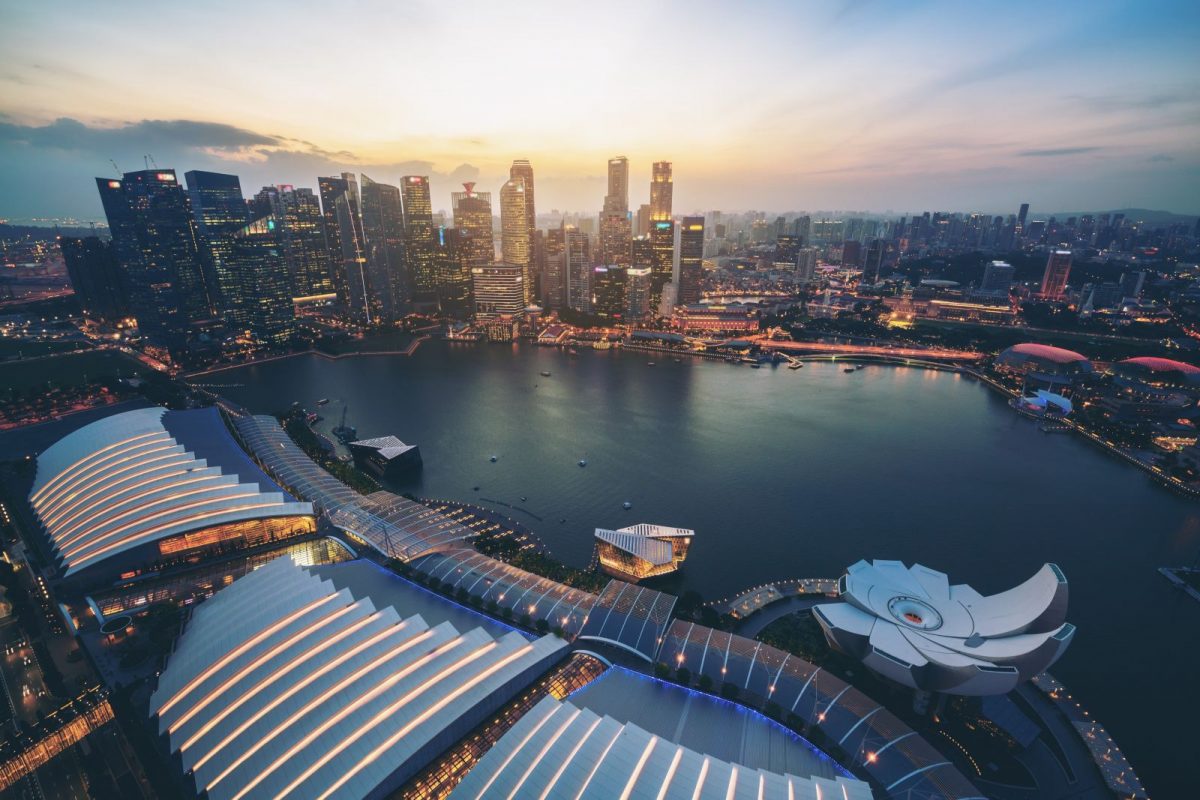
Singapore skyline representing property equity release, bridging loans, and asset-backed finance solutions for property owners in Singapore

Starting today, Global Mortgage Group is launching a dedicated content series covering every aspect of releasing equity from Singapore private property, for every property type, every owner profile, and every situation the conventional banking system cannot serve

If you own private property in Singapore, a condominium, a shophouse, a Good Class Bungalow, a landed home, a commercial unit, or a hospitality asset, there is a very good chance that you are sitting on substantial equity that you cannot access through the conventional Singapore banking system. Not because of anything wrong with your financial position. Because of a regulatory framework called the TDSR, because of how Singapore banks assess overseas income, because of how they treat business owner earnings, or simply because your property type does not fit their product parameters.

Global Mortgage Group has been solving this problem, quietly, efficiently, and repeatedly, for property owners across Singapore and the region for years. Today we are making everything we know publicly available, in a comprehensive content series we are calling Unlocked in Singapore.

What Is Unlocked in Singapore?

Unlocked in Singapore is a 17-article content series covering every aspect of Singapore property equity release, bridging loans, home equity loans, and asset-backed financing. Each article is written for a specific audience, a specific property type, a specific borrower profile, a specific nationality, or a specific financial situation. Together, they form the most comprehensive resource available on Singapore property liquidity for high-net-worth individuals, regional investors, and the financial professionals who advise them.

The series launches today and will be published in full over the coming weeks. Every article is available on GMG's website, and each one is free to read, share, and act on.

Why We Are Publishing This

The answer is simple. Too many Singapore property owners, people with extraordinary asset wealth, are being told by their banks that they cannot borrow against their property, without anyone explaining clearly why, what their options are, or where they can go for a solution. The information gap is real and it is causing real financial harm.

A retired Singapore citizen who owns a fully paid Good Class Bungalow worth S$15 million should be able to access S$5 million of that value. A Malaysian permanent resident who has lived in Singapore for fifteen years and built a successful business should be able to borrow against their Bukit Timah landed property. An Indonesian family that has owned a Tanjong Pagar shophouse for a decade should be able to access its equity without being told that their Jakarta income does not satisfy a Singapore bank's income verification requirements.

These people exist. They come to us every week. And the first thing most of them say is: I did not know this was possible. I thought the bank's answer was the only answer.

It is not. And Unlocked in Singapore is how we make that clear to everyone who needs to hear it.

Who This Series Is For

Unlocked in Singapore is written for three distinct audiences, and we have made sure every article in the series speaks clearly to all three.

Singapore property owners who need equity release

If you own Singapore private property and need capital, for a business, an investment, an overseas acquisition, a family commitment, education funding, or any other purpose, and your bank has declined you or you suspect it will, this series maps every option available to you. Whether you are a Singapore citizen, a permanent resident, a foreign national, an overseas Singaporean, a retiree, or a business owner, there is an article in this series written specifically for your situation.

Regional and international investors in Singapore property

Indonesians, Malaysians, Hong Kong residents, Chinese national investors, Indians, and other regional owners of Singapore private property face specific equity release barriers that are different from those faced by Singapore residents. The Unlocked in Singapore series includes dedicated articles for each of these ownership groups, explaining the specific barriers and the specific solutions available.

Private bankers, wealth managers, and client advisors

If you are a private banker, wealth manager, client advisor, relationship manager, financial planner, or any client-facing financial professional, and you have clients who own Singapore property and cannot access equity through your institution, this series includes an article written specifically for you. It covers what GMG can provide that your institution cannot, how our referral and white-label arrangements work, and how introducing a client to GMG strengthens rather than diminishes your relationship with them.

The Full Series, What We Are Publishing

Here is everything that is coming in the Unlocked in Singapore series, in the order it will be published.

The Foundation Articles

  • The Complete Guide to Singapore Property Equity Release, the hub article covering every product, every property type, every borrower profile, and every route to equity release from Singapore private property
  • Your Singapore Property Is Worth Millions. Your Bank Won't Lend Against It. The definitive explanation of the TDSR barrier, who it affects, and what to do about it
  • I Own Singapore Property and Need Cash. What Are My Options? A plain-English guide for property owners who are not familiar with financial terminology and simply need to understand what is available to them
  • When Your Institution Cannot Help, the guide for private bankers, wealth managers, and client advisors on how to solve Singapore property equity release mandates for clients their institution cannot serve

By Property Type

  • Good Class Bungalows and Landed Property, equity release and bridging loans for owners of Singapore's most prestigious and most bank-underserved landed assets
  • Conservation Shophouses, bridging loans and asset-backed financing for freehold and conservation shophouse owners across Tanjong Pagar, Chinatown, Boat Quay, Kampong Glam, and Singapore's other shophouse precincts
  • Prime District Condominiums, equity release for owners in Districts 9, 10, 11, and Sentosa Cove, including foreign national and non-resident owners who cannot access conventional bank home equity loans
  • Commercial and Hospitality Assets, bridging loans and private credit for owners of Singapore office strata, retail units, industrial property, boutique hotels, and serviced apartments

By Borrower Profile

  • Business Owners and Self-Employed Professionals, how Singapore entrepreneurs, company directors, and self-employed professionals can access property equity when the TDSR director's fee calculation makes conventional bank equity release impossible
  • Retirees and Semi-Retired Owners, equity release without monthly repayments for retired Singapore property owners whose CPF Life income fails the bank's TDSR test
  • Foreign Nationals and Non-Residents, asset-backed bridging loans for non-residents of all nationalities who own Singapore private property and earn their income outside Singapore
  • Family Offices and Ultra-High-Net-Worth Principals, private credit facilities and Lombard-style property-backed financing for Singapore family offices and UHNW individuals beyond the scope of retail bank products

By Nationality and Origin

  • Indonesian and Southeast Asian Owners, bridging loans and asset-backed financing for Indonesian, Thai, Vietnamese, Filipino, and other ASEAN investors in Singapore property
  • Malaysian Owners, equity release for Malaysian nationals, Singapore permanent residents with Malaysian income, and cross-border investors on both sides of the Causeway
  • Hong Kong and Chinese National Owners, bridging loans for Hong Kong residents who have relocated capital to Singapore and for Chinese national investors with PRC income and holding structures
  • Indian and NRI Owners, equity release for Indian nationals, non-resident Indians, and Singapore residents of Indian origin with complex income structures

The Strategy Article

  • Using Your Singapore Property Equity to Buy Overseas Real Estate, how to use Singapore equity release to fund property acquisitions in Australia, the United Kingdom, the United States, and Thailand without selling your Singapore asset

What Every Article Has in Common

Every article in the Unlocked in Singapore series is written to the same standard. Each one explains the specific barrier the relevant audience faces, describes the solution GMG provides, uses real representative scenarios to illustrate how the solution works in practice, and includes a clear path to starting a conversation with Donald Klip directly.

None of the articles contain jargon without explanation. None of them assume prior knowledge of Singapore mortgage regulations, TDSR, LTV ratios, or bridging loan structures. And none of them contain anything that is not directly useful to someone who owns Singapore property and needs to understand their options.

A Note on Who We Are

Global Mortgage Group is headquartered in Singapore. We are a specialist cross-border property finance firm operating across more than 23 jurisdictions, with particular depth in Singapore, the United States, Australia, the United Kingdom, and Southeast Asia. Our Singapore practice focuses on equity release, bridging loans, and asset-backed private credit for the high-net-worth individuals, regional investors, and family offices that the conventional Singapore bank system systematically underserves.

We have originated over SGD 400 million in Singapore bridging loans over approximately three years, working with clients across the full spectrum of Singapore private property, from District 10 condominiums to conservation shophouses to Good Class Bungalows to hospitality assets. Our clients include Singapore citizens, Malaysian permanent residents, Indonesian investors, Hong Kong family offices, Chinese national shophouse owners, NRI technology executives, and overseas Singaporeans who have been told by banks in three countries that their income does not qualify.

Donald Klip, GMG's Founder, leads the Singapore equity release and bridging loan practice personally. If you have a Singapore property equity release question, whether you are a property owner, a financial professional, or a regional investor, the best starting point is a direct conversation with Donald.

How to Follow the Series

Every article in the Unlocked in Singapore series will be published on GMG's website at www.gmg.asia as it goes live over the coming weeks. If you want to be notified when new articles are published, or if you want access to the full series immediately, contact Donald Klip directly.

If you have a specific situation, a property, a loan amount, a purpose, and a bank that has declined you or that you know will, you do not need to wait for the relevant article to be published. Contact Donald now. The conversation is confidential, there is no obligation, and in most cases GMG can provide an indicative terms letter within a few days of the first conversation.

Contact Donald Klip

Email: [email protected]
Phone: +65 9773-0273
Website: gmg.asia

The Unlocked in Singapore series begins today. If your Singapore property value has been telling you one thing and your bank has been telling you another, we are about to give you the full picture.

UNLOCKED IN AMERICA: Malaysian High-Net-Worth Owners of US Real Estate — The Complete Equity Release Guide

Malaysian HNW US real estate equity release Los Angeles Sdn Bhd Singapore MYR

How Malaysian nationals and Malaysia-based high-net-worth individuals, including the significant ethnic Chinese Malaysian community that manages international capital through Singapore, who own property in Los Angeles, Irvine, San Francisco, Silicon Valley, and across America's premium real estate markets can release the equity they have built, with the Singapore-headquartered expertise of a lender that understands the Malaysia-Singapore capital corridor and the ethnic Chinese Malaysian financial profile from the inside 

Malaysia's high-net-worth community has a long-established and deeply considered relationship with international real estate investment, driven by the strategic logic of geographic diversification, the educational connections between Malaysian families and American universities, and the capital management instinct of a community that has historically maintained significant offshore wealth positions as a hedge against domestic political and economic uncertainty. 

Malaysian high-net-worth owners of US real estate are found primarily in California, the San Gabriel Valley and Irvine in particular, where the Malaysian-American community and Malaysian high-net-worth buyers have established residential positions that in many cases go back to the 1980s and 1990s, anchored by the educational draw of UCLA, USC, and UCI. Silicon Valley has attracted the ethnic Chinese Malaysian technology professional community. San Francisco has drawn Malaysian buyers who value the city's cultural density. Hawaii has attracted Malaysian lifestyle and resort buyers. 

The ethnic Chinese Malaysian community represents the most significant segment of Malaysian high-net-worth US real estate ownership. Ethnic Chinese Malaysians, who represent a disproportionate share of Malaysian private wealth, have managed their international capital through Singapore for generations, routing Malaysian business income through Singapore holding companies and deploying from Singapore into international assets including US real estate. This Singapore bridge is the defining characteristic of ethnic Chinese Malaysian international capital management, and it is a structure that GMG's Singapore headquarters and team understand from direct operational experience. 

This is the Unlocked in America: Malaysian High-Net-Worth Owners of US Real Estate guide, part of the Unlocked in America series by Global Mortgage Group and America Mortgages, the only US mortgage lender focused exclusively on overseas borrowers. 

The Malaysian Equity Release Barrier 

MYR income and Bank Negara Malaysia regulations 

Malaysian high-net-worth income is earned in Malaysian ringgit (MYR), documented on LHDN (Lembaga Hasil Dalam Negeri, Malaysian Inland Revenue Board) filings, and structured through Malaysian Sdn Bhd (Sendirian Berhad, private limited company) entities that US mortgage underwriters cannot assess. Bank Negara Malaysia's foreign exchange administration rules govern the outward movement of capital and shape how Malaysian high-net-worth families have historically structured their US real estate acquisitions. 

The Singapore bridge: the ethnic Chinese Malaysian capital structure 

The standard international capital management structure for ethnic Chinese Malaysian high-net-worth families routes Malaysian business income, earned through Malaysian Sdn Bhd companies, through Singapore holding companies established either as Singapore private limited companies or as Singapore Variable Capital Companies (VCCs) within Singapore's family office framework. The Singapore entity manages the international portfolio, including US real estate positions held directly or through US LLCs. 

GMG's Singapore team works with this structure daily, it is the standard approach of the ethnic Chinese Malaysian high-net-worth community and one that our Singapore-based team can assess with direct familiarity rather than generic international assessment framework. 

The education property dimension 

Malaysian high-net-worth families with children at UCLA, USC, UCI, or other California universities frequently purchased residential property near those universities during the students' academic years and have retained those properties long after graduation. These education-property holdings, purchased in the 1990s and 2000s at prices that are now dramatically below current market values, represent one of the most consistent and most underappreciated equity release opportunities in the Malaysian high-net-worth US property market. For this specific dimension, GMG refers Malaysian families to the Unlocked in America: College Towns guide for detailed coverage of the university town equity release opportunity. 

What Malaysian High-Net-Worth Owners Have Built in US Real Estate 

Los Angeles and the San Gabriel Valley 

Malaysian high-net-worth buyers have established significant residential positions in the San Gabriel Valley: Arcadia, Rowland Heights, and the broader eastern LA communities, and in Irvine's premium planned communities. These California positions, many purchased in the 1990s and early 2000s for USD 300,000 to 700,000, are now worth USD 1 to 2.5 million. 

Silicon Valley and San Francisco 

The ethnic Chinese Malaysian technology professional community in Silicon Valley, engineers, entrepreneurs, and technology executives who have built careers at the major Bay Area technology companies, has accumulated residential equity in Cupertino, San Jose, and the Peninsula communities. San Francisco has attracted Malaysian buyers who value the city's proximity to the Bay Area technology ecosystem. 

GMG's Equity Release Solution for Malaysian High-Net-Worth Owners 

  • Loan size: USD 500,000 to USD 100,000,000+ 
  • Term: 6 to 24 months 
  • LTV: Up to 65–70% of independently appraised US market value 
  • Interest: Retained or rolled up — no monthly payment 
  • No US credit history or SSN required 
  • MYR income and Malaysian Sdn Bhd corporate income — considered within GMG's asset-led assessment 
  • Singapore holding companies with Malaysian beneficial owners, VCC structures, BVI and Cayman entities — all considered with GMG Singapore's direct expertise
  • GMG Singapore team: available for in-person consultation 
  • Security: Los Angeles, San Gabriel Valley, Irvine, Silicon Valley, San Francisco, Hawaii, and all major US markets with significant Malaysian high-net-worth ownership 
  • Timeline: Term sheet 24–48 hours; drawdown 10–20 business days 

Contact Donald Klip 

Email: [email protected]
Phone: +65 9773-0273
Website: gmg.asia
America Mortgages: americamortgages.com

UNLOCKED IN AMERICA: Filipino High-Net-Worth Owners of US Real Estate — The Complete Equity Release Guide

Filipino HNW Filipino American US real estate equity release San Francisco PHP OFW

How Filipino nationals, Filipino-Americans, and Philippines-based high-net-worth individuals who own property in San Francisco, Los Angeles, San Diego, Las Vegas, and across America's premium real estate markets can release the equity they have built across five decades of Filipino investment in American residential real estate, without PHP income complexity, BSP foreign exchange regulations, and the American lending system's inability to recognise OFW remittance income and Filipino corporate structures standing between them and their own property wealth 

The Filipino-American community is the second largest Asian-American community in the United States, a community that has been building American residential equity since the 1960s with a consistency, a depth, and a geographic spread that makes it one of the most significant concentrations of Asian-American residential property wealth in the country. Filipino-American families in San Francisco, Los Angeles, San Diego, Las Vegas, and across every major American metropolitan area have accumulated decades of equity in properties that were purchased at prices that now seem historical, and for most of that community, that equity has never been the subject of a serious equity release conversation. 

Filipino high-net-worth owners of US real estate span two distinct communities with different financial profiles and different equity release needs. The Filipino-American community, families who immigrated to the United States, built careers and businesses, purchased residential property, and accumulated equity over decades of consistent holding, represents the largest and most historically established layer of Filipino US real estate ownership. The Philippines-based high-net-worth community, the growing class of Filipino business families and entrepreneurs who have built significant wealth in the Philippines and who have diversified internationally into US real estate as part of a deliberate capital management strategy, represents a newer but increasingly significant layer. 

Both communities face equity release barriers. The Filipino-American faces the standard international high-net-worth barrier of no US credit history (for those who have not established US banking relationships) and income structures, including OFW remittance income, business distributions from Philippine companies, and the combination of US and Philippine income that characterises many Filipino-American households, that the conventional US mortgage system handles poorly. The Philippines-based high-net-worth individual faces the full range of international barriers: PHP income, BSP foreign exchange regulations, Philippine corporate structures, and the absence of any US financial footprint. 

This is the Unlocked in America: Filipino High-Net-Worth Owners of US Real Estate guide, part of the Unlocked in America series by Global Mortgage Group and America Mortgages, the only US mortgage lender focused exclusively on overseas borrowers. 

The Filipino-Specific Equity Release Barrier 

OFW remittance income and non-standard income documentation 

The Overseas Filipino Worker (OFW) remittance income mode, in which Filipino nationals working abroad send remittances to family members in the Philippines who use those funds to build and manage assets including US real estate, creates a specific income documentation challenge. The connection between the ultimate beneficial owner of the US property, the income source, and the documentation trail is often non-linear in ways that conventional US mortgage underwriters cannot navigate. GMG's asset-led assessment accommodates non-standard income documentation for Filipino borrowers without requiring the income trail to conform to US mortgage documentation standards. 

PHP income and BSP foreign exchange regulations 

Filipino high-net-worth income is earned in Philippine pesos (PHP), documented on BIR (Bureau of Internal Revenue) filings, and structured through Philippine corporate entities, the Corporation (stock corporation) and the One Person Corporation (OPC) being the most common high-net-worth holding vehicles. The Bangko Sentral ng Pilipinas (BSP) regulates foreign exchange transactions and outward capital flows in ways that shape how Philippines-based high-net-worth buyers have historically funded and managed their US real estate positions. 

GMG accommodates PHP income and Philippine corporate structures within our asset-led equity release assessment framework. 

What Filipino High-Net-Worth Owners Have Built in US Real Estate 

San Francisco and the Bay Area: The Heart of Filipino-American Residential Equity 

San Francisco and the broader Bay Area, including the communities of Daly City, South San Francisco, Vallejo, and the Peninsula, has the largest concentration of Filipino-American residential property equity in the United States. Filipino-American families have been building Bay Area residential equity since the 1960s when Filipino nurses, doctors, and healthcare professionals were recruited to staff California's hospitals and medical centres. Properties purchased in Daly City and South San Francisco in the 1970s and 1980s for USD 60,000 to 150,000 are now worth USD 700,000 to 1.5 million, appreciation of tenfold or more. In San Francisco's Pacific Heights, Richmond, and Sunset districts, properties purchased by Filipino-American professional families in the 1980s and 1990s for USD 200,000 to 400,000 are now worth USD 1.5 to 3.5 million. 

Los Angeles: Pasadena, Carson, and the Filipino-American Community 

The Los Angeles Filipino-American community, concentrated in Pasadena, Carson, Eagle Rock, and the communities of the South Bay, has built substantial residential equity across four decades of consistent holding. Pasadena properties purchased by Filipino-American professional families in the 1990s for USD 300,000 to 500,000 are now worth USD 900,000 to 1.8 million. 

San Diego: The Naval Connection and Four Decades of Equity 

San Diego's Filipino-American community, one of the largest in the United States, built around the US Navy's historical recruitment of Filipino nationals as US Navy stewards and the subsequent family immigration that followed, has been building San Diego residential equity since the 1960s. Properties purchased in San Diego's Chula Vista, National City, and Mira Mesa communities in the 1970s and 1980s are now worth multiples of their original purchase prices. 

Las Vegas: The Filipino-American Hospitality Community 

Las Vegas has attracted a significant Filipino-American community driven by the hospitality and gaming industry's historical employment of Filipino workers. Residential equity built by Filipino-American families in Las Vegas over three decades represents a significant and largely untapped equity release opportunity. 

GMG's Equity Release Solution for Filipino High-Net-Worth Owners 

  • Loan size: USD 500,000 to USD 100,000,000+ 
  • Term: 6 to 24 months 
  • LTV: Up to 65–70% of independently appraised US market value
  • Interest: Retained or rolled up — no monthly payment 
  • No US credit history required 
  • No Social Security Number required 
  • PHP income, OFW remittance income structures, and Philippine corporate income — all considered within asset-led assessment 
  • Philippine corporations, BVI entities, and US LLCs with Filipino beneficial owners — all considered 
  • Long-held properties with informal documentation — GMG works with existing documentation 
  • Security: San Francisco, Daly City, Los Angeles, Pasadena, San Diego, Las Vegas, and all major US markets with significant Filipino high-net-worth ownership
  • Timeline: Term sheet 24–48 hours; drawdown 10–20 business days 

Contact Donald Klip 

Email: [email protected]
Phone: +65 9773-0273
Website: gmg.asia
America Mortgages: americamortgages.com

UNLOCKED IN AMERICA: Indonesian High-Net-Worth Owners of US Real Estate — The Complete Equity Release Guide

Indonesian HNW US real estate equity release Los Angeles PT Singapore IDR

How Indonesian nationals and Indonesia-based high-net-worth individuals, including the significant ethnic Chinese Indonesian community that manages international capital through Singapore, who own property in Los Angeles, Irvine, San Francisco, Hawaii, and across America's premium real estate markets can release the equity they have built, with the Southeast Asia expertise of a lender headquartered in Singapore that understands the Indonesia-Singapore capital flow that defines Indonesian high-net-worth international investment 

Indonesia, the world's fourth most populous country and Southeast Asia's largest economy, has produced a high-net-worth community whose international capital allocation has been growing steadily and whose US real estate investment reflects the increasing international sophistication of Indonesian wealth management. 

Indonesian high-net-worth owners of US real estate are a genuinely distinct community whose financial profile reflects several specific characteristics. The ethnic Chinese Indonesian community, which represents a disproportionate share of Indonesian private wealth and whose business networks span Indonesia, Singapore, and the broader Chinese diaspora, manages international capital through structures that combine Indonesian operating companies, Singapore holding entities, and offshore vehicles in arrangements that reflect both the Indonesian regulatory environment and the ethnic Chinese business family's instinct for international diversification. The broader Indonesian high-net-worth community has been building US real estate positions through Singapore-based wealth management relationships that provide the offshore capital management infrastructure that Indonesian domestic banking cannot offer. 

Global Mortgage Group's Singapore headquarters and our direct Southeast Asia regional expertise make us uniquely positioned to serve Indonesian high-net-worth owners of US real estate. We understand the Indonesia-Singapore capital flow, the routing of Indonesian high-net-worth capital through Singapore family offices, Singapore private banks, and Singapore holding companies that is the standard international capital management approach for Indonesian high-net-worth families. We understand the PT (Perseroan Terbatas) corporate structure and the Indonesian regulatory environment. And we can engage with Indonesian high-net-worth clients and their Singapore-based advisors in the language and framework of their existing wealth management relationships. 

This is the Unlocked in America: Indonesian High-Net-Worth Owners of US Real Estate guide, part of the Unlocked in America series by Global Mortgage Group and America Mortgages

The Indonesia-Specific Equity Release Barrier 

IDR income and Bank Indonesia regulations 

Indonesian high-net-worth income is earned in Indonesian rupiah (IDR), documented on Indonesian tax returns, and structured through PT (Perseroan Terbatas, limited liability company) entities that are entirely outside the assessment capability of conventional US mortgage underwriters. Bank Indonesia's foreign exchange regulations govern the outward movement of capital by Indonesian residents and shape the offshore holding structures that Indonesian high-net-worth families have used to acquire and manage their US real estate positions. 

The Singapore bridge and the ethnic Chinese Indonesian structure 

The most common approach to Indonesian high-net-worth international real estate investment, including US real estate, runs through Singapore. The Indonesian high-net-worth family establishes a Singapore holding company or works through a Singapore family office or private bank to manage and deploy international capital. The Singapore entity acquires the US real estate directly or through a US LLC. The Indonesian individual or PT company is the ultimate beneficial owner. The entire structure is legitimate, tax-efficient, and entirely appropriate, but entirely outside the assessment capability of conventional US equity release lenders. 

GMG's Singapore team is specifically experienced with this Indonesia-Singapore structure. We assess the ultimate Indonesian beneficial owner, the Singapore holding entity, and the US property value through a single integrated due diligence process that reflects our direct familiarity with how Indonesian high-net-worth international capital is actually managed. 

What Indonesian High-Net-Worth Owners Have Built in US Real Estate 

Los Angeles and the San Gabriel Valley 

Indonesian high-net-worth buyers have concentrated in the San Gabriel Valley communities: Arcadia, Rowland Heights, and the broader eastern LA suburban market, alongside the Irvine and Orange County premium residential market. These communities offer the combination of established Asian-American infrastructure, school district quality, and relative accessibility that appeals to Indonesian families establishing their first US residential base. 

San Francisco, Silicon Valley, and Hawaii 

The Indonesian technology professional community in Silicon Valley, and the growing Indonesian entrepreneurial presence in the Bay Area, has built residential equity in the Peninsula and South Bay markets. Hawaii has attracted Indonesian high-net-worth resort and lifestyle buyers, with Maui and Oahu the primary destinations. 

GMG's Equity Release Solution for Indonesian High-Net-Worth Owners 

  • Loan size: USD 500,000 to USD 100,000,000+ 
  • Term: 6 to 24 months 
  • LTV: Up to 65–70% of independently appraised US market value 
  • Interest: Retained or rolled up, no monthly payment 
  • No US credit history or SSN required 
  • IDR income and Indonesian PT corporate income, considered within GMG's asset-led assessment with direct Southeast Asia expertise 
  • Singapore holding companies with Indonesian beneficial owners, BVI and Cayman entities, Indonesian PT structures, all considered 
  • GMG Singapore team: available for in-person consultation, the same team that manages GMG's Southeast Asia regional operations 
  • Security: Los Angeles, San Gabriel Valley, Irvine, San Francisco, Silicon Valley, Hawaii, and all major US markets with significant Indonesian high-net-worth ownership 
  • Timeline: Term sheet 24–48 hours; drawdown 10–20 business days 

Contact Donald Klip 

Email: [email protected]
Phone: +65 9773-0273
Website: gmg.asia
America Mortgages: americamortgages.com

UNLOCKED IN AMERICA: Mexican High-Net-Worth Owners of US Real Estate — The Complete Equity Release Guide

Mexican HNW US real estate equity release Texas California MXN SA de CV

How Mexican nationals and Mexico-based high-net-worth individuals who own property in Texas, California, Arizona, Miami, New York, and across America's premium real estate markets can release the equity they have built across generations of Mexican investment in American residential real estate, without MXN income complexity, Mexican corporate structures, and cross-border lending barriers standing between them and their own American property wealth 

Mexico's relationship with American real estate is the most geographically intimate and the most historically deep of any country's international property investment in the United States. The 2,000-mile shared border between Mexico and the United States, one of the most consequential borders in the world, has created a bilateral real estate investment relationship that is uniquely layered: part diaspora, part business investment, part lifestyle, and part strategic capital preservation. 

Mexican high-net-worth owners of US real estate are found across every significant American market. In Texas, where Mexican business families have been acquiring commercial and residential property in San Antonio, Dallas, Houston, and the border cities for generations, creating one of the deepest concentrations of Mexican high-net-worth US property equity of any state. In California, where the Mexican-American community and Mexican high-net-worth buyers have built substantial equity in Los Angeles, San Diego, and the broader California market over four decades. In Arizona, where Scottsdale, Phoenix, and the desert resort communities have attracted consistent Mexican high-net-worth investment from the Sonoran border community. In Miami, where Mexican buyers have established a consistent and growing presence in the Latin-inflected lifestyle market. In New York, where the growing Mexican professional and business community has built Manhattan and outer borough residential equity. 

The Mexican high-net-worth equity release barrier reflects the specific complexity of cross-border Mexican-American property finance: MXN income documented through SAT (Servicio de Administración Tributaria) filings, Mexican corporate structures (SA de CV and S de RL de CV), and the offshore holding entities, Cayman and Panama structures, that Mexican high-net-worth families use to manage their international real estate positions. 

This is the Unlocked in America: Mexican High-Net-Worth Owners of US Real Estate guide, part of the Unlocked in America series by Global Mortgage Group and America Mortgages

The Mexico-Specific Equity Release Barrier 

MXN income and SAT documentation 

Mexican high-net-worth income, from manufacturing businesses, agricultural enterprises, retail operations, financial services, technology companies, or the real estate portfolios that many Mexican business families hold across both sides of the border, is earned in Mexican pesos (MXN), documented on SAT declarations, and structured through Mexican corporate entities that US mortgage underwriters cannot assess. 

The SA de CV (Sociedad Anónima de Capital Variable) and the S de RL de CV (Sociedad de Responsabilidad Limitada de Capital Variable) are the standard Mexican corporate vehicles, equivalent to the US corporation and LLC respectively, that hold Mexican business wealth. Personal income declared by the individual Mexican high-net-worth owner is frequently a small fraction of the actual economic capacity of the family, with the majority of wealth held and managed at the corporate level. 

GMG's asset-led assessment accommodates MXN income and Mexican corporate structures without requiring personal income to reflect actual wealth or requiring the corporate structure to be unwound as a condition of equity release. 

Cross-border complexity and proximity paradox 

Mexico's geographic proximity to the United States creates what might be called the Mexican proximity paradox: the closest major international neighbour is simultaneously the most cross-border active, with the highest volume of bilateral trade, investment, and personal movement, and yet systematically excluded from the US conventional mortgage market by the same barriers that affect buyers from the other side of the world. A Mexican business family that crosses the border weekly for business purposes, that banks in both Texas and Tamaulipas, and that has owned San Antonio real estate for twenty years finds that the American lending system treats them with the same blunt foreign national exclusion that it applies to a first-time buyer from Singapore or Germany. 

GMG's cross-border equity release expertise is specifically designed to work efficiently for Mexican high-net-worth owners, accommodating the genuine complexity of the Mexico-US financial relationship while delivering a facility in 10 to 20 business days. 

What Mexican High-Net-Worth Owners Have Built in US Real Estate 

Texas: The Generational Mexican High-Net-Worth Market 

Texas is the most historically significant and most geographically concentrated US state for Mexican high-net-worth property ownership. The border cities: Laredo, El Paso, McAllen, have been home to Mexican business families with US real estate positions for generations, reflecting the commercial integration of the Texas-Mexico border economy. San Antonio, where the Mexican-American cultural connection is the deepest of any major Texas city, has attracted Mexican high-net-worth investment in the Alamo Heights, Terrell Hills, and the premium residential communities for decades. 

Dallas, Houston, and Austin have attracted newer waves of Mexican high-net-worth investment, driven by the relocation of Mexican business operations northward, the Texas technology industry's growing connection to Mexico's own technology sector, and the zero state income tax environment that makes Texas the most tax-efficient American state for high-net-worth Mexican investors. 

San Antonio properties purchased by Mexican business families in the 1990s for USD 300,000 to 600,000 are now worth USD 900,000 to 2 million. Dallas Highland Park and Preston Hollow properties acquired in the early 2000s are now worth multiples of their purchase prices. 

California: San Diego, Los Angeles, and the Pacific Coast 

San Diego, the closest major US city to Mexico and the natural American base for Mexican business families from Baja California Norte, has attracted the most consistent and most historically deep Mexican high-net-worth property investment of any California city. La Jolla, Del Mar, Rancho Santa Fe, and Coronado have all attracted significant Mexican high-net-worth ownership. La Jolla oceanfront properties purchased in the 1990s for USD 800,000 to 1.5 million are now worth USD 4 to 8 million. 

Los Angeles has attracted Mexican business, entertainment, and technology industry buyers, concentrated in Beverly Hills, the Westside, and the premium communities of the San Fernando Valley. Arizona's Scottsdale and Paradise Valley have attracted the Mexican border community's lifestyle and second home investment. 

Miami: The Latin Gateway 

Miami's Spanish-speaking character, its Latin lifestyle infrastructure, and its position as the natural American commercial hub for Latin American business make it a consistent destination for Mexican high-net-worth buyers seeking a Miami base that combines lifestyle quality with business utility. 

GMG's Equity Release Solution for Mexican High-Net-Worth Owners 

  • Loan size: USD 500,000 to USD 100,000,000+ 
  • Term: 6 to 24 months 
  • LTV: Up to 65–70% of independently appraised US market value 
  • Interest: Retained or rolled up, no monthly payment 
  • No US credit history or SSN required 
  • MXN income and Mexican SA de CV and S de RL de CV corporate structures — considered within asset-led assessment without requiring restructuring 
  • Cayman, Panama, and BVI entities with Mexican beneficial owners, all considered 
  • Security: Texas (San Antonio, Dallas, Houston, Austin), California (San Diego, Los Angeles), Arizona, Miami, and all major US markets with significant Mexican high-net-worth ownership 
  • Timeline: Term sheet 24–48 hours; drawdown 10–20 business days 

Contact Donald Klip 

Email: [email protected]
Phone: +65 9773-0273
Website: gmg.asia
America Mortgages: americamortgages.com

UNLOCKED IN AMERICA: Colombian High-Net-Worth Owners of US Real Estate — The Complete Equity Release Guide

Colombian HNW US real estate equity release Miami Coral Gables COP AML

How Colombian nationals and Colombia-based high-net-worth individuals who own property in Miami, Brickell, Coral Gables, Coconut Grove, New York, and across America's premium real estate markets can release the equity they have built across decades of Colombian investment in American residential real estate, without COP income complexity, Colombian holding structures, and the American lending system's historical caution around Colombian borrowers standing between them and their own property wealth 

Colombia's relationship with American real estate is one of the most significant and most consistently growing of any Latin American country's investment in the United States. Colombian high-net-worth families have been among the most consistent international buyers in Miami's premium residential market since the 1980s, building positions that have appreciated dramatically and that represent, in many cases, the most significant and most strategically important component of the Colombian high-net-worth family's international wealth portfolio. 

The Colombian high-net-worth owner of US real estate is a specific and distinct financial profile that deserves to be understood on its own terms rather than lumped into a generic Latin American borrower category. The Colombian business family whose wealth comes from legitimate commerce: manufacturing, agriculture, financial services, technology, retail, construction, has built their US real estate position as a deliberate act of international capital diversification, motivated by the same strategic logic that drives high-net-worth families from every country to seek dollar-denominated asset positions outside their domestic market: currency stability, legal certainty, property rights protection, and the capital preservation that comes from owning an asset in the world's most transparent and most liquid real estate market. 

Colombia's remarkable transformation over the past two decades, from a country associated with instability to one of Latin America's fastest-growing and most dynamic economies, with a rapidly expanding high-net-worth population, a thriving technology sector, and a business community that is increasingly internationally oriented, has produced a new generation of Colombian high-net-worth buyers whose US real estate investment reflects confidence and ambition rather than capital flight anxiety. 

This is the Unlocked in America: Colombian High-Net-Worth Owners of US Real Estate guide, part of the Unlocked in America series by Global Mortgage Group and America Mortgages, the only US mortgage lender focused exclusively on overseas borrowers. 

The Colombia-Specific Equity Release Barrier 

COP income and DIAN documentation complexity 

Colombian high-net-worth income is earned in Colombian pesos (COP), documented on DIAN (Dirección de Impuestos y Aduanas Nacionales, Colombia's tax authority) filings, and structured through Colombian corporate entities, Sociedad Anónima (SA), Sociedad de Responsabilidad Limitada (Ltda), and Sociedad por Acciones Simplificada (SAS), that are entirely outside the assessment capability of conventional US mortgage underwriters. 

Colombian high-net-worth income frequently combines: COP business distributions from Colombian operating companies; USD income from international business activities or export contracts; investment returns from Colombian and international portfolios; and in some cases dividends and capital gains from Colombian public company holdings. This multi-currency, multi-source income profile, which is genuinely complex even by the standards of international high-net-worth finance, cannot be mapped onto US mortgage documentation standards in any meaningful way. 

GMG's asset-led assessment accommodates the full complexity of Colombian high-net-worth income without requiring it to conform to US mortgage documentation standards. We assess the US property value and the exit strategy, the Colombian income documentation informs our overall understanding within our standard beneficial ownership due diligence framework. 

Offshore holding structures and capital management 

Colombian high-net-worth families have historically managed their international capital through offshore structures , Cayman Islands companies, BVI entities, Panama corporations, and in more recent years Uruguayan holding companies, that serve legitimate asset protection, estate planning, and capital management purposes. These structures are the standard vehicles for Colombian high-net-worth international real estate investment and are entirely outside the assessment capability of conventional US equity release lenders. 

GMG lends against these structures subject to thorough and efficient beneficial ownership due diligence. We assess the ultimate Colombian beneficial owner and the US property value, the offshore structure is a compliance matter to be managed, not an automatic barrier to proceeding. 

The historical compliance sensitivity 

Colombia's historical association with drug-related capital, an association that has never accurately characterised the legitimate Colombian high-net-worth business community but that has cast a shadow over all Colombian borrower applications at conventional US financial institutions, has created a compliance culture in which many US lenders apply heightened scrutiny to Colombian borrowers that goes beyond what the regulatory environment actually requires. 

GMG applies thorough, consistent, and appropriate AML and beneficial ownership due diligence to all borrowers regardless of nationality. For Colombian high-net-worth borrowers with legitimate business wealth, our due diligence process is designed to efficiently establish the legitimacy of the source of funds and the beneficial ownership structure, not to use Colombian nationality as a proxy for elevated risk that is not otherwise evidenced. 

What Colombian High-Net-Worth Owners Have Built in US Real Estate 

Miami: Brickell, Coral Gables, and the Colombian Capital of America 

Miami is the primary and dominant US real estate market for Colombian high-net-worth buyers, a position the Colombian community has built through decades of consistent investment that has made Colombian buyers one of the most financially significant international communities in the Miami residential market. 

Colombian high-net-worth buyers are concentrated across Miami's premium residential markets: Brickell, where Colombian business and financial professionals who have established Miami operational bases have purchased in the premium condominium towers that define the financial district's residential skyline. Coral Gables, where Colombian professional and business families have built multi-generational residential presences in the Mediterranean-architecture community that most closely mirrors the residential character of Bogotá's premium neighbourhoods. Coconut Grove, where Colombian buyers value the combination of waterfront lifestyle and the established Latin American community that makes Coconut Grove the most genuinely Latin residential neighbourhood in Miami. Key Biscayne, where the privacy and the island character attract Colombian ultra-high-net-worth buyers who value the combination of security and lifestyle quality. 

Brickell and Coconut Grove condominiums purchased by Colombian high-net-worth buyers in the early 2000s for USD 250,000 to 600,000 are now worth USD 900,000 to 2.5 million. Coral Gables single-family homes acquired for USD 500,000 to 1 million in the 1990s and early 2000s are now worth USD 2 to 5 million. Key Biscayne waterfront properties purchased in the 2000s for USD 800,000 to 2 million are now worth USD 3 to 7 million. 

New York: The Colombian Professional and Business Community 

New York's Colombian high-net-worth community, concentrated in Manhattan and in the premium Queens and northern New Jersey communities, has built consistent residential equity across decades of Colombian professional and business investment in the New York market. Colombian financial services, technology, and professional service industry executives who have established New York bases maintain Manhattan residential positions that have appreciated significantly. 

Medellín's New Generation: The Technology Wealth Wave 

Medellín's emergence as one of Latin America's most significant technology and innovation hubs has produced a new generation of Colombian high-net-worth technology founders and investors whose US real estate investment reflects a new confidence and a new internationalism. This technology wealth wave has concentrated in Miami, maintaining the Colombian community's traditional primary market, but has also established growing positions in New York and Los Angeles that reflect the broader international aspirations of Colombia's technology entrepreneur generation. 

GMG's Equity Release Solution for Colombian High-Net-Worth Owners of US Real Estate 

  • Loan size: USD 500,000 to USD 100,000,000+ 
  • Term: 6 to 24 months 
  • LTV: Up to 65–70% of independently appraised US market value 
  • Interest: Retained or rolled up, no monthly payment obligation 
  • No US credit history required 
  • No Social Security Number required 
  • COP income and Colombian corporate income, considered within asset-led assessment framework 
  • Colombian SA, Ltda, and SAS structures, Cayman, BVI, and Panama entities with Colombian beneficial owners — all considered subject to thorough beneficial ownership due diligence 
  • AML and source of funds assessment: conducted thoroughly, efficiently, and without using Colombian nationality as a proxy for elevated risk 
  • Security: Brickell, Coral Gables, Coconut Grove, Key Biscayne, Miami Beach, Manhattan, and all major US markets with significant Colombian high-net-worth ownership 
  • Timeline: Indicative equity release term sheet 24–48 hours; drawdown 10–20 business days 

Contact Donald Klip 

Email: [email protected]
Phone: +65 9773-0273
Website: gmg.asia
America Mortgages: americamortgages.com