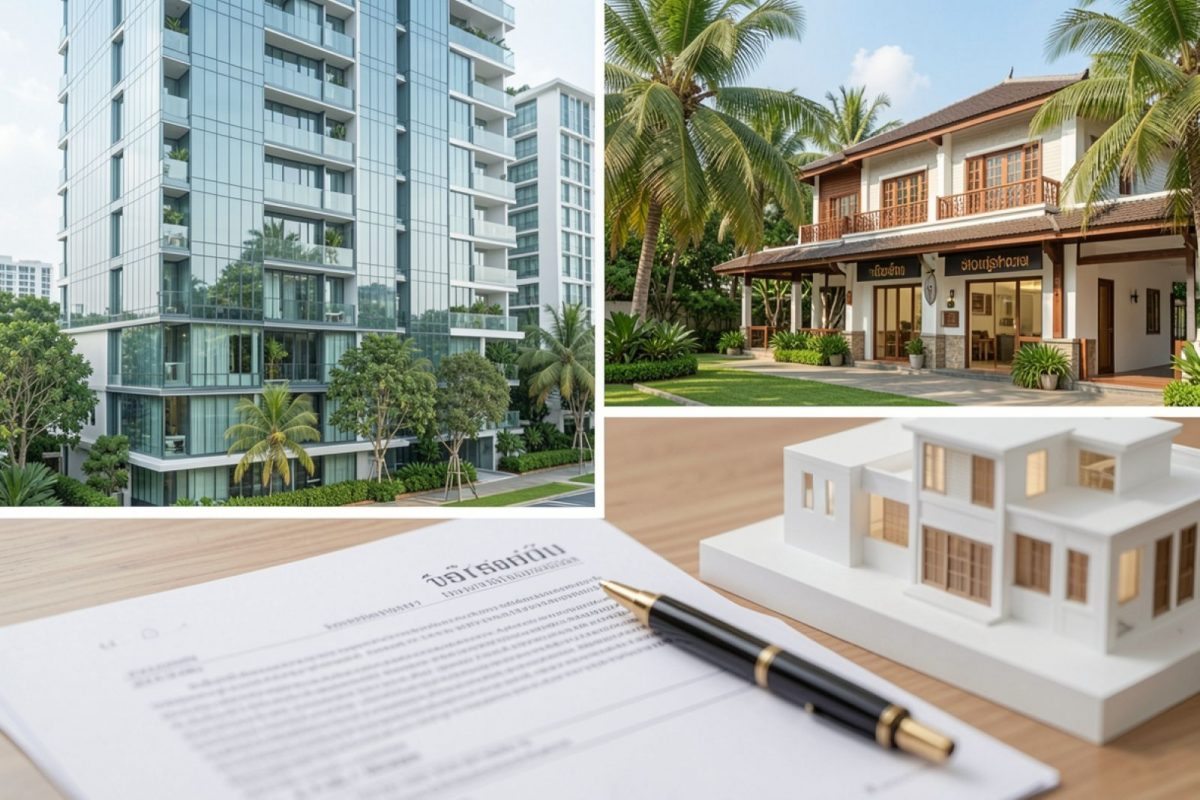
UNLOCKED IN AMERICA (Pt 6 of 11) — Your Family Chose Miami When It Was Still a Regional City. The Equity That Decision Created Is Now Extraordinary — and Still Untouched.

Latin American high net worth Miami Florida US property equity release

How Brazilian, Colombian, Venezuelan, Argentine, and Mexican high-net-worth investors turned Miami into a global city and why the extraordinary equity they built in Fisher Island, Brickell, Coral Gables, and Palm Beach remains largely inaccessible through conventional US lending.

Miami did not become a global city by accident. It became one because Latin American high-net-worth families decided it would.

Through the 1970s, the 1980s, and the 1990s, through currency crises, political upheavals, hyperinflation events, and the periodic economic catastrophes that have characterised the Latin American experience across half a century, a consistent stream of high-net-worth Brazilian, Colombian, Venezuelan, Argentine, and Mexican families made a deliberate decision to place a portion of their wealth in Miami real estate. The calculation was not purely financial. It was the calculation of international high-net-worth families who had seen what instability could do to domestic assets, who valued the predictability of American property law and the safety of dollar-denominated holdings, and who found in Miami a city that felt familiar: Latin in culture, warm in climate, and positioned as the natural commercial and social bridge between South America and the United States.

They bought condominiums on Fisher Island when the development was new. They bought waterfront units in Brickell before Brickell was a financial district. They bought houses in Coral Gables. They bought on Miami Beach, in Coconut Grove, in Key Biscayne. They bought in Palm Beach and Boca Raton. And they held.

The equity those international high-net-worth families have built over forty and fifty years of Miami and South Florida appreciation is one of the most significant concentrations of internationally held US property wealth anywhere in the country. And it is, for the most part, completely inaccessible through conventional American equity release channels.

This is Part 6 of UNLOCKED IN AMERICA, an 11-part series for international high-net-worth owners of US real estate who have built extraordinary wealth in America and cannot access it. You can also explore GMG's dedicated US property equity release programme for a full overview of how the facility works.

The Miami Appreciation Story: What Latin American High-Net-Worth Buyers Built

Decades of patient capital and unwavering conviction have produced asset appreciation that, in many cases, exceeds anything the original buyers could have projected. The scale of that appreciation is the starting point for any conversation about equity release.

Fisher Island

Residences that sold to international high-net-worth buyers for USD 400,000 to 700,000 in the early 1990s now trade at USD 3 to 8 million for comparable units. Waterfront positions have seen values exceed USD 15 to 20 million. For Brazilian and Venezuelan high-net-worth families who bought on Fisher Island in its first development phase, the equity release opportunity from those original purchases is transformational.

Fisher Island consistently ranks among the highest per-capita income zip codes in the United States. According to the Miami Herald, demand from Latin American and international buyers continues to underpin values at levels that have no precedent in the broader Miami market.

Brickell and Downtown Miami

Latin American high-net-worth buyers who purchased Brickell condominiums in the late 1990s and early 2000s for USD 200,000 to 400,000 are now holding assets worth USD 800,000 to 2 million in comparable units, driven by Miami's emergence as a genuine global financial district. The migration of financial services firms and technology companies to Brickell over the past decade has structurally repriced the corridor.

Miami Beach and South Beach

Condominiums and single-family homes purchased on Miami Beach in the 1990s for USD 300,000 to 600,000 now regularly command USD 2 to 5 million. Penthouse positions with ocean or bay views have appreciated to USD 8 to 15 million from 1990s purchase prices, representing a compounding return that rivals the best-performing private equity vintages of the same era.

Coral Gables and Palm Beach

Single-family homes in Coral Gables purchased in the early 1990s for USD 300,000 to 600,000 now regularly sell for USD 2 to 4 million. Palm Beach properties purchased in the 1990s and early 2000s for USD 500,000 to 1,500,000 are now worth USD 3 to 8 million, with exceptional recent appreciation driven by the relocation of northeastern financial wealth.

The broader structural case for continued South Florida premium residential appreciation is well supported. The National Association of Realtors consistently identifies Miami-Dade and Palm Beach counties among the strongest markets for international buyer activity in the United States, a dynamic that shows no sign of reversal.

Why Latin American High-Net-Worth Families Cannot Release Their Miami Equity

The equity is real, the barrier to accessing it is structural, and it is almost entirely a product of how the US mortgage system was designed for domestic borrowers with domestic income, domestic credit histories, and domestically held assets.

Capital Control Restrictions in Home Countries

The same dynamics that made Miami property an attractive safe haven — capital controls and currency instability can complicate the ability to document income in ways that satisfy US mortgage underwriting requirements for equity release. A family whose wealth creation occurred in an environment of capital restrictions faces particular challenges when US lenders ask for straightforward income verification.

Income in Weak or Controlled Currencies

A high-net-worth family whose income is earned in Brazilian reais, Colombian pesos, or Argentine pesos faces a specific challenge: even where the income is substantial in local terms, the currency dynamics and domestic banking infrastructure make it difficult to present income in a format that US equity release lenders can assess. GMG underwrites on asset value, not on home-country income documentation.

For families who have held US property for decades and are now considering their longer-term financing options, GMG's equity release programme for long-term US property owners addresses exactly this profile substantial US equity, non-US income, and a need for a lender who understands the full picture.

Properties Purchased Through Latin American Entities

Some Latin American high-net-worth buyers used Latin American holding companies or domestic trusts as the purchasing entity  structures that continue to serve legitimate purposes but create complexity for conventional US equity release lending. GMG lends against Cayman and Panama holding companies, Latin American entities, and family trusts and foundations.

Privacy and Discretion Requirements

Some Latin American high-net-worth families maintain their Miami property specifically for its discretion characteristics. GMG's equity release process is designed to be efficient, discreet, and minimally intrusive in terms of ongoing financial reporting requirements.

"Miami's relationship with Latin American high-net-worth wealth goes back to the 1970s. These are families who understood early that the United States offered something their home markets could not: stability, rule of law, and a currency that held its value. They built positions in Miami and South Florida that have now appreciated dramatically over forty or fifty years. The equity they hold is substantial. Our job is to give them an equity release mechanism that works for how they actually manage their money."

Donald Klip, Co-Founder, Global Mortgage Group and America Mortgages

The Specific Situations Where Miami High-Net-Worth Equity Release Matters Most

Accessing Capital During a Period of Home Country Instability

When a Brazilian high-net-worth family needs dollar-denominated liquidity during a period of domestic uncertainty, the equity in their Miami property is their most stable capital reserve — if they have an equity release mechanism to access it. GMG provides that mechanism in 10 to 20 business days, with no requirement for home-country income documentation.

Funding a Miami Acquisition or Portfolio Expansion

Equity release from an existing Miami holding provides capital for expansion without requiring a sale of an asset that has performed exceptionally. Many Latin American high-net-worth families are now in a position to use their foundational Miami position to fund a second or third US acquisition without touching the original asset.

Generational Wealth Transfer and Estate Planning

Equity release provides liquidity during the generational transfer, enabling estate obligations to be met and structures to be updated, without forcing a property sale. For families who built their Miami position over multiple decades, the estate planning dimension of equity release is often as important as the capital access dimension.

Families considering how US property equity intersects with education planning for the next generation may also find GMG's dedicated education and US property equity resource useful, it covers how equity release can fund US university costs and associated property acquisitions for the next generation.

Pre-Construction Completion Finance

Miami's luxury condominium development pipeline remains one of the most active in the United States. A GMG equity release facility secured against an existing Miami property funds a completion payment and preserves a new acquisition, without requiring the family to liquidate their existing position or arrange conventional financing they would not qualify for.

How GMG's Equity Release Works for Latin American High-Net-Worth Miami Property Owners

GMG's equity release and bridging loan programme for Latin American high-net-worth US property owners is purpose-built for the specific profile of families that built their Miami positions across the 1970s, 1980s, 1990s, and 2000s. The key parameters are as follows:

  • Loan size: USD 500,000 to USD 20,000,000+
  • Term: 6 to 24 months
  • LTV: Up to 65 to 70% of independently appraised US market value
  • Interest: Retained or rolled up — no monthly repayment in most structures
  • Security: Fisher Island, Brickell, Miami Beach, Coral Gables, Coconut Grove, Key Biscayne, Palm Beach, Boca Raton, and broader South Florida premium residential
  • Borrower: Brazilian, Colombian, Venezuelan, Argentine, Mexican, and broader Latin American high-net-worth nationals and non-US residents; Cayman and Panama holding companies; Latin American entities; family trusts and foundations
  • No SSN, no US credit history, no US income documentation required
  • Timeline: Equity release term sheet 24 to 48 hours; drawdown 10 to 20 business days

For long-term financing after the equity release period, America Mortgages provides Foreign National and DSCR mortgage products for Latin American high-net-worth overseas buyers and investors across all 50 US states.

The Wall Street Journal has reported extensively on the structural shift in Miami real estate toward international high-net-worth ownership, noting that the lack of accessible equity release products for non-US residents represents one of the most significant gaps in the American mortgage market.

Is This Right for You?

This solution is most relevant if:

  • You or your family are Latin American high-net-worth investors who own property in Miami, South Beach, Fisher Island, Coral Gables, Palm Beach, or Boca Raton, purchased at any point from the 1970s to the 2010s
  • The equity in that property has never been released or fully accessed
  • Your income is earned in a Latin American country in a currency and documentation format that US equity release lenders cannot assess
  • Your Miami property is held through a Cayman, Panama, or Latin American holding entity
  • You have a capital need in the US or in Latin America that released Miami property equity could fund without requiring a sale

Contact Donald Klip

If you are an international high-net-worth owner of US real estate and want to explore equity release or a bridging loan against your American property, contact Donald Klip directly.

Email: [email protected]
Phone: +65 9773-0273
Website: gmg.asia
America Mortgages: americamortgages.com

To receive an indicative equity release term sheet, we need only: US property address and type, estimated current market value, any existing mortgage balance, approximate equity release amount required, desired loan term, and a brief description of the intended use of funds and repayment plan.

Continue reading the UNLOCKED IN AMERICA series at gmg.asia.


UNLOCKED IN AMERICA (Pt 5 of 11) — The Beverly Hills Home Your Family Bought When The Yen Was Strong Is Now Worth Ten Times What You Paid In Dollars

Asian high net worth Beverly Hills Los Angeles US property equity release

How Chinese, Japanese, Korean, Singaporean, Hong Kong, and Southeast Asian high-net-worth investors built one of the largest concentrations of international property equity in the United States and why international equity release finance is finally making it accessible.

Long before Beverly Hills became a global shorthand for American luxury, Asian high-net-worth capital was already flowing into Los Angeles in quantities that would reshape the city's property market for generations.

The relationship between Asian high-net-worth families and Los Angeles real estate is one of the most consequential and least-told stories in American property history. It began in the late 1970s and accelerated through the 1980s and 1990s, driven by a specific convergence of forces: the weakening US dollar, which made American assets extraordinarily cheap in yen, Hong Kong dollar, Singapore dollar, and New Taiwan dollar terms; the emergence of Los Angeles as the western terminus of the trans-Pacific trade relationship that was transforming the global economy; the concentration of elite American universities within reach of Southern California; and the city's position as the natural gateway for Asian high-net-worth families building their first significant American connection.

The buyers who came were not speculators. They were business families, professional dynasties, and multigenerational high-net-worth wealth holders from Japan, Hong Kong, Singapore, Taiwan, South Korea, Malaysia, and increasingly mainland China, who saw Los Angeles not as a trade but as a permanent base; a place to anchor capital, educate children, maintain a lifestyle presence, and participate in the American economy at a level that their home markets could not accommodate.

They bought in Arcadia and San Marino. They bought in Beverly Hills and Bel Air. They bought in the Pacific Palisades. They bought in Malibu. And then they held through every cycle, for forty years.

The equity they have built is extraordinary. And for the overwhelming majority of Asian high-net-worth families who hold it, that equity has never been released.

This is Part 5 of UNLOCKED IN AMERICA, an 11-part series for international high-net-worth owners of US real estate who have built extraordinary wealth in America and cannot access it.

The Appreciation Story: What Asian High-Net-Worth Buyers Built in Los Angeles

Forty years of patient capital have produced asset appreciation that, in many cases, exceeds anything the original buyers could have projected. Understanding the scale of that appreciation is the starting point for any conversation about equity release.

Arcadia and the San Gabriel Valley

Arcadia, the epicentre of Chinese and Taiwanese high-net-worth property investment from the 1980s onwards, has seen median home values rise from approximately USD 250,000 in 1990 to over USD 1.2 million today. Asian high-net-worth families who purchased premium single-family homes at USD 400,000 to 700,000 have seen appreciation to USD 2 to 3.5 million. In San Marino, homes that sold for USD 600,000 to 900,000 in the early 1990s now regularly achieve USD 3 to 5 million.

The San Gabriel Valley's transformation into one of the most sought-after residential destinations in Southern California is well documented. According to the Los Angeles Times, demand from international buyers continues to underpin premium valuations across the corridor, with Chinese and Taiwanese buyer activity remaining a defining feature of the market.

Beverly Hills and Bel Air

Japanese and Korean high-net-worth business families who purchased Beverly Hills estates at USD 2 to 4 million in the late 1980s, when the yen was exceptionally strong against the dollar, are now holding assets worth USD 12 to 25 million. A Japanese high-net-worth family that converted 400 million yen into a Beverly Hills home in 1989, when the yen was at approximately 130 to the dollar, paid approximately USD 3 million for an asset now worth USD 15 million or more. The yen-adjusted equity release opportunity is exceptional by any measure.

The Pacific Palisades

Homes purchased by international high-net-worth families for USD 600,000 to 900,000 in the mid-1990s now regularly command USD 3 to 5 million. Consistent demand from Asian high-net-worth families who value the school quality, community character, and ocean proximity has produced appreciation well above the broader Los Angeles average.

Malibu

Asian high-net-worth business families who purchased Malibu oceanfront properties in the 1980s and early 1990s for USD 1.5 to 3 million are now holding assets worth USD 15 to 40 million. Carbon Beach values exceeding USD 10,000 per square foot represent appreciation of tenfold or more from 1980s purchase prices.

For context on how Los Angeles premium residential values compare to other global gateway cities, the UBS Global Real Estate Bubble Index consistently identifies the Southern California luxury market as one of the most structurally undersupplied in the world, a structural condition that continues to support long-term value.

Why Asian High-Net-Worth Families Cannot Release Their Los Angeles Equity

The equity is real. The barrier to accessing it is structural, and it is almost entirely a product of how the US mortgage system was designed for domestic borrowers with domestic income, domestic credit histories, and domestically-held assets.

No Meaningful US Credit History

A Hong Kong high-net-worth business family that purchased a Beverly Hills home in 1988 and has managed it remotely for thirty-five years has no FICO credit score. The American credit scoring system has no record of their existence as financial actors, regardless of their global creditworthiness and multi-decade track record of US property ownership.

Income in Asian Currencies and Structures

Income from a Singaporean family office, a Hong Kong conglomerate, a Japanese manufacturing business, or a Korean investor arrives in SGD, HKD, JPY, or KRW, is documented on Asian tax returns, and is structured through corporate and trust entities that US mortgage underwriters have neither the training nor the mandate to assess.

Offshore Holding Structures Established Decades Ago

Many Asian high-net-worth buyers in the 1980s and 1990s acquired their Los Angeles property through offshore holding structures — Hong Kong companies, Singapore entities, BVI vehicles — that continue to serve legitimate purposes but that virtually no conventional US lender will lend against.

Generational Transition Complexity

As the original Asian high-net-worth buyers of the 1980s and 1990s age, their Los Angeles property positions are passing to the next generation often through structures and with tax histories that create complexity for conventional US equity release lending. America Mortgages has developed dedicated products to address exactly these generational transition scenarios.

"Asian high-net-worth families built a significant part of Los Angeles — in the San Gabriel Valley, in Beverly Hills, in the Pacific Palisades and Malibu. They bought when the dollar was cheap, they held through every cycle, and they have created equity positions that in many cases represent the single most valuable asset their family owns. Most of them have never had a mechanism to release that equity without selling. That is what our equity release programme changes."
Donald Klip, Co-Founder, Global Mortgage Group and America Mortgages

What Asian High-Net-Worth Families Do With Released Los Angeles Equity

The range of capital needs that equity release addresses is broad, but several scenarios recur consistently among Asian high-net-worth families with established US property positions.

Funding a Singapore, Hong Kong, or Home-Market Acquisition Without Liquidating the US Position

This is the most common equity release request. The Asian high-net-worth family wants to deploy capital in Asia and the Los Angeles equity is the most efficient capital source. Equity release provides the funds without requiring a sale preserving the US asset, the family's US connection, and any accumulated capital gains tax position.

Accessing Capital During a Generational Transition

Equity release provides liquidity that enables the family to implement wealth transfer structures and fund estate obligations without being forced to sell the US property. In many Asian high-net-worth families, the Los Angeles property is the anchor asset of the family's international portfolio — and selling it under pressure would represent a significant and unnecessary loss.

Funding the Next Generation's US Chapter

The equity in the family's existing LA property funds the next generation's American acquisition without requiring a sale of the family's foundational US asset. This pattern using established US equity to fund the next US position — is one of the most financially efficient structures available to multigenerational Asian high-net-worth families.

Rebalancing a Portfolio That Has Become LA-Concentrated

Long-term appreciation has in many cases made the Los Angeles property a disproportionately large percentage of the Asian high-net-worth family's overall net worth. Equity release without a sale enables rebalancing — diversifying into other asset classes or geographies while preserving the core US real estate position.

How GMG's Equity Release Works for Asian High-Net-Worth US Property Owners

Global Mortgage Group's equity release and bridging loan programme for Asian high-net-worth US property owners is purpose-built for the specific profile of families that built their Los Angeles positions in the 1980s, 1990s, and 2000s. The key parameters are as follows:

  • Loan size: USD 500,000 to USD 20,000,000+
  • Term: 6 to 24 months
  • LTV: Up to 65 to 70% of independently appraised US market value
  • Interest: Retained or rolled up — no monthly repayment in most structures
  • Security: Beverly Hills, Bel Air, Pacific Palisades, Malibu, Arcadia, San Marino, and broader Los Angeles premium residential
  • Borrower: Chinese, Japanese, Korean, Singaporean, Hong Kong, Southeast Asian high-net-worth nationals and non-US residents; Hong Kong and Singapore companies; BVI and Cayman entities; family trusts
  • No SSN, no US credit history, no US income documentation required
  • Timeline: Equity release term sheet 24 to 48 hours; drawdown 10 to 20 business days

For long-term financing after the equity release period, America Mortgages provides Foreign National and DSCR mortgage products specifically designed for Asian overseas high-net-worth buyers and investors across all 50 US states.

Is This Right for You?

This solution is most relevant if:

  • You or your family are Asian high-net-worth investors who own property in Los Angeles or Southern California purchased at any point from the 1980s to the 2010s
  • The equity in that property has never been released and represents a significant portion of your family's net worth
  • Your income is earned in Asia and documented in a format that US mortgage underwriters cannot assess
  • Your US property is held through a Hong Kong company, Singapore entity, BVI vehicle, or other offshore structure
  • You have a capital need — in Asia or elsewhere — that released US property equity could fund without requiring a sale

Contact Donald Klip

If you are an international high-net-worth owner of US real estate and want to explore equity release or a bridging loan against your American property, contact Donald Klip directly.

Email: [email protected]
Phone: +65 9773-0273
Website: gmg.asia
America Mortgages: americamortgages.com

To receive an indicative equity release term sheet, we need only: US property address and type, estimated current market value, any existing mortgage balance, approximate equity release amount required, desired loan term, and a brief description of the intended use of funds and repayment plan.Continue reading the UNLOCKED IN AMERICA series at gmg.asia.

UNLOCKED IN AMERICA (Pt 4 of 11) — You Bought It for Your Child’s Education. Your Child Graduated Twenty Years Ago. The Property Is Still There — and So Is the Equity.

Education property university town US real estate equity release international parents

How globally mobile high-net-worth families who purchased US property near Harvard, Columbia, Stanford, UCLA, and America's great universities have accumulated decades of untapped appreciation, and how international equity release finance turns that dormant asset into working capital

It started with a university acceptance letter.

Harvard. Columbia. NYU. Stanford. UCLA. USC. Berkeley. MIT. Yale. The letter arrived, at a family home in London, or Singapore, or Hong Kong, or Frankfurt, or Zurich, or São Paulo, or Dubai, or Sydney, and with it came the practical question that every internationally mobile high-net-worth family faces when a child earns a place at an elite American institution: where will they live, and what is the most intelligent way to handle the cost?

The calculation was usually straightforward. Four years of university, potentially followed by a graduate programme, an internship, an early career. Six, seven, perhaps ten years of American residency for the child. Renting for that duration seemed wasteful to a high-net-worth family accustomed to owning. The American property market had a long track record of appreciation that every internationally mobile investor understood. The dollar was at an accessible level. And an apartment in a good building near the university, or in the city itself, positioned in a neighbourhood with long-term residential appeal, felt like a rational investment that served both an immediate practical purpose and a longer-term wealth objective.

So the family bought. A two-bedroom condominium on Manhattan's Upper West Side, within reasonable distance of Columbia. An apartment in Boston's Back Bay for the Harvard student who wanted to be in the city rather than Cambridge. A flat in San Francisco's Pacific Heights for the child at Berkeley or Stanford. A condominium in Westwood or Santa Monica for the UCLA or USC student who needed to be in Los Angeles. A townhouse in New Haven for the Yale family who wanted something better than student accommodation.

The purchase was made. The child moved in. The university years passed. And then — this is the part of the story that plays out most consistently, the child graduated, built a life in America or returned home, and the apartment remained. Rented out to tenants, or used occasionally as a pied-a-terre, or simply held because selling felt premature and the income covered the costs and the property kept appreciating and there was always something more urgent to attend to.

Twenty or thirty years later, the international high-net-worth families who made those purchases are sitting on equity that bears no relationship to the price they paid or the purpose for which they originally bought. The two-bedroom apartment near Columbia purchased in 1993 for USD 380,000 is worth USD 2.8 million today. The San Francisco flat bought in 1998 for USD 450,000 is worth USD 2.2 million. The West Los Angeles condominium acquired in 1995 for USD 320,000 is worth USD 1.6 million. The Boston Beacon Hill property purchased in 2001 for USD 600,000 is worth USD 2.1 million.

The equity is real. It has been building for three decades. And for most of the international high-net-worth families who hold it, it has never once been accessed.

This is Part 4 of UNLOCKED IN AMERICA — an 11-part series for international high-net-worth owners of US real estate who have built extraordinary wealth in America and cannot access it.

The Global High-Net-Worth Family And The American University Pipeline

The relationship between elite American higher education and international high-net-worth property investment is one of the most consistent and least-discussed drivers of demand in US prime residential real estate over the past four decades.

The pattern is not accidental. It reflects a deliberate and rational strategy that globally mobile high-net-worth families have developed, and refined across multiple generations, as American universities consolidated their position as the world's most sought-after educational institutions for the children of internationally mobile wealth.

Harvard, Yale, Princeton, Columbia, Stanford, MIT, and their peer institutions draw applicants from every country in which serious private wealth exists. The globally mobile high-net-worth families who send their children to these institutions are, by definition, financially sophisticated and accustomed to thinking about capital allocation across multiple jurisdictions. When their children are accepted and the practical question of US housing arises, the purchase decision is not a stretch — it is the obvious choice for a family that already manages property assets in London, Singapore, Hong Kong, or Geneva and understands the value of owning rather than renting in markets with long-term appreciation potential.

The cities that have attracted the most consistent education-driven international high-net-worth property investment are the same cities that have delivered the most dramatic long-term appreciation:

New York City — driven by Columbia, NYU, and the city's role as the terminal destination for ambitious graduates who build careers in finance, law, media, and the arts. Manhattan apartments — particularly on the Upper West Side, in Morningside Heights, in the Village, and in Tribeca — have been the primary vehicle for education-related international high-net-worth property investment from European, Asian, Middle Eastern, and Latin American families for four decades.

San Francisco and the Bay Area — driven by Stanford and UC Berkeley, and by the Silicon Valley technology ecosystem that has made the Bay Area one of the most economically dynamic regions in the world. International high-net-worth families who bought San Francisco condominiums in the 1990s and early 2000s for education-related reasons found themselves holding extraordinarily appreciated assets as technology wealth permanently elevated Bay Area property values.

Los Angeles — driven by UCLA, USC, Pepperdine, and the city's position as the US terminus of Asia-Pacific cultural and commercial relationships. Asian high-net-worth families in particular — from Hong Kong, Singapore, mainland China, Japan, and Korea — have long regarded Los Angeles as a natural entry point to the American market, and education-related property purchases have been a consistent feature of the LA high-net-worth property landscape since the 1980s.

Boston — driven by Harvard, MIT, Boston University, and Tufts. European and Asian high-net-worth families whose children pursued medicine, science, finance, or law at Boston institutions have been consistent buyers in the Back Bay, Beacon Hill, South End, and Cambridge markets since the late 1980s.

The Appreciation That Accumulated While The Family Was Not Looking

Manhattan and New York City

Upper West Side two-bedroom condominiums that international high-net-worth families purchased for USD 350,000–500,000 in the early 1990s are now worth USD 1.8–3.5 million. The West Village and Greenwich Village — areas popular with NYU families — have seen even stronger appreciation, with two-bedroom apartments that sold for USD 400,000 in the mid-1990s now trading at USD 2.5–4 million. Tribeca — which attracted Columbia and NYU-adjacent international high-net-worth buyers from the 1990s onwards — has delivered some of Manhattan's most dramatic neighbourhood appreciation, with units that cost USD 500,000 in 2000 now worth USD 3.5–6 million.

For the international high-net-worth family that bought in US dollars during the 1990s — a period when the dollar was weak against the Deutsche Mark, sterling, and the yen — the currency-adjusted return compounds the already significant nominal appreciation. A British high-net-worth family that paid GBP 250,000 for a Manhattan apartment in 1993 now holds an asset worth USD 2.5 million. The currency-adjusted return from a GBP 250,000 investment is, in sterling terms, approximately GBP 1.75 million over thirty years. The equity is, in many cases, the largest financial asset the family owns.

San Francisco and the Bay Area

Pacific Heights, Nob Hill, and the Marina district condominiums purchased in the late 1990s and early 2000s by international high-net-worth families for education-related reasons at USD 400,000–700,000 are now worth USD 1.5–3.5 million. In Palo Alto and the Stanford-adjacent communities, family homes purchased in the early 2000s for USD 800,000–1,200,000 now regularly trade above USD 3.5–5 million.

Los Angeles

Westwood Village — immediately adjacent to UCLA — has seen condominium values rise from USD 250,000–400,000 in the early 1990s to USD 800,000–1.5 million today. Santa Monica and Brentwood, which have attracted Asian and European high-net-worth families with children at UCLA and USC, have seen larger properties appreciate from USD 600,000–1,000,000 in the mid-1990s to USD 2.5–5 million. The Pacific Palisades — particularly popular with Asian high-net-worth families given its school quality and community character — has seen appreciation that in some cases exceeds tenfold from 1990 purchase prices.

Boston and Cambridge

Back Bay condominiums purchased by international high-net-worth families in the early 1990s for USD 300,000–500,000 are now worth USD 1.2–2.5 million. Cambridge's premium residential market, immediately adjacent to Harvard and MIT, has seen properties purchased in the 1990s for USD 400,000–700,000 now worth USD 1.5–3 million.

Why International High-Net-Worth Families Cannot Access This Equity

The structural barriers are the same ones that affect all internationally mobile high-net-worth owners of US real estate, but in the education property context they are particularly acute because these families have often had no ongoing US financial relationship since the child graduated.

No ongoing US financial footprint: An international high-net-worth family that bought a Manhattan apartment in 1994, managed it remotely from London for thirty years, and has had no other US financial activity has effectively no US financial identity. No FICO credit score. No US bank account with meaningful history. To the American mortgage underwriting system, they are invisible, regardless of their global wealth and three decades of property ownership.

Foreign income in unrecognisable formats: The income that would service an equity release facility, whether it comes from a German family business, a Singapore investment portfolio, a Hong Kong property rental stream, or a Middle Eastern holding company, arrives in foreign currencies and is documented on foreign tax returns. US mortgage underwriters are not trained or mandated to assess this income, and most exclude it entirely.

Properties held in offshore structures: Many education-era purchases were made through offshore holding structures that were standard for international high-net-worth real estate investment in the 1980s and 1990s. The conventional US mortgage market will not lend against these structures, and the suggestion that the international high-net-worth family restructure their ownership to access equity is both impractical and potentially tax-triggering.

FIRPTA complexity: Non-resident international high-net-worth owners of US property face Foreign Investment in Real Property Tax Act withholding obligations on any disposal, making equity release without selling even more financially attractive, if a practical path to it exists. GMG's equity release facility provides exactly that path.

"Some of the most meaningful equity release conversations we have are with international high-net-worth families who bought in New York or San Francisco in the 1990s for their child's university years, and who have been holding that property ever since — sometimes not even consciously aware of how much it has appreciated. They think of it as the education apartment. We think of it as a highly appreciated asset with substantial equity that can be released and deployed into whatever the family needs next."
Donald Klip, Co-Founder Global Mortgage Group & America Mortgages

How Gmg's Equity Release Facility Works For Education-Era Property Owners

  • Loan size: USD 500,000 to USD 20,000,000+
  • Term: 6 to 24 months
  • LTV: Up to 65–70% of independently appraised US market value
  • Interest: Retained or rolled up — no monthly repayment obligation in most structures
  • Security: US residential condominium, single-family home, townhouse in major university cities
  • Borrower: International high-net-worth non-US residents, foreign nationals, offshore holding companies, family trusts and foundations, US expatriates
  • No SSN, no US credit history, no US-format income documentation required
  • Offshore structures considered subject to due diligence
  • Timeline: Indicative term sheet 24–48 hours; drawdown typically 10–20 business days

What International High-Net-Worth Families Do With Released Education-Era Equity

Funding a property acquisition elsewhere without selling the US asset: The most frequent request. The international high-net-worth family wants to acquire in their home market, in Asia, in Europe, or in another US city, and the education-era American property equity is the most efficient and least disruptive capital source. Equity release provides the funds without requiring a sale of an asset the family intends to keep.

Funding the next generation's US chapter: The most poetically appropriate use. The grandchild accepted at NYU or UCLA. The second generation wanting to establish a career in New York or San Francisco. The family that wants to maintain its American connection across a third generation. Equity release from the original education property funds the next chapter without requiring a sale of the family's foundational American asset.

Estate planning and generational wealth transfer: As the founders of the education property generation reach their 70s and 80s, the properties are passing to the next generation. Equity release provides liquidity during the transfer, enabling estate obligations to be met, inheritance provisions to be equalised, and holding structures to be updated, without forcing a property sale under time pressure.

Accessing capital without triggering FIRPTA: For non-resident international high-net-worth owners, a sale triggers FIRPTA withholding at 15% of the gross sale price, potentially USD 300,000–500,000 or more withheld at closing on a USD 2–3 million property. Equity release provides access to capital from the property's appreciated value without a sale and without the FIRPTA withholding event.

Is This Right For Your Family?

This solution is most relevant if one or more of the following applies:

  • Your family owns US property, in New York, San Francisco, Los Angeles, Boston, or another major US university city, that was originally purchased in connection with a child's or grandchild's American education
  • That property has been held for ten, twenty, thirty, or more years and has appreciated significantly from its purchase price
  • The equity has never been accessed and represents a substantial portion of your family's wealth
  • You are a non-US resident or international high-net-worth foreign national whose income is earned outside the United States
  • Your US property is held through an offshore company, family trust, or other structure
  • You have a capital need, a property acquisition, a business opportunity, an estate planning requirement, that the equity in your US property could fund
  • You want to access your equity without selling a property with personal and family significance

Contact Donald Klip

If you are an international high-net-worth owner of US real estate and want to explore equity release or a bridging loan against your American property, contact Donald Klip directly.

Email: [email protected]
Phone: +65 9773-0273
Website: gmg.asia
America Mortgages: americamortgages.com

To receive an indicative equity release term sheet, we need only: US property address and type, estimated current market value, any existing mortgage balance, approximate equity release amount required, desired loan term, and a brief description of the intended use of funds and repayment plan.

Continue reading the UNLOCKED IN AMERICA series at gmg.asia.

UNLOCKED IN AMERICA (Pt 3 of 11) — Thirty Years Ago Your Family Bought Property in America. That Decision Is Now Worth Millions More Than You Realise.

Long term international family US real estate equity release appreciation

How European, Asian, Middle Eastern, and globally mobile high-net-worth families who built US property positions over three and four decades are sitting on extraordinary untapped appreciation, and how international equity release finance finally makes that wealth accessible without selling

It started with a decision that seemed straightforward at the time.

A British business family bought a Manhattan apartment in 1986 for USD 380,000. A German industrialist acquired a Beverly Hills home in 1989 for USD 1.4 million, converting Deutsche Marks at a favourable exchange rate during a period when the dollar was weak and American real estate seemed, by European standards, extraordinarily good value. A French family purchased a Miami Beach condominium in 1993 for USD 420,000 because Miami felt like a natural base for their Latin American business interests. A Hong Kong business dynasty acquired a San Francisco property in 1997 for USD 680,000 for a child studying at Stanford, and never sold when the child graduated. A Singapore family office bought a Hamptons weekend house in 2003 for USD 1.9 million because New York had always been their second city.

None of these international high-net-worth families bought their American property as a speculative trade. They bought it because they had a connection to the United States: professional, educational, personal, cultural, commercial, and because American real estate felt like a rational, permanent, and legally secure place to anchor a portion of their family's wealth. They paid what seemed like a significant sum at the time. And then they held.

The Manhattan apartment bought in 1986 for USD 380,000 is worth USD 3.8 million today. The Beverly Hills home acquired for USD 1.4 million in 1989 is worth USD 12 million. The Miami Beach condominium purchased for USD 420,000 in 1993 is worth USD 3.5 million. The San Francisco property bought for USD 680,000 in 1997 is worth USD 3.2 million. The Hamptons weekend house that cost USD 1.9 million in 2003 is worth USD 9 million today.

The equity these international high-net-worth families have built, quietly, patiently, across thirty and forty years of American real estate appreciation is extraordinary. And for the overwhelming majority of them, that equity has never once been released. It sits there, compounding, while the families who created it manage the rest of their capital around it as though it were fixed and immovable.

International equity release finance changes that. And this article explains how.

This is Part 3 of UNLOCKED IN AMERICA — an 11-part series for international high-net-worth owners of US real estate who have built extraordinary wealth in America and cannot access it.

The Global High-Net-Worth Relationship With American Real Estate: How It Began And Why It Endured

The relationship between globally mobile high-net-worth families and American residential real estate is one of the most consequential and least-discussed stories in the history of private wealth management. It has been building since the late 1970s and it has involved buyers from virtually every country in which serious private wealth exists.

European high-net-worth families were among the earliest and most consistent international buyers of US prime residential real estate. The late 1970s and 1980s brought a convergence of forces that made American property particularly attractive to European capital: a weakening dollar that made US assets cheap in Deutsche Mark, Swiss franc, Dutch guilder, and sterling terms; Manhattan real estate prices that had not yet begun the long appreciation cycle that would define the following four decades; and a growing recognition among European business families that a New York presence was increasingly important in a world where American financial and cultural dominance was undeniable.

British, German, French, Dutch, Scandinavian, and Swiss high-net-worth families established American property positions during this period that have now been held for thirty, forty, and in some cases nearly fifty years. They bought in Manhattan when Tribeca was considered marginal. They bought in Beverly Hills when the Westside of Los Angeles was still finding its identity as a global luxury destination. They bought in Miami when South Beach was derelict and Fisher Island was newly developed. They bought in the Hamptons when oceanfront on Meadow Lane seemed expensive at USD 3 million.

Asian high-net-worth families followed a parallel trajectory. Japanese buyers were significant acquirers of Beverly Hills and Los Angeles property during the late 1980s, converting yen at historically favourable rates. Hong Kong and Singapore high-net-worth families established Manhattan and San Francisco positions through the 1990s and 2000s. Chinese high-net-worth families accelerated their US property acquisition significantly from 2010 onwards, concentrating in Los Angeles, San Francisco, and New York.

Middle Eastern high-net-worth families: from Saudi Arabia, the UAE, Kuwait, and Qatar — have maintained consistent US property positions in New York and Los Angeles since the 1980s, driven by capital diversification logic, educational connections to American universities, and the lifestyle appeal of cities that offer anonymity and cultural richness unavailable in Gulf cities of equivalent wealth concentration.

Latin American high-net-worth families: Brazilian, Colombian, Venezuelan, Argentine, Mexican, have been the dominant force in Miami's international property market since the 1970s, with capital flows that have been consistent through multiple cycles of domestic political and economic stress.

What characterises almost all of these acquisitions is the intention behind them. These were not trades. They were long-term allocations of international high-net-worth capital to what buyers correctly perceived as one of the world's most stable, legally robust, and appreciating property markets. And the holding period, in many cases three and four decades, has produced equity positions that the original buyers could not have imagined.

The Numbers: What Four Decades Of American Property Appreciation Have Created

Manhattan and New York City

Manhattan residential property has appreciated by approximately 600–800% in nominal terms since 1985. A cooperative apartment on Park Avenue purchased by a European high-net-worth family for USD 500,000 in 1985 is worth USD 4–6 million today. A Tribeca loft acquired by an international high-net-worth buyer for USD 300,000 in 1990 may now be worth USD 3–5 million. A prime condominium on the Upper West Side bought for USD 800,000 in 1995 is likely worth USD 4–7 million.

For European high-net-worth buyers who acquired in US dollars during periods when the dollar was weak against the Deutsche Mark, the Swiss franc, the Dutch guilder, or sterling, the currency appreciation compounds the already significant nominal return. A German high-net-worth family that paid DM 800,000 for a Manhattan apartment in 1989 converted roughly DM 450,000 into that apartment purchase. The same apartment is now worth USD 3.5 million. The currency-adjusted equity release opportunity is exceptional by any measure.

Los Angeles and Beverly Hills

A Beverly Hills home purchased by a Japanese high-net-worth family for USD 1.5 million in 1990 is likely worth USD 8–12 million today. A Pacific Palisades property acquired by a European high-net-worth investor for USD 900,000 in 1995 may now command USD 6–9 million. Malibu's oceanfront has seen per-square-foot values exceed USD 10,000 for Carbon Beach positions — appreciation of fifteen to twenty times original purchase prices over forty years in some cases.

Miami and South Florida

Fisher Island residences that sold to international high-net-worth buyers for USD 400,000–700,000 in the early 1990s now trade at USD 3–8 million. The broader Palm Beach and Boca Raton market has seen properties purchased in the 1990s for USD 500,000–1,500,000 reach USD 3–8 million today.

San Francisco and the Bay Area

Pacific Heights, Nob Hill, and Marina district properties purchased in the late 1990s and early 2000s by international high-net-worth families for USD 400,000–700,000 are now worth USD 1.5–3.5 million. In the Stanford-adjacent communities, family homes purchased in the early 2000s for USD 800,000–1,200,000 now regularly trade above USD 3.5–5 million.

The Hamptons and the Northeast

Hamptons properties purchased in the 1990s by European, Asian, and Latin American high-net-worth families for USD 1–3 million now regularly achieve USD 8–25 million. Oceanfront estates now trade at USD 40–100 million.

Why This Equity Has Never Been Released

For all the appreciation that global high-net-worth families have seen in their American properties, the equity locked within those assets has in almost every case remained completely inaccessible — not because the families chose not to release it, but because the US financial system was never designed to serve them.

No US financial footprint: An international high-net-worth family that has owned a Manhattan apartment since 1988 but has never lived in the United States has effectively no US financial identity. No FICO score. No US tax history beyond the ITIN filings their accountant handles. To the American mortgage underwriting system, the decades of ownership count for nothing.

Foreign income in unrecognisable formats: The income of a German high-net-worth industrialist, dividends from a private company, returns from a European property portfolio, distributions from a family trust, arrives in euros, is documented in German, and is filed on German tax returns. US mortgage underwriters have neither the mandate nor the methodology to assess this income reliably. The same applies to income from Singapore, Hong Kong, the Middle East, or Latin America.

Offshore holding structures: Many international high-net-worth buyers, particularly those who acquired in the 1980s and 1990s, hold their American property through offshore structures that the vast majority of US conventional lenders will not lend against.

Non-resident status: Fannie Mae and Freddie Mac have specific restrictions on lending to non-resident foreign nationals. Most US banks that have historically offered international high-net-worth equity release programmes have tightened significantly or withdrawn from this market entirely.

The result: a generation of global high-net-worth families who have watched three and four decades of US property appreciation accumulate in their assets, and who have had no practical mechanism to release a portion of that equity without selling.

"Global high-net-worth families have had a unique and deeply personal relationship with American cities — particularly New York, Miami, Los Angeles, and San Francisco — for four and five decades. Many of them hold property that was purchased at prices that today seem almost historical. The equity that has accumulated in those properties over thirty or forty years of American real estate appreciation is genuinely extraordinary. And most of those families have never once explored what equity release from those assets could make possible. That is the conversation we want to have."
— Donald Klip, Co-Founder Global Mortgage Group & America Mortgages

How Gmg's Equity Release Facility Works For Long-Term International High-Net-Worth Property Owners

GMG provides senior secured equity release facilities against qualifying US residential and commercial property for European, Asian, Middle Eastern, Latin American, and globally mobile high-net-worth families. The equity release facility is assessed on the US property value and the exit strategy — not on US income documentation, US credit scores, or Social Security Numbers.

Key parameters:

  • Loan size: USD 500,000 to USD 20,000,000+
  • Term: 6 to 24 months
  • LTV: Up to 65–70% of independently appraised US market value
  • Interest: Retained or rolled up — no monthly payment obligation in most structures
  • Security: US residential and commercial property in all major markets
  • Borrower: European, Asian, Middle Eastern, Latin American, and globally mobile high-net-worth foreign nationals and non-US residents; offshore holding companies; family trusts and foundations
  • No SSN, no US credit history, no US income documentation required
  • Offshore structures: BVI, Cayman, Jersey, Guernsey, Liechtenstein, Singapore, Hong Kong entities considered subject to due diligence
  • Timeline: Indicative term sheet 24–48 hours; drawdown typically 10–20 business days

What International High-Net-Worth Families Do With Released US Equity

Funding a property acquisition in another market without selling the US asset: The most frequent equity release request. The family wants to deploy capital in their home market, in Asia, in Europe, or in another US city, and the American property equity is the most efficient source. Equity release provides the funds without requiring a sale.

Deploying capital into a business opportunity or private investment: International high-net-worth families with US property equity that has never been released are sitting on a capital reserve they have been effectively ignoring. A business opportunity, a private equity co-investment, a private credit transaction, all can be funded from released US equity.

Funding the next generation's property purchase: International high-net-worth families with American property connections frequently have children or grandchildren who want to establish their own US foothold. Equity release against the family's existing American asset provides the capital for the next generation's acquisition without requiring a sale.

Estate planning and generational wealth transfer: Equity release provides liquidity during the restructuring and generational transfer process, enabling the family to manage the transition without being forced to sell at an inopportune moment.

Rebalancing a portfolio that has become US property-concentrated: Long-term appreciation has in many cases made the American property a disproportionately large percentage of the international high-net-worth family's overall net worth. Equity release without a sale enables rebalancing.

Is This Right For Your Family?

This solution is most relevant if one or more of the following applies:

  • Your family owns US property, in New York, Miami, Los Angeles, San Francisco, the Hamptons, or another major US market, purchased ten, twenty, thirty, or more years ago at a fraction of its current value
  • You are a European, Asian, Middle Eastern, Latin American, or globally mobile high-net-worth family whose US property equity has never been released
  • Your income is earned and documented outside the United States
  • Your US property is held through an offshore holding structure, family trust, or foundation
  • You have a capital need that released US equity could fund without requiring a sale
  • You have previously been told by a US bank that they cannot help because you do not have a Social Security Number, a US credit history, or US-documented income

Contact Donald Klip

If you are an international high-net-worth owner of US real estate and want to explore equity release against your American property, contact Donald Klip directly.

Email: [email protected]
Phone: +65 9773-0273
Website: gmg.asia
America Mortgages: americamortgages.com

To receive an indicative equity release term sheet, we need only: US property address and type, estimated current market value, any existing mortgage balance, approximate equity release amount required, desired loan term, and a brief description of the intended use of funds and repayment plan.

Continue reading the UNLOCKED IN AMERICA series at gmg.asia.

UNLOCKED IN AMERICA (Pt 2 of 11) — Your US Bank Knows Exactly How Much Your Property Is Worth. They Still Will Not Lend Against It.

Asset rich complex income US property equity release overseas owner

Why America's wealthiest international property owners, global high-net-worth business founders, retirees, self-employed professionals, US citizens abroad, and investors with complex income, are being systematically denied access to the equity they have built in US real estate, and what to do about it

There is a particular kind of frustration that comes from being wealthy on paper and constrained in practice.

You have owned your home in Beverly Hills, or your apartment in Manhattan, or your estate in the Hamptons, or your condominium in Miami for fifteen, twenty, perhaps twenty-five years. You are an international high-net-worth property owner, whether you are based in London, Singapore, Hong Kong, Sydney, São Paulo, Dubai, or in the United States itself. The property has appreciated dramatically. You have paid down the mortgage, or paid it off entirely. The equity is not theoretical, it is visible, it is substantial, and according to your net worth statement it represents one of the largest single assets you own.

You need capital. The reason does not matter, a business opportunity, a property acquisition, a family need, an investment that will not wait. You go to your bank. You have been a client for years. Your relationship manager knows you. They pull up your file. They see the property value. They see the equity. And then they run the calculation, the debt-to-income ratio, the income assessment, the serviceability test, and the number that comes out has no relationship to the asset sitting on the screen in front of them.

Your bank, which knows you are a high-net-worth property owner, tells you they cannot lend you what you need against the property that proves it.

This is not a rare edge case. It is a systematic failure of the American lending framework for a large and growing cohort of international high-net-worth property owners whose wealth is real but whose income, as the bank measures it, does not fit the box. And it has a solution that most of the people experiencing it do not yet know exists.

This is Part 2 of UNLOCKED IN AMERICA, an 11-part series for international high-net-worth owners of US real estate who have built extraordinary wealth in America and cannot access it.

The Income Types That Break The American Lending System For High-Net-Worth Owners

The United States residential mortgage and home equity lending market operates on a foundational assumption: that a borrower's ability to repay a loan is best measured by their monthly income. The debt-to-income ratio, total monthly debt payments divided by gross monthly income, is the primary tool conventional US lenders use to determine how much they will lend.

For a salaried employee with a W-2 from a single employer, this system works straightforwardly. For the categories of high-net-worth international and domestic US property owner who make up a significant proportion of America's wealthiest property holders, it fails consistently and predictably.

The global high-net-worth business founder or owner who pays themselves strategically

International and domestic high-net-worth business owners who have successfully built significant companies frequently pay themselves a modest salary for tax efficiency reasons, taking the balance of their economic benefit as dividends, distributions, or retained earnings within the business.

The recently retired international high-net-worth executive or professional

Retirement triggers one of the most acute equity access failures in the American lending system, and it affects international high-net-worth property owners just as acutely as domestic ones. The executive who earned USD 800,000 per year for the last decade of their career, who has accumulated USD 5 million in investments and USD 4 million of equity in their US property, who has retired and now lives on portfolio drawdowns — that person's assessable monthly income drops dramatically at the moment of retirement. The equity in the US property is unchanged. The wealth is unchanged. But the bank's willingness to lend against that property drops in direct proportion to the income decline.

The self-employed high-net-worth professional with legitimate income complexity

Doctors, lawyers, architects, consultants, and other highly compensated self-employed professionals — whether based in the United States or internationally — frequently have income that fluctuates year to year, is reported net of business expenses, and is assessed by conventional lenders with a two-year averaging methodology that penalises recent success following a lower-income year. The self-employed high-net-worth professional who earned USD 200,000 two years ago and USD 600,000 last year may be assessed on an averaged USD 400,000 — or on the lower of the two years.

The US citizen living and working abroad

Millions of American citizens live and work outside the United States — in Singapore, London, Dubai, Hong Kong, Sydney, and dozens of other global cities. Many of them are high-net-worth individuals who maintain US property as an investment or a future primary residence. Their income is earned in foreign currencies from foreign employers or businesses. When they seek to access equity from their US property, conventional US lenders either exclude their foreign income entirely, apply heavy haircuts, or decline the application. Their international high-net-worth status is entirely irrelevant to the system.

The global high-net-worth real estate investor with a portfolio of income-producing properties

High-net-worth international property investors who have accumulated a portfolio of US income-producing assets face a counterintuitive problem: each new equity release application is assessed after accounting for the debt on every existing property in the portfolio. As the portfolio grows, the debt obligations grow — and even as the rental income from those properties more than covers those obligations, the conventional lender's assessment frequently shows a borrower who is over-leveraged on a debt-to-income basis, regardless of the actual cash flow position.

The high-net-worth earner with significant variable compensation

Wall Street professionals, technology executives, and senior corporate leaders — both domestic and international, whose total compensation is heavily weighted toward bonuses, restricted stock units, carried interest, and equity-based awards face a specific underwriting challenge: conventional US lenders typically require two years of variable income history to count it toward qualifying income. A portfolio manager who earns USD 300,000 in base salary and USD 1.5 million in annual bonus may find that only a fraction of their total compensation counts toward their mortgage qualifying income.

In every one of these cases — whether the high-net-worth owner is based in London, Singapore, Hong Kong, São Paulo, Dubai, or in the United States itself — the wealth is real. The equity is real. The ability to repay is, by any reasonable assessment, not in question. But the lending system cannot see past the income box.

"I have had conversations with international high-net-worth clients who have USD 8 million of equity in a single US property, who have owned that property for twenty years, who are financially sophisticated by any global standard — and who have been told by their bank that they do not qualify to borrow two million dollars against it because their retirement income or their foreign business income does not meet the debt-to-income threshold. The wealth is there. The system just cannot see it. That is exactly the problem our equity release programme solves."
— Donald Klip, Co-Founder - Global Mortgage Group & America Mortgages

The Equity That International And Domestic High-Net-Worth Owners Have Built In US Property

For long-term high-net-worth US property owners — whether they acquired as domestic buyers or as international high-net-worth investors — the appreciation of the past two to three decades has been transformative.

Manhattan and the New York Metro Area

Manhattan residential property has delivered consistent and significant appreciation for high-net-worth buyers — both domestic and international — who entered the market in the late 1990s and 2000s. Median Manhattan condominium prices have risen from approximately USD 450,000 in 2000 to over USD 1.5 million today, with premium properties substantially outperforming that average. For international high-net-worth buyers and domestic high-net-worth buyers alike who entered the market at 2000–2005 prices in desirable buildings, equity positions of USD 3–8 million on individual properties are not unusual. In the broader New York metro area — Westchester County, Connecticut's Fairfield County — long-term high-net-worth homeowners who purchased in the 1990s are sitting on equity positions that frequently exceed USD 2–5 million on a single property.

Los Angeles and Southern California

Beverly Hills, Bel Air, Pacific Palisades, Santa Monica, and Malibu have delivered exceptional appreciation driven by the concentration of entertainment, technology, and international high-net-worth wealth in Los Angeles. A Pacific Palisades home purchased for USD 1.5 million in 2000 may now be worth USD 6–9 million. A Beverly Hills property acquired for USD 2.5 million in 2005 could be worth USD 10–15 million today. The cumulative equity available for release in the Southern California high-net-worth residential market — held by domestic and international high-net-worth owners alike — is one of the largest in the United States.

The San Francisco Bay Area

Bay Area technology wealth has driven residential values to extraordinary levels. Long-term homeowners — including a significant international high-net-worth component from China, India, Korea, and Southeast Asia — who purchased before 2010 have seen their properties appreciate by 300–500% in many cases. For those homeowners whose income structures are now complex — retired, transitioning between careers, running privately held businesses, or based internationally — the income-based assessment failure is acute and the equity available for release is substantial.

South Florida: Miami, Palm Beach, and the Keys

Miami and Palm Beach have undergone one of the most dramatic property value transformations of any major US market in the past decade. International high-net-worth buyers from Latin America, Europe, and Asia — alongside domestic high-net-worth relocators from the northeast — have driven values across Fisher Island, Brickell, South Beach, Coral Gables, and Palm Beach to levels that long-term owners could not have predicted. Equity positions of USD 2–10 million on properties that were once valued in the hundreds of thousands are not uncommon among both international high-net-worth and domestic high-net-worth owners in this market.

The Specific Situations Where Equity Release Finance Solves The Problem For High-Net-Worth Owners

When your bank's income assessment does not reflect your actual financial position

This is the primary use case for international and domestic high-net-worth property owners alike. You know what your US property is worth. You know what the equity is. You know you can repay. But the bank's number, the debt-to-income ratio calculated on the income they choose to recognise, produces a result that does not give you access to what you need. GMG's equity release assessment starts with the property and the exit strategy, not the income form. The question we ask is simple: is the equity there, and is there a credible plan to repay the facility? If the answer to both is yes, the conversation moves forward regardless of how the income calculation comes out.

When you need capital faster than the conventional process allows

Even when a conventional US lender is willing to extend a home equity line of credit or a cash-out refinancing to a high-net-worth borrower, the process takes time — typically six to twelve weeks in a best-case scenario. For opportunities that close in four weeks, this is simply too long. GMG's equity release facility for international and domestic high-net-worth property owners can be arranged in 10–20 business days from initial engagement to drawdown, a timeline that matches real-world capital deployment needs.

When you are a high-net-worth retiree and your income has dropped but your wealth has not

The retirement equity trap, substantial US property appreciation, significant investment portfolio, meaningfully lower monthly income, is one of the most common and most frustrating equity access failures for high-net-worth property owners both in the United States and internationally. GMG's exit-strategy-led credit assessment evaluates the property value and the repayment plan. For a retired high-net-worth borrower whose exit strategy is a property sale, a refinance once income is re-established, or the sale of another investment asset, the income during the loan term is secondary to the clarity of the exit.

When you are a global high-net-worth business owner whose distributions do not count the way salary does

International and domestic high-net-worth business owners who take income as distributions rather than salary are one of the most systematically underserved borrower categories in the US lending market. GMG's equity release assessment accommodates high-net-worth business owner borrowers where the overall financial picture, equity position, business value, personal balance sheet, and exit strategy, supports the facility.

When you are a US citizen abroad and your foreign income does not satisfy US documentation requirements

America MortgagesGMG's US subsidiary — is specifically designed for US expatriates whose foreign income makes conventional US mortgage and equity release qualification difficult. Our EXPat mortgage programme and GMG's short-term equity release facility together provide a complete solution for the US citizen living internationally who wants to access equity from their US property without their foreign income being the barrier.

When your US property is held through an LLC or trust and the bank will not lend to the entity

A significant proportion of international high-net-worth US property owners hold their real estate through LLCs, family trusts, or offshore structures. Many conventional US lenders will not extend equity release facilities to these entities. GMG can structure equity release facilities against properties held in US LLCs and trust structures subject to standard due diligence — without requiring ownership restructuring as a condition of lending.

How Gmg's US Equity Release Facility Works

GMG provides senior secured equity release facilities against qualifying US residential and commercial property for both international high-net-worth foreign nationals and domestically connected high-net-worth property owners, assessed on property value and exit strategy rather than income-based debt-to-income calculation.

Key parameters:

  • Loan size: USD 500,000 to USD 20,000,000+
  • Term: 6 to 24 months
  • LTV: Up to 65–70% of independently appraised US market value
  • Interest: Retained or rolled up, no monthly payment obligation in most structures
  • Security: US residential (single-family home, condominium, townhouse), commercial, and mixed-use property in major markets
  • Borrower: International high-net-worth foreign nationals, US citizens, permanent residents, self-employed individuals, high-net-worth business owners, retirees, US citizens abroad, US LLCs, family trusts
  • Income assessment: Asset and exit-strategy led, conventional US debt-to-income ratio assessment does not apply
  • Timeline: Indicative term sheet 24–48 hours; drawdown typically 10–20 business days

Is This Equity Release Solution Right For You?

This solution is most relevant if one or more of the following applies:

  • You are an international high-net-worth owner or a domestically connected high-net-worth owner of US residential property with significant equity that your bank will not release at the level your property's value justifies
  • Your income — business distributions, self-employment income, retirement drawdowns, variable compensation, foreign income — does not satisfy conventional US debt-to-income assessment despite your overall financial position being clearly strong
  • You are a global high-net-worth individual who is retired and whose post-retirement income does not support the equity access your wealth would justify
  • You hold your US property in an LLC, family trust, or other structure that conventional US lenders will not lend against
  • You need capital faster than the conventional US home equity or cash-out refinancing process allows
  • You are a US citizen or high-net-worth individual living outside the United States whose foreign income is not recognised by US mortgage underwriters
  • You have been declined by a US bank or been offered materially less than your equity position justifies

Contact Donald Klip

If you are an international high-net-worth owner of US real estate and want to explore equity release or a bridging loan against your American property, contact Donald Klip directly.

Email: [email protected]
Phone: +65 9773-0273
Website: gmg.asia
America Mortgages: americamortgages.com

To receive an indicative equity release term sheet, we need only: US property address and type, estimated current market value, any existing mortgage balance, approximate equity release amount required, desired loan term, and a brief description of the intended use of funds and repayment plan. No tax returns, W-2 forms, or Social Security Number required at the initial stage.

Continue reading the UNLOCKED IN AMERICA series at gmg.asia.

UNLOCKED IN AMERICA (Pt 1 of 11) — You Are Not American. You Own American Property. That Is Why Your Bank Will Not Release Your Equity

Foreign national overseas owner US real estate equity release

The complete guide to releasing equity from high-value US property as an international high-net-worth foreign national, overseas investor, or globally mobile property owner, when your bank says no, your income does not fit the form, and the opportunity will not wait

You did not stumble into this situation. You made a deliberate, considered decision to invest in American real estate, one of the world's most liquid, most legally transparent, and historically most appreciating property markets. You bought in Manhattan, or Beverly Hills, or Miami Beach, or San Francisco, or the Hamptons. You have owned the property for years, perhaps decades. You have watched the value climb in a way that has materially added to your net worth. The equity is real, it is substantial, and in any rational world it should be accessible.

And then you tried to borrow against it.

If you are an international high-net-worth property owner whose financial life exists primarily outside the United States, if your income comes from a business in Singapore, a family trust in the Cayman Islands, a portfolio managed from Geneva, a company headquartered in Hong Kong, a conglomerate in São Paulo, or an investment office in Dubai, you already know what happened next. The American mortgage system, built around Social Security Numbers, W-2 income forms, domestic credit scores, and debt-to-income ratios calculated on US tax returns, looked at your financial profile and produced an answer that had no relationship to your actual wealth: declined, or approved for a fraction of what you need, or approved in twelve weeks, long after the opportunity you needed the capital for has already closed.

This guide is for you. It explains why the conventional US equity release market fails the international high-net-worth property owner, what the real numbers look like in the markets where global high-net-worth investors have concentrated their US holdings, and how Global Mortgage Group and America Mortgages provide equity release solutions that work for the financial profiles that the mainstream US lending market cannot serve.

This is Part 1 of UNLOCKED IN AMERICA, an 11-part series for international high-net-worth owners of US real estate who have built extraordinary wealth in America and cannot access it.

The US Property Wealth That International High-Net-Worth Investors Have Built

The scale of equity that internationally mobile, globally connected high-net-worth investors have accumulated in US prime residential markets is significant by any measure. Over the past twenty to twenty-five years, the appreciation in the markets that have attracted the most international high-net-worth capital has been exceptional.

In Manhattan, global high-net-worth buyers who acquired prime condominium units in the late 1990s and early 2000s paid prices that now look extraordinary in retrospect. A Tribeca apartment purchased by a European high-net-worth family for USD 900,000 in 2001 is likely worth USD 4–6 million today. A unit in one of the Plaza District's white-glove buildings bought by an Asian high-net-worth investor for USD 1.5 million in 2003 may now be worth USD 6–9 million. At the very top of the Manhattan market, Billionaires' Row, where 432 Park Avenue, One57, and Central Park Tower have set new global benchmarks, values have reached USD 5,000–8,000 per square foot, representing extraordinary appreciation from earlier purchase prices held by international high-net-worth buyers from London, Hong Kong, Singapore, Riyadh, and São Paulo.

In Beverly Hills and the broader Los Angeles luxury market, international high-net-worth investors who acquired in the 2000s and early 2010s have seen consistent and significant value growth. A Beverly Hills home purchased by a Middle Eastern high-net-worth family for USD 3 million in 2005 may now be worth USD 10–15 million. Malibu's Carbon Beach oceanfront properties, long favoured by European and Asian high-net-worth buyers who value their discretion and natural setting, have crossed USD 10,000 per square foot for the most sought-after positions. Bel Air and Holmby Hills estates purchased by globally mobile high-net-worth families in the 2000s have reached USD 30–100 million, representing multiples of their original purchase prices.

The Hamptons: Southampton, East Hampton, Bridgehampton, Sagaponack, have seen sustained appreciation driven by the concentration of financial, media, and technology wealth in New York, and by consistent international high-net-worth demand from European, Asian, and Latin American buyers. Oceanfront estates that traded in the early 2000s for USD 8–15 million now regularly command USD 40–80 million.

In Miami, the structural transformation of the past decade, driven by the migration of financial services from New York, Latin American capital flows, and the appeal of zero state income tax, has permanently elevated values across Fisher Island, Brickell, South Beach, Palm Beach, and Coral Gables. International high-net-worth properties purchased in the 2010–2018 window have in many cases doubled in value, rewarding the European, Latin American, and Asian high-net-worth families who recognised Miami's global potential early.

In San Francisco, Bay Area technology wealth, including a significant international high-net-worth component from China, India, Korea, and Southeast Asia, has driven residential values to levels that few could have predicted in the early 2000s. Pacific Heights and Sea Cliff homes purchased by globally connected high-net-worth families before 2010 are now worth USD 8–15 million.

The equity positions are real. The problem is access.

Why The US Mortgage System Cannot Serve The International High-Net-Worth Property Owner

The United States residential mortgage market is backstopped by Fannie Mae and Freddie Mac, the government-sponsored enterprises whose underwriting guidelines set the standards for the vast majority of US home loans. Those guidelines require three things that the internationally mobile high-net-worth property owner typically cannot provide: a Social Security Number or ITIN, a US credit history, and income that is verifiable through US tax documentation.

These are not suggestions. They are the structural requirements of the system. And for the international high-net-worth foreign national property owner, regardless of how wealthy they are, how valuable their US property is, or how long they have held it, they create a wall.

Specific barriers faced by international high-net-worth owners of US real estate seeking equity release:

No Social Security Number or established ITIN: Global high-net-worth foreign nationals who are not US residents typically do not have an SSN. Obtaining an ITIN requires engagement with the IRS and time that may not be available when a capital need is immediate.

No US credit history: The American credit scoring system, FICO scores built from domestic credit card usage, loan payment history, and US financial activity, is meaningless for an international high-net-worth buyer whose financial life has existed primarily in Singapore, Hong Kong, London, Zurich, Dubai, or São Paulo. No US credit activity means no US credit score. No US credit score means automatic disqualification from most conventional US lending products.

Foreign income documentation: US mortgage underwriters are trained to assess W-2 income forms and 1040 tax returns. Income earned from a Singapore business, a Hong Kong family office, a European investment portfolio, a Middle Eastern holding company, or a Latin American conglomerate simply does not map onto these documents. Many US underwriters do not have the mandate or the training to assess foreign income documentation even where it is comprehensive and verifiable.

Non-resident status: Fannie Mae and Freddie Mac have specific restrictions on lending to non-resident foreign nationals, and many US lenders have withdrawn from this segment entirely following risk management changes in the post-2008 period.

Offshore holding structures: A significant proportion of international high-net-worth buyers hold their US property through US LLCs, offshore holding companies, or trust structures — for legitimate tax, estate planning, and liability management reasons that are entirely standard for globally mobile wealth. Many conventional US lenders will not extend equity release facilities to borrowers whose US property is held in these structures.

The handful of US banks that have historically offered international high-net-worth foreign national equity release or mortgage programmes — HSBC Private Bank, Citibank Private Bank, East West Bank — offer products that are slow (45–90 day timelines in many cases), heavily documented, and in competitive capital deployment situations, completely unusable.

The result: the international high-net-worth property owner who needs to access equity from their US real estate is typically left with two options — sell the property, or leave the equity stranded. Neither is acceptable when there is a better solution available.

"The United States is the world's most important real estate market. It is also the market where the conventional lending system is most systematically unhelpful to the international high-net-worth foreign national owner who wants to access the equity they have built up. You can own a USD 6 million apartment in Manhattan with no mortgage, have held it for fifteen years, and still find that no mainstream US lender will release equity against it because your income comes from Singapore or London or Dubai. That is the problem we built our US equity release programme to solve."
— Donald Klip, Co-Founder of Global Mortgage Group and America Mortgages

How International US Property Equity Release Works

Global Mortgage Group provides senior secured equity release facilities against qualifying US residential and commercial property for international high-net-worth foreign nationals, overseas investors, and globally mobile high-net-worth individuals and family offices. America Mortgages, GMG's US subsidiary and the only US mortgage lender focused exclusively on overseas borrowers, provides long-term refinancing solutions once the immediate equity release need has been met.

The equity release facility is asset-led and exit-strategy-led. The primary assessment criteria are the value of the US property, the loan-to-value ratio, and the credibility of the repayment plan. US income documentation, credit scores, and Social Security Numbers are not the determining factors.

Key parameters:

  • Loan size: USD 500,000 to USD 20,000,000+
  • Term: 6 to 24 months
  • LTV: Up to 65–70% of independently appraised US market value
  • Interest: Retained or rolled up — no monthly payment obligation in most structures
  • Security: US residential (single-family, condominium, townhouse), commercial, mixed-use property in major markets
  • Borrower: International high-net-worth foreign nationals, non-US residents, US expatriates, US LLCs with foreign beneficial owners, offshore holding entities, international trusts and family offices
  • Income assessment: Asset and exit-strategy led — Fannie Mae and Freddie Mac income criteria do not apply
  • No SSN or US credit history required at the equity release stage
  • Timeline: Indicative term sheet 24–48 hours; drawdown typically 10–20 business days

The Situations Where International High-Net-Worth Equity Release Matters Most

A time-sensitive investment opportunity that requires capital now

For international high-net-worth individuals and family offices, the most common trigger for US property equity release is an investment opportunity that has a closing deadline. A co-investment alongside a private equity fund. A business requiring capital. A property acquisition in another market. A private credit opportunity with a specific closing date. If the capital is locked in a US property and the only conventional path to releasing it requires twelve weeks of documentation, the opportunity closes. GMG's equity release facility can typically be arranged in 10–20 business days — a timeline that matches real-world investment deadlines.

Acquiring a second or third US property without going through the US mortgage system again

International high-net-worth buyers who already own US property and want to expand their US holdings face the same underwriting barriers they faced the first time. Releasing equity from an existing US property provides the capital to fund a new acquisition, enabling the international high-net-worth buyer to transact in a competitive US market without returning to a system that was not designed for them.

Funding a non-US acquisition or international business need using US property as security

One of the most powerful and underutilised applications of US property equity release is the deployment of released capital into opportunities entirely outside the United States. A Singapore family office's US property has appreciated. A Southeast Asian investment opportunity has emerged. A European high-net-worth family wants to fund a London acquisition using their Manhattan equity. The logic is sound — the US property is the most appreciated asset, the opportunity is elsewhere, and the equity release facility is the bridge. GMG structures exactly these cross-border transactions for international high-net-worth clients regularly.

Accessing US property equity during a period of personal or business transition

Business sales, inheritance events, retirement transitions, and career changes all create periods where the conventional income assessment process is particularly ill-suited to the international high-net-worth owner's actual position. An equity release facility secured against a high-value US property provides a capital bridge through the transition without requiring income documentation that accurately reflects neither the past nor the future.

Market By Market: Where International High-Net-Worth Equity Release Demand Is Strongest

Manhattan and New York City

Manhattan's prime condominium market — where the majority of international high-net-worth buyers are concentrated, given the co-operative sector's board approval requirements that effectively exclude most non-resident purchasers — represents the deepest pool of international high-net-worth US property equity. Global high-net-worth foreign nationals who bought into Tribeca, Hudson Yards, the Upper West Side, or the Plaza District in the 2000s and 2010s are sitting on equity positions that in many cases exceed USD 2–8 million. GMG's equity release facility is available against Manhattan condominium security with a minimum loan size of USD 500,000.

The Hamptons and Long Island's East End

Hamptons equity positions among the international high-net-worth community are substantial. European, Asian, and Latin American high-net-worth buyers who acquired in Southampton, East Hampton, and Sagaponack in the 2000s and 2010s have seen consistent and strong appreciation. The seasonal transaction dynamics of the Hamptons market mean that international high-net-worth buyers who can access equity quickly have a consistent advantage in acquiring additional Hamptons property at the best seasonal pricing.

Los Angeles: Beverly Hills, Bel Air, Malibu, and the Pacific Rim Market

Los Angeles's internationally diverse high-net-worth buyer base — Chinese, Korean, Southeast Asian, Middle Eastern, European, Latin American — has created the largest concentration of international high-net-worth US property equity outside New York. Beverly Hills, Bel Air, and Holmby Hills equity positions for international high-net-worth buyers who entered in the 2000s and early 2010s are frequently in the USD 5–20 million range. GMG's equity release facility covers the full spectrum of Los Angeles luxury residential property.

Miami and South Florida

Miami's Latin American high-net-worth buyer community — Brazilian, Colombian, Venezuelan, Argentine, Mexican — represents the most consistent and long-standing international high-net-worth equity base in US real estate outside New York. Many of these globally connected high-net-worth families have held Miami properties for ten or more years and have accumulated equity through both appreciation and mortgage paydown. The ability to release that equity without navigating US income documentation requirements that were never designed for their financial structures is a direct and practical need that GMG addresses.

San Francisco and the Bay Area

Bay Area technology wealth — including a significant international high-net-worth and diaspora component from China, India, Korea, and Southeast Asia — has created a large cohort of equity-rich property owners whose income structures are frequently incompatible with conventional US mortgage underwriting. RSU-heavy compensation, business ownership structures, and non-citizen status create specific barriers that GMG's equity release programme is positioned to address for internationally connected high-net-worth owners.

The Two-Stage Solution: Equity Release Now, Long-Term Mortgage Next

For international high-net-worth US property owners, the optimal path to capital efficiency has two stages:

Stage 1 — Equity release now: GMG's international equity release facility provides capital quickly, assessed on the US property value and exit strategy rather than US income documentation. No SSN required, no US credit history required, no Fannie Mae compliance required. Arrange in 10–20 business days.

Stage 2 — Long-term refinancing: Once the immediate capital need is met and the international high-net-worth borrower is ready to establish a longer-term US financing structure, America Mortgages — the only US mortgage lender focused exclusively on overseas borrowers — refinances the equity release facility onto a long-term product:

  • DSCR Mortgage: Investment and rental properties assessed on rental income coverage rather than personal income — the cleanest long-term solution for international high-net-worth foreign national property investors
  • Foreign National Mortgage: Personal income-based long-term mortgage assessment for non-US citizens without SSN or US credit history requirement
  • EXPat Mortgage: For US citizens living and working abroad, whose foreign income and asset base make conventional US mortgage qualification difficult
  • America Mortgages originates across all 50 US states and covers the full spectrum of international high-net-worth borrower profiles.

Is US Property Equity Release Right For You?

An equity release facility secured against US real estate is most likely the right solution if one or more of the following applies:

  • You are an international high-net-worth owner of US real estate — in New York, Los Angeles, Miami, San Francisco, the Hamptons, or another major US market — with significant unrealised equity and a need to access capital
  • You are a global high-net-worth foreign national or non-US resident whose income structure means conventional American mortgage and equity release underwriting consistently fails you
  • You hold your US property through a US LLC, an offshore holding company, or a trust structure that US banks will not lend against
  • You have a time-sensitive investment or business opportunity that requires capital faster than the conventional US equity release process allows
  • You want to use US property equity to fund an international investment, acquisition, or business need without selling your US asset
  • You want to acquire additional US property using equity from your existing holding without re-engaging with the US mortgage system
  • A US bank has declined your equity release application or offered materially less than your property's value justifies

Contact Donald Klip

If you are an international high-net-worth owner of US real estate and want to explore equity release or a bridging loan against your American property, contact Donald Klip directly.

Email: [email protected]
Phone: +65 9773-0273
Website: www.gmg.asia
www.americamortgages.com

To receive an indicative equity release term sheet, we need only: US property state and type, estimated current market value, approximate equity release amount required, desired term, and a brief description of the intended use of funds and repayment plan. No SSN, no US credit history, and no US income documentation is required at the initial stage.

Continue reading the UNLOCKED IN AMERICA series at www.gmg.asia

UNLOCKED IN AMERICA — The Complete Equity Release Series for International High-Net-Worth Owners of US Real Estate

International high net worth property owners US real estate equity release

How global high-net-worth investors in New York, Los Angeles, San Francisco, Miami, and the Hamptons are sitting on decades of untapped US property equity — and what international equity release finance does about it

Somewhere in the world right now — in Singapore, in London, in Hong Kong, in São Paulo, in Frankfurt, in Dubai, in Sydney — an international high-net-worth owner of US real estate is doing a calculation that does not add up.

They own property in the United States. In Manhattan, or Beverly Hills, or Miami Beach, or San Francisco, or the Hamptons. They have owned it for years — in many cases for decades. They bought it when the dollar was accessible, or when their child was studying at Harvard or Columbia or UCLA, or when American real estate felt like the most rational and permanent place in the world to anchor a portion of their family's wealth. They followed the logic that global high-net-worth investors have followed for forty years: that US real estate, held long-term, in a market underpinned by the rule of law and the world's deepest property liquidity, was one of the safest and most reliable stores of private wealth available.

The property has done what American real estate has consistently done for that entire period. It has appreciated. The Manhattan apartment purchased by a British family for USD 600,000 in 1996 is worth USD 4.5 million today. The Beverly Hills home acquired by a Hong Kong family for USD 1.8 million in 2001 is worth USD 11 million. The Miami condominium bought by a Brazilian family for USD 450,000 in 1993 is worth USD 3.8 million. The San Francisco flat held by a German family since 1999, purchased for USD 550,000 for a child studying at Berkeley, is worth USD 3.2 million today.

The equity these international high-net-worth property owners have built is real, it is substantial, and it represents — in many cases — one of the most successful long-term investments their family has ever made.

And yet, when they need to access that equity — when a time-sensitive investment appears, when a capital need arises, when a property opportunity will not wait, when a business requires funding — they discover that the American financial system has no practical mechanism to serve them. The US mortgage and home equity lending market was built for a domestic American borrower with a Social Security Number, a W-2 income form, a domestic credit history, and a financial life that exists primarily within the United States. The international high-net-worth owner of US real estate — the foreign national, the globally mobile family, the US expatriate living in Asia or Europe, the overseas investor whose wealth is held in structures the US underwriter cannot process — falls outside the system's parameters entirely.

The equity is there. The system cannot see it.

This is the problem that Global Mortgage Group and America Mortgages built our international equity release and bridging loan programme to solve. And it is the problem that UNLOCKED — our new 11-part content series for international high-net-worth owners of US real estate — exists to address with depth, specificity, and practical information that global property owners and their advisors can actually use.

What Is Unlocked?

UNLOCKED is an 11-part series of in-depth guides covering every major dimension of US property equity release for international high-net-worth investors and globally mobile property owners.

Each article in the series addresses a specific audience, a specific market, or a specific structural challenge that international high-net-worth owners of US real estate face when they try to access the capital their American property has accumulated. Whether you are a European family with a Manhattan apartment held since the 1980s, an Asian high-net-worth investor with a Beverly Hills estate purchased through a Hong Kong company, a US citizen living in Singapore whose foreign income your American bank will not assess, a Latin American family with decades of Miami appreciation you have never been able to touch, or a retired executive whose post-career income no longer satisfies the bank's debt-to-income formula despite your having USD 6 million in residential equity — there is an article in this series written specifically for your situation.

The series is called UNLOCKED because that is precisely what it does. It takes the equity that has been building quietly in American real estate for thirty and forty years — equity that belongs to the international high-net-worth property owners who created it but that the conventional US lending system has made functionally inaccessible — and explains, concretely and practically, how to release it.

The Eleven Parts

Part 1 — The Master Guide

US Property Equity Release for International High-Net-Worth Investors: Everything You Need to Know. The definitive overview that maps the full landscape of international equity release for global owners of US real estate and connects you to the specific article most relevant to your situation.

Part 2 — The Foreign National and Non-Resident Owner

You Own Millions in US Real Estate. The American Banking System Will Not Let You Touch It. For international high-net-worth foreign nationals and non-residents who have no SSN, no US credit history, and income earned and documented outside the United States — and who have been told by every US bank they have approached that the system cannot process them.

Part 3 — The Asset-Rich, Income-Complex Owner

Your US Home Is Worth Millions. Your Bank Knows It. They Still Said No. For high-net-worth business founders taking distributions, self-employed professionals, high earners with variable compensation, and any internationally connected property owner whose income structure does not fit the conventional US underwriting framework.

Part 4 — The European and Global Long-Term Holder

The Apartment Your Family Bought in New York in 1987 Is Now Worth Ten Times What You Paid. Have You Ever Tried to Release That Equity? For British, German, French, Dutch, Scandinavian, Swiss, and globally mobile high-net-worth families who built US property positions over decades and have never once accessed the extraordinary appreciation they have accumulated.

Part 5 — The Education Property Owner

You Bought an Apartment Near Harvard, Columbia, or UCLA for Your Child's Education. Thirty Years Later It Is One of the Most Valuable Things You Own. For the internationally mobile high-net-worth parents who purchased US property to support a child's American university years — and have been holding that quietly appreciating asset ever since.

Part 6 — The Asian High-Net-Worth Buyer in Los Angeles

Asian High-Net-Worth Buyers Built Los Angeles. Now Their Equity Is Trapped and Their Bank Cannot Help. For Chinese, Japanese, Korean, Singaporean, Hong Kong, and Southeast Asian high-net-worth families with decades of equity in Beverly Hills, the Pacific Palisades, Arcadia, San Marino, and Malibu — held through offshore structures that the US lending system will not accommodate.

Part 7 — The Latin American High-Net-Worth Miami Owner

Latin American Families Made Miami. The Equity They Built There Is Still Waiting to Be Released. For Brazilian, Colombian, Venezuelan, Argentine, and Mexican high-net-worth families with decades of appreciation in Fisher Island, Brickell, Coral Gables, Palm Beach, and Miami Beach — and the specific financing challenges created by capital controls, offshore structures, and US income documentation requirements.

Part 8 — The American Expatriate

You Are an American Living Abroad. You Own US Property. Your Own Country's Banks Will Not Lend Against It. For US citizens living in Singapore, London, Hong Kong, Dubai, Sydney, and other global cities whose foreign income and non-resident status make them invisible to the conventional US mortgage system — despite being American citizens who pay US taxes on their worldwide income.

Part 9 — The LLC and Trust Owner

Your US Property Is Held in an LLC or Trust. That Is Why Your Bank Said No — and Here Is What to Do Instead. For high-net-worth international and domestic US property owners whose legitimate legal and tax planning — US LLCs, family trusts, BVI companies, Cayman entities — has become the precise barrier to equity access that no one anticipated when those structures were established.

Part 10 — The Sell-versus-Release Decision

Before You Sell Your US Property, Read This. Equity Release May Be the Smarter Financial Decision. The analytical case for international high-net-worth owners of US real estate who are considering selling to access capital — FIRPTA withholding at 15% of gross proceeds, capital gains tax at combined rates of up to 33% in California and New York, depreciation recapture, agent commissions, and the permanent loss of future appreciation on an asset that has been their best investment.

Part 11 — The Retired High-Net-Worth Wealth Builder

You Spent Forty Years Building Wealth in US Real Estate. Your Bank Will Not Recognise It Now That You Have Retired. For retired and semi-retired high-net-worth property owners — in the United States and internationally — whose post-career income no longer satisfies the conventional US mortgage system despite their having built substantial US real estate wealth over a lifetime.

The Equity Release And Bridging Loan Solution For International High-Net-Worth Owners of US Real Estate

Every article in the UNLOCKED series points to the same practical solution: GMG's international equity release and bridging loan programme, delivered in partnership with America Mortgages — the only US mortgage lender focused exclusively on overseas and internationally mobile borrowers.

The solution is built around a principle that is simple but that the conventional US lending system cannot execute: assess the international high-net-worth property owner on the asset, the equity, and the plan — not on a domestic income form that was never designed for a globally mobile financial life.

In practical terms, this means:

Equity release and bridging loan facilities from USD 500,000 to USD 20,000,000 and above, secured against qualifying US residential and commercial property in all major markets — New York, Los Angeles, San Francisco, Miami, the Hamptons, Boston, and beyond.

Loan terms of 6 to 24 months, with interest retained or rolled up so that there is no monthly repayment obligation during the loan term. The facility is repaid in full at maturity from the exit event — a property sale, a long-term refinancing, the receipt of investment proceeds, or another capital event.

No Social Security Number required. No US credit history required. No US income documentation required at the initial stage. Offshore holding structures — US LLCs, family trusts, BVI companies, Cayman entities, Singapore and Hong Kong holding companies — considered subject to standard due diligence.

Indicative term sheet within 24 to 48 hours of receiving basic property and borrower information. Drawdown typically within 10 to 20 business days. A timeline that matches the real investment and capital deployment decisions that international high-net-worth property owners face.

For international high-net-worth owners of US real estate who want a long-term financing structure after the equity release period, America Mortgages provides the permanent solution — Foreign National mortgages for non-US citizens, DSCR investment property mortgages assessed on rental income rather than personal income, and EXPat mortgages for US citizens living and working abroad — available across all 50 US states.

Why Global Mortgage Group And America Mortgages Built This Programme

I am Donald Klip, Co-Founder of Global Mortgage Group and America Mortgages.

Between the two firms, we have spent the better part of two decades building the international mortgage and property finance infrastructure that the globally mobile high-net-worth community has needed and has not had. GMG operates across more than 23 jurisdictions. America Mortgages is the only US mortgage lender that has made serving international high-net-worth overseas borrowers its exclusive focus — not a side product, not a niche programme within a larger domestic operation, but the entire business.

Together we have structured equity release facilities and mortgage transactions for international high-net-worth clients based in Singapore, Hong Kong, the United Kingdom, Germany, Switzerland, Brazil, the UAE, Australia, Japan, and dozens of other countries — all of whom own US real estate and all of whom the conventional US lending system could not serve.

The UNLOCKED series is the direct result of those client conversations. Every article in it was written because we have sat across from an international high-net-worth owner of US property — or received a message from one — who described exactly the situation that article addresses. The trapped equity. The bank that said no. The opportunity that was passing. The frustration of being wealthy on paper and constrained in practice.

These are solvable problems. UNLOCKED explains how.

A Note On Terminology: Equity Release And Bridging Loans

Throughout this series, you will see the terms equity release and bridging loan used in ways that are closely related and sometimes interchangeable.

Equity release refers to the broader objective — accessing the capital value built up in a US property without selling it. A bridging loan is the specific financial instrument most commonly used to achieve that objective — a senior secured short-term loan, typically between 6 and 24 months, with interest retained or rolled up and a clearly defined exit strategy.

In the United Kingdom, equity release has a specific regulatory meaning associated with lifetime mortgage products for retirees over 55. That is not how the term is used in this series. In the UNLOCKED context, equity release means exactly what it says: releasing the equity that international high-net-worth owners have built in their US real estate and putting it to productive use.

How To Read This Series

If you are new to GMG and America Mortgages, start with Part 1 — the master guide — which maps the full landscape of US property equity release for international high-net-worth investors and will direct you to the specific article most relevant to your situation.

If you already know which article applies to you, go directly to that piece. Each article is complete and self-contained — you do not need to read the others to get full value from any single piece in the series.

If you are a private banker, wealth advisor, family office professional, or international mortgage broker who serves global high-net-worth clients with US property, every article in the UNLOCKED series is relevant to your practice. Each piece represents a client conversation you may already be having — or should be having — and every article ends with a clear path to GMG's equity release and bridging loan solution.

New articles in the UNLOCKED series are published every two days on the GMG blog at gmg.asia. Two articles every two days until all eleven parts are live.

Contact Donald Klip

If you are an international high-net-worth owner of US real estate and want to explore equity release or a bridging loan against your American property, contact Donald Klip directly.

Email: [email protected]
Phone: +65 9773-0273
Website: gmg.asia
America Mortgages: americamortgages.com

To receive an indicative equity release term sheet, we need only: the US property address and type, the estimated current market value, any existing mortgage balance, the approximate equity release amount required, the desired loan term, and a brief description of the intended use of funds and repayment plan.

No tax returns. No W-2 forms. No Social Security Number. No US credit history required at the initial stage.

The initial conversation is about the property, the equity, and the plan.

UNLOCKED starts now.

---

Disclaimer: This article and the UNLOCKED series are for informational purposes only and do not constitute financial, legal, or tax advice. US property law and lending regulation vary by state. All loan terms are indicative and subject to GMG credit assessment and independent US appraisal. America Mortgages, Inc. is a registered US mortgage lender.

© 2025 Global Mortgage Group Pte Ltd | Singapore | gmg.asia

America Mortgages, Inc. | americamortgages.com

Bridge Loan Exit Strategies: The Complete 2026 Guide for HNW Investors & Global Real Estate Borrowers

Bridge loan exit strategies for global real estate borrowers showing sale, refinance, DSCR, and liquidity event pathways

The Definitive 2026 Guide · America Mortgages & GMG

Your exit strategy is not a formality at the end of a bridge loan. It is the most important decision you make at the beginning. This is the complete guide, every exit path, every scenario, every risk, written by the lender that has closed over $480 million in bridge loans across 57 countries in the past year alone.

  • 4 — Primary exit strategy types
  • 100% — Exit confirmed before every close
  • 12–36 Months — typical bridge term
  • 97% — Approval rate (AM / GMG)

The First Principle of Bridge Lending · Robert Chadwick, CEO

"When America Mortgages issues a bridge loan, a viable exit strategy is in place before the loan ever funds. Normally our bridge loans — regardless of whether they are in Vietnam, Cambodia, Hong Kong, or the US — have the same principle: 12–36 months, interest-only payments, with a confirmed exit event that is realistic, verifiable, and within the loan term."
Robert Chadwick, CEO, America Mortgages

Most guides to bridge loans focus on entry: how to qualify, what rates to expect, how fast you can close. This guide focuses on something more important, and something most borrowers don't think about deeply enough until they are 10 months into an 18-month bridge loan and the exit is not as clear as it seemed.

The exit strategy is not a box to check on a loan application. It is the fundamental logic of a bridge loan. Every bridge loan, by definition, must be repaid at a specific point in time. The exit strategy is the plan for how that repayment happens. Without a strong exit strategy, a bridge loan is not a bridge, it is a plank over a gap that ends before the other side.

America Mortgages and GMG have closed bridge loans across California, New York, Florida, Singapore, Australia, the UK, Thailand, and globally. From $1 million residential equity releases to the landmark $112 million Thailand hotel portfolio transaction. In every one of these deals, the exit strategy was confirmed, credible, and documented before the first dollar was funded.

This is everything you need to know about exit strategies, and how to choose the one that is right for your transaction.

Why Exit Strategy Is the Most Critical Factor in Bridge Loan Approval

In conventional mortgage underwriting, the borrower's income and credit profile are the dominant factors. The asset matters, but the bank is primarily asking: can this person make monthly payments?

In asset-based bridge lending, the question is fundamentally different: how does this loan get repaid at maturity? Because bridge loans are interest-only, meaning no principal is repaid during the term, the full loan balance must be repaid from a single exit event at or before maturity.

This structure makes the exit strategy both the primary risk in the transaction and the primary approval criterion. A borrower with a $50 million real estate portfolio and a perfectly credible 12-month sale exit strategy will get funded faster and at better terms than a borrower with a $10 million asset and a vague "I'll figure out refinancing" approach.

America Mortgages underwrites the exit as rigorously as it underwrites the asset. This is not bureaucratic caution, it is the structure of sound bridge lending that benefits the borrower as much as the lender. Nobody benefits from a bridge loan that can't be repaid.

The 4 Primary Bridge Loan Exit Strategies

1. Sale of the Property

Most Common

The simplest and most commonly used bridge loan exit. The property is sold during or at the end of the bridge term, and the sale proceeds repay the loan. The net equity after loan repayment is the borrower's profit or liquidity.

When it is the right exit: Property repositioning plays, distressed asset acquisitions at below-market pricing, estate properties being prepared for listing, corporate retreats and second homes being monetised, and any situation where the borrower's intent is to sell within a defined timeframe.

Key requirements: The intended sale price must support the loan repayment at maturity. America Mortgages assesses current market value, planned sale timeline, and market conditions to confirm the sale exit is credible. For a property purchased at $20M on a $14M bridge loan (70% LTV), the sale needs to generate at least $14M — which means the asset must be valued and sold at approximately $14M or above.

Real example: The $18M Beverly Hills corporate retreat bridge — 18-month term, no monthly payments, with the property listing and sale as the confirmed exit. The Swiss private bank referral explicitly referenced the planned sale as the exit basis.

Best for: Second homes, corporate retreats, estate properties, distressed acquisitions, fix-and-flip commercial, and any asset with a clear sale timeline within 12–36 months.

2. Refinance to Long-Term Financing

Most Versatile

The bridge loan is replaced by a permanent long-term mortgage at or before maturity. The refinance loan repays the bridge principal, and the borrower transitions from short-term bridge to long-term hold financing.

When it is the right exit: When the borrower intends to hold the property long-term but needs bridge financing during a transition period, whether that is pending stabilisation, a documentation gap, a waiting period for a financial event, or simply a timing issue between acquiring the asset and qualifying for permanent financing.

Long-term options through America Mortgages: Foreign national investment mortgages (30-year fixed and ARM options); DSCR loans for income-producing investment properties (no personal income required, the property's rental income qualifies the loan); and jumbo investment mortgages for luxury assets. America Mortgages' ability to provide both the bridge and the permanent exit loan means the transition is seamless, no change of lender, no documentation restart, no execution risk from a third-party refinance.

Real example: The $10M Indonesian family office bridge on three California homes — funded as a 2-year bridge with the explicit exit strategy of refinancing the properties into America Mortgages' long-term foreign national investment mortgage programme.

Best for: Investment properties, foreign nationals building a US credit footprint, expats establishing a US financing history, development completions, and value-add assets reaching stabilisation.

3. DSCR Loan (Debt Service Coverage Ratio)

Fastest Growing

A DSCR loan is a long-term (typically 30-year) investment property mortgage that qualifies based on the property's rental income rather than the borrower's personal income. A DSCR of 1.0–1.25x (rental income covers the mortgage payment) is generally sufficient for qualification. No W-2s, no tax returns, no personal income documentation required.

Why DSCR is the fastest-growing bridge exit: The DSCR loan is the closest thing to a conventional 30-year mortgage for investment property investors, but without personal income verification. According to 2025 California Mortgage Association data, DSCR lending in California grew 168% year-to-date in 2025. For foreign national and HNW borrowers who cannot document personal income conventionally, DSCR is frequently the permanent exit from a bridge loan that makes the entire strategy viable.

The bridge-to-DSCR strategy: (1) Acquire the property with a fast-close bridge loan. (2) Lease the property or stabilise it to income-producing status. (3) Once DSCR of 1.0x+ is demonstrated, refinance into a DSCR long-term loan that repays the bridge. This strategy gives global investors access to US investment property without ever producing a personal income document.

Best for: Buy-to-let investors, multifamily acquisitions, any income-producing residential or commercial asset, and foreign nationals building a long-term US investment property portfolio without conventional income documentation.

4. Business Liquidity Event

HNW Specialist

A pending business transaction,  company sale, private equity event, IPO, large asset sale, inheritance completion, or investment portfolio realisation, generates the capital to repay the bridge loan. The bridge "bridges" between the borrower's current liquidity position and the proceeds from the business event.

Why this exit matters: This exit strategy is unique to the HNW and UHNW borrower profile, and is a category that conventional mortgage underwriting is structurally unable to serve. A business founder with $200 million of company equity in a pending sale transaction has exceptional net worth and a completely viable exit. But conventional banks require income history, not anticipated event proceeds. America Mortgages underwrites the event as a credible exit, assessing its likelihood, timeline, and size, and funds against the asset while the event completes.

The landmark case: The $18M Los Angeles Bird Streets bridge, a Chinese technology founder whose company sale had not yet closed. His pending company sale was the exit strategy. America Mortgages underwrote the sale as credible and funded $18M at 70% LTV in 8 business days.

Other examples: Inheritance proceedings completing within 12 months. Private equity fund liquidity event. Large investment portfolio rebalancing generating cash. Business sale proceeds from an international acquisition.

Best for: Business founders, entrepreneurs, private equity professionals, HNW/UHNW individuals with pending liquidity events, and estate beneficiaries awaiting probate or estate completion.

Choosing the Right Exit Strategy: A Decision Framework

Borrower SituationRecommended ExitWhy
Second home / corporate retreat — intends to sellSale exitConfirmed timeline, clean execution, no income documentation gap
Investment property — intends to hold and rentDSCR or refinanceOnce property is income-producing, DSCR loan provides permanent exit with no personal income required
Foreign national — pending long-term mortgageRefinance to AM foreign national loanSeamless transition within America Mortgages — no documentation restart
Business founder — company sale pendingBusiness liquidity eventAsset value and event credibility drive approval — income documentation irrelevant
Developer — land acquisition before construction financingRefinance to construction loanBridge holds the land while construction financing is arranged; ADV used for sizing
Distressed commercial asset acquisitionSale or DSCR after repositioningBridge funds the acquisition; sale or stabilisation provides the permanent exit
Expat returning to invest — building US credit historyRefinance to long-term mortgageBridge provides immediate capital; 12–18 months establishes profile for permanent financing

What Makes a Bridge Loan Exit Strategy Strong — and What Doesn't

Strong Exit Indicators

Specific timeline: "I intend to sell the property within 12 months" is stronger than "eventually, when the market is right."

Market evidence: Comparable sales supporting the intended sale price exist in the current market.

Active process: A business sale that is in signed LOI stage is more credible than one that is "being planned."

Refinance target within program parameters: An investment property at 55% LTV generating 1.2x DSCR is a clear refinance exit. America Mortgages' own long-term loan programs confirm feasibility.

Redundant exit: A borrower who has both a sale option and a refinance option has a stronger exit than one who relies solely on a single event.

Exit Strategies That Require Extra Scrutiny

Highly speculative development exits: "When I finish developing and sell the units" requires assessment of construction timeline, market absorption, and sale pricing assumptions.

Business events without documentation: A pending company sale without any signed agreement requires more evidence of credibility than one with a term sheet.

Refinance into a program that doesn't yet exist for the borrower: A foreign national whose exit is "refinance to a US bank mortgage" when no US bank will lend to foreign nationals is not a viable exit. America Mortgages' own foreign national loan programs, however, make this exit credible for qualifying borrowers.

Important: Bridge Loan Extension

If a bridge loan exit is delayed, a sale that takes longer than planned, a business event that extends beyond the loan term, borrowers typically have options: request a term extension from the lender (subject to ongoing asset value and exit viability), refinance to a new bridge loan, or sell the asset to repay. America Mortgages reviews extension requests on a case-by-case basis and works with borrowers to ensure the transition is managed with minimum disruption. This is why confirming exit timeline realism at the outset is so important.

Case Studies: Exit Strategies in Practice

Exit Strategy: Business Liquidity Event · Los Angeles, 2026E

$18M Bird Streets — Company Sale as Exit · 8-Day Close

A Chinese technology founder's pending company sale,  credibly sized, in advanced stage,  was accepted as the bridge exit. America Mortgages underwrote the exit event alongside the asset and funded at 70% LTV in 8 days. The company sale completed within the bridge term. Loan repaid in full.

Exit Type: Company Sale
Bridge Facility: $18M / 70% LTV
Time to Close: 8 Days

Exit Strategy: Property Sale · Beverly Hills, 2025

$18M Corporate Retreat — Sale of Asset as Exit · Single-Digit Rate

An Indonesian business leader's Beverly Hills estate was being prepared for listing. The confirmed sale timeline within 18 months was accepted as exit. Bridge structured with no monthly payments and a single-digit rate, giving the borrower maximum holding flexibility while the property was prepared and sold.

Exit Type: Property Sale
Bridge Facility: $18M, 18-Month
Structure: No Monthly Pmts

Exit Strategy: Refinance · California Multi-Property, 2024

$10M — 3 California Homes — Refinance to Long-Term as Exit

An Indonesian family office holding three California homes as vacant second homes received a 2-year interest-only bridge. Exit: refinance to America Mortgages' foreign national long-term investment mortgages within the 2-year term. The bridge gave the family office the liquidity they needed while the path to permanent financing was confirmed within AM's own programs.

Exit Type: Refinance to LT
Bridge Facility: $10M, 2-Year
Collateral: 3 Properties

The most important question we ask before funding any bridge loan is not 'how much is the property worth?' — it is 'how does this loan get repaid?' We have declined bridge loans on excellent assets because the exit strategy was not credible. We have funded complex, multi-jurisdiction, cross-border transactions because the exit was clear, realistic, and within the term. Exit strategy is everything.
Robert Chadwick, CEO, America Mortgages & Global Mortgage Group

The America Mortgages Advantage: Bridge and Permanent Under One Roof

One of the most powerful, and most underappreciated, aspects of America Mortgages' offering is that the firm provides both bridge loans and long-term permanent financing for the same borrower profile.

For a foreign national who uses an America Mortgages bridge loan to acquire a California investment property, the natural exit is not a search for a new lender who will accept their international income profile (an uncertain and time-consuming process). The natural exit is an America Mortgages DSCR loan or foreign national investment mortgage, programs that are already designed for this exact borrower profile, with the same underwriting philosophy and the same global capital base.

This is the bridge-to-permanent strategy that makes the entire financing lifecycle coherent for the HNW international investor: acquire fast with a bridge, hold with a long-term investment mortgage, and manage both through a single global platform with 30 loan officers across 12 countries operating 24/7.

Frequently Asked Questions: Bridge Loan Exit Strategies

Q1: What is the most common bridge loan exit strategy?
A: For residential bridge loans through America Mortgages, the two most common exits are sale of the property (particularly for second homes and corporate retreats) and refinance to long-term financing. For HNW and UHNW borrowers, business liquidity events are a significant third category that conventional lenders are not equipped to assess.

Q2: Can I use a DSCR loan to exit a bridge loan?
A: Yes, and this is one of the most effective bridge-to-permanent strategies available to investment property investors. Once the property generates sufficient rental income (typically DSCR 1.0x+), a DSCR loan provides 30-year permanent financing with no personal income documentation required. America Mortgages provides DSCR loans directly, enabling a seamless bridge-to-DSCR transition within the same lender relationship.

Q3: How far in advance should I plan my bridge loan exit strategy?
A: Before you apply for the bridge loan. The exit strategy should be defined, credible, and achievable within the loan term before you submit an inquiry. America Mortgages confirms exit viability as part of the initial assessment — a strong exit strategy accelerates approval, improves pricing, and ensures the bridge serves its purpose.

Q4: What if my exit strategy changes during the bridge loan term?
A: Notify America Mortgages as soon as the change occurs. We work proactively with borrowers to assess alternative exits, whether that is pivoting from a sale to a refinance, extending the bridge term, or restructuring the facility. The worst outcome is not communicating a change and reaching maturity without a viable exit in place.

Q5: Does America Mortgages fund bridge loans in markets where it also offers long-term financing?
A: Yes, and this is a significant advantage. In the US, America Mortgages provides both bridge loans and long-term foreign national investment mortgages, DSCR loans, and jumbo investment mortgages. The bridge-to-permanent transition is smoother, faster, and lower-risk when the same lender provides both products.

Plan Your Bridge Loan Exit with the World's Leading Global Bridge Lender

Our team assesses your exit strategy alongside your asset in every inquiry — and we provide both bridge loans and the permanent financing that exits them.

AmericaMortgages.com | GMG.asia
US: +1 830-217-6608
Singapore: +65 8430-1541
24/7 Global Team · Bridge + Permanent Under One Roof

How to Get a US Real Estate Bridge Loan with No Tax Returns, No SSN & No US Credit History: The Foreign National & Expat Playbook 2026

Foreign national securing US real estate bridge loan without tax returns or SSN using global capital financing

The Foreign National & Expat Playbook 2026

The complete playbook for foreign nationals, US expats, and globally mobile HNW investors. Step-by-step. With real case studies. And the only lender in the world with Singapore-based global capital specifically built for this exact borrower profile.

If you are a foreign national, a US expat living abroad, or an HNW individual whose wealth is structured internationally, and you have been declined for US real estate financing, told your documentation doesn't qualify, or simply warned that "US banks don't lend to non-residents", this article is for you.

Not as a consolation. Not as a second-best option. As the definitive guide to a financing model that is faster, more flexible, and in many cases more appropriately structured for your financial profile than the conventional mortgage ever was.

America Mortgages and Global Mortgage Group (GMG) have closed US real estate bridge loans for clients in 57 countries. Their Singapore headquarters sits at the centre of Asian private wealth, precisely where the majority of clients who face the US bank documentation barrier are based. They have an approval rate of 97%. They have closed deals in 8 business days. And they have never required a US Social Security Number, US tax returns, or US credit history from a foreign national borrower.

This is the playbook.

Why US Banks Decline Foreign Nationals — The Structural Problem

W-2 / Tax Return Requirement

US banks need domestic income documentation. International income, regardless of amount, is treated as unverifiable.

Social Security Number

The SSN is the foundation of US credit infrastructure. Without one, the bank's underwriting system has no anchor.

US Credit History

A foreign national with $50M in assets and zero US credit history is considered "thin file", effectively invisible to the domestic credit system.

Domestic Asset Verification

Wealth held in offshore structures, foreign currencies, or trust entities cannot be verified through US banking channels.

None of these barriers reflect the actual financial strength of the borrower. They reflect the structural limitations of a domestic banking system that was built for domestic borrowers. The solution is not to force international wealth into a domestic documentation framework — it is to use a lender with a framework built for international wealth from the start.

The Solution: Asset-Based Bridge Lending From a Global Platform

An asset-based bridge loan is underwritten on the property, not the person. The loan decision rests on three factors: the property's current market value, the loan-to-value ratio requested, and a viable exit strategy. Nothing else is required from the borrower in the initial qualification process.

This structure is not a workaround or a compromise, it is a fundamentally different model that is more appropriate for the HNW and internationally mobile borrower profile than a conventional income-verified mortgage. Your property has value that is independent of your income documentation. Your exit strategy, whether that is a sale, a refinance, or a business liquidity event, is demonstrable and verifiable. These two facts are the entire basis of the bridge loan.

"Regardless if you're in the US, Singapore, Hong Kong, HCMC, or Phnom Penh, America Mortgages Bridge is a viable short-term financing option to assets you may own globally. Personal or company financials are not required. In most cases, we take a loan from application to funding in a matter of 10 days."
Robert Chadwick, CEO, America Mortgages

5 Common Myths About Foreign National Bridge Loans — Corrected

Myth: You need a US Social Security Number to get any US mortgage or bridge loan.
Fact: America Mortgages closes US bridge loans for foreign nationals with zero US documentation — no SSN, no ITIN, no US tax returns.

Myth: Without US credit history, you can't qualify for any US real estate loan.
Fact: Asset-based bridge loans are underwritten on the property value, not the borrower's credit profile. US credit history is irrelevant.

Myth: US bridge loans for foreigners require personal guarantees and extensive legal complexity.
Fact: Personal guarantees are often not required for America Mortgages bridge loans. Trust structures, offshore companies, and complex ownership vehicles are handled routinely.

Myth: US bridge loans for foreign nationals take months to close.
Fact: America Mortgages' record close for a foreign national transaction is 8 business days — an $18M Los Angeles transaction for a Chinese national whose private banker in Shanghai contacted GMG directly.

Myth: Hard money lenders are the only option, and they charge extremely high rates.
Fact: America Mortgages' Singapore-based global capital enables rates that compete with — and often beat, domestic hard money lenders, particularly at $5M+ transaction sizes where global capital volume advantages are most pronounced.

The Step-by-Step Playbook: How to Close a US Bridge Loan Without US Documentation

1. Confirm You Have a Qualifying Asset

Any US real property with a current market value that can support the loan amount at up to 65%–70% LTV qualifies for consideration. Residential luxury, commercial, multifamily, development site, or non-income-producing second home — all are eligible. The minimum loan amount is $1,000,000 for residential and $3,000,000 for commercial.

No documentation required at this stage

2. Define Your Exit Strategy

Before you contact us, know your exit. The three most common exits: (1) Sale of the property. (2) Refinance to a long-term investment mortgage, including through America Mortgages' own long-term foreign national loan programmes. (3) Business liquidity event proceeds (company sale, investment exit, asset monetisation). The strength of your exit is the most important factor in the loan decision.

Essential — must be confirmed before close

3. Contact America Mortgages or GMG

Reach out via AmericaMortgages.com, GMG.asia, or call us at +1 830-217-6608 (US) or +65 8430-1541 (Singapore). Our Singapore office is specifically positioned to serve Asian and international clients in their own time zones, in multiple languages, and with an understanding of international wealth structures that no US-based lender has developed. Provide: property address, estimated value, loan amount needed, and exit strategy.

Same day — 24-hour response guaranteed

4. Receive Your Term Sheet

Within 24–48 hours, you will receive preliminary loan terms, LTV, rate, term, and structure. No personal financial documentation is required to receive a term sheet. This is a genuine offer, not a subject-to-verification indication. America Mortgages issues term sheets with a very high degree of confidence, backed by a 97% approval rate.

24–48 hours after initial inquiry

5. Light Documentation Review

Unlike conventional mortgage applications requiring months of paperwork, America Mortgages' foreign national bridge loan documentation is minimal: passport identification, property documentation (title, existing mortgage statements if applicable), and any available property valuation. No US tax returns, W-2s, bank statements, or financial history documentation is required.

Days 2–5 of the process

6. Global Capital Structuring

GMG's Singapore team simultaneously sources capital from multiple global pools — Asian institutional funds, European private banks, and US debt funds. No single committee approval bottleneck. This is the step that separates America Mortgages from every domestic lender and is what enables 8–14 day close timelines even for complex, cross-border foreign national transactions.

Days 2–7, parallel with documentation

7. Close and Fund

Legal documentation, title, and disbursement. For foreign national transactions, America Mortgages coordinates all US-side legal and title requirements. The client receives funds in as few as 8 business days from initial inquiry for qualifying transactions. Average is under 14 business days.

Days 8–14 for qualifying US transactions

Who We Serve: Client Profiles by Country of Origin

Chinese Nationals

One of our most active client profiles. Chinese technology founders, business entrepreneurs, and family offices acquiring US real estate, particularly Los Angeles and New York. Referrals from Shanghai, Beijing, and Hong Kong private banks.

Indonesian Investors

Indonesian business leaders and family offices holding California, New York, and Florida real estate as second homes, corporate retreats, and investment assets. Swiss private bank referrals are common.

UAE & Middle Eastern Investors

UAE-based UHNW individuals and family offices holding US real estate across Manhattan, Beverly Hills, and Miami. Trust structures through Channel Islands and offshore vehicles handled routinely.

UK & European Investors

British, French, German, and broader European investors with US real estate holdings. Often referred by London and European wealth managers who cannot place the US financing themselves.

Singapore-Based Investors

Singapore family offices, private banking clients, and globally mobile professionals holding US real estate as part of a diversified international portfolio. Singapore-language referral network is our deepest.

US Expats Abroad

American citizens and green card holders living in Singapore, Hong Kong, London, Dubai, and globally who hold US property and require capital without navigating domestic income documentation requirements.

Real Case Studies: Foreign National Bridge Loans Closed by America Mortgages

Chinese National · Los Angeles, CA · 2026

$18M in 8 Days — No US Documentation, Funded on Company Sale Exit

A prominent Chinese technology founder was acquiring a luxury residence on Bird Streets, Los Angeles. His company sale had not yet closed — making every conventional mortgage channel unavailable. His Shanghai private banker contacted Global Mortgage Group directly. America Mortgages underwrote entirely on the property value and the company sale as a credible exit event. No SSN. No US tax returns. No US credit history. Close: 8 business days. Loan: $18 million at 70% LTV.

Chinese National
Borrower Profile

$18,000,000
Loan Amount

8 Days
Time to Close

Zero US Docs
Documentation

Indonesian National · Beverly Hills, CA · 2025

$18M — Corporate Retreat Equity Release — Swiss Private Bank Referral

An Indonesian business leader sought equity release from a Beverly Hills corporate retreat ahead of its planned sale. Referral via Swiss private bank to America Mortgages' Singapore office. Structured as an 18-month interest-only bridge with no monthly payments and a single-digit rate — a structure specifically tailored to a foreign national's cash flow profile, with property sale as exit.

Indonesian National
Borrower Profile

$18,000,000
Loan Amount

No Monthly Pmts
Structure

Swiss PB Referral
Origination

UAE National · Manhattan + Beverly Hills · 2025

$25M — Cross-Continental, Jersey Trust, 4 Time Zones — 10 Days

A UAE-based UHNW investor required simultaneous bridge financing of $25 million across a Manhattan penthouse and a Beverly Hills estate, both held in a Jersey, Channel Islands trust. Three mortgage brokers in London and Dubai had independently referred the deal to America Mortgages after being unable to place it anywhere else. It was funded in 10 days across four time zones and three continents.

UAE National
Borrower Profile

$25,000,000
Loan Amount

Jersey Trust
Ownership Structure

10 Days
Time to Close

The Singapore Advantage for Foreign National Bridge Loans

GMG's Singapore headquarters is not incidental to its foreign national bridge lending capability, it is the source of it. Singapore is home to thousands of family offices, private banks, and institutional investors who are the same community as GMG's clients. When a Chinese entrepreneur's Shanghai private banker, an Indonesian family office's Swiss wealth manager, or a UAE investor's Dubai broker refers a deal to America Mortgages, they are referring to a firm they know, because GMG is embedded in their professional world. This is why the same deal gets referred to America Mortgages by multiple brokers in different countries. It is the only lender every global wealth advisor knows will close it.

Frequently Asked Questions

Q1: What documents does a foreign national need for an America Mortgages bridge loan?
A: Passport identification, property address and estimated value, intended loan amount, and your exit strategy. That is the initial inquiry. No US tax returns, W-2s, Social Security Number, US credit report, or bank statements are required.

Q2: Can I hold the property in a foreign company or trust structure?
A: Yes. America Mortgages routinely funds bridge loans to properties held in offshore companies, trust structures, and cross-border ownership vehicles, including Jersey Channel Islands trusts, BVI companies, and Asian holding structures. These are not exceptions, they are a regular part of the firm's deal flow.

Q3: Do I need to travel to the US to close a bridge loan?
A: No. America Mortgages and GMG coordinate the entire process remotely. Documentation can be executed internationally. Funds are disbursed to US escrow from offshore capital sources. No US presence is required.

Q4: What is the minimum loan amount for a foreign national?
A: $1,000,000 for residential assets; $3,000,000 for commercial. There is no stated maximum,  we have closed $25M cross-continental transactions and $75M+ single-asset bridge loans for foreign national clients.

Q5: Can a foreign national get a bridge loan on a US property with no rental income?
A: Yes. Vacant second homes, corporate retreats, and non-income-producing investment properties all qualify for asset-based bridge loans. The $18M Beverly Hills and $10M California multi-property transactions were both non-income-producing assets.

Q6: What is the best US state for foreign national bridge loans?
A: California, New York, and Florida are the three largest markets for foreign national bridge loans through America Mortgages, reflecting the concentration of international investor activity in these states. California (particularly Los Angeles and Beverly Hills) accounts for the highest deal volume and is where our most high-profile transactions have closed.

Get Your US Bridge Loan Terms in 24 Hours — No US Docs Required

Tell us your property and exit strategy. We handle everything else — in your time zone, in 8–14 days, with zero US documentation requirements.

AmericaMortgages.com | GMG.asia
US: +1 830-217-6608
Singapore (24/7): +65 8430-1541
57 Countries · 97% Approval Rate