What Is an Asset-Based Bridge Loan? The Complete 2026 Guide for HNW Investors, Foreign Nationals & US Expats

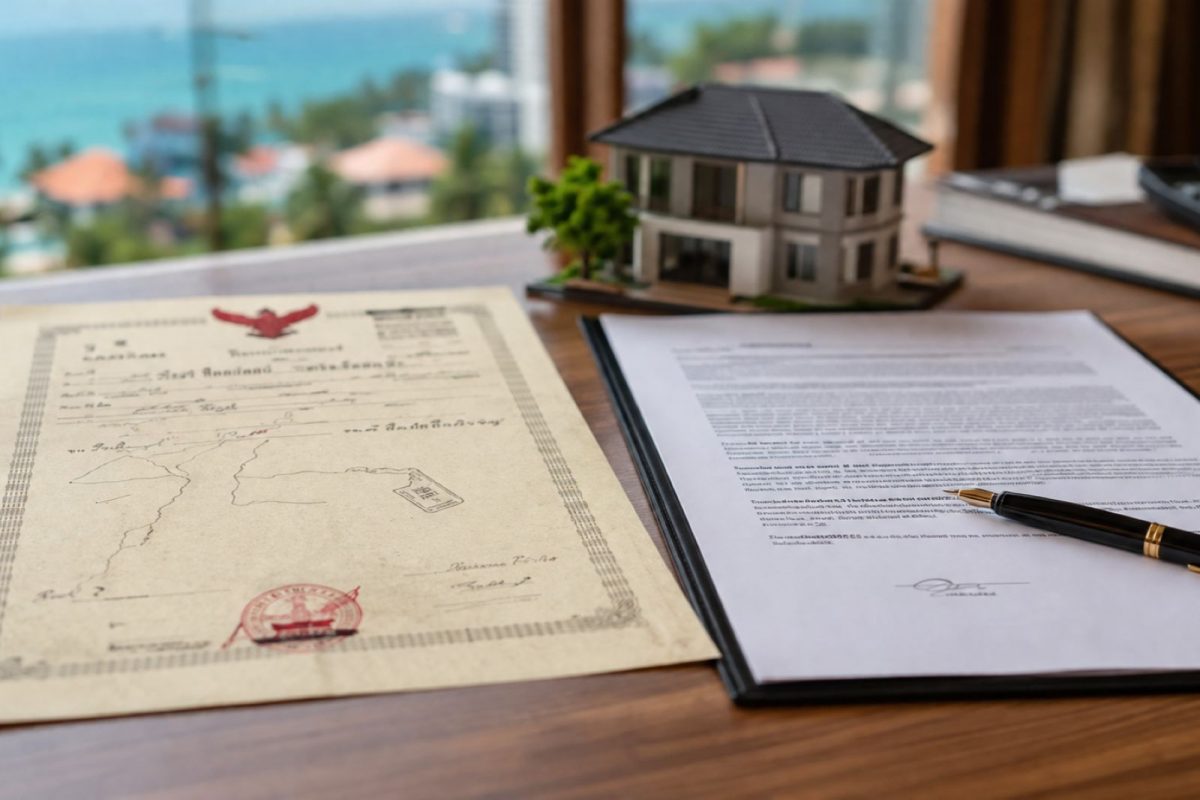
Asset-based bridge loan concept showing global real estate financing for HNW investors and foreign nationals

From how they work and who qualifies, to rates, LTVs, exit strategies, and why global capital from Singapore gives America Mortgages a structural advantage every other lender lacks — this is the only bridge loan guide written specifically for the clients conventional banks decline.

What Is an Asset-Based Bridge Loan?

Asset-Based Bridge Loan

An asset-based bridge loan is a short-term real estate financing facility in which the underwriting decision is made entirely on the value of the property, not the borrower's income, tax returns, employment history, credit score, or domestic financial footprint. The property is the collateral. If the asset value is sufficient and a viable exit strategy exists, the loan funds. Period. 

This single distinction, property first, borrower documentation secondary or irrelevant, is what makes asset-based bridge loans the defining financing tool for high-net-worth individuals, ultra-high-net-worth investors, foreign nationals, US expats, family offices, and globally mobile entrepreneurs who hold significant real estate assets but whose wealth is structured in ways that conventional banks cannot process.

Consider the paradox that defines this market: a Chinese technology founder with $200 million in company equity is declined for a $20 million mortgage because he cannot produce a US W-2. An Indonesian family office owning $17 million of California real estate free and clear cannot access equity because the properties generate no rental income. A UAE-based UHNW investor holding a $25 million portfolio across Manhattan and Beverly Hills cannot access bridge financing because his wealth is held through a Jersey, Channel Islands trust structure that no domestic US lender understands.

In every one of these cases — all real, all closed by America Mortgages — the asset value was exceptional. The bank simply couldn't process the borrower. An asset-based bridge loan resolves this paradox completely. 

How Asset-Based Bridge Loans Work

The mechanics of an asset-based bridge loan are deliberately simple. The complexity is handled by the lender, not the borrower.

Collateral: The real estate asset secures the loan. The lender assesses current market value through an appraisal or broker opinion of value. In some cases, after-repair value (ARV) or after-development value (ADV) is used for properties under development or renovation.

Loan-to-Value (LTV): The loan amount is expressed as a percentage of the property's value. America Mortgages funds up to 65% LTV as standard, with up to 70% LTV available for qualifying transactions.

Term: Bridge loans are short-term by design — typically 12 to 36 months.

Structure: Most asset-based bridge loans are interest-only.

Exit: Every bridge loan funded by America Mortgages has a confirmed, viable exit strategy before the loan closes. 

"When America Mortgages issues a bridge loan, a viable exit strategy is in place before the loan ever funds. Bridge loans... typically 12–36 months, interest-only payments, with rates ranging from 9%–15% depending on the location, the rule of law, and the collateral."
Robert Chadwick, CEO, America Mortgages

Asset-Based Bridge Loans vs. Hard Money Loans: What's the Difference?

The terms "asset-based bridge loan" and "hard money loan" are often used interchangeably. Both are underwritten on property value rather than borrower income.

The key differences:

  • Capital source: Global multi-source vs single domestic fund
  • Max loan size: No limit vs typically $5M–$20M
  • Foreign nationals: Fully supported vs rarely
  • Close timeline: 8–14 days vs 14–30+ days
  • Documentation: No tax returns or credit required vs often required

The key insight: America Mortgages and GMG deliver the flexibility of hard money lending with the pricing and capacity of globally sourced institutional capital. 

Who Qualifies for an Asset-Based Bridge Loan?

The short answer: anyone with a qualifying real estate asset and a viable exit strategy.

Foreign Nationals

No SSN, no US tax returns, no credit history required.

US Expats

Access capital globally without restrictive domestic underwriting.

HNW and UHNW Individuals

Wealth held in complex structures; underwriting is based on the asset.

Family Offices & Private Banks

Preferred referral partner for complex deals.

Business Owners in Liquidity Transition

Bridge loans provide funding before liquidity events close. 

Asset-Based Bridge Loan Rates, LTVs & Terms in 2026

Bridge loan pricing is driven by:

  • LTV
  • Property quality
  • Location
  • Exit strategy
  • Capital source

America Mortgages’ global capital structure creates a pricing advantage.

Standard Parameters:

  • Interest rates: single-digit to 9%–15%
  • LTV: up to 65% (70% possible)
  • Term: 12–36 months
  • Minimum loan: $1M (residential), $3M (commercial)
  • Maximum: no stated limit ($75M+ completed)
  • Personal guarantee: often not required 

Exit Strategies: How the Loan Gets Repaid

Exit 1 — Sale of the Property

Loan repaid through property sale.

Exit 2 — Refinance

Transition to long-term mortgage.

Exit 3 — Business Liquidity Event

Company sale, IPO, or similar.

Exit 4 — Refinance via America Mortgages Programs

Transition to permanent financing with same lender. 

The America Mortgages Process: From Inquiry to Close

  1. Initial Inquiry — Submit property + exit strategy
  2. Term Sheet (24–48 hrs) — Preliminary terms issued
  3. Capital Sourcing — Global funding structured
  4. Legal & Documentation — Coordinated by lender
  5. Funding — 8–14 days (US), 14–28 days (international) 

Real Case Studies: Closed Asset-Based Bridge Loan Transactions

$18M — Chinese Technology Founder — 8 Days

  • 70% LTV
  • Funded in 8 business days

$18M — Indonesian Business Leader — No Monthly Payments

  • 18-month bridge
  • Single-digit rate

$10M — Indonesian Family Office — Equity Release

  • 3 properties
  • Funded in 2 weeks 

Why Singapore Headquarters Is the Competitive Advantage

America Mortgages’ advantage comes from GMG being headquartered in Singapore.

  • Access to global capital pools
  • Asian institutional funds
  • European private banks
  • US debt funds

This enables:

  • Better pricing
  • Faster execution
  • Larger loan capacity

"Global funding reach paired with deep local expertise uniquely positions us to deliver faster, smarter, cheaper and more effective solutions..."
— Robert Chadwick, CEO, America Mortgages

Frequently Asked Questions: Asset-Based Bridge Loans

Q1: What is an asset-based bridge loan in simple terms?

A: A short-term loan based on property value, not income or credit.

Q2: How is it different from a conventional mortgage?
A: Mortgage = borrower-based. Bridge loan = asset-based.

Q3: What rates should I expect in 2026?
A: Typically 9%–15%, with lower rates for premium assets.

Q4: Can I get one without US credit?
A: Yes. No SSN, credit, or tax returns required.

Q5: Maximum LTV?
A: Up to 65%, up to 70% for qualifying deals.

Q6: Timeline?
A: Term sheet in 24–48 hours, close in 8–14 days.

Q7: Can I finance a non-income property?
A: Yes — asset value is what matters. 

Get Asset-Based Bridge Loan Terms in 24 Hours

Tell us your property address and exit strategy. We handle the rest — globally, in your time zone, in 8–14 business days.

AmericaMortgages.com | GMG.asia
US: +1 830-217-6608
Singapore: +65 8430-1541
24/7 Global Team · 57 Countries

Commercial Real Estate Bridge Loans: How Global Investors Finance US Office, Retail, Hospitality & Development Assets — Without a Bank

Commercial real estate bridge loans for office, retail, hotel, and development assets with global capital access

With over $1.3 trillion in US commercial real estate loans maturing in 2025–2026 and banks tightening credit, global investors need a new model. America Mortgages and GMG deliver it — from Singapore, the financial capital of Asia, with onshore and offshore capital that no domestic lender can access. 

Market Alert 2025–2026:

Over $1.3 trillion in US commercial real estate loans are scheduled to mature — and bank credit is tightening. Fast, flexible bridge financing from global capital sources is now the primary solution.

Commercial real estate investors have always understood something that homebuyers rarely encounter: the moment a significant deal requires capital, conventional financing is almost never fast enough, flexible enough, or structurally capable enough to close it. Banks take 60–90 days. Their credit committees are designed for stabilised, income-producing assets with clean, domestic-source financial histories. They are not designed for:

  • Hotel portfolios requiring fast equity release across multiple assets
  • Development sites being acquired ahead of long-term construction financing
  • Foreign national investors holding US commercial real estate with no SSN
  • Maturing commercial loans that cannot be refinanced through the same conventional channel
  • Distressed commercial assets where timing is the entire value proposition

These are precisely the transaction profiles that America Mortgages and Global Mortgage Group (GMG) were built to finance — at speed, at scale, and with global capital that the US domestic market simply cannot match. 

MARKET SIGNAL · 2025–2026

$1.3 Trillion+

In US commercial real estate loans scheduled to mature in 2025 and 2026. With conventional bank credit tightening and alternative lending platforms growing, the commercial bridge loan has become the primary capital tool for investors navigating this maturity wave, particularly for foreign nationals, HNW individuals, and globally structured borrowers whose wealth doesn't fit the bank's documentation framework.

What Is a Commercial Real Estate Bridge Loan?

A commercial real estate bridge loan is short-term financing — typically 12 to 36 months — secured by a commercial property asset. Like all asset-based bridge loans, the underwriting centres on the property value and a viable exit strategy rather than the borrower's personal income, employment history, or domestic credit profile.

The "bridge" refers to the gap the loan spans. This might be the time between acquiring a development site and securing construction financing. The period between purchasing a distressed commercial asset and completing a renovation that qualifies it for long-term DSCR financing. The window between a maturing commercial loan and a refinance that isn't yet possible. Or simply the time needed to release equity from a high-value commercial holding without selling the asset.

For all of these scenarios, America Mortgages and GMG offer a single unified solution: asset-based commercial bridge financing from global capital — faster, more flexible, and more globally accessible than any domestic US commercial lender. 

Commercial Asset Types: What We Finance

Hospitality & Hotels

Single hotel assets, branded portfolios, boutique hospitality, resorts, and serviced apartments. Landmark transaction: $112M hotel portfolio bridge loan, Thailand.

Office

Class A, B, and C office buildings. Repositioning, lease-up, and acquisition bridge loans across US gateway cities and globally.

Retail & Mixed-Use

Retail strips, anchored retail centres, mixed-use commercial-residential, and urban retail assets requiring fast capital or equity release.

Development Sites & Land

Pre-development land acquisition, entitlement-phase bridge, and construction bridge for residential, commercial, and mixed-use developments.

Multifamily & Apartments

Bridge financing for apartment buildings, multifamily assets undergoing value-add, and portfolio equity release for foreign-national owners.

Industrial & Specialist

Industrial assets, data centres, healthcare real estate, self-storage, and other specialist commercial property types. 

When Commercial Investors Need Bridge Financing

Maturing Commercial Loan — Refinance Not Yet Possible

A commercial property loan matures but the permanent refinance requires 3 more months of stabilised occupancy. A bridge loan buys the time. America Mortgages closes in 14–21 days versus the 90+ days a bank would require.

Distressed CRE Acquisition at Below-Market Price

A distressed office building or hotel comes to market at 30% below replacement value. The window to close is 30 days. A commercial bridge loan from America Mortgages provides certainty of close and fast capital deployment.

Foreign National Developer Acquiring US Land

An international developer is acquiring a US development site. No SSN. No US credit history. Income from offshore sources. Bank financing is unavailable. America Mortgages underwrites on the land value and development plan exit.

Hotel Portfolio Equity Release

A hotel operator needs to release equity across multiple assets without selling. The $112M Thailand hotel bridge demonstrates GMG's capacity for portfolio-level hospitality financing at institutional scale — globally.

Value-Add Repositioning Bridge

A multifamily or office asset is being repositioned. During the lease-up period, the asset doesn't qualify for conventional financing. A commercial bridge holds the position until stabilisation.

Cross-Border 1031 Exchange Timing Gap

An international investor is executing a 1031 exchange but the replacement property identification and acquisition timeline creates a capital gap. America Mortgages bridges the gap without disrupting the exchange. 

Landmark Transaction: $112M Hotel Portfolio Bridge Loan — Thailand

$112 Million Bridge Loan Secured Against Hotel Portfolio — Thailand

Global Mortgage Group recently closed one of the largest cross-border hospitality bridge loans in Southeast Asian market history: a $112 million facility secured against a group of hotel assets in Thailand. This transaction required a lender with capital depth for institutional-scale hospitality financing, cross-border expertise navigating Thai corporate and legal structures, multi-source capital architecture capable of competitive pricing at this loan size, and the Singapore-based institutional relationships that made offshore capital available at terms no single domestic Thai or regional lender could provide.

GMG delivered — demonstrating conclusively that the firm's global bridge lending capability extends far beyond US residential assets into large-scale commercial, hospitality, and portfolio-level transactions across Asia and globally.

$112,000,000
Hotel Portfolio
Thailand
Multi-Source 

Whether your wealth is generated in Shanghai, structured in Geneva, or deployed in Los Angeles — or in the case of our Thailand hotel portfolio, structured across multiple South Asian holding vehicles — our asset-based lending platform connects global capital to global real estate. The capital doesn't care about geography. Neither do we.
Robert Chadwick, CEO, America Mortgages

Why Global Capital From Singapore Outperforms US Commercial Bridge Lenders

The commercial real estate bridge lending market in the US is dominated by domestic private equity funds, debt funds, and single-source capital providers. These lenders share two structural limitations that become critical disadvantages at the $10M, $30M, $75M, and $112M levels:

Single capital source: A domestic US commercial bridge lender typically draws from one capital pool — a private fund or debt vehicle with fixed capacity, a fixed margin floor, and a single approval committee. At scale, this limits loan size, constrains pricing, and creates execution uncertainty.

No international framework: The domestic hard money and commercial bridge market was built for US-based borrowers with US-source income. Foreign nationals, globally mobile HNW individuals, international developers, and cross-border investors are treated as exceptions — and often simply declined.

America Mortgages and GMG resolve both limitations simultaneously. Our Singapore headquarters provides direct access to Asian institutional capital pools, European private banking relationships, and US debt funds — all accessed simultaneously for any given commercial bridge transaction. The result is genuine pricing competition across capital sources, institutional-scale capacity, and a borrower framework built from day one for the international investor profile. 

Commercial Bridge Loan Parameters

  • Minimum loan amount: $3,000,000 (US commercial); $1,000,000 (US residential)
  • Maximum: No stated limit — $112M+ funded
  • LTV: Up to 65% standard; up to 70% for qualifying assets
  • Loan term: 12–36 months; interest-only structures available
  • Interest rates: 9%–15% depending on asset class, LTV, location, and term; single-digit available for premium assets
  • Close timeline: 14–21 business days (US commercial); 14–28 days (international)
  • SSN: Not required for foreign nationals
  • US tax returns: Not required
  • US credit: Not required
  • Asset types: Office, retail, hotel, multifamily, mixed-use, industrial, land, development
  • Geographies: US, Singapore, Australia, UK, Thailand, and global 

Frequently Asked Questions

Q1: What is the minimum commercial bridge loan amount?
A: The minimum for US commercial bridge loans through America Mortgages is $3,000,000. There is no stated maximum — the firm closed a $112 million commercial bridge loan against a hotel portfolio in Thailand, with full capability for US commercial transactions at institutional scale.

Q2: Can foreign nationals get commercial bridge loans for US real estate?
A: Yes. This is a core speciality. No US SSN, no US tax returns, no US credit history required. Commercial bridge loans for foreign nationals and non-resident investors are underwritten on the property value, the business plan, and the exit strategy.

Q3: How does a commercial bridge loan exit strategy work?
A: The exit strategy for a commercial bridge loan is how the loan gets repaid at maturity. Common exits include: refinance to permanent DSCR or long-term investment mortgage, sale of the property, completion of development and conventional construction financing, or proceeds from a business transaction. America Mortgages confirms a viable exit before every commercial bridge closes.

Q4: Do you fund commercial bridge loans outside the US?
A: Yes. GMG funds commercial bridge loans in Singapore, Australia, the UK, Thailand, and expanding global markets. The $112 million Thailand hotel portfolio bridge is the clearest demonstration of this international commercial capability.

Q5: What's the difference between a commercial bridge loan and a construction loan?
A: A commercial bridge loan provides fast, short-term capital against an existing asset's current value. A construction loan is specifically structured around building costs, draw schedules, and after-construction value. GMG provides both, and can bridge a development site acquisition ahead of a formal construction loan, which is one of the most common use cases in the pre-development phase.

Q6: How competitive are commercial bridge loan rates from America Mortgages versus domestic lenders?
A: More competitive for most qualifying transactions, particularly above $10 million. America Mortgages' multi-source global capital model means rates reflect competition across multiple funding pools rather than a single domestic fund's margin floor. For premium assets at lower LTVs, this advantage is most pronounced. 

Commercial Bridge Loan Terms in 24 Hours

Tell us your asset type, location, loan amount, and exit strategy. We structure and price within 24 hours, and close in 14–21 days for qualifying US commercial transactions.

AmericaMortgages.com | GMG.asia
US: +1 830-217-6608
Singapore: +65 8430-1541
Global 24/7 Team · 57 Countries

Global Real Estate Bridge Loans: From $112M Thailand Hotel Portfolio to Beverly Hills Estates

Global real estate bridge loans spanning Thailand hotel portfolio and Beverly Hills luxury estates

The World's Most Globally Connected Real Estate Bridge Lender: From $112M Thailand Hotels to Beverly Hills Estates

Based in Singapore, the financial capital of Asia, we deploy onshore and offshore capital across six continents to deliver asset-backed real estate bridge loans that no bank, and no domestic lender, can replicate.

There is a category of real estate financing that the world's largest banks cannot deliver. The transaction is too fast. The borrower is too international. The asset is in the wrong jurisdiction. The wealth structure is too complex. The documentation the bank requires does not exist, because the client's wealth was never structured to produce it.

This is not a niche problem. It is the defining financing challenge of global wealth management in the 21st century. And it is precisely the problem that Global Mortgage Group (GMG) and its US subsidiary America Mortgages were built to solve, at scale, at speed, and across geographies that no single-country lender could reach.

From our headquarters in Singapore, the financial capital of Asia, the city where private banks, family offices, sovereign wealth structures, and institutional capital converge in a single regulated ecosystem, we have built the world's most globally connected real estate bridge lending platform. And we have the closed transactions to prove it.

Key Metrics

  • $1.5B+ Total funded loans since 2019
  • 57 Countries served
  • 97% Approval rate
  • $480M+ Funded in past 12 months
  • 8 Days Fastest close on record

$112 Million Bridge Loan — Hotel Portfolio, Thailand

Landmark Transaction · Southeast Asia

Global Mortgage Group recently closed one of the largest cross-border real estate bridge loans in Southeast Asian market history: a $112 million facility secured against a group of hotel assets in Thailand. This transaction represents everything that makes GMG unique in the global bridge lending market.

The deal required a lender with the capital depth to fund at this scale without domestic institutional constraints, the cross-border expertise to navigate Thai corporate and legal structures, the hospitality asset underwriting capability that most residential-focused bridge lenders lack, and the Singapore-based network to access the offshore capital pools that made competitive pricing possible at this transaction size.

GMG delivered. The $112 million Thailand hotel portfolio bridge loan stands as a landmark demonstration of global bridge lending capability — and as proof that GMG's reach extends far beyond the US residential market into global commercial, hospitality, and institutional-scale transactions.

Loan Details:

  • Loan Amount: $112,000,000
  • Asset Class: Hotel Portfolio
  • Market: Thailand
  • Structure: Cross-Border

"Regardless if you're in the US, Singapore, Hong Kong, HCMC, or Phnom Penh, America Mortgages Bridge is a viable short-term financing option to assets you may own globally and wish to keep but have a short-term liquidity issue. In most cases, we take a loan from application to funding in a matter of 10 days."
Robert Chadwick, CEO, America Mortgages

Why Singapore: The Capital Advantage That Defines GMG

Every conversation about Global Mortgage Group eventually returns to one defining fact: we are headquartered in Singapore. This is not a detail, it is the structural source of every competitive advantage we hold.

Singapore is the financial capital of Asia. It is home to over 1,500 registered family offices, dozens of the world's leading private banks, major sovereign wealth fund operations, and a highly sophisticated institutional lending market. The city sits at the intersection of Asian wealth creation, Chinese, Indian, Southeast Asian, and increasingly Middle Eastern, and globally diversified real estate investment.

GMG's position at the centre of this ecosystem means we maintain direct, active capital relationships that no US-based lender has ever built. Asian institutional capital pools. Offshore private lending funds structured through Singapore. European private bank relationships. All accessed simultaneously for any given transaction, with the coordination complexity handled by GMG, not the client.

The result is a multi-source capital model that delivers genuine market competition for every dollar we deploy. When we fund a bridge loan, whether in Los Angeles, Manhattan, Miami, Singapore, Bangkok, or London, the pricing reflects competition across multiple global capital pools, not the margin floor of a single domestic fund.

"When certainty, speed, and execution are non-negotiable — our team delivers outcomes that traditional banks and conventional mortgage lenders simply cannot match. Global wealth requires global solutions."
Robert Chadwick, CEO, America Mortgages

Global Bridge Loan Markets: Where We Lend

United States

California, New York, Florida, and nationwide. All property types. Specialty in foreign national and HNW/UHNW bridge financing. Close from 8 days.

Singapore

GMG's largest single bridge market. Condos, Good Class Bungalows, commercial, and investment properties. Rapid-close expertise for Singapore's fast-moving market.

Thailand

GMG's fastest-growing bridge market. Phuket luxury villas, Pattaya residential, Bangkok commercial, and, as evidenced by the landmark $112M closing — hotel portfolio bridge financing.

Australia

Sydney, Melbourne, Brisbane, and major metro markets. Residential, commercial, and development bridge financing for international investors and domestic HNW clients.

United Kingdom

London and nationwide. Residential and commercial bridge financing for international buyers, US expats, and HNW clients. Cross-border from Singapore or US offices.

Emerging & Specialist Markets

Hong Kong, Philippines, Vietnam, Cambodia, Dubai, Portugal, Spain, and expanding. If an asset Flies or Floats, GMG can Finance it.

Global Asset-Backed Bridge Loans: What We Finance

  • Ultra-Luxury Residential Estates
    Beverly Hills, Manhattan, Miami Beach, Palm Beach, Singapore GCBs, London Prime, Phuket villas
  • Commercial Real Estate
    Office, retail, mixed-use, industrial — US, UK, Australia, and Asia
  • Hospitality & Hotel Portfolios
    Including the landmark $112M Thailand hotel portfolio bridge
  • Development Sites & Construction
    Pre-development land, construction bridge, completion bridge
  • Investment & Portfolio Properties
    Multi-property cross-collateralised bridge loans
  • Owner-Occupied Primary Residences
    Luxury homes across all markets
  • Distressed & Time-Sensitive Acquisitions
    Capital in days, not months
  • Alternative Assets
    Private jets, yachts, commercial vessels

The Global Bridge Loan Clients We Serve

Foreign Nationals — Any Country, Any Asset

International investors from over 57 countries who own or are acquiring real estate globally. No US Social Security Number, no domestic tax returns, no local credit history required. Underwriting is based on the asset value and a viable exit strategy.

US Expats Holding Global Real Estate

American citizens living abroad who hold real estate in the US or globally and require access to capital without navigating restrictive domestic underwriting processes.

HNW and UHNW Individuals & Family Offices

High-net-worth and ultra-high-net-worth individuals whose wealth is held in complex structures. We lend on the asset when traditional banks cannot.

Private Banks, Family Offices & Wealth Advisors

Preferred referral destination for private banks globally when bridge financing is too complex, too fast, or too cross-border.

Global Bridge Loan Case Studies

$18M — Chinese Tech Founder, Bird Streets LA — 8 Business Days

  • 70% LTV
  • No income documentation
  • Closed in 8 business days

$18M — Indonesian Business Leader, Beverly Hills Estate

  • 18-month bridge loan
  • No monthly payments
  • Single-digit interest rate

$25M — UAE UHNW Investor — Cross-Coastal

  • Manhattan + Beverly Hills
  • 4 time zones
  • Closed in 10 days

$10M — Indonesian Family Office — 3 California Homes

  • Cross-collateralised
  • 2-year interest-only loan
  • Funded in 2 weeks

February 2025 Global Bridge Loan Report

In February 2025, GMG published its monthly bridge loan funding report — covering 11 closed transactions across Singapore, the United States, Australia, London, and Thailand, with an average drawdown under 14 business days.

The report covered transactions ranging from Singapore Good Class Bungalow refinances and Phuket luxury villa bridges to US investment property equity release and Australian residential bridges.

Each represented a borrower that a conventional bank had been unable to serve. Each closed within weeks, not months.

This is the global bridging loan market as it actually operates, and GMG is operating at its centre.

Frequently Asked Questions: Global Bridge Loans

Q1: What makes Global Mortgage Group unique among global bridge lenders?
A: GMG is the only global bridge lender headquartered in Singapore with simultaneous access to multiple global capital sources, delivering better pricing, higher LTVs, and faster execution.

Q2: Can you fund bridge loans for commercial and hospitality assets?
A: Yes. Including large-scale transactions like the $112M Thailand hotel portfolio.

Q3: What is the minimum and maximum bridge loan size globally?
A: Minimum: $1,000,000 (US assets). No fixed maximum.

Q4: How does the bridge loan process work for an international asset?
A: Submit details → Term sheet in 24–48 hours → GMG handles structuring → Close in 8–28 days depending on market.

Q5: Is America Mortgages the same as Global Mortgage Group?
A: America Mortgages is the US subsidiary of GMG.

Q6: What countries do you fund in?
A: US, Singapore, Australia, UK, Thailand, Hong Kong, UAE, Europe, and expanding globally.

The World's Bridge Loan — Applied to Yours

Whether it is a $1 million California investment property or a $112 million hotel portfolio in Thailand, our team structures a solution in 24 hours. No bank committees. No domestic constraints. Just the asset and the exit strategy.

AmericaMortgages.com | GMG.asia

US: +1 830-217-6608
Singapore: +65 8430-1541
[email protected]
24/7 Global Team · 30 Loan Officers · 12 Countries

The Apartment Your Family Bought In New York In 1987 Is Now Worth Ten Times What You Paid. Have You Ever Tried To Release That Equity?

Aerial view of a U.S. residential neighborhood, representing long-term property appreciation and the opportunity to unlock significant equity from real estate held over decades.

Why European and global high-net-worth families with long-held US property in New York, Los Angeles, and Florida are sitting on decades of untapped appreciation — and how international equity release finance is finally making that wealth accessible without selling

There is a particular category of asset that exists in the portfolios of certain European and globally mobile families — an asset that was acquired almost casually, held through multiple market cycles with little attention, and has quietly become one of the most valuable things the family owns.

It is the apartment on the Upper East Side that a German industrialist bought for his daughter when she was studying at Columbia in 1989. It is the condominium on Fisher Island that a French business family acquired during a Miami sailing trip in 1994 because the price seemed reasonable and America felt like a safe place to put capital. It is the house in Beverly Hills that a British media executive purchased in 1997 during a period when Los Angeles felt like the centre of the world and the dollar was weak enough to make the numbers compelling. It is the Hamptons weekend house that a Dutch financial family bought in 2001 for USD 1.8 million because New York had always been their second city and they wanted something within reach of it.

None of these families bought their American property as a speculative trade. They bought it because they had a connection to the United States — professional, personal, educational, cultural — and because American real estate felt like a rational and permanent place to hold a portion of their wealth. They paid what seemed like a significant sum at the time. And then they held. And held. And the American property market did what it has done, with remarkable consistency, across the past four decades.

The apartment bought in 1989 for USD 400,000 is worth USD 3.5 million today. The Fisher Island condominium purchased for USD 650,000 in 1994 is worth USD 4.2 million. The Beverly Hills house acquired for USD 2.1 million in 1997 is worth USD 11 million. The Hamptons weekend house that cost USD 1.8 million in 2001 is worth USD 9 million today.

The equity in these properties — accumulated over thirty and forty years of American real estate appreciation — is extraordinary. And for the overwhelming majority of the European and global HNW families who hold it, that equity has never been touched. It has never been accessed, leveraged, or deployed. It simply sits there, compounding, while the families who own it manage their capital around it as though it were fixed and immovable.

It does not have to be that way.

The European Relationship With American Real Estate: A History Of Quiet, Long-Term Wealth Creation

To understand why so much untapped equity exists in the hands of European and globally mobile HNW families, it helps to understand how that relationship with American property developed and why it has been so durable.

The first significant wave of European HNW investment in American residential real estate began in the late 1970s and accelerated through the 1980s. Several forces converged to make the United States an attractive destination for European private capital during this period. The dollar weakened significantly against European currencies in the late 1970s, making American assets cheap in European terms. New York — despite the fiscal crisis of the mid-1970s and the social challenges that followed — retained its position as the world's pre-eminent financial and cultural capital, and Manhattan real estate prices had not yet begun the long appreciation cycle that would define the following four decades. European families who had children studying at American universities — Columbia, NYU, Harvard, MIT — found that purchasing Manhattan apartments rather than renting made straightforward financial sense, and those purchases became the anchor of long-term American property relationships that in many cases have now extended to a second and third generation.

Miami and South Florida attracted a different wave of European capital, driven partly by the emergence of Miami as the gateway city for Latin American commerce and culture, and partly by the straightforward lifestyle appeal of Florida's climate, coastline, and low tax environment. British, German, Scandinavian, and Dutch families who had established business interests in Latin America found Miami a natural second base. The early condominium developments on Fisher Island, Key Biscayne, and along the barrier islands of Palm Beach County were priced at levels that, in retrospect, look almost impossible to believe — and they were bought by European buyers who valued quality, privacy, and the tangible reality of American property rights above speculative return calculations.

Los Angeles attracted European capital through the entertainment industry's gravitational pull and through the city's position as the natural US terminus of the trans-Pacific trade and cultural relationship. British, French, Italian, and Scandinavian buyers who had professional or personal connections to the film, television, and music industries established footholds in Beverly Hills, Bel Air, and the Hollywood Hills during the 1980s and 1990s. German and Dutch buyers who arrived later — in the 2000s — found that the Pacific Palisades, Malibu, and the Santa Monica corridor offered a combination of lifestyle credentials and capital safety that justified the investment even at prices that had already risen considerably from the 1980s baseline.

What characterises almost all of these acquisitions — across New York, Miami, and Los Angeles — is the intention behind them. These were not trades. They were not speculative positions. They were deliberate, long-term allocations of family capital to what European buyers correctly perceived as one of the world's most stable and legally robust property markets. The families who made these purchases expected to hold them. They have held them. And the holding period — ten, twenty, thirty, in some cases forty years — has produced equity positions that the original buyers could not have imagined when they signed the contracts.

The Numbers: What Four Decades Of American Property Appreciation Have Created

The scale of appreciation that US prime residential markets have delivered for long-term holders is worth examining in detail, because it is the foundation of the equity release opportunity that most European and global HNW families have never engaged with.

New York and Manhattan

Manhattan residential property has appreciated by approximately 600–800% in nominal terms since 1985, with the most sought-after buildings and neighbourhoods outperforming that average substantially. A co-operative apartment on Park Avenue purchased for USD 500,000 in 1985 is worth USD 4–6 million today. A Tribeca loft acquired for USD 300,000 in 1990 — when Tribeca was still considered a marginal neighbourhood by the standards of the day — may now be worth USD 3–5 million. A prime condominium on the Upper West Side bought for USD 800,000 in 1995 is likely worth USD 4–7 million depending on the building and the specific unit.

For European buyers who acquired in US dollars during periods when the dollar was weak against the Deutsche Mark, the Swiss franc, the Dutch guilder, or sterling, the currency appreciation compounds the already significant nominal return. A German family that paid DM 800,000 for a Manhattan apartment in 1989 — when the dollar was at approximately 1.80 Deutsche Marks — converted roughly DM 450,000 into that apartment purchase. The same apartment is now worth USD 3.5 million. The currency-adjusted return is exceptional by any measure.

Miami and South Florida

Miami's transformation from a regional American city to a global financial and lifestyle capital is one of the most dramatic urban stories of the past thirty years, and it has been directly reflected in property values. Fisher Island — the private island community accessible only by ferry, which was developed in the late 1980s and early 1990s and marketed heavily to European and Latin American HNW buyers — has seen values multiply many times over from original purchase prices. Residences that sold for USD 400,000–700,000 in the early 1990s now trade at USD 3–8 million for comparable units, with waterfront positions commanding more.

The broader Palm Beach and Boca Raton market, which has long been popular with British, German, and Scandinavian families who appreciate the combination of warm climate, golf infrastructure, and the proximity to Palm Beach's established social community, has seen consistent long-term appreciation. Properties purchased in the 1990s for USD 500,000–1,500,000 are now frequently worth USD 3–8 million depending on location and specification.

Miami Beach and South Beach, which attracted a wave of European buyers in the 1990s as the Art Deco revival transformed the neighbourhood from derelict to desirable, have seen extraordinary appreciation in the three decades since. A South Beach penthouse purchased for USD 600,000 in 1996 may now be worth USD 5–7 million.

Los Angeles and Southern California

Beverly Hills, Bel Air, and the Westside Los Angeles luxury market have delivered exceptional long-term appreciation. A Beverly Hills home purchased for USD 1.5 million in 1990 is likely worth USD 8–12 million today. A Pacific Palisades property acquired for USD 900,000 in 1995 may now command USD 6–9 million. Malibu's oceanfront — always expensive, but purchased by European buyers in the 1980s and 1990s at prices that seemed high at the time — has seen per-square-foot values exceed USD 10,000 for Carbon Beach positions, representing appreciation of fifteen to twenty times original purchase prices over forty years in some cases.

The Hamptons and the Northeast

For European families with strong New York connections, the Hamptons has served as the natural American country house — the weekend and summer counterpart to the Manhattan pied-a-terre. Southampton and East Hampton properties purchased in the 1990s for USD 1–3 million now regularly achieve USD 8–25 million. The oceanfront estates along Meadow Lane and Further Lane that seemed the preserve of old American money when European buyers first encountered them in the 1980s are now trading at USD 40–100 million — prices that would have been unimaginable to the families who bought the adjacent properties thirty years earlier.

"European families have had a unique and deeply personal relationship with American cities — particularly New York, Miami, and Los Angeles — for four or five decades. Many of them hold property that was purchased at prices that today seem almost historical. The equity that has accumulated in those properties over thirty or forty years of American real estate appreciation is genuinely extraordinary. And most of those families have never once explored what it would mean to release a portion of that equity without selling. That is the conversation we want to have."
— Donald Klip, Co-founder, Head of GMG Capital Advisory

Why This Equity Has Never Been Touched

For all the appreciation that European and global HNW families have seen in their American properties, the equity locked within those assets has in most cases remained entirely inaccessible — not because the families chose not to access it, but because the US financial system was never designed to serve them.

The American mortgage and home equity lending market operates on the assumption that borrowers are US residents with Social Security Numbers, domestic credit histories, and income documented through W-2 forms and US tax returns. The European family that has held a Manhattan apartment for thirty years — that receives income from a German business, a Swiss trust, a British investment portfolio, or a French family company — does not fit any of those parameters. When they have approached US banks to release equity from their American property, the answer has consistently been the same: the system cannot process them.

Some of the most specific barriers European and global HNW families face when seeking US property equity release:

No US credit history: A German or British family that has owned a Manhattan apartment since 1988 but has never lived in the United States, never held a US credit card, and never taken a US loan has no FICO score. Zero. Regardless of their wealth, their creditworthiness in every other jurisdiction, and their thirty-five-year track record of maintaining US property ownership — the American credit scoring system does not know they exist.

Foreign income that US underwriters cannot assess: The income that services a German industrialist's lifestyle — dividends from a private company, returns from a German property portfolio, distributions from a family trust — arrives in euros, is documented in German, and is filed on German tax returns. US mortgage underwriters, trained on W-2 forms and 1040 returns, have neither the mandate nor the methodology to assess this income reliably. The result is that the income is excluded, discounted, or assessed in a way that produces a qualifying income number entirely disconnected from the family's actual financial capacity.

Offshore holding structures: Many European buyers — particularly those who acquired in the 1980s and 1990s with the benefit of legal and tax advice of that era — hold their American property through offshore structures: Cayman Islands companies, British Virgin Islands holding entities, Liechtenstein foundations, or similar vehicles. These structures made excellent legal and tax sense when established, and continue to serve legitimate estate planning and liability management purposes. But they are structures that the vast majority of US conventional lenders will not lend against.

Non-resident status: Fannie Mae and Freddie Mac — the government-sponsored enterprises that underpin the US conforming mortgage market — have specific restrictions on lending to non-resident foreign nationals. Most US banks that have historically offered foreign national home equity programmes have tightened significantly or withdrawn from this market entirely in the post-2008 regulatory environment.

The result is a generation of European and global HNW families who own American property worth many multiples of what they paid for it, who have never once been able to access a dollar of the equity embedded in that appreciation, and who — until now — had no alternative to either holding and leaving the equity dormant or selling an asset with deep personal and historical significance to the family.

The Equity Release Solution: How It Works For European And Global Hnw Families

GMG provides senior secured equity release facilities against qualifying US residential and commercial property for European, Asian, Middle Eastern, and globally mobile HNW families and individuals. America Mortgages — GMG's US subsidiary and the only US mortgage lender focused exclusively on overseas borrowers — provides long-term refinancing solutions for the same borrower profile.

The equity release facility is assessed on the US property value and the exit strategy — not on US income documentation, US credit scores, or Social Security Numbers. The question GMG asks is straightforward: is the equity there, and is there a credible plan for repayment? If the answer to both is yes, the conversation moves forward.

Key parameters:

  • Loan size: USD 500,000 to USD 20,000,000+
  • Term: 6 to 24 months
  • LTV: Up to 65–70% of independently appraised US market value
  • Interest: Retained or rolled up — no monthly payment obligation in most structures
  • Security: US residential (single-family home, condominium, co-operative where lendable, townhouse), commercial, mixed-use
  • Borrower: European nationals, non-US residents, offshore holding companies, family trusts, foundations
  • No SSN, no US credit history, no US income documentation required at the equity release stage
  • Offshore structures: UK SPVs, BVI companies, Cayman entities, family trusts considered subject to due diligence
  • Timeline: Indicative term sheet 24–48 hours; drawdown typically 10–20 business days

The retained interest structure is particularly important for European families whose income is not documented in US-recognisable formats. In a retained interest structure, the total interest for the loan term is calculated upfront and deducted from the loan proceeds. There is no monthly repayment requirement. The facility is repaid in full at maturity from the exit event — a property sale, a long-term refinancing, the receipt of other capital, or a portfolio rebalancing. The monthly income question simply does not arise.

What European And Global Families Do With The Released Equity

The uses of released equity are as varied as the families themselves. The most common applications GMG sees from European and globally mobile HNW clients with long-held US property include:

Funding a property acquisition in another market without liquidating the US asset

The most frequent reason European families want to release equity from a long-held US property is to fund an acquisition elsewhere — in London, in Singapore, in Dubai, or back in their home country — without having to sell the American asset. The US property has sentimental value, family history, and in many cases significant ongoing utility as a pied-a-terre or holiday home. Selling it is not the preferred outcome. Releasing a portion of its equity to fund the next investment is.

Deploying capital into a business opportunity or private investment

Family-owned businesses, private equity co-investments, and private credit opportunities all present themselves on timelines that do not accommodate the US conventional mortgage process. A European family whose US property equity release is the most efficient source of capital for a time-sensitive business opportunity needs the facility arranged in weeks, not months.

Rebalancing family wealth without a forced sale

Long-term holders of American property have, in many cases, seen their US real estate become a disproportionately large percentage of their overall net worth — not through any deliberate decision, but simply through appreciation. Releasing a portion of the equity allows the family to rebalance their portfolio, diversify into other asset classes, and reduce concentration risk without triggering the transaction costs, capital gains implications, and emotional disruption of a property sale.

Funding the next generation's property purchase

European families with American property connections frequently have children or grandchildren who want to establish their own American foothold — a first apartment, a career-stage purchase in New York or Los Angeles — and for whom the family's existing US equity is the most logical and tax-efficient source of capital. Equity release against the family's existing American asset provides the capital for the next generation's purchase without requiring the sale of the family's own holding.

Estate planning and wealth structuring

For families that hold US property in offshore structures established decades ago, there is frequently a need to restructure the ownership as part of broader estate planning — updating the holding vehicle, adding beneficiaries, or simplifying the structure in response to changes in tax law. Equity release finance provides liquidity during the restructuring period, enabling the family to manage the transition without being forced to sell at an inopportune moment.

Is US Property Equity Release Right For Your Family?

This solution is most relevant if one or more of the following describes your situation:

  • Your family owns US property — in New York, Miami, Los Angeles, the Hamptons, Palm Beach, or another major US market — that was purchased ten, twenty, thirty, or more years ago at a fraction of its current value
  • The equity in that US property has never been accessed and represents a significant portion of your family's net worth
  • Your income is earned and documented outside the United States in a way that US mortgage underwriters cannot accommodate
  • Your US property is held through an offshore holding structure, family trust, or foundation
  • You have a capital need — a property acquisition, an investment, a business opportunity, an estate planning requirement — that the equity in your US property could fund
  • You have previously been told by a US bank that they cannot help because you do not have a Social Security Number, a US credit history, or US-documented income
  • You want to access your US equity without selling a property with deep personal or family significance

How To Get Started

The conversation is straightforward. Contact Donald Klip; [email protected] or visit www.gmg.asia. For long-term mortgage solutions through America Mortgages, visit americamortgages.com. Our team covers London, Singapore, Hong Kong, Dubai, and New York time zones and is available for calls, video meetings, and in-person discussions in London and Singapore for qualifying borrowers.

To receive an indicative equity release term sheet, we need only: the US property address and type, the estimated current market value, any existing mortgage balance, the approximate equity release amount required, the desired loan term, and a brief description of the intended use of funds and repayment plan.

No tax returns. No W-2 forms. No US credit history. No Social Security Number. The initial conversation is about the property, the equity, and the plan.

---

Disclaimer: This article is for informational purposes only and does not constitute financial, legal, or tax advice. US property law and lending regulation vary by state. All loan terms are indicative and subject to GMG credit assessment and independent US appraisal. America Mortgages, Inc. is a registered US mortgage lender.

You Own Millions In U.S. Real Estate. The American Banking System Will Not Let You Touch It.

Close-up of a house model against the American flag, symbolizing high-value U.S. real estate holdings and the challenge of accessing equity within the American banking system.

The complete guide to releasing equity from high-value U.S. property as a foreign national, overseas investor, or globally mobile HNW individual — when your bank says no, your income does not fit the form, and the opportunity will not wait

You did not stumble into this situation. You made a deliberate, considered decision to invest in American real estate — one of the world's most liquid, most legally transparent, and historically most appreciating property markets. You bought in Manhattan, or Beverly Hills, or Miami Beach, or the Hamptons. You have owned the property for years, perhaps decades. You have watched the value climb in a way that has materially added to your net worth. The equity is real, it is substantial, and in any rational world it should be accessible.

And then you tried to borrow against it.

If your financial life exists primarily outside the United States — if your income comes from a business in Singapore, a family trust in the Cayman Islands, a portfolio managed from Geneva, a company headquartered in Hong Kong — you already know what happened next. The American mortgage system, built around Social Security Numbers, W-2 income forms, domestic credit scores, and debt-to-income ratios calculated on U.S. tax returns, looked at your financial profile and produced an answer that had no relationship to your actual wealth: declined, or approved for a fraction of what you need, or approved in twelve weeks — long after the opportunity you needed the capital for has closed.

This guide is for you. It explains why the conventional U.S. equity release market fails the internationally mobile property owner, what the real numbers look like in the markets where HNW international buyers have concentrated, and how GMG and America Mortgages provide equity release solutions that work for the financial profiles the mainstream U.S. lending market cannot serve.

The U.S. Property Wealth That Is Sitting Inaccessible

The scale of equity that internationally mobile buyers have accumulated in U.S. prime residential markets is significant by any measure. Over the past twenty to twenty-five years, the appreciation in the markets that have attracted the most international capital has been exceptional.

In Manhattan, buyers who acquired prime condominium units in the late 1990s and early 2000s — Tribeca lofts, Upper West Side co-ops converted to condos, the earliest luxury towers on the West Side — paid prices that now look extraordinary in retrospect. A Tribeca apartment purchased for USD 900,000 in 2001 is likely worth USD 4–6 million today. A unit in one of the Plaza District's white-glove buildings bought for USD 1.5 million in 2003 may now be worth USD 6–9 million. The very top of the Manhattan market — Billionaires' Row, where 432 Park Avenue, One57, and Central Park Tower have set new global benchmarks — has seen per-square-foot values reach USD 5,000–8,000 for the finest units, representing extraordinary appreciation from earlier purchase prices.

In Beverly Hills and the broader Los Angeles luxury market, international buyers who acquired in the 2000s and early 2010s have seen consistent and significant value growth. A Beverly Hills home purchased for USD 3 million in 2005 may now be worth USD 10–15 million. Malibu's Carbon Beach oceanfront properties have crossed USD 10,000 per square foot for the most sought-after positions. Bel Air and Holmby Hills estates have reached USD 30–100 million for the most significant properties, representing multiples of what they sold for twenty years ago.

The Hamptons — Southampton, East Hampton, Bridgehampton, Sagaponack — have seen sustained appreciation driven by the concentration of financial, media, and technology wealth in New York. Oceanfront estates that traded in the early 2000s for USD 8–15 million now regularly command USD 40–80 million. The overall market has been underpinned by a consistent and growing demand that has compressed the gap between asking and achieved prices.

In Miami, the structural transformation of the past five years — driven by the migration of financial services from New York, Latin American capital flows, and the appeal of zero state income tax — has permanently elevated values across Fisher Island, Brickell, South Beach, Palm Beach, and Coral Gables. Properties that were purchased in the 2010–2018 window have in many cases doubled in value.

In San Francisco, Bay Area technology wealth has driven residential values to levels that few could have predicted in the early 2000s. Pacific Heights and Sea Cliff homes purchased for USD 2–3 million before 2010 are now worth USD 8–15 million.

The equity positions are real. The problem is access.

Why The U.S. Mortgage System Cannot Serve The International Property Owner

The United States residential mortgage market is backstopped by Fannie Mae and Freddie Mac — the government-sponsored enterprises whose underwriting guidelines set the standards for the vast majority of U.S. home loans. Those guidelines require three things that the internationally mobile property owner typically cannot provide: a Social Security Number or ITIN, a U.S. credit history, and income that is verifiable through U.S. tax documentation.

These are not suggestions. They are the structural requirements of the system. And for the foreign national property owner — regardless of how wealthy they are, how valuable their property is, or how long they have held it — they create a wall.

Specific barriers faced by international U.S. property owners seeking equity release:

No Social Security Number or established ITIN: Foreign nationals who are not U.S. residents typically do not have an SSN. Obtaining an ITIN (Individual Taxpayer Identification Number) is possible but requires engagement with the IRS and time that may not be available when a capital need is immediate.

No U.S. credit history: The American credit scoring system — FICO scores built from domestic credit card usage, loan payment history, and U.S. financial activity — is meaningless for a buyer whose financial life has existed primarily in Singapore, Hong Kong, London, or Dubai. No U.S. credit activity means no U.S. credit score. No U.S. credit score means automatic disqualification from most conventional U.S. lending products.

Foreign income documentation: U.S. mortgage underwriters are trained to assess W-2 income forms and 1040 tax returns. Income earned from a Singapore business, a Hong Kong family office, a European investment portfolio, or a Cayman trust simply does not map onto these documents. Many U.S. underwriters do not have the mandate or the training to assess foreign income documentation even where it is comprehensive and verifiable.

Non-resident status: Fannie Mae and Freddie Mac have specific restrictions on lending to non-resident foreign nationals, and many U.S. lenders have withdrawn from this segment of the market entirely following risk management changes in the post-2008 period.

Offshore holding structures: A significant proportion of international buyers hold their U.S. property through U.S. LLCs, offshore holding companies, or trust structures — for legitimate tax, estate planning, and liability management reasons. Many conventional U.S. lenders will not extend equity release facilities to borrowers whose U.S. property is held in these structures.

The handful of U.S. banks that have historically offered foreign national equity release or mortgage programmes — HSBC Private Bank, Citibank Private Bank, East West Bank — offer products that are slow (45–90 day timelines in many cases), heavily documented, and in competitive capital deployment situations, completely unusable.

The result: the internationally mobile property owner who needs to access equity from their U.S. real estate is typically left with two options — sell the property, or leave the equity stranded. Neither is acceptable when there is a better solution available.

"The United States is the world's most important real estate market. It is also the market where the conventional lending system is most systematically unhelpful to the foreign national owner who wants to access the equity they have built up. You can own a USD 6 million apartment in Manhattan with no mortgage, have held it for fifteen years, and still find that no mainstream U.S. lender will release equity against it because your income comes from Singapore. That is the problem we built our U.S. equity release programme to solve."
— Donald Klip, Co-Founder, Head of GMG Capital Advisory

How International U.S. Property Equity Release Works

GMG provides senior secured equity release facilities against qualifying U.S. residential and commercial property for foreign nationals, overseas investors, and internationally mobile HNW individuals and family offices. America Mortgages — GMG's U.S. subsidiary and the only U.S. mortgage lender focused exclusively on overseas borrowers — provides long-term refinancing solutions once the immediate equity release need has been met.

The equity release facility is asset-led and exit-strategy-led. The primary assessment criteria are the value of the U.S. property, the loan-to-value ratio, and the credibility of the repayment plan. U.S. income documentation, credit scores, and Social Security Numbers are not the determining factors.

Key parameters:

  • Loan size: USD 500,000 to USD 20,000,000+
  • Term: 6 to 24 months
  • LTV: Up to 65–70% of independently appraised U.S. market value
  • Interest: Retained or rolled up — no monthly payment obligation in most structures
  • Security: U.S. residential (single-family, condominium, townhouse), commercial, mixed-use property in major markets
  • Borrower: Foreign nationals, U.S. expatriates, U.S. LLCs with foreign beneficial owners, offshore holding entities, international trusts
  • Income assessment: Asset and exit-strategy led — Fannie Mae and Freddie Mac income criteria do not apply
  • No SSN or U.S. credit history required at the equity release stage
  • Timeline: Indicative term sheet 24–48 hours; drawdown typically 10–20 business days

The Situations Where International U.S. Equity Release Matters Most

A time-sensitive investment opportunity that requires capital now

For internationally mobile HNW individuals, the most common trigger for U.S. property equity release is an investment opportunity that has a closing deadline. A co-investment alongside a private equity fund. A business requiring capital. A property acquisition in another market. A private credit opportunity closing on a specific date. If the capital is locked in a U.S. property and the only conventional path to releasing it requires twelve weeks of documentation, the opportunity closes. GMG's equity release facility can typically be arranged in 10–20 business days — a timeline that matches real-world investment deadlines.

Acquiring a second or third U.S. property without going through the U.S. mortgage system again

International buyers who already own U.S. property and want to expand their U.S. holdings face the same underwriting barriers they faced the first time — only now with the additional complexity of existing U.S. property debt. Releasing equity from an existing U.S. property provides the capital to fund a new acquisition, enabling the buyer to transact in a competitive U.S. market without returning to a system that was not designed for them.

Funding a non-US acquisition or international business need using U.S. property as security

One of the most powerful and underutilised applications of U.S. property equity release is the deployment of released capital into opportunities entirely outside the United States. A Singapore family office's U.S. property has appreciated. A Southeast Asian investment opportunity has emerged. The logic of releasing U.S. equity to fund an Asian acquisition is sound — the U.S. property is the most appreciated asset, the investment opportunity is in Asia, and the bridge between them is an equity release facility secured against the American real estate. GMG structures exactly these cross-border transactions regularly.

Rebalancing a portfolio without triggering a U.S. property sale and its tax consequences

For long-term U.S. property owners, a forced sale creates a capital gains tax event — often a significant one given the appreciation that has occurred. Equity release allows the owner to access a portion of the property's value without triggering a sale and its associated tax consequences. The property is retained, the equity is released, and the tax event is deferred. This is not tax advice, but it is a structurally important consideration that equity release finance enables in a way that forced selling does not.

Accessing U.S. property equity during a period of personal or business transition

Business sales, inheritance events, divorce settlements, retirement transitions, and career changes all create periods of capital uncertainty where the conventional income assessment process is particularly ill-suited to the borrower's actual position. An equity release facility secured against a high-value U.S. property provides a capital bridge through the transition period without requiring income documentation that accurately reflects neither the past nor the future.

Market By Market: Where International Equity Release Demand Is Strongest

Manhattan and New York City

Manhattan's prime condominium market — where the majority of international buyers are concentrated, given the co-operative sector's board approval requirements that effectively exclude non-resident purchasers — represents the deepest pool of international U.S. property equity. Foreign nationals who bought into Tribeca, Hudson Yards, the Upper West Side, or the Plaza District in the 2000s and 2010s are sitting on equity positions that in many cases exceed USD 2–8 million. GMG's equity release facility is available against Manhattan condominium security with a minimum loan size of USD 500,000.

The Hamptons and Long Island's East End

Hamptons equity positions among the international buyer community are substantial. Asian family offices, European media and finance executives, and Latin American UHNW buyers who acquired in Southampton, East Hampton, and Sagaponack in the 2000s and 2010s have seen consistent and strong appreciation. The seasonal transaction dynamics of the Hamptons market — where the most motivated seller pricing occurs off-season — means that buyers who can access equity quickly have a consistent advantage in acquiring additional Hamptons property.

Los Angeles: Beverly Hills, Bel Air, Malibu, and the Pacific Rim Market

Los Angeles's internationally diverse luxury buyer base — Chinese, Korean, Southeast Asian, Middle Eastern, European, Latin American — has created the largest concentration of foreign national U.S. property equity outside New York. Beverly Hills, Bel Air, and Holmby Hills estate equity positions for buyers who entered in the 2000s and early 2010s are frequently in the USD 5–20 million range. Malibu's Carbon Beach positions are among the most valuable collateral available in U.S. residential real estate. GMG's equity release facility covers the full spectrum of Los Angeles luxury residential property.

Miami and South Florida

Miami's Latin American buyer community — Brazilian, Colombian, Venezuelan, Argentine, Mexican — represents the most consistent and long-standing international equity base in U.S. real estate outside New York. Many of these buyers have held Miami properties for ten or more years and have accumulated equity through both appreciation and mortgage paydown. The ability to release that equity without navigating U.S. income documentation requirements that were never designed for their financial structures is a direct and practical need that GMG addresses.

San Francisco and the Bay Area

Bay Area technology wealth — including a significant international and diaspora component from China, India, Korea, and Southeast Asia — has created a large cohort of equity-rich property owners whose income structures are frequently incompatible with conventional U.S. mortgage underwriting. RSU-heavy compensation, business ownership structures, and non-citizen status create specific barriers that GMG's equity release programme is positioned to address.

The Two-stage Solution: Equity Release Now, Long-term Mortgage Next

For international U.S. property owners, the optimal path to capital efficiency has two stages:

Stage 1 — Equity release now: GMG's international equity release facility provides capital quickly, assessed on the U.S. property value and exit strategy rather than U.S. income documentation. No SSN required, no U.S. credit history required, no Fannie Mae compliance required. Arrange in 10–20 business days.

Stage 2 — Long-term refinancing: Once the immediate capital need is met and the borrower is ready to establish a longer-term U.S. financing structure, America Mortgages — the only U.S. mortgage lender focused exclusively on overseas borrowers — refinances the equity release facility onto a long-term product. Options include:

  • DSCR Mortgage: Investment and rental properties assessed on rental income coverage rather than personal income — the cleanest long-term solution for foreign national property investors
  • Foreign National Mortgage: Personal income-based long-term mortgage assessment for non-US citizens without SSN or U.S. credit history requirement
  • EXPat Mortgage: For U.S. citizens living and working abroad, whose foreign income and asset base make conventional U.S. mortgage qualification difficult

America Mortgages originates across all 50 U.S. states and covers the full spectrum of international borrower profiles. The transition from GMG's equity release facility to America Mortgages' long-term products is a seamless handover within the same group.

Is U.S. Property Equity Release Right For You?

An equity release facility secured against U.S. real estate is most likely the right solution if one or more of the following applies:

  • You own high-value U.S. property — in New York, Los Angeles, Miami, San Francisco, the Hamptons, or another major U.S. market — with significant unrealised equity and need to access capital
  • You are a foreign national or non-US resident whose income structure means conventional American mortgage and equity release underwriting consistently fails you
  • You hold your U.S. property through a U.S. LLC, an offshore holding company, or a trust structure that U.S. banks will not lend against
  • You have a time-sensitive investment or business opportunity that requires capital faster than the conventional U.S. equity release process allows
  • You want to use U.S. property equity to fund an international investment, acquisition, or business need without selling your U.S. asset
  • You want to acquire additional U.S. property using equity from your existing holding without re-engaging with the U.S. mortgage system
  • You want to access your equity without triggering a sale and its associated tax and transaction costs
  • A U.S. bank has declined your equity release application or offered materially less than your property's value justifies

How To Get Started

Contact Donald Klip at [email protected]; +65 9773-0273 or visit www.gmg.asia. For America Mortgages' long-term Foreign National, DSCR, and EXPat mortgage products, visit americamortgages.com.

Our team covers Singapore, Hong Kong, London, and Dubai time zones and is available for calls, video meetings, and in-person discussions for qualifying borrowers.

To receive an indicative equity release term sheet, we need only: U.S. property state and type, estimated current market value, approximate equity release amount required, desired term, and a brief description of the intended use of funds and repayment plan. No SSN, no U.S. credit history, and no U.S. income documentation is required at the initial stage.

---

Disclaimer: This article is for informational purposes only and does not constitute financial, legal, or tax advice. U.S. property law and lending regulation vary by state. All loan terms are indicative and subject to GMG credit assessment and independent U.S. appraisal. America Mortgages, Inc. is a registered U.S. mortgage lender.

Your Australian Property Has Made You Wealthy. Now It Is Time To Put That Equity To Work.

Sydney Harbour skyline with the Opera House at sunset, representing strong Australian property appreciation and using real estate equity to fund new investments and opportunities.

How three decades of extraordinary price growth in Sydney, Melbourne, Brisbane, Perth, and the Gold Coast have created a generation of equity-rich property owners who cannot access their own capital — and how international equity release finance changes that when timing is critical and conventional lending fails you

Here is a situation playing out across Australia right now, in suburbs from Mosman to Toorak to Cottesloe.

You bought a house in Sydney's inner west in 1998 for AUD 380,000. It is worth AUD 2.8 million today. You have paid off the mortgage. The equity is entirely yours. A property has come to market two streets away — the kind of property that only appears once a decade — and the vendor wants exchange within three weeks. Or perhaps it is not a property at all. Perhaps it is a business opportunity, a private investment, a stake in something that requires AUD 800,000 in capital within the month.

You call your bank. Your relationship manager knows you. They know what your house is worth. But the answer that comes back from the credit team is no. Or it is yes, but for AUD 300,000, not AUD 800,000. Or it is yes, but the process will take eight to ten weeks — by which time the property is sold, the investment round is closed, and the opportunity is gone.

You have not done anything wrong. You are not a credit risk. You are, by any reasonable definition, wealthy. But the bank is not assessing your wealth. It is assessing your income. And if you are self-employed, retired, a business owner drawing distributions rather than salary, or a property investor whose income is irregular or held in a company structure — the bank's lending criteria will consistently undervalue what you actually have.

This is the equity trap that is frustrating thousands of Australian property owners in 2025. And it is exactly the problem that international property equity release finance exists to solve.

Three Decades Of Australian Property Appreciation: The Equity You Have Built

To understand why the equity release opportunity is so significant, it is worth looking at what Australian property has actually done over the past thirty years.

In Sydney, the median house price in 1990 was approximately AUD 194,000. By 2024 it had risen to over AUD 1.4 million — more than a sevenfold increase. In prestige suburbs the numbers are more dramatic still. A house in Mosman that sold for AUD 600,000 in 1995 is likely worth AUD 5–7 million today. A Toorak property purchased for AUD 800,000 in the late 1990s may now be worth AUD 6–8 million. In Brisbane, properties that sold for AUD 200,000–300,000 in the early 2000s are worth AUD 1.2–1.8 million today. Perth, which experienced its own extraordinary growth cycle through the mining boom and then again from 2021 onwards, has seen suburb-level appreciation of 300–400% over twenty-five years in established areas like Cottesloe, Claremont, and Nedlands.

The Gold Coast's prestige pocket — Hedges Avenue in Mermaid Beach, Isle of Capri, Hope Island — has seen waterfront values multiply many times over since the early 2000s, as the region has transitioned from a domestic holiday destination to a genuine lifestyle market attracting interstate and international capital.

The collective result is a generation of Australian homeowners — now largely in their 50s, 60s, and 70s — who are sitting on equity positions they could not have imagined when they made their original purchase. For many of them, that equity represents the majority of their net worth. And for many of them, the conventional banking system is the primary obstacle standing between them and the ability to put that equity to productive use.

The question is no longer whether you have equity. Most long-term Australian property owners have substantial equity. The question is whether you can access it — efficiently, quickly, and without being forced to sell an asset you want to keep.

Why Your Australian Bank Cannot Help You Release Your Equity — Even When It Is Enormous

Australian banks operate under a regulatory and risk management framework that assesses lending based primarily on income serviceability — your ability to make monthly repayments — rather than on asset value or overall wealth. The Australian Prudential Regulation Authority (APRA) requires banks to apply a serviceability buffer of at least 3% above the loan interest rate when assessing whether a borrower can afford to repay. At current interest rates, this means a borrower must demonstrate they can service the loan at a rate of around 9–10% per annum.

For a borrower with stable salaried income, this assessment is straightforward. For the equity-rich Australian property owner whose income does not fit that template — and there are many — the system consistently fails:

  • The retiree living off superannuation drawdowns and investment income whose assessable income is a fraction of their actual wealth
  • The business owner who pays themselves a modest salary and takes the rest as dividends or distributions, neither of which counts toward serviceability in the same way
  • The self-employed professional or tradesperson whose income fluctuates year to year and whose most recent tax return does not reflect their longer-term earning capacity
  • The property investor with a portfolio of five or six properties generating strong rental income — but where each property's rental income is assessed at a 20–25% haircut and each existing loan reduces assessable capacity further
  • The overseas Australian — an expatriate working in Singapore, Hong Kong, London, or Dubai — who has maintained their Australian property but whose foreign income is assessed at a discount or excluded entirely by many lenders

In every one of these cases, the borrower's equity position may be substantial and their overall financial position sound. But the bank's lending framework does not have a mechanism to appropriately recognise that. The answer is no, or not enough, or not in time.

The core problem is a structural mismatch: the bank measures income, but the wealth is in the asset. Equity release finance looks at what actually matters — the property value, the loan-to-value ratio, and the plan for repayment.

"The Australian property market has created extraordinary wealth for a generation of homeowners. The tragedy is that so many of them cannot access that equity when it matters — when there is an opportunity in front of them and a bank system behind them that is looking at the wrong thing. We look at the asset, the equity, and the plan. That is what matters."
— Donald Klip, Co-Founder, Global Mortgage Group

When Timing Is Critical: The Situations Where Equity Release Finance Makes The Difference

Buying at auction or under competitive conditions

Australia's auction culture — particularly in Sydney and Melbourne — creates situations where the ability to commit quickly is decisive. A property going to auction requires unconditional exchange at the fall of the hammer. A competitive private treaty sale may have multiple buyers and a vendor who will not wait for financing approval. The equity-rich buyer who cannot demonstrate financial readiness loses to the buyer who can. An equity release facility, with a term sheet available within 24–48 hours and drawdown achievable in 10–15 business days, fundamentally changes the competitive dynamic.

An investment opportunity with a fixed closing date

Private investment opportunities — a stake in a business, a syndicated property deal, a private credit investment, an opportunity to co-invest alongside a fund — come with closing timelines set by the counterparty. They do not wait for bank loan processing. If the equity is in your home and the bank needs ten weeks to access it, the opportunity closes without you. Equity release finance secured against your property can be arranged on a timeline that matches the opportunity, not the bank's process.

Bridging the gap between buying and selling

The classic equity release use case — buying a new property before your existing one is sold — is particularly acute for equity-rich owners who are upgrading or downsizing. Selling first and buying second sounds prudent, but in a competitive market it means searching for a new home with no certainty of what you can afford, renting in the interim, and potentially watching prices move against you. Buying first and selling second means carrying two properties simultaneously. An equity release facility threads this needle: you exchange on the new property, complete the sale of your existing home, and repay from the proceeds — without the stress of either extreme.

Funding an overseas property acquisition

A growing number of Australian property owners use the equity in their Australian home to fund property acquisitions overseas — in London, Singapore, Thailand, New York, or Miami. The logic is sound: diversify the portfolio, deploy a productive asset, gain international exposure. Accessing Australian property equity to fund an offshore acquisition requires a lender who understands cross-border transactions and can move on timelines that match international property markets. GMG operates across 23+ jurisdictions and structures exactly these transactions regularly.

Releasing equity without selling an asset you want to keep

Perhaps the most powerful application of equity release finance is the simplest: you want access to capital, but you do not want to sell your property. You believe in the long-term value of the asset. You want to keep it, but you also want to deploy a portion of the embedded value. Equity release finance makes this possible — you access a loan against the property's value, use the capital for your chosen purpose, and repay when the time is right, from a sale, a refinancing, or another capital event.

Market By Market: Where The Equity Story Is Most Compelling

Sydney: The Prestige Market and the Auction Culture

Sydney's harbourside prestige suburbs — Vaucluse, Point Piper, Mosman, Bellevue Hill, Double Bay — represent some of the most significant concentrations of residential equity in Australia. Homes purchased for AUD 1–2 million in the 1990s and early 2000s are now worth AUD 6–20 million or more. Owners in this cohort are frequently retired, running private businesses, or living off investment portfolios — exactly the income profiles that APRA's serviceability framework handles least well.

Sydney's auction culture adds the timing dimension. In inner east and lower north shore Sydney, competitive properties routinely sell at or above reserve within days of listing. The equity-rich buyer who has arranged finance in advance — who can exchange unconditionally on auction day — is the buyer who competes. GMG can issue an indicative equity release term sheet against a Sydney property profile in 24–48 hours, giving long-term Sydney owners a genuine competitive weapon.

Melbourne: Toorak, Brighton, and the Bayside Equity Corridor

Melbourne's prestige market — Toorak, Brighton, Hawthorn, South Yarra, Malvern — has delivered exceptional long-term capital growth. A Toorak home purchased in the mid-1990s for AUD 900,000 may now be worth AUD 8–12 million. A Brighton property bought for AUD 500,000 in 2000 is likely worth AUD 3–4 million today. Melbourne's property investor community also generates consistent demand for equity release as investors look to recycle capital from one asset into the next without waiting for a full sale process.

Brisbane and the Gold Coast: The Olympic Dividend and the Lifestyle Equity Play

The 2032 Brisbane Olympics has accelerated a structural shift in Queensland property values that was already well underway. Brisbane homeowners who purchased in the 2000s and 2010s have seen values double and in some cases triple. The Gold Coast prestige market — waterfront on Hedges Avenue, canal-front on Isle of Capri — has attracted significant interstate and international capital, pushing values to levels that make long-held properties extraordinarily valuable as equity assets available for release.

Perth: Resources Wealth and the Fastest-Growing Equity Market in Australia

Perth is currently one of the strongest property markets in Australia by capital growth. The Western Australian resources sector has driven a sustained period of high employment, high wages, and acute housing undersupply that has pushed values in established suburbs — Cottesloe, Nedlands, Dalkeith, Claremont — to historic highs. For long-term Perth homeowners, the equity appreciation of the past five years alone has been remarkable. Equity release finance against Perth property gives these owners access to capital that the bank system has been slow to recognise through its standard assessment processes.

How Gmg's Australian Equity Release Facility Works

GMG provides senior secured equity release facilities against Australian residential and commercial property for equity-rich owners, overseas investors, and expatriate Australians. Our credit assessment is led by the value of the security property and the strength of the exit strategy — not by income serviceability.

Key parameters:

  • Loan size: AUD 500,000 to AUD 20,000,000+
  • Term: 3 to 24 months
  • LTV: Up to 60-80% of independently assessed market value
  •  Interest: Retained or rolled up — no monthly repayment required in most structures
  • Security: Residential, commercial, mixed-use Australian property in major capital cities and key regional markets
  • Borrower: Australian residents, non-residents, expatriates, Australian companies and trusts
  • Income assessment: Asset and exit-strategy led — APRA serviceability buffers do not apply
  • Timeline: Indicative term sheet within 24–48 hours; drawdown in 10–15 business days

The retained interest structure is particularly important for equity-rich borrowers whose income profile makes monthly repayments difficult to demonstrate. In a retained interest structure, the interest for the full loan term is calculated upfront and deducted from the loan proceeds at drawdown. There is no monthly payment. The loan — principal plus interest — is repaid in full at maturity from the exit event: a property sale, a refinancing, the receipt of investment proceeds, or another capital event. This is a structurally different product to a conventional mortgage and one that is specifically designed for the asset-rich, income-complex borrower.

Is Equity Release Finance Right For You?

An equity release facility secured against Australian property is most likely the right solution if one or more of the following applies:

  • You own Australian property with significant equity and need to access that capital quickly
  • Your income — business distributions, self-employment, investment returns, superannuation drawdowns, rental income — means conventional bank assessment consistently undervalues your financial position
  • You have a time-sensitive property, investment, or business opportunity that a bank timeline cannot accommodate
  • You are buying before selling and need capital to bridge the gap between your new purchase and your existing property sale
  • You are an overseas investor or expatriate Australian who cannot access Australian bank finance due to residency or income requirements
  • You want to use Australian property equity to fund an overseas acquisition or investment
  • You want to access your equity without selling a property you intend to keep for the long term
  • Your bank has declined your application or offered materially less than your equity position justifies

How To Get Started

Contact Donald Klip at [email protected]; +65 9773-0273 or visit www.gmg.asia. Our Asia-Pacific team operates across Singapore and Australia time zones and is available for calls, video meetings, or in-person discussions for qualifying borrowers.

To receive an indicative term sheet, we need only: property address and type, estimated current market value, approximate loan amount required, desired loan term, and a brief description of the intended use of funds and repayment plan. No formal application, income documentation, or full financial statements are required at this stage.

---

Disclaimer: This article is for informational purposes only and does not constitute financial or legal advice. Australian property lending by GMG operates outside APRA's standard serviceability framework through private credit capital sources. FIRB requirements and state stamp duty obligations remain the responsibility of the borrower and their Australian legal advisors. All loan terms are indicative and subject to GMG credit assessment and independent Australian property valuation.

Florida Real Estate Bridge Loans For Foreign Nationals, US Expats & HNW Investors

A panoramic waterfront view of the Sarasota, Florida, skyline at sunset, featuring mid-rise luxury buildings reflecting on the calm waters of the bay.

Fast, asset-backed bridge financing for Florida's most sought-after real estate — from our Singapore headquarters, with access to global capital no domestic lender can match.

  • $32M — Miami waterfront profile deal
  • 8 Days — Fastest close (LA benchmark)
  • 70% — Max LTV available
  • 24hr — Initial term sheet turnaround

Introduction

Florida has become one of the world's great luxury real estate destinations. From the global-city energy of Miami's Brickell and South Beach to the heritage estates of Palm Beach, the deep-water mega-yachting lifestyle of Fort Lauderdale, the Gulf-side compounds of Naples, and the island retreat of Fisher Island — Florida attracts international capital at a pace that has made it one of the three most important US real estate markets for HNW and UHNW global investors.

And yet, the very qualities that make Florida real estate so attractive to global wealth — its international buyer base, its high-value property concentrations, its appetite for cross-border investment — are precisely the qualities that most US bridge lenders are least equipped to serve.

America Mortgages and Global Mortgage Group (GMG) are built differently. Headquartered in Singapore — the financial capital of Asia and the wealth management hub of the Indo-Pacific — we bring an entirely different capital architecture to Florida real estate bridge lending. One that is global by design, fast by structure, and purposely built for the clients that conventional US lenders decline.

Why Florida's HNW Real Estate Market Needs a Global Bridge Lender

The profile of Florida's luxury buyer has changed dramatically over the past decade. Brazilian, Colombian, Venezuelan, Argentinian, and wider Latin American capital has long driven Miami's super-prime market. But the buyer base now extends to Chinese family offices, Middle Eastern sovereign-adjacent wealth, European private banking clients, and South and Southeast Asian HNW individuals who view Miami in particular as a natural complement to Singapore and Dubai in a globally diversified real estate portfolio.

These buyers — and the existing Florida property holders among this same population — face a structural lending gap. US banks require income documentation, credit histories, and Social Security Numbers that international investors either cannot provide or have no reason to possess. Domestic hard money lenders have neither the capital scale for $20 million, $30 million, or $75 million transactions, nor the international underwriting framework needed to assess wealth held in offshore structures, foreign currencies, or across multiple jurisdictions.

The result is a massive unfulfilled demand for fast, globally underwritten, asset-based bridge financing in Florida's premium real estate market. America Mortgages and GMG fill this gap — and have done so with documented, closed transactions at exactly the deal sizes and complexity levels that define Florida's luxury tier.

Fast bridging loans from the US help businesses and individuals finance urgent projects with short-term loans or buy commercial or residential property anywhere — including abroad. Personal or company financials are not required.
— Robert Chadwick, CEO, America Mortgages

Florida Bridge Loan Locations: Where We Lend

Miami & Miami Beach

Brickell, South Beach, Coconut Grove, Coral Gables, Key Biscayne, Wynwood, and the Design District. Waterfront condos, penthouses, estates, and commercial real estate.

Palm Beach & Palm Beach County

Palm Beach island estates, West Palm Beach commercial and residential, Wellington equestrian properties, and Boca Raton luxury real estate.

Fort Lauderdale & Broward County

Waterfront deep-water estates, Las Olas luxury condos, Hillsboro Beach, and the broader Fort Lauderdale luxury market.

Naples & Southwest Florida

Naples Gulf-front estates, Marco Island, Bonita Springs, and Sarasota high-value real estate. Trophy assets and vacation home equity release.

Orlando & Central Florida

Commercial, hospitality, and development site bridge financing in the Orlando metro and central Florida growth corridor.

The Florida Keys

Key West, Islamorada, Marathon, and upper Keys luxury real estate bridge loans for international buyers and equity release transactions.

Florida Bridge Loans: Property Types We Finance

America Mortgages and GMG fund bridge loans across all Florida real estate asset classes — from individual luxury residences to commercial portfolios and development projects at scale:

Owner-Occupied Luxury Residences

Miami Beach estates, Palm Beach island properties, waterfront compounds, and trophy homes. Including vacant, second-home, and corporate retreat holdings where bank financing is unavailable.

Investment & Buy-to-Let Properties

Income-producing properties, short-term rental assets, and multi-property investment portfolios in Florida's high-demand rental markets.

Commercial Real Estate

Office, retail, hospitality, and mixed-use commercial assets across Miami, Fort Lauderdale, Palm Beach, and statewide.

Development & Construction Sites

Pre-development land, construction bridge financing, and development completion bridge loans for Florida's active development pipeline.

Distressed & Time-Sensitive Acquisitions

Distressed luxury assets, foreclosure acquisitions, and time-sensitive deals where a $32 million waterfront property hits the market at below-market pricing and requires capital in days, not months.

High-Value Trophy Assets

Iconic properties, branded residences, Fisher Island, Star Island, and ultra-premium estates that require lender sophistication commensurate with the asset.

The Singapore Headquarters Advantage in Florida Bridge Lending

The question we are most often asked by Florida-focused brokers and private bankers is: why does it matter that your headquarters is in Singapore for a Florida bridge loan?

The answer is capital architecture. America Mortgages, as the US subsidiary of Global Mortgage Group, does not rely on a single domestic capital source. Our Singapore headquarters provides direct, active relationships with Asian family office capital, Singapore-based private lending funds, and institutional investors across the Indo-Pacific who have both the appetite for US real estate-backed credit and the capital volume to fund transactions at $30 million, $50 million, and $75 million without committee delay.

These capital relationships are layered with European private bank connections and US debt fund access — meaning the capital structure for any Florida bridge loan is genuinely multi-source and globally competitive. The rate a client receives reflects competition across multiple funding pools, not the margin requirements of a single domestic fund.

This is why we can close a $32 million Miami waterfront bridge loan faster, at more competitive pricing, with higher LTV options, than any domestically funded Florida hard money lender — and why private banks and family offices in Switzerland, Singapore, and Dubai refer their most complex Florida financing requirements directly to us.

Global funding reach paired with deep local expertise uniquely positions us to deliver faster, smarter, cheaper and more effective solutions in the US bridge lending market. Whether your wealth is generated in Shanghai, structured in Geneva, or deployed in Miami, our asset-based lending platform connects global capital to US real estate.
— Robert Chadwick, CEO, America Mortgages

Featured Florida Bridge Loan Transaction

$32M Distressed Waterfront Acquisition — Fast Close, Asset-Only Underwriting

A distressed $32 million Miami waterfront property became available at below-market pricing, requiring capital deployment within days. The international buyer — a Southeast Asian family office — had no US Social Security Number, no US credit history, and income structured entirely through offshore holding vehicles. Conventional banks required 60+ days and three years of US tax returns.

America Mortgages structured a full asset-based bridge facility against the property value and the buyer's credible exit strategy (refinance to long-term investment mortgage within 18 months). The term sheet was issued within 24 hours. Close was achieved within 14 business days.

Key Details

  • $32,000,000 — Property Value
  • Asset-Only — Underwriting Basis
  • 24 Hours — Term Sheet
  • 14 Days — Time to Close

Florida Bridge Loan Parameters

  • Minimum Loan Amount: $1,000,000
  • Maximum Loan Amount: No stated limit. Capacity demonstrated at $75M+
  • Loan-to-Value: Up to 65% LTV standard; up to 70% LTV in select cases
  • Loan Terms: 12 to 36 months; interest-only structures available
  • Interest Rates: From single-digit rates on premium assets; 9%–15% range
  • Close Timeline: 8–14 business days for qualifying transactions
  • SSN: Not required for foreign nationals
  • US Tax Returns: Not required
  • US Credit History: Not required
  • Employment Verification: Not required
  • Personal Guarantee: Often not required

Frequently Asked Questions: Florida Bridge Loans

Q1: Can a foreign national or non-resident get a bridge loan on Florida real estate?
A: Yes. This is our core specialisation. We serve foreign nationals from across Latin America, Asia, the Middle East, and Europe who hold or are acquiring Florida real estate. No US SSN, no US tax returns, no employment verification required.

Q2: Do you fund bridge loans on Miami vacation homes and second properties?
A: Yes. We have specifically funded bridge loans on properties held as second homes, vacation properties, and corporate retreats — situations where bank financing is unavailable. The underwriting is based entirely on the property value and exit strategy.

Q3: How does your Florida bridge loan compare to a hard money loan?
A: America Mortgages offers the flexibility and speed of hard money lending with the pricing and capacity advantages of global institutional capital access.

Q4: Do you fund development and construction bridge loans in Florida?
A: Yes. We fund development site acquisition bridge loans, construction bridge financing, and pre-development bridge loans across Florida.

Q5: What is the quickest a Florida bridge loan can close?
A: Our fastest close benchmark is 8 business days (Los Angeles transaction). For Florida transactions, 10–14 business days is a representative timeline for qualifying deals.

Get Florida Bridge Loan Terms in 24 Hours

Speak directly with a specialist. No forms. No call centres. A private, confidential conversation with someone who has structured transactions at every level of the Florida real estate market.

Robert Chadwick
US: +1-830-217-6608
SG: +65 8430-1541
[email protected]

You Own Property in Thailand Worth Far More Than You Paid. Here Is How to Release That Equity Without Selling.

Bangkok skyline at dusk overlooking the Chao Phraya River, symbolizing rising Thailand property values and unlocking equity from high-value real estate without selling.

Why the absence of a conventional mortgage and equity release market for foreign property owners in Thailand is creating one of the most significant financing opportunities in Southeast Asian real estate — and how international equity release finance is changing what is possible for owners in Bangkok, Phuket, Chiang Mai, and Hua Hin

The situation is unique to Thailand, and it frustrates foreign property owners more than almost any other aspect of investing in one of Southeast Asia's most compelling real estate markets.

You purchased a luxury condominium in Bangkok's Sukhumvit corridor in 2015 for USD 280,000. It is worth USD 980,000 today — and the rental income it generates has been consistent throughout. Or you bought a pool villa in Phuket's Surin Beach area in 2012 for USD 650,000. The same villa would now sell for USD 1.4 million or more, driven by a post-pandemic surge in international lifestyle property demand that has fundamentally repriced the top end of the Phuket market.

In both cases, the equity appreciation is real. The asset is high quality. The ownership structure is legally sound. And yet, if you walk into a Thai commercial bank and ask to release equity from that property — to fund a completion payment on another Thai purchase, to invest in a business opportunity, to access the appreciation you have built up over ten or more years — the answer will almost certainly be no.

Not because your asset is not valuable. Because you are a foreigner. And Thailand's banking system, by regulation, does not provide mortgage or equity release finance to foreign nationals in any meaningful or reliable way.

This is not a solvable problem through better paperwork or a more sympathetic branch manager. It is structural. It applies to almost every foreign property owner in Thailand regardless of their wealth, their asset quality, or the size of their equity position. And it is the gap that GMG's Thailand equity release programme exists to fill.

The Thai Property Appreciation Story: What Your Equity Is Worth Today

Thailand's international property market has delivered strong capital growth over the past two decades, particularly in the segments most popular with foreign buyers. The appreciation story is the foundation of the equity release opportunity.

In Bangkok, the super-luxury condominium corridor — Sukhumvit 39 to 49, Sathorn, Lumphini, Riverside — has seen consistent value growth since the mid-2000s. Branded residences and ultra-luxury developments have set new pricing benchmarks: The Residences at Mandarin Oriental Bangkok, Ritz-Carlton Residences at MahaNakhon, Sindhorn Residence, and comparable projects have achieved USD 8,000–15,000 per square metre — multiples of what comparable space sold for a decade ago. For buyers who entered the Bangkok luxury condominium market between 2010 and 2018, the appreciation has been material and the equity position meaningful.

In Phuket, the appreciation story is more dramatic still. Villas in Surin, Layan, Kamala, and Bang Tao that sold for USD 500,000–900,000 before 2019 are now changing hands — where they come to market at all — for USD 1.5–4 million and above. The post-COVID period saw international demand for Phuket lifestyle property surge in a way that permanently repriced the top of the market. The buyer cohort that entered Phuket between 2010 and 2018 — predominantly Singaporean, Hong Kong, Russian, Scandinavian, and British — has seen its investment appreciate dramatically.

Almost none of them can release that equity through conventional means.

Hua Hin's Gulf coast market has seen steady appreciation driven by improving infrastructure and growing European buyer interest. Chiang Mai has attracted lifestyle relocators and retirees whose property values have appreciated consistently as demand for quality northern Thai stock has grown.

The equity is real across all four markets. The mechanism to access it has, until now, simply not existed for foreign nationals.

Why There Is No Conventional Equity Release Market For Foreign Property Owners In Thailand

Banks effectively restrict commercial bank mortgage and equity release lending to Thai nationals and permanent residents. This is not a soft guideline, and the limited alternatives are narrow and impractical for most foreign property owners:

Thai commercial banks will occasionally consider foreign nationals with long-term work permits and Thai-registered income, but this excludes the vast majority of international buyers who own Thai property as an investment or lifestyle asset rather than as a primary residence with accompanying Thai employment. The documentation requirements, LTV restrictions, and currency constraints make these programmes largely unworkable even for the small cohort who technically qualify.

Foreign banks with Thai operations — UOB, HSBC, Bank of China — have historically offered limited programmes for Thai property, but these are heavily documented, geographically restricted to specific property types and locations, and in some cases have been withdrawn from the market entirely as these banks have reassessed their risk appetite for Thai collateral.

Developer payment plans address the off-plan purchase stage but provide absolutely no mechanism for equity release from a completed, held asset.

The result is that foreign nationals who own Thai property — a Bangkok condominium purchased a decade ago, a Phuket villa held through the post-COVID appreciation cycle, a Hua Hin resort residence, a Chiang Mai compound — hold assets that have frequently appreciated significantly and represent a meaningful portion of their net worth. Without an equity release mechanism, the only options are to hold and watch the equity sit idle, or sell and exit the market entirely.

GMG's Thailand equity release programme is a third option.

"Thailand has delivered exceptional returns for international property investors over the past two decades — particularly in Phuket and Bangkok. The frustration has always been that those returns are trapped. You can see the appreciation on paper but the Thai banking system gives you no mechanism to access it without selling. Our Thailand equity release programme exists to solve exactly that problem."
— Donald Klip, Co-Founder, Head of GMG Capital Advisory

When Timing Is Critical: Thai Property Situations Where Equity Release Is The Only Answer

Off-plan completion calls that arrive faster than expected

This is currently the most urgent equity release requirement in the Thai market, particularly in Bangkok. A significant number of foreign buyers who purchased luxury condominium units off-plan between 2018 and 2022 — often at prices that now look very attractive given subsequent market appreciation — are now receiving completion transfer notices from developers. The completion payment, typically 70–90% of the purchase price, falls due within 30–60 days of the transfer notice.

For buyers who planned to fund the completion from savings or other capital that has not materialised on the expected timeline, the completion call creates an immediate financing crisis. An equity release facility from GMG — secured against an existing Thai asset or structured as acquisition finance against the new property — can fund the completion payment and give the buyer time to arrange longer-term capital. This is time-sensitive and the equity release solution is frequently the only available answer.

Accessing equity from an appreciated asset to fund another investment

For foreign nationals who have held Thai property for five years or more and have seen meaningful appreciation, the next logical step is often to deploy a portion of that equity productively — into another Thai asset, an investment in their home market, a business opportunity, or a private market transaction. Without equity release finance, the only mechanism for accessing that value is selling the property. With a GMG equity release facility secured against the Thai asset, the equity can be accessed without a sale, the asset is retained, and the capital is deployed into the next opportunity.

An off-market villa or property acquisition where speed matters

Phuket's top-end villa market operates largely off-market. The best properties change hands through agent relationships and private introductions, with sellers expecting fast transactions from buyers who are ready to move. Foreign buyers who cannot demonstrate financing readiness — because no Thai bank will issue them an equity release or mortgage approval — are at a permanent disadvantage. A GMG equity release facility, with a term sheet available in 24–48 hours, changes that dynamic.

Funding a lifestyle relocation to Thailand from Europe or Australia

A growing cohort of European, Australian, and British buyers are making permanent or semi-permanent lifestyle relocations to Thailand. Many are funding their Thai purchase from the sale of a European or Australian home. But property sales take time, and the right Thai property does not always wait. An equity release facility — secured against an existing Thai property if one is already held, or structured as acquisition finance against the new Thai property with the European or Australian asset providing broader context — gives the buyer the ability to move when the right property surfaces.

Releasing Thai equity to fund an investment outside Thailand

Some of the most interesting equity release transactions GMG structures in the Thai market involve releasing equity from a Thai asset to fund an investment or acquisition entirely outside Thailand — in Singapore, Australia, the UK, or the US. The Thai property has appreciated. The opportunity is elsewhere. The equity release unlocks the Thai asset's value without requiring a sale and deploys it into the next investment.

Market By Market: The Equity And Opportunity Story

Bangkok: The Global City and the Locked-Up Condominium Equity

Bangkok's super-luxury condominium market — anchored by Ritz-Carlton Residences, Mandarin Oriental, and a strong pipeline of comparable branded projects — trades at price points competitive with Singapore and Hong Kong at 40–60% of the cost per square foot. For the investor who entered this market in the 2010–2018 window, the appreciation has been consistent and the equity position is real. GMG's Bangkok equity release capability covers both completion finance for off-plan buyers and equity release for longer-term holders who want to deploy their appreciation productively without selling.

Phuket: Southeast Asia's Villa Market and Its Stranded Appreciation

Phuket represents the single largest concentration of foreign-owned Thai residential equity — and the most acute equity release need. Post-COVID villa appreciation has been dramatic. Owners who purchased in Surin, Layan, Kamala, and Bang Tao between 2010 and 2019 have in many cases seen their investment double or more. Almost none of them can access that appreciation through conventional channels. GMG's Phuket equity release programme directly addresses this. We have direct experience in Phuket's villa and hospitality market — including familiarity with Chanote title structures, lease registrations, and the local valuation ecosystem — that other international lenders lack.

Chiang Mai: The Lifestyle Market and the Relocation Equity Need

Chiang Mai attracts a distinct buyer profile — retirees, long-stay lifestyle seekers, digital entrepreneurs — for whom the equity release need is real but the capital requirement is more modest. Equity release in Chiang Mai most commonly serves buyers who are relocating from Europe, Australia, or North America and need capital before their home country property sale completes, or existing owners who want to access appreciation to fund a further lifestyle investment or personal financial need.

Hua Hin: The Gulf Coast and the European Second Home Equity Story

Hua Hin's established European buyer community — Scandinavian, German, Dutch, and British — represents a consistent source of equity release demand. The profile is typically a buyer in their 50s or 60s who has owned property in Thailand for a decade or more, has seen meaningful appreciation, and either wants to access equity for a further investment or needs capital to fund a lifestyle transition. The golf course communities — Black Mountain, Banyan, Majestic Creek — anchor the premium end of the Hua Hin market and provide high-quality collateral for equity release purposes.

How Gmg's Thailand Equity Release Facility Works

GMG provides senior secured equity release facilities against qualifying Thai property for foreign nationals, overseas investors, and internationally mobile borrowers. Thai bank lending regulations do not apply to GMG's private credit programme.

Key parameters:

  • Loan size: USD 500,000 to USD 20,000,000
  • Term: 6 to 36 months
  • LTV: Up to 50% of independently assessed market value (security type and location dependent)
  • Interest: Retained or rolled up — no monthly repayment required in most structures
  • Security: Freehold condominium and villas (Chanote title),hospitality and commercial assets
  • Borrower: Foreign nationals, Singapore and HK-registered holding companies with non-nominee Thai shareholders 
  • Title requirement: Chanote (full title certificate) as minimum for residential security; Nor Sor 3 Gor considered for commercial and hospitality assets
  • Leasehold: Accepted where registered lease has minimum 15 years remaining beyond loan maturity
  • Currency: USD primary; THB considered
  • Timeline: Indicative term sheet 24–48 hours; drawdown typically 15–25 business days

The exit strategy is central to GMG's Thai equity release credit assessment. In Bangkok, secondary market liquidity for quality condominium stock in the prime corridor is sufficient to support a sale-based exit in most transactions. In Phuket, the strength of international villa demand — particularly from Singapore, Hong Kong, and the Middle East — makes a sale exit credible for well-located quality assets. For lifestyle relocation buyers, the exit is typically the receipt of proceeds from a European or Australian property sale.

Is Thailand Property Equity Release Right For You?

A Thai property equity release facility from GMG is most likely the right solution if one or more of the following applies:

  • You own Thai property — a Bangkok condominium, a Phuket villa, a Hua Hin golf residence — with meaningful appreciation and want to access that equity without selling
  • You are facing an off-plan completion payment in Bangkok or Phuket that you need to fund at short notice
  • You want to acquire another Thai property — or make an investment outside Thailand — using equity from an existing Thai asset
  • You are relocating to Thailand and need capital before a European, Australian, or UK property sale completes
  • You want to deploy the appreciation in your Thai property into a business or investment opportunity
  • A Thai commercial bank has confirmed they cannot help because you are a foreign national

How To Get Started

Contact me at [email protected]+65 9773-0273 or visit www.gmg.asia. Our team is based in Singapore and covers ASEAN, Greater China, Australia, Europe, and Middle East time zones.

To receive an indicative term sheet, we need only: property location and type, estimated current market value in USD or THB, approximate loan amount required, desired loan term, and a brief description of the intended use of funds and exit strategy. No formal application, Thai bank account, or Thai income documentation is required at the initial stage.

---

Disclaimer: This article is for informational purposes only and does not constitute financial or legal advice. Thai property law is complex and foreign ownership structures carry specific legal requirements — always engage a qualified Thai property lawyer before proceeding. Chanote title verification is a mandatory condition of all GMG Thai equity release facilities. All loan terms are indicative and subject to GMG credit assessment and independent Thai property valuation.

NYC Real Estate Bridge Loans: The Global Capital Advantage for HNW & Foreign National Investors

Aerial high-angle view of the Midtown Manhattan skyline in New York City, representing luxury real estate and bridge loan financing.

When New York's most valuable real estate demands fast, discreet capital — and conventional banks cannot deliver — America Mortgages and Global Mortgage Group close the deal from the financial capital of Asia.

  • 10 — Days to fund — NYC $25M deal
  • $75M+ — Single-deal capacity
  • 0 — US documents required for foreign nationals
  • 24hrs — Term sheet turnaround

Introduction

New York City is the world's most iconic real estate market — a global stage where a Manhattan penthouse, a Brooklyn brownstone portfolio, or a Hamptons compound can command prices that few domestic financing solutions are equipped to handle, especially for the international investors, US expats, and ultra-high-net-worth individuals who hold significant positions in New York property.

The paradox that defines New York's luxury real estate market is well known: the buyers with the most substantial wealth profiles — foreign nationals, globally mobile entrepreneurs, Asian and Middle Eastern family offices — are precisely the clients that US banks are structurally least equipped to serve. No Social Security Number. Income structured through overseas holding companies. Wealth held in trust structures spanning multiple jurisdictions. Conventional banks decline. Timelines collapse. Deals are lost.

America Mortgages and Global Mortgage Group (GMG) exist to solve this paradox — and New York City is one of the markets where our global capital model delivers the most decisive competitive advantage.

Why New York Real Estate Bridge Loans Require a Global Lender

The scale and complexity of New York's top-tier real estate transactions cannot be adequately served by single-source domestic lenders.

A $40 million Manhattan penthouse purchase. A $15 million Hamptons estate requiring fast equity release. A $25 million cross-coast bridge loan across Manhattan and Beverly Hills — funded in 10 days for a UAE-based UHNW investor whose portfolio spanned three continents and was held through a Jersey, Channel Islands trust structure.

These transactions require a lender that is simultaneously connected to Asian institutional capital, European private banking networks, and US debt fund relationships. They require a lender with no single-committee bottleneck, no domestic regulatory constraints on foreign-source income, and no cultural or structural bias against internationally structured wealth.

That is precisely what America Mortgages and GMG deliver — from our headquarters in Singapore, the financial capital of Asia, where direct relationships with family offices, sovereign wealth structures, private banks, and institutional capital are embedded in our operating DNA.

When certainty, speed, and execution are non-negotiable — especially for HNW foreign national investors and international buyers — our team delivers outcomes that traditional banks and conventional mortgage lenders simply cannot match. We offered our client not only flexible bridge financing tailored to his specific liquidity constraints, but precision and velocity. That combination is what defines Global Mortgage Group. Global wealth requires global solutions.
— Robert Chadwick, CEO, America Mortgages & Global Mortgage Group

The Singapore Capital Advantage: How It Works in New York

Every dollar of capital deployed in a New York bridge loan by America Mortgages is structured through GMG's multi-source global capital model.

When a client in Hong Kong, Singapore, Dubai, or London requires a New York bridge loan, GMG is already embedded in their financial world — through their private bankers, through their family office advisors, through the institutional relationships that define Singapore's position as the wealth management capital of Asia.

This means that a $50 million New York bridge loan does not require a single domestic lender to bear the full risk. It is structured across multiple capital sources — Asian, European, and American — simultaneously. The client receives a more competitive rate, a higher LTV option, and execution certainty that no single-source lender can offer at this scale.

The result is what our case studies prove: a 10-day closing for a $25 million cross-coast UHNW bridge loan. A same-day term sheet for a $40 million Manhattan commercial bridge. An interest-only structure with no monthly payments for an Indonesian family office holding Manhattan real estate as a foreign investment asset.

Case Study

New York + Los Angeles · 2025

$25M Simultaneous Bridge Financing — UAE Investor, Manhattan Penthouse & Beverly Hills Estate

A UAE-based UHNW investor held a Manhattan penthouse and a Beverly Hills estate — both tenanted by a Hollywood A-lister — and required simultaneous bridge financing totalling $25 million.

The complexity was exceptional: four time zones, three continents, trust structures administered through a Jersey, Channel Islands entity, and three independent mortgage brokers in London and Dubai who had each independently referred the deal to America Mortgages having been unable to place it elsewhere.

The deal was funded in 10 days.

As CEO Robert Chadwick noted:
"When we see the same high-profile deal referred through several brokers, it normally means it's a more challenging deal, which we do not shy away from."

Key Details

  • $25,000,000 — Total Loan Amount
  • 2 Properties — Cross-Coastal
  • 10 Days — Time to Close
  • 3 Referrers — London & Dubai brokers — all declined elsewhere

New York Bridge Loans vs. Conventional Options

CriteriaAmerica Mortgages / GMGUS Bank / ConventionalDomestic Hard Money
Foreign nationals accepted✓ Speciality✗ Rarely✗ Rarely
US SSN required✓ Not required✗ Always✗ Usually
US tax returns required✓ Not required✗ 2–3 years✗ Often required
Close timeline✓ 8–14 business days✗ 45–90 days14–30 days
Max loan size✓ No limit (75M+ funded)Varies✗ Typically $10M–20M
Capital source✓ Global multi-sourceSingle institution✗ Single domestic fund
Cross-border wealth accepted✓ Specialist expertise✗ Very limited✗ Limited
Trust/offshore structures✓ Routinely handled✗ Declined✗ Usually declined

NYC Property Types: What We Finance

America Mortgages and GMG fund bridge loans across the full spectrum of New York real estate, including properties and deal profiles that conventional lenders categorically decline:

Manhattan Luxury Penthouses & High-Rise Residences

Park Avenue, Fifth Avenue, Central Park South, Hudson Yards, Tribeca, and all premium Manhattan addresses. Vacant units, tenanted properties, and trophy assets. Foreign national and US expat buyers and refinancers. No SSN required.

Brooklyn Townhouses, Brownstones & Portfolio Properties

Bridge financing for Brooklyn Heights, Park Slope, DUMBO, and Williamsburg high-value residential assets. Multi-property portfolio bridge loans for investors holding multiple Brooklyn properties.

The Hamptons Luxury Estate Financing

Fast equity release and acquisition bridge loans for the Hamptons, Montauk, Shelter Island, and North Fork. Seasonal and year-round luxury estate bridge financing for international owners and wealthy US buyers requiring speed conventional lenders cannot provide.

New York Commercial & Mixed-Use Bridge Loans

Commercial real estate, office, retail, hospitality, and mixed-use assets across all five boroughs. Development site acquisition bridge loans. Pre-construction and ground-up development bridge financing.

New York Multifamily & Investment Property Bridge Loans

Apartment buildings, multifamily assets, and income-producing investment properties. Fast closings for time-sensitive acquisitions and equity release transactions.

Who We Serve in New York

Foreign Nationals Investing in NYC Real Estate

Chinese, Singaporean, Hong Kong, UAE, Indian, European, and global investors who own or are acquiring New York real estate. No US documentation required. Underwriting based entirely on asset value. Our Singapore headquarters means we are already embedded in the financial infrastructure these clients rely on — their private banks, their family offices, their wealth advisors.

US Expats Holding New York Real Estate

American citizens living abroad in Singapore, Hong Kong, London, Dubai, or anywhere globally who hold New York real estate and require access to capital without returning to the US or satisfying domestic income verification requirements.

UHNW Individuals & Family Offices

Ultra-high-net-worth individuals and family offices whose wealth is held in corporate structures, business interests, or diversified asset portfolios rather than conventionally documentable salaried income. These clients face the paradox that the greater their wealth, the more complex their income structure — and the more likely they are to be declined by a conventional US bank. America Mortgages was built to serve this profile specifically.

Frequently Asked Questions: NYC Bridge Loans

Q1: Can I get a bridge loan on a Manhattan property without a US Social Security Number?
A: Yes. This is our core capability. Foreign nationals and non-residents do not require a US SSN, US credit history, or US tax returns. We underwrite entirely on the property value and exit strategy.

Q2: How fast can a New York bridge loan close?
A: We have closed NYC bridge loans in 10 business days. Our typical timeline is 10–14 business days for qualifying transactions. This speed is possible because our Singapore headquarters provides simultaneous access to multiple global capital sources — eliminating the committee approval delays of domestic lenders.

Q3: Can you fund a bridge loan on a vacant New York property?
A: Yes. Vacant properties, second homes, corporate holdings, and non-income-producing New York real estate all qualify for bridge financing through America Mortgages. We have specifically funded transactions on properties held as vacant second homes and corporate retreats where conventional financing was unavailable.

Q4: Do you finance commercial real estate bridge loans in New York?
A: Yes. America Mortgages funds bridge loans on commercial real estate, office buildings, retail, hospitality, mixed-use assets, and development sites across New York City and New York State.

Q5: What is the minimum loan amount for a NYC bridge loan?
A: $1,000,000 minimum. There is no stated maximum — we have structured and funded transactions at the $25 million level in New York with capacity for significantly larger deals through our global capital network.

Get NYC Bridge Loan Terms in 24 Hours

Speak directly with a specialist. No forms. No call centres. A private, confidential conversation with someone who has structured transactions at every level of the New York real estate market.

Robert Chadwick
US: +1-830-217-6608
SG: +65 8430-1541
[email protected]