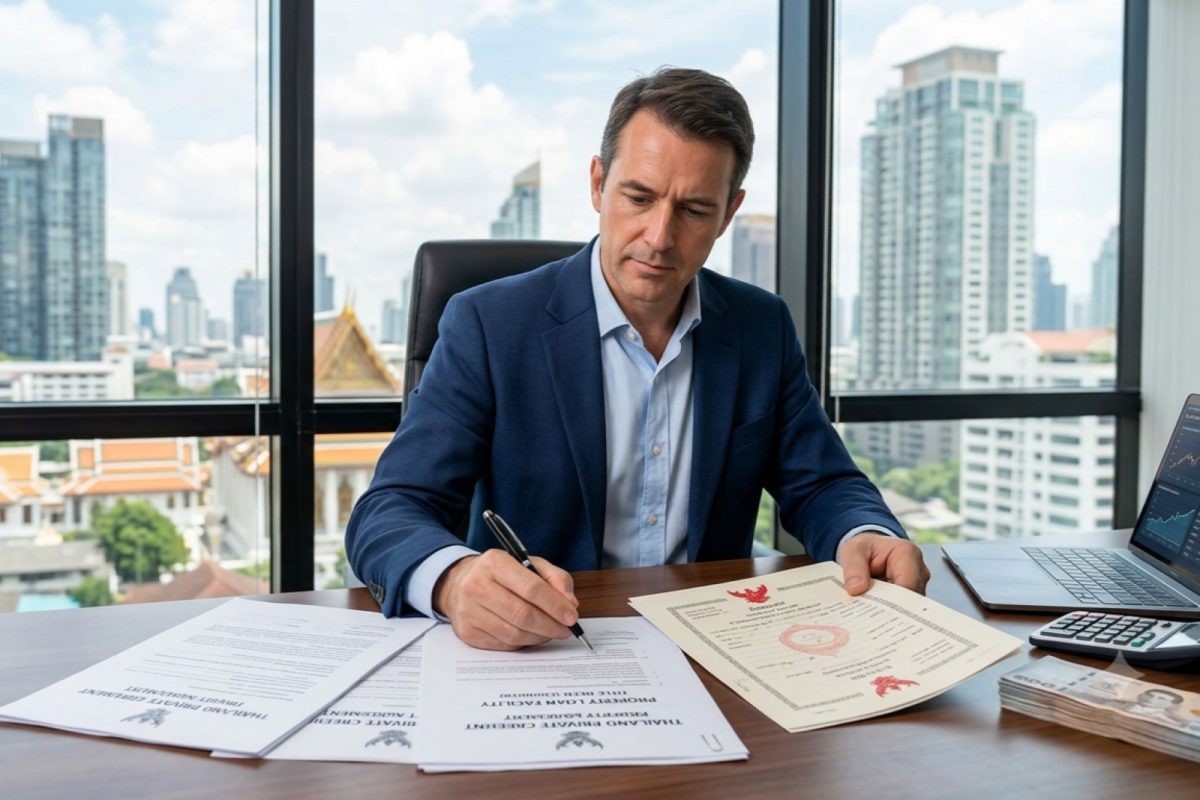
What Is a Special Situations Loan? A Corporate Finance Guide for Asia Pacific Business Owners

Business owners and finance executives reviewing complex financing structures for a special situations loan in Asia Pacific.

Private credit solutions for transactions that fall outside every standard lending template and why Asia Pacific's mid-market produces more of them than any other region.

Published by

Donald Klip  |  Co-Founder, Global Mortgage Group  |  Head, GMG Capital Advisory

30 years of institutional finance. Former hedge fund founder. Senior roles at top global investment banks. GMG Capital Advisory arranges private credit and special situations finance of $10M–$100M for operating companies across Asia Pacific.

[email protected]   |   +65 9773 0273   |   Singapore · Hong Kong   |   Asia-Pacific  

A special situations loan is a corporate debt facility arranged for a business in circumstances that conventional bank lending cannot accommodate. Not because the business is failing. Not because the deal is too risky. But because the transaction falls outside the standardised templates that banks use to approve and process credit.

A special situations loan is not a loan for broken companies. It is a loan for complex situations that banks are not built to handle. 

What Makes a Situation 'Special'?

Time pressure: A corporate transaction with a hard deadline that a bank's 8–14 week credit process cannot meet.

Complex ownership or corporate structure: Businesses with multi-jurisdiction holding structures, cross-border operating subsidiaries, or unconventional shareholder arrangements.

Non-standard collateral: Transactions secured by assets that banks cannot or will not accept operating cash flows, project revenues, specialist equipment, intellectual property, or offshore-held assets.

Sector restrictions: Banks maintain growing lists of restricted sectors. A business in hospitality, energy, or cross-border manufacturing may face a sector-level policy regardless of individual deal quality.

Distress or time-critical refinancing: A business facing a debt maturity, covenant breach, or facility withdrawal requiring rapid replacement.

Bridge to a future event: A financing need that exists only until a specific future event: an asset sale, equity raise, or regulatory approval.

Turnaround and recovery: A business emerging from underperformance that cannot yet satisfy bank backward-looking criteria despite a credible forward case.

Special Situations in Asia Pacific: Why This Market Generates So Many

Cross-border complexity: Operating companies spanning multiple jurisdictions create structures that no single bank can underwrite consistently.

Foreign ownership restrictions: Multiple markets impose restrictions that banks treat as a risk multiplier. Private credit lenders with regional expertise can structure around these.

Bank sector exclusions: Growing excluded sector lists affect businesses regardless of individual credit quality.

Family business succession: Asia Pacific has a large population of family-owned businesses undergoing ownership transitions that banks are not structurally equipped to handle.

Infrastructure and project finance gaps: Data centres, power generation, renewables, and logistics generate project-level financing needs between institutional project finance and conventional corporate lending.

Common Special Situations Structures

Senior secured bridge: Short-term facility (12–24 months) secured against identifiable assets, structured around a defined repayment event. The most common special situations structure in the region.

Unitranche: A blended facility combining senior and subordinated debt. Simpler to execute than traditional leveraged structures. Well-suited to mid-market acquisitions and MBOs.

Asset-backed term loan: Medium-term facility (2–4 years) secured primarily against specific assets.

Cash flow-based lending: Facilities sized around EBITDA and free cash flow rather than hard asset collateral. Available for strongly cash-generative businesses.

Mezzanine: Subordinated debt behind senior facilities. Higher yield, more flexible covenants, often used alongside senior debt in acquisitions or recapitalisations.

Collateral in Special Situations Finance

Private credit lenders assess the totality of the security package, not individual line items. Real property across multiple jurisdictions, operating business cash flows, specialist equipment, trade receivables, intellectual property, personal guarantees from HNWI business owners, and offshore-held assets can all be incorporated into a coherent security structure. A transaction combining real property, contracted revenues, personal guarantee, and strong business cash flow can access significantly better terms than the sum of its parts might suggest.

About GMG Capital Advisory

Donald Klip  |  Co-Founder, Global Mortgage Group  |  Head, GMG Capital Advisory

Donald Klip has 30 years of institutional finance experience spanning hedge fund management and senior roles at the world’s top global investment banks. GMG Capital Advisory specialises in arranging and structuring corporate debt financing of $10M–$100M for operating companies, asset owners, and project sponsors where conventional bank lending is unavailable, insufficient, or too slow. We operate across 23+ jurisdictions in Asia Pacific.

www.gmg.asia   |   [email protected]   |   +65 9773 0273   |   Singapore · Hong Kong 

The Debt Desk

Corporate private credit intelligence for Asia Pacific’s $10M–$100M middle market. Published by GMG Capital Advisory. Part of the Private Credit Asia content series.

www.gmg.asia   |   Read all 41 articles in the series

Alternative Corporate Finance in Asia Pacific: Every Option Your Bank Doesn’t Tell You About

Business leaders evaluating multiple non-bank financing options including private credit, asset-based lending, and mezzanine finance across Asia Pacific.

A comprehensive guide to the full landscape of non-bank corporate finance solutions available to operating companies across Asia Pacific.

Published by

Donald Klip  |  Co-Founder, Global Mortgage Group  |  Head, GMG Capital Advisory

30 years of institutional finance. Former hedge fund founder. Senior roles at top global investment banks. GMG Capital Advisory arranges private credit and special situations finance of $10M–$100M for operating companies across Asia Pacific.

[email protected]   |   +65 9773 0273   |   Singapore · Hong Kong   |   Asia-Pacific  

When a bank says no, the conversation does not end. The capital market is significantly broader than the banking system, and operating companies across Asia Pacific have access to a wider range of financing solutions than most CFOs and business owners have been told about.

The banking system is one financing channel among many. The CFO who understands all the channels has a significant advantage over the one who only knows one. 

Private Credit: The Primary Alternative

Private credit corporate debt arranged through non-bank lenders including private debt funds, family offices, and specialist finance firms is the most comprehensive and flexible alternative to bank lending for mid-market operating companies. It covers the broadest range of transaction types, deal sizes, industries, and structures of any single alternative financing category. It is covered in depth throughout this series.

Asset-Based Lending (ABL)

Receivables financing: Credit advanced against outstanding trade receivables. The facility grows and shrinks with the business's receivables book, making it well-suited to seasonal or growth businesses.

Inventory financing: Credit secured against raw material or finished goods inventory. Common in manufacturing, distribution, and retail businesses with significant inventory positions.

Equipment financing: Loans or leases secured against specific plant, machinery, or equipment assets. Particularly relevant for capital-intensive industries.

Sale and leaseback: The operating company sells an asset typically real property or equipment to a finance provider and leases it back, releasing equity capital while retaining operational use of the asset.

Mezzanine Finance

Mezzanine finance sits in the capital structure between senior debt and equity. It carries a higher yield than senior debt and is typically used to bridge a gap between what senior lenders will provide and what equity investors require. In Asia Pacific mid-market transactions particularly leveraged buyouts and management buyouts mezzanine can enable deals that would otherwise be impossible to capitalise.

Family Office and High-Net-Worth Direct Lending

Singapore, Hong Kong, and increasingly other regional centres host a large and growing population of family offices and HNW investors who allocate directly to private credit and direct lending opportunities. These investors can be highly flexible; they have no regulatory capital constraints and can accommodate structures that institutional lenders cannot.

Government-Backed and Development Finance

Most major Asia Pacific markets operate government-backed lending schemes that provide subsidised or guaranteed credit to qualifying businesses. Enterprise Singapore, the SME Corporation in Malaysia, Indonesia's KUR programme, and Australia's various state and federal business finance schemes are among the better-known examples.

Export Credit and Trade Finance

Operating companies with significant export activity have access to export credit agency (ECA) financing in their home markets. ECAs in Australia, Singapore, Korea, Japan, and Taiwan provide loans, guarantees, and insurance for export transactions that domestic banks may be reluctant to finance.

The Right Solution Depends on the Situation

No single alternative finance solution is right for every operating company or every situation. The appropriate solution depends on the specific capital requirement, the business's asset base, its cash flow profile, its industry, its jurisdictional footprint, and the urgency of the need. GMG Capital Advisory works across the full spectrum of alternative corporate finance solutions. Speak to us first.

About GMG Capital Advisory

Donald Klip  |  Co-Founder, Global Mortgage Group  |  Head, GMG Capital Advisory

Donald Klip has 30 years of institutional finance experience spanning hedge fund management and senior roles at the world’s top global investment banks. GMG Capital Advisory specialises in arranging and structuring corporate debt financing of $10M–$100M for operating companies, asset owners, and project sponsors where conventional bank lending is unavailable, insufficient, or too slow. We operate across 23+ jurisdictions in Asia Pacific.

www.gmg.asia   |   [email protected]   |   +65 9773 0273   |   Singapore · Hong Kong 

The Debt Desk

Corporate private credit intelligence for Asia Pacific’s $10M–$100M middle market. Published by GMG Capital Advisory. Part of the Private Credit Asia content series.

www.gmg.asia   |   Read all 41 articles in the series

Private Credit for Operating Companies in Asia Pacific: A Plain-English Guide for CFOs and Business Owners

Chief financial officer reviewing private credit financing options for a growing operating company in Asia Pacific.

Everything you need to know about how private credit works, who it is for, what determines pricing, what collateral looks like across industries, and how to access it.

Published by

Donald Klip  |  Co-Founder, Global Mortgage Group  |  Head, GMG Capital Advisory

30 years of institutional finance. Former hedge fund founder. Senior roles at top global investment banks. GMG Capital Advisory arranges private credit and special situations finance of $10M–$100M for operating companies across Asia Pacific.

[email protected]   |   +65 9773 0273   |   Singapore · Hong Kong   |   Asia-Pacific  

Private credit is one of the fastest-growing segments of global finance. In Asia Pacific alone, assets under management in private credit strategies exceeded $150 billion in 2024 a figure that has more than doubled in five years. Yet for most business owners and CFOs, private credit remains poorly understood.

Private credit is not a last resort. For a growing number of Asia Pacific businesses, it is the first call. 

What Is Private Credit?

Private credit is lending provided by non-bank institutions, a dedicated private debt fund, a family office, an insurance company, a specialist finance firm, or a high-net-worth investor group. The word 'private' refers to the nature of the transaction: a direct, bilateral agreement between borrower and lender, negotiated privately rather than arranged through a public market.

Because private credit lenders are not subject to the same regulatory capital framework as banks, they can lend in situations banks cannot, move faster, accept more complex collateral, and price for deal-specific risk rather than applying blanket sector restrictions.

Private Credit vs a Bank Loan: The Key Differences

Speed: Bank credit process typically 8–14 weeks. Private credit: 2–4 weeks. For time-sensitive acquisitions or working capital crises, this is decisive.

Deal size: Banks are raising minimum commercial deal sizes. The $10M–$100M range is precisely the segment most systematically abandoned.

Structure: Banks apply standardised templates. Private credit lenders structure around your specific transaction, collateral profile, and cash flow cycle.

Sector access: Banks maintain growing excluded sector lists. Private credit lenders assess each transaction on its own merits.

Relationship: With a bank, your credit decision is made by a committee that has never met you. With private credit, you deal directly with the principals making the decision.

Covenants: Bank covenants are maintenance-based, tested regularly. Private credit covenants are incurrence-based, triggered only if you take a specific action. Significantly more business-friendly.

What Determines Private Credit Pricing?

Collateral quality and liquidity: The single most important pricing driver. Strong, liquid, easily realisable collateral commands significantly better pricing than illiquid or specialised assets.

Loan-to-value ratio: The lower the LTV relative to collateral value, the better the pricing.

Clarity of repayment source: A transaction with a clearly defined, contracted exit price better than one with a vague refinancing plan.

Business cash flow quality: Contracted, recurring revenues from creditworthy customers price better than project-based or lumpy cash flows.

Tenor: Shorter-term transactions typically price tighter than longer ones.

Jurisdiction: Markets with reliable contract enforcement and efficient security registration price better than those with legal uncertainty.

Deal complexity: Cross-border structures, complex ownership, and regulatory complications add to the cost of underwriting and are reflected in pricing.

Collateral Across Industries

Data centres and digital infrastructure: Physical infrastructure, long-term power purchase agreements, co-location and hyperscaler offtake contracts, land and building assets.

Power generation and energy: Project cash flows underpinned by PPAs, plant and equipment, land rights, environmental permits, and carbon credit streams.

Biofuels and sustainable fuels: Feedstock supply contracts, processing plant, product offtake agreements, carbon credits, and land assets.

Hospitality and hotels: Real property value, brand licence agreements, management contracts, forward booking revenues, and F&B income streams.

Manufacturing and industrial: Plant and equipment, real property, raw material inventory, finished goods, trade receivables, and export contracts.

Real estate development: Land value, development approvals, pre-sales contracts, construction contracts, and developer equity.

Healthcare and medical: Licensed premises, specialist equipment, patient receivables, insurance receivables, and long-term service agreements.

Logistics and supply chain: Warehousing assets, vehicle and equipment fleets, long-term client contracts, and cold chain infrastructure.

Agribusiness and food production: Land and plantation assets, processing facilities, equipment, harvest offtake agreements, and export contracts.

Operating companies generally: Trade receivables, inventory, intellectual property, cross-company guarantees, and personal guarantees from HNWI business owners.

The right private credit lender does not just provide capital. They provide certainty and in business, certainty of funding is often worth more than the cheapest rate. 

The Private Credit Process

Step 1: Initial conversation (Days 1–5)

A private credit lender will want to understand the business, the capital requirement, the repayment source, and the collateral available. Good private credit lenders form a preliminary credit view within days.

Step 2: Term sheet (Days 5–14)

If the lender has appetite, they issue a non-binding term sheet. Most terms are negotiable through direct dialogue.

Step 3: Due diligence (Weeks 2–4)

Financial, legal, and asset due diligence. Well-prepared borrowers with clean financials move through this stage quickly.

Step 4: Documentation (Weeks 3–5)

Documentation is negotiated directly between legal teams and can be completed in days for straightforward transactions.

Step 5: Funding (Weeks 4–6)

Once conditions precedent are satisfied, funds are drawn. For urgent transactions, some private credit lenders can move from first conversation to funding in under three weeks.

About GMG Capital Advisory

Donald Klip  |  Co-Founder, Global Mortgage Group  |  Head, GMG Capital Advisory

Donald Klip has 30 years of institutional finance experience spanning hedge fund management and senior roles at the world’s top global investment banks. GMG Capital Advisory specialises in arranging and structuring corporate debt financing of $10M–$100M for operating companies, asset owners, and project sponsors where conventional bank lending is unavailable, insufficient, or too slow. We operate across 23+ jurisdictions in Asia Pacific.

www.gmg.asia   |   [email protected]   |   +65 9773 0273   |   Singapore · Hong Kong 

The Debt Desk

Corporate private credit intelligence for Asia Pacific’s $10M–$100M middle market. Published by GMG Capital Advisory. Part of the Private Credit Asia content series.

www.gmg.asia   |   Read all 41 articles in the series

Why Banks Across Asia Pacific Are Tightening Corporate Lending: A Country-by-Country Breakdown

Map of Asia Pacific highlighting corporate lending trends and credit tightening across major regional markets.

The specific regulatory, structural, and market forces driving corporate credit tightening in each major Asia Pacific market and what operating companies can do about it.

Published by

Donald Klip  |  Co-Founder, Global Mortgage Group  |  Head, GMG Capital Advisory

30 years of institutional finance. Former hedge fund founder. Senior roles at top global investment banks. GMG Capital Advisory arranges private credit and special situations finance of $10M–$100M for operating companies across Asia Pacific.

[email protected]   |   +65 9773 0273   |   Singapore · Hong Kong   |   Asia-Pacific  

The headline story that bank corporate lending is tightening across Asia Pacific is well understood by most CFOs and business owners who have tried to access or renew credit facilities in the past two years. What is less well understood are the specific forces at work in each market.

Bank credit tightening in Asia Pacific is not one story, it is fourteen stories with a common theme. Understanding the specific dynamics in your market is essential to navigating them.

Singapore

Singapore’s three major local banks DBS, OCBC, and UOB have responded to the Basel III and IV environment by prioritising three categories of business: wealth management and private banking, large institutional corporate and trade finance, and retail mortgages. The consequence for mid-market operating companies is that credit decisions are increasingly made at specialist credit business unit level, timelines have extended significantly, minimum ticket sizes have risen, and sector restrictions have expanded. Foreign-owned businesses and cross-border structures face particular scrutiny.

Australia

The Banking Royal Commission triggered a wholesale tightening of credit standards across Australia’s big four banks. They have since systematically reduced commercial lending exposure in favour of residential mortgages. Regional and rural businesses, hospitality, retail, and property development have been disproportionately affected.

Malaysia

Bank Negara Malaysia has implemented progressive tightening of provisioning requirements. Domestic banks have concentrated their corporate lending books on government-linked companies and large established corporations. Independent operating companies particularly those without GLC affiliations or with foreign ownership face significantly longer credit timelines and higher collateral requirements.

Indonesia

Indonesia’s banking system is dominated by state-owned banks that prioritise state-linked enterprises. Foreign ownership restrictions create structural barriers to collateral registration and enforcement that make domestic banks reluctant to lend to foreign-affiliated entities regardless of credit quality. Private credit arranged through offshore holding entities is often the only practical route.

Thailand

Thailand’s banking system is concentrated and centralised. The Land Code and Business of Foreigners Act create specific constraints on collateral registration for non-Thai entities. Private credit arranged through appropriate offshore structures has become the dominant financing channel for foreign-owned operating companies in Thailand.

Philippines

The Philippine banking system is dominated by family-controlled conglomerates whose affiliated banks prioritise lending within their own corporate ecosystems. Independent mid-market companies and foreign-owned businesses sit outside these ecosystems and face limited options, slow processes, and conservative terms.

India

India’s public sector banks accumulated enormous NPA books, triggering a prolonged period of extremely conservative corporate lending standards. Foreign-owned businesses and internationally structured entities face additional barriers: FEMA compliance requirements, RBI approval for certain cross-border debt structures, and domestic bank unfamiliarity with international corporate structures.

Japan

Japan’s banking system is characterised by keiretsu relationships. For businesses outside a keiretsu including virtually all foreign-owned or foreign-managed businesses the domestic banking system is effectively closed for meaningful corporate credit.

South Korea

Korea’s banking system allocates the majority of corporate credit to chaebol-affiliated companies and large domestic corporations. Mid-market independents particularly those without chaebol or government affiliations are chronically underserved.

Taiwan

Taiwan’s banking system prioritises government-linked and large corporate relationships. The export-oriented manufacturing and technology base that forms the backbone of the Taiwanese economy is chronically underfunded, particularly for cross-border expansion and international acquisition financing.

Hong Kong

Hong Kong’s banking system is overwhelmingly focused on real estate, trade finance, and large corporate lending. Mid-market operating company credit particularly for businesses without significant property collateral is difficult to access. Hong Kong is most valuable as a cross-border financing hub for businesses with offshore holding structures.

New Zealand

New Zealand’s four major banks are all subsidiaries of Australian parents and apply substantially similar credit frameworks. As the Australian parents have tightened, so have their New Zealand subsidiaries. Businesses outside agricultural and residential property sectors face increasing difficulty accessing corporate credit at meaningful scale.

What Operating Companies Should Do

The common thread across all markets is that mid-market operating companies particularly those with foreign ownership, cross-border structures, or operations in restricted sectors can no longer rely on domestic bank credit as their primary corporate financing channel. Private credit, arranged through experienced specialists with genuine regional presence, is the most effective alternative.

About GMG Capital Advisory

Donald Klip  |  Co-Founder, Global Mortgage Group  |  Head, GMG Capital Advisory

Donald Klip has 30 years of institutional finance experience spanning hedge fund management and senior roles at the world’s top global investment banks. GMG Capital Advisory specialises in arranging and structuring corporate debt financing of $10M–$100M for operating companies, asset owners, and project sponsors where conventional bank lending is unavailable, insufficient, or too slow. We operate across 23+ jurisdictions in Asia Pacific.

www.gmg.asia   |   [email protected]   |   +65 9773 0273   |   Singapore · Hong Kong 

The Debt Desk

Corporate private credit intelligence for Asia Pacific’s $10M–$100M middle market. Published by GMG Capital Advisory. Part of the Private Credit Asia content series.

www.gmg.asia   |   Read all 41 articles in the series

The $10M–$100M Corporate Lending Blind Spot: Why Mid-Market Companies Fall Between Every Lender’s Criteria

Asia Pacific business executives evaluating financing options after being declined by traditional banks despite strong corporate performance.

The structural gap in Asia Pacific corporate lending that leaves profitable, creditworthy businesses without access to the capital they need and what to do about it.

Published by

Donald Klip  |  Co-Founder, Global Mortgage Group  |  Head, GMG Capital Advisory

30 years of institutional finance. Former hedge fund founder. Senior roles at top global investment banks. GMG Capital Advisory arranges private credit and special situations finance of $10M–$100M for operating companies across Asia Pacific.

[email protected]   |   +65 9773 0273   |   Singapore · Hong Kong   |   Asia-Pacific  

There is a gap in the corporate lending market that most business owners and CFOs only discover at the worst possible moment when they need capital and cannot get it. The gap is not random. It is structural, predictable, and widening. And it sits precisely at the $10M–$100M range that represents the heartland of Asia Pacific’s operating company economy.

The $10M–$100M corporate borrower is too large to be served by SME products and too small to attract institutional capital. Private credit was built to serve exactly this market.

The Three Tiers of Corporate Lending

  • Tier 1 — SME lending (below $5M): This market is well-served. Government guarantee schemes, fintech lenders, trade finance platforms, and standardised bank SME products all compete for this segment.
  • Tier 2 — Institutional corporate lending (above $100M): Also well-served. Large corporates access syndicated loan markets, investment-grade bond markets, bilateral bank facilities with dedicated corporate banking coverage.
  • Tier 3 — Mid-market (the gap: $10M to $100M): Systematically underserved. Too large for automated SME underwriting. Too small for syndicated markets. Too complex for standardised bank templates. Too unprofitable per unit of regulatory capital for banks under Basel III and IV constraints.

Why Banks Have Effectively Exited the Mid-Market

  • Regulatory capital cost: Under Basel III and IV risk-weighting frameworks, corporate loans to mid-market businesses require banks to hold substantially more regulatory capital than retail mortgages or government securities.
  • Origination cost: Mid-market corporate loans require significant credit analysis, relationship management, legal documentation, and ongoing monitoring. The cost of originating a $20M facility is not materially lower than a $200M facility.
  • Covenant and monitoring complexity: Mid-market businesses are complex. Managing the ongoing compliance of a mid-market credit facility is operationally intensive relative to the revenue generated.
  • Sector and concentration restrictions: As banks manage portfolio exposures more actively, sector and geographic concentration limits increasingly exclude entire categories of mid-market borrowers regardless of individual credit quality.

The Characteristics of a Mid-Market Lending Gap Borrower

  • Revenue typically between $10M and $200M, with EBITDA generating meaningful but not institutional-scale debt capacity
  • Profitable and operationally sound, with a track record of meeting obligations, but unable to satisfy increasingly conservative bank credit criteria
  • Often owner-managed or family-controlled, with non-standard governance relative to listed company peers
  • Frequently operating across multiple Asia Pacific jurisdictions, creating cross-border complexity that exceeds any single bank’s regional appetite
  • Asset-rich relative to earnings significant real property, equipment, or contracted revenue streams that represent strong collateral but are assessed conservatively under bank frameworks

What Private Credit Offers the Mid-Market

  • Deal-by-deal underwriting: Every transaction is assessed individually by an experienced credit team. No sector exclusion lists. No automated scoring models that cannot accommodate complexity.
  • Speed: Without bank committee processes, private credit lenders can move from initial assessment to term sheet in days and from term sheet to funding in weeks.
  • Structural flexibility: Private credit facilities are structured around the borrower’s specific situation: the collateral available, the cash flow profile, the repayment source.
  • Appropriate pricing: Private credit carries a higher cost than bank lending. For mid-market borrowers who have been unable to access bank credit at any price, private credit pricing is not expensive; it is the market rate for capital they cannot otherwise access.

GMG Capital Advisory was built for the mid-market gap. Our $10M–$100M focus is not a positioning statement, it is a precise description of the market we serve because it is the market that needs us most.

About GMG Capital Advisory

Donald Klip  |  Co-Founder, Global Mortgage Group  |  Head, GMG Capital Advisory

Donald Klip has 30 years of institutional finance experience spanning hedge fund management and senior roles at the world’s top global investment banks. GMG Capital Advisory specialises in arranging and structuring corporate debt financing of $10M–$100M for operating companies, asset owners, and project sponsors where conventional bank lending is unavailable, insufficient, or too slow. We operate across 23+ jurisdictions in Asia Pacific.

www.gmg.asia   |   [email protected]   |   +65 9773 0273   |   Singapore · Hong Kong

The Debt Desk

Corporate private credit intelligence for Asia Pacific’s $10M–$100M middle market. Published by GMG Capital Advisory. Part of the Private Credit Asia content series.

www.gmg.asia   |   Read all 41 articles in the series 

Corporate Credit Is Tightening Across Asia Pacific — Private Credit Is Filling the Gap

Business executives reviewing corporate financing options as private credit providers fill the lending gap left by traditional banks across Asia Pacific.

How structural shifts in bank lending across Asia Pacific are creating a $10M–$100M corporate financing gap and why private credit has become the answer for operating companies, CFOs, and their advisors.

Published by

Donald Klip  |  Co-Founder, Global Mortgage Group  |  Head, GMG Capital Advisory

30 years of institutional finance. Former hedge fund founder. Senior roles at top global investment banks. GMG Capital Advisory arranges private credit and special situations finance of $10M–$100M for operating companies across Asia Pacific.

[email protected]   |   +65 9773 0273   |   Singapore · Hong Kong   |   Asia-Pacific 

Across Asia Pacific, a quiet but significant shift is underway in corporate lending. Operating companies that have maintained strong banking relationships for years profitable businesses with real assets and solid track records are finding that their banks can no longer serve them in the way they once did.

Facilities are being reduced. Renewals are being complicated. New credit requests are being declined. And in most cases, the businesses affected are doing nothing wrong. The problem is not on the borrower’s side of the table.

I have spent thirty years in institutional finance as a hedge fund founder, structuring transactions at the world’s top investment banks, and building cross-border lending operations across Asia Pacific. I have watched credit cycles from both sides of the table. What is happening right now to mid-market corporate borrowers across the region is structural, not cyclical. And most business owners and CFOs do not yet fully understand why.

When a bank pulls back from a creditworthy corporate borrower, the problem is almost always on the bank’s balance sheet, not the borrower’s.

Why Banks Are Pulling Back: The Regulatory Reality

Banks do not lend from a limitless pool of capital. Every corporate loan they make consumes regulatory capital, a financial buffer they are required by law to maintain against potential losses. When the cost of holding that capital rises, the economics of lending change fundamentally.

Since 2022, banks across Asia Pacific have faced a convergence of pressures that have made corporate lending to mid-sized operating companies significantly less attractive:

  • Rising capital requirements under Basel III and Basel IV, increasing the regulatory cost of every corporate loan on the balance sheet
  • Higher risk-weightings applied to commercial and corporate credit, making these loans more expensive to hold than retail mortgages or government securities
  • Heightened scrutiny of non-performing loan ratios following post-COVID stress, prompting conservative provisioning across commercial loan books
  • Margin pressure pushing banks toward higher-yielding retail products, wealth management, and large institutional mandates
  • Sector and geographic concentration limits restricting new lending to entire industries or markets regardless of individual borrower quality

None of these pressures relate to the creditworthiness of individual corporate borrowers. They are systemic constraints reshaping bank lending behaviour across the entire region.

The Corporate Lending Gap: Why $10M–$100M Is No Man’s Land 

  • Below $5M: The SME segment. Government-backed schemes, fintech lenders, and standardised bank products compete actively. Options are plentiful.
  • Above $100M: The institutional segment. Syndicated loan markets, bond markets, and dedicated corporate banking divisions serve this tier. Capital is available.
  • $10M to $100M: No man’s land. Too large for SME products. Too small to justify the full cost of a corporate banking relationship. Too complex for automated underwriting. Increasingly, too capital-intensive for a bank under tightening regulatory constraints.

A Timeline of Tightening

2020–2021: The COVID Accommodation

Central banks flooded markets with liquidity and regulators temporarily relaxed capital requirements. Banks were incentivised to lend broadly, including to borrowers that would not have passed pre-crisis credit committees.

2022: The Inflection Point

As inflation surged and central banks reversed course aggressively, the credit environment shifted with unusual speed. Banks began repricing risk, tightening covenants, and reviewing facilities approved under pandemic-era assumptions.

2023–2024: Structural Recalibration

Basel III finalisation timelines accelerated across major Asia Pacific jurisdictions. Mid-market corporate credit, high origination cost, high capital consumption, moderate yield became the first category to be deprioritised.

2025: The New Baseline

What looked initially like a cyclical tightening has proved structural. Banks have reorganised credit functions, raised minimum deal sizes, and redirected corporate banking resources toward larger, more profitable mandates.

The bank that served your business well for ten years has not changed its view of you. It has changed its view of the corporate lending market you operate in.

Market by Market: How the Tightening Is Playing Out

  • Singapore: MAS-regulated banks have prioritised wealth management, trade finance, and large institutional mandates. Mid-market corporate credit is increasingly declined or routed to specialist subsidiaries with longer timelines and more restrictive terms.
  • Australia: The big four banks have systematically reduced commercial lending appetite following the Banking Royal Commission. Corporate borrowers outside major metros face particular difficulty.
  • Malaysia: Bank Negara Malaysia’s tighter provisioning requirements have pushed domestic banks toward government-linked corporations. Independent operating companies face longer credit timelines and higher collateral demands.
  • Indonesia: Foreign-owned businesses face structural lending barriers regardless of credit quality. Domestic banks apply significant risk premiums to international entities.
  • Thailand: Bangkok-headquartered banks dominate with limited appetite for foreign-owned or regionally-structured operating companies. Approval processes are slow and collateral frameworks inflexible.
  • Philippines: Family-controlled banking conglomerates prioritise affiliated corporate groups. Independent mid-market businesses face limited credit options.
  • South Korea: The chaebol-dominated banking system allocates the majority of corporate credit to large conglomerates. Mid-market independents are structurally underserved.
  • Taiwan: A large and internationally active manufacturing and technology base is chronically underfunded by domestic banks.
  • Japan: Foreign-owned businesses face significant structural barriers to domestic bank credit. Keiretsu banking relationships are effectively closed to outside participants.
  • India: Post-NPA crisis provisioning requirements have constrained mid-market corporate lending significantly. Foreign-owned and internationally structured businesses face additional barriers.

Where Corporate Capital Has Moved: The Rise of Private Credit

As bank lending to mid-market corporates has contracted, private credit has grown substantially. Private credit assets under management in Asia Pacific exceeded $150 billion in 2024, having more than doubled over five years.

Private credit lenders operate outside the Basel regulatory framework that constrains banks. They can structure transactions that banks cannot, move faster, accept broader collateral packages, and serve corporate borrowers systematically deprioritised by the banking system.

This is the thesis behind The Debt Desk. Private credit in Asia Pacific is not a last resort for distressed borrowers. It is a structural financing solution that sophisticated corporates, CFOs, and their advisors are increasingly treating as the first call rather than the fallback.

What This Series Covers 

  • Chapter 1 — The Corporate Lending Gap: The structural forces driving bank credit tightening and how private credit is filling the gap
  • Chapter 2 — Deal Types Decoded: Bridge finance, acquisition funding, working capital, recapitalisation, rescue finance, and refinancing
  • Chapter 3 — Market Guides: Country-by-country private credit intelligence across 14 Asia Pacific markets
  • Chapter 4 — Industry Verticals: Sector-specific financing solutions across 11 industries
  • Chapter 5 — The Borrower’s Playbook: What to prepare, what drives pricing, how to approach a lender
  • Chapter 6 — GMG Perspective: Market outlook, trends, and the macro case for private credit in Asia Pacific

If you have a corporate financing requirement right now, do not wait for the series. Contact us directly.

About GMG Capital Advisory

Donald Klip  |  Co-Founder, Global Mortgage Group  |  Head, GMG Capital Advisory

Donald Klip has 30 years of institutional finance experience spanning hedge fund management and senior roles at the world’s top global investment banks. GMG Capital Advisory specialises in arranging and structuring corporate debt financing of $10M–$100M for operating companies, asset owners, and project sponsors where conventional bank lending is unavailable, insufficient, or too slow. We operate across 23+ jurisdictions in Asia Pacific.

www.gmg.asia   |   [email protected]   |   +65 9773 0273   |   Singapore · Hong Kong

The Debt Desk

Corporate private credit intelligence for Asia Pacific’s $10M–$100M middle market. Published by GMG Capital Advisory. Part of the Private Credit Asia content series. 

www.gmg.asia   |   Read all 41 articles in the series

UNLOCKED IN AUSTRALIA: Your Australian Property Equity Is Sitting in the Wrong Cycle. Here Is How to Move It.

Australian property owner unlocking home equity through bridge financing to invest in international real estate and global investment opportunities.

For years, many Australian homeowners focused on one strategy: pay down debt and hold property for the long term. It has been a rational, rewarding approach. Australian residential property has compounded consistently, and the discipline of holding through cycles has generated extraordinary wealth for a generation of owners who stayed the course.

CONTACT DONALD KLIP — GLOBAL MORTGAGE GROUP

Equity Release | Bridging Loans | Bridge Financing | Australian Property 

[email protected] | +65 9773-0273 | www.gmg.asia

But a different conversation is emerging among sophisticated Australian borrowers: a conversation about whether dormant equity trapped in Australian property is being optimally deployed, or whether the structural divergence between Australian monetary conditions and global rate cycles is creating a specific, time-sensitive opportunity to put that equity to work elsewhere. For property owners prepared to think beyond the conventional refinance, bridge financing and equity release are the tools that make this reallocation possible.

The Mortgage Pressure Driving the Conversation

Australian borrowers have spent the past several years adjusting to significantly higher borrowing costs. The RBA’s tightening cycle which took the cash rate from near zero to 4.35 percent flowed through to mortgage rates that created real financial pressure for many homeowners. Three cuts in 2025, bringing the cash rate to approximately 3.35 percent, provided some relief. But the February 2026 increase back to 3.85 percent prompted by re-emerging inflationary pressure has reset the conversation. The cost of conventional mortgage debt in Australia remains elevated, and the path to lower rates is less clear than it appeared six months ago.

For homeowners with substantial equity, this creates an unusual situation: valuable residential assets, strong long-term capital growth, but increasingly expensive conventional mortgage structures. At the same time, many borrowers are discovering that conventional refinancing is slower, more restrictive, and less flexible than expected, particularly for self-employed applicants, investors, and multi-property owners. That has led some affluent Australians to look at bridge financing as a strategic liquidity tool rather than simply a short-term gap solution.

The Global Rate Divergence Opportunity 

Interest rate cycles do not move in synchrony globally. While Australia has maintained relatively restrictive monetary conditions, some overseas markets have entered different phases of the cycle. In the United States, the Federal Reserve moved through a cutting cycle in 2024 and into 2025 before pausing as inflation proved stickier than expected. In parts of Europe, the ECB has similarly been navigating between easing and restraint. In Southeast Asia, rate dynamics vary significantly by market.

The divergence between Australian monetary conditions and those in key overseas markets creates what might be described as a capital allocation window for globally minded Australian property owners. Not arbitrage in the traditional hedge-fund sense but a timing and capital- efficiency opportunity. Australian property equity, accessed through bridge financing, can be deployed into overseas markets that are in a different part of the monetary and real estate cycle. The capital works in a different environment while the Australian asset continues to compound.

The Strategic Logic: One Cycle Funding Entry Into Another 

The strategic thesis is straightforward. Australian property has been through an extended appreciation cycle, generating substantial equity. Some overseas markets, the United States, parts of Southeast Asia, certain European cities have experienced valuation corrections, yield improvements, or structural supply constraints that create acquisition opportunities at pricing that looks attractive relative to where those markets have been.

A homeowner with a AUD 3.5 million Sydney property, low existing leverage, and significant dormant equity can use bridge financing to unlock short-term liquidity without selling. That capital AUD 1.5 to 2 million at 60 to 65 percent LVR can potentially be used for a deposit on overseas real estate, USD-denominated investments, commercial opportunities in growing Asian markets, or private credit deployments that benefit from the rate environment.

The strategic logic is simple: use relatively stable Australian property equity accumulated during one appreciation cycle to gain exposure to assets or markets entering a different phase. The diversification is real. The return potential is real. And the Australian property remains in the portfolio, continuing to compound.

Why Diversification Is Becoming a Bigger Theme for Australian HNW 

Many affluent Australians are heavily concentrated in local residential property. For the generation that built wealth through property in the 1990s and 2000s, that concentration has been richly rewarded. But higher domestic borrowing costs, moderating growth expectations in Sydney and Melbourne, and changing global cycles are encouraging some investors to reassess portfolio balance.

Diversification options for Australian property equity include international property exposure particularly the United States, where GMG’s America Mortgages subsidiary provides specialist financing for Australians acquiring US real estate as well as foreign currency assets, private credit, commercial investments in growing Asian markets, and business acquisitions. The goal is not abandoning Australian property. It is improving capital flexibility by activating equity that is currently working at zero return inside a property asset.

Why Timing Matters: The Bridge Financing Advantage 

Traditional refinancing can take eight to twelve weeks particularly for complex borrowers. But investment opportunities often move faster. Overseas property acquisition windows, distressed asset purchases, currency movements, private market placements, and commercial transactions all operate on timelines that conventional bank refinancing cannot match.

Bridge financing provides the speed and optionality that these opportunities require. The bridging loan is secured against the Australian property, assessed on value and LVR rather than income serviceability. The capital is available within days. The deployment proceeds on the timeline the opportunity requires, not the timeline the bank’s credit committee can manage.

For sophisticated borrowers, that flexibility itself becomes a source of return. The ability to move when a window is open to commit capital before competing buyers have assembled their financing is worth more than it costs. Bridge financing makes that ability real.

A Worked Example: Sydney Equity Into a US Acquisition 

Consider a borrower with a AUD 4 million Sydney residence, substantial dormant equity, and limited desire to sell long-term holdings. They have identified a US residential property in a market where DSCR-based lending through America Mortgages would allow them to finance 70 percent of the acquisition cost. They need AUD 800,000 for the US acquisition deposit and costs.

Instead of waiting for Australian rates to eventually fall and a conventional refinance to become available, they access AUD 800,000 in equity release through a bridging loan secured against the Sydney property. The US property is acquired. It begins generating USD rental income. The bridging loan is repaid 12 months later through a conventional refinance of the Sydney property, which is now possible because the borrower’s income documentation has been updated. The Sydney property is retained. The US property is in the portfolio. Both are compounding in their respective markets.

The bridge was the mechanism. Diversification was the goal. The return is the combined appreciation and income from two assets in two markets, built from equity that was previously sitting dormant in one.

"Australian property has created extraordinary capital. The question for the next decade is not whether that capital will grow inside the property it will. The question is whether it is also working somewhere else at the same time. Bridge financing is the answer to that question." — Donald Klip, Co-Founder and CIO, Global Mortgage Group 

CONTACT DONALD KLIP — GLOBAL MORTGAGE GROUP 

Equity Release | Bridging Loans | Bridge Financing | Australian Property 

[email protected] | +65 9773-0273 | www.gmg.asia

Getting Started: Australian Equity Release for Global Deployment 

GMG operates across 23 jurisdictions and can structure the full transaction Australian equity release through bridge financing, and the overseas acquisition financing through our network of international lenders including America Mortgages for US property. Contact Donald Klip directly to discuss your Australian property equity and how it can be deployed into international opportunities.

CONTACT DONALD KLIP — GLOBAL MORTGAGE GROUP 

Equity Release | Bridging Loans | Bridge Financing | Australian Property 

[email protected] | +65 9773-0273 | www.gmg.asia

UNLOCKED IN AUSTRALIA: The Australian Property Wealth Ladder — How to Move Up Without Selling Down

Australian property investor building wealth through equity release, bridge financing, and portfolio expansion without selling existing assets.

The most successful Australian property investors share a common characteristic: they do not think in properties, they think in portfolios. They understand that the real mechanism of property wealth creation is not buying low and selling high, it is buying well, holding long, and using accumulated equity systematically as the capital base for each subsequent acquisition. This is the property wealth ladder. Bridge financing and equity release are the rungs.

CONTACT DONALD KLIP — GLOBAL MORTGAGE GROUP

Equity Release | Bridging Loans | Bridge Financing | Australian Property 

[email protected] | +65 9773-0273 | www.gmg.asia

The ladder metaphor is apt. Each property acquisition is a rung. To reach the next rung, you need to transfer weight to use the strength of your current position to support the move upward. Selling a property to fund the next acquisition is the equivalent of removing a rung while climbing. Equity release through a bridging loan allows you to use the rung you are standing on to reach the next one, without dismantling the structure beneath you.

The Mathematics of Compounding Equity

The power of the property wealth ladder is in the compounding. Consider a property owner who purchased a Brisbane property in 2015 for AUD 600,000. By 2026, with Brisbane’s sustained appreciation, that property may be worth AUD 1.5 to 1.8 million. The equity compounded from AUD 600,000 of asset value assuming a 20 percent deposit and 80 percent LVR at purchase is now AUD 1.1 to 1.4 million net of the original mortgage, assuming some capital repayment over the intervening years.

That equity, accessed through a bridging loan at 65 percent LVR against the current property value, provides the capital for a deposit on a second acquisition perhaps in a suburb or city that is currently in an earlier part of the appreciation cycle. The second property is acquired. Both properties continue to compound. In three to five years, the same exercise can be repeated using equity from both properties to fund a third acquisition.

The compounding works because each acquisition adds to the total asset base, each asset continues to appreciate, and the equity released at each stage is a fraction of the total value being retained. The investor who sells a property to fund the next acquisition loses the future appreciation on the sold asset. The investor who uses equity release and bridging loans retains all assets and all future appreciation.

The Role of Bridge Financing in Portfolio Sequencing 

The practical challenge of building a property portfolio through equity release is sequencing. The ideal acquisition presents itself on its own timeline not on the timeline of the investor’s conventional refinance process. Bridge financing solves this by providing a fast, asset-based lending mechanism that can move as fast as the opportunity requires.

A portfolio investor who identifies an off-market Perth property during a period of strong local demand needs to move quickly. The equity in their existing Brisbane property is substantial and readily available but a conventional bank refinance to release it would take 8 to 12 weeks. A bridging loan against the Brisbane property, assessed on property value and LVR, can be structured in days. The Perth acquisition proceeds. The bridging loan is repaid through a conventional refinance of the Brisbane property once the acquisition is complete and time pressure has passed.

The investor has added a rung to the ladder without waiting for the bank. The portfolio grows. The compounding continues.

Structuring the Ladder: Stand-Alone Security and Equity Isolation 

The structural discipline of a well-managed property wealth ladder is stand-alone security on each property. Each asset secures its own loan. Each loan is sized to allow equity release from that specific property without requiring access to the rest of the portfolio. This structure allows individual properties to be refinanced, sold, or used for equity release independently without disturbing the other assets in the portfolio.

Cross-collateralisation securing one loan against multiple properties undermines this independence. It creates a portfolio where the lender has security over multiple assets and can restrict the owner’s ability to deal with any one of them. Experienced property investors avoid cross-collateralisation precisely because it limits the ladder’s flexibility.

Bridge financing, which is always structured on a stand-alone security basis against the specific property being used as collateral, is inherently consistent with the ladder approach. The bridging loan is secured against one property. The acquired property is secured separately. The portfolio retains its structural independence.

When to Use Bridge Financing and When to Use Conventional Refinance 

Not every step on the property wealth ladder requires bridge financing. When timing is not the constraint when the investor has identified a future opportunity but does not need to move immediately a conventional refinance to release equity ahead of the acquisition is often the right approach. It is cheaper than bridge financing, and if the conventional bank’s income test can be satisfied, it provides longer-term flexibility.

Bridge financing is the right tool when timing matters. When the acquisition is available now. When the vendor wants an unconditional offer. When the conventional refinance process would take longer than the opportunity allows. When the borrower’s income structure means conventional refinance is unavailable regardless of the timeframe. In these situations which describe the majority of off-market and time-sensitive acquisitions bridge financing is not the expensive option. It is the only option that works.

"The investors who build the most successful Australian property portfolios are not the ones who pick the best individual assets. They are the ones who master the mechanics of portfolio construction, the sequencing, the equity recycling, the stand-alone structures. Bridge financing is the tool that makes all of that possible at the right speed." — Donald Klip, Co-Founder and CIO, Global Mortgage Group 

CONTACT DONALD KLIP — GLOBAL MORTGAGE GROUP 

Equity Release | Bridging Loans | Bridge Financing | Australian Property 

[email protected] | +65 9773-0273 | www.gmg.asia

Getting Started with Your Next Rung 

GMG works with Australian property investors across all portfolio stages from the first equity release to fund a second acquisition through to complex multi-property restructures. Contact us to discuss where you are on the ladder and what the next step looks like.

CONTACT DONALD KLIP — GLOBAL MORTGAGE GROUP 

Equity Release | Bridging Loans | Bridge Financing | Australian Property [email protected] | +65 9773-0273 | www.gmg.asia

UNLOCKED IN AUSTRALIA: Equity Release and Bridge Financing for UK and European Australian Property Owners

British-Australian and European property owners unlock equity from Australian real estate through bridge financing and cross-border lending solutions.

The United Kingdom is Australia’s most significant source of permanent migrants and dual nationals. The British-Australian community Australians of British origin who maintain connections to both countries, and British nationals who have settled in Australia and then relocated back to the UK or Europe represent a significant cohort of Australian property holders whose cross-border financial circumstances create specific equity access challenges.

CONTACT DONALD KLIP — GLOBAL MORTGAGE GROUP

Equity Release | Bridging Loans | Bridge Financing | Australian Property 

[email protected] | +65 9773-0273 | www.gmg.asia

British-Australian dual nationals working in London’s financial sector, European executives transferred from Sydney or Melbourne to continental postings, and UK-based Australians who returned to Britain while maintaining their Australian property portfolio all face the same fundamental problem: their GBP, EUR, or USD income is assessed at a discount by Australian lenders, their non-resident status limits product availability, and the time zone and distance from the Australian banking market makes the conventional application process slow and frustrating.

GBP Income and Australian Equity Release

GBP is among the more favourably treated foreign currencies by Australian lenders typically shaded at a lower discount rate than Asian currencies, reflecting the historical volume of British expat borrowing in the Australian market. But income shading still applies, and for borrowers who have been in the UK long enough to lose Australian tax residency, the lending landscape narrows significantly.

For a British-Australian dual national earning GBP 150,000 annually in London a senior professional salary that would be well-recognised as supporting a significant Australian property equity release in any rational credit assessment the combination of income shading, currency conversion, and serviceability buffers may reduce the assessable income to a level that makes conventional bank equity release unavailable against their AUD 2 to 3 million Sydney or Melbourne property.

British-Australians who maintained Australian property while returning to the UK often did so during a period of significant Australian price appreciation the decade from 2010 to 2020, when Sydney and Melbourne prices roughly doubled. Their UK posting or permanent return coincided, in many cases, with the strongest period of Australian property performance. They now hold assets worth substantially more than they paid, in a currency AUD that provides a natural diversification from their GBP income and GBP-denominated UK property.

Many of these owners have never refinanced their Australian property since purchase. The equity has accumulated for years without any attempt to deploy it. Bridge financing and equity release provide the mechanism to access that accumulated wealth for deployment into a UK property acquisition, a European investment, a business opportunity, or simply repatriation of capital for personal use.

EUR Income: Continental European Owners and Australian Property 

A smaller but growing cohort of European owners particularly Germans, French, and Swiss nationals who acquired Australian property during their time working in Australia hold AUD- denominated assets while now earning EUR. The EUR is generally well-accepted by Australian lenders, but the same shading and non-resident restrictions apply.

GMG works with European owners of Australian property on equity release and bridging loan applications that reflect the specific income and residency circumstances of European-based borrowers. Our cross-border team operates across European and Australian time zones and can accommodate the language and documentation requirements of European borrowers.

Using Australian Equity for UK and European Property Acquisitions 

One of the most strategically compelling uses of Australian property equity for UK and European-based owners is funding UK or European property acquisitions. The mechanics are elegant: the Australian property provides the collateral for the bridging loan. The bridging loan funds the deposit on a London, Edinburgh, Paris, or Zurich property. The overseas property acquisition proceeds. The bridge is repaid through refinance, sale of the Australian property, or a business capital event.

GMG operates across the UK and European property finance markets as well as Australia, making us uniquely positioned to support owners who want to use Australian equity to acquire overseas property. We can advise on both sides of the transaction the Australian equity release and the overseas acquisition financing in a coordinated structure.

"British-Australians and European owners of Australian property occupy a position of genuine financial strength AUD-denominated assets that have compounded through a remarkable period, in a market that continues to be supported by structural undersupply. Bridge financing connects them to that strength from wherever they are in the world." — Donald Klip, Co-Founder and CIO, Global Mortgage Group 

CONTACT DONALD KLIP — GLOBAL MORTGAGE GROUP 

Equity Release | Bridging Loans | Bridge Financing | Australian Property 

[email protected] | +65 9773-0273 | www.gmg.asia

Getting Started from the UK or Europe 

GMG provides Australian equity release and bridging loan facilities for UK and European-based owners of Australian property. We work across GMT and AEST time zones. Contact Donald Klip at [email protected] to discuss your Australian property equity release and any connected UK or European acquisition financing.

CONTACT DONALD KLIP — GLOBAL MORTGAGE GROUP 

Equity Release | Bridging Loans | Bridge Financing | Australian Property 

[email protected] | +65 9773-0273 | www.gmg.asia