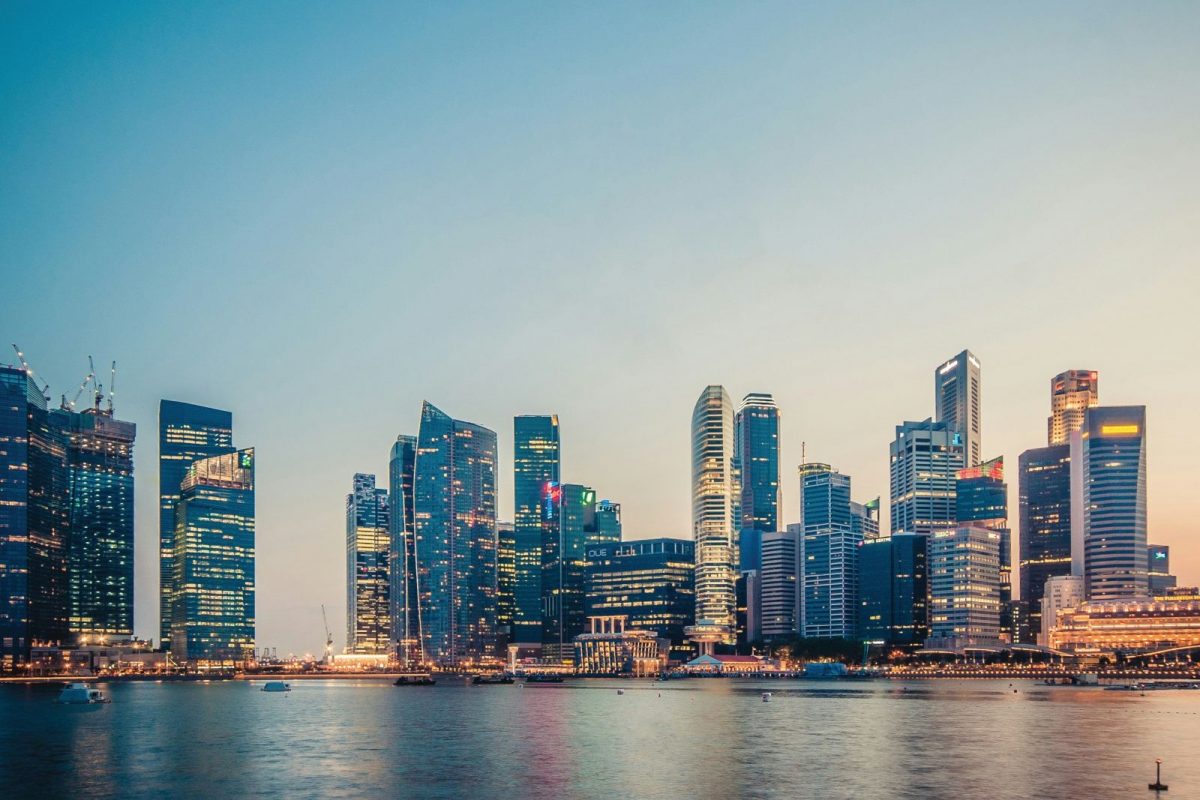
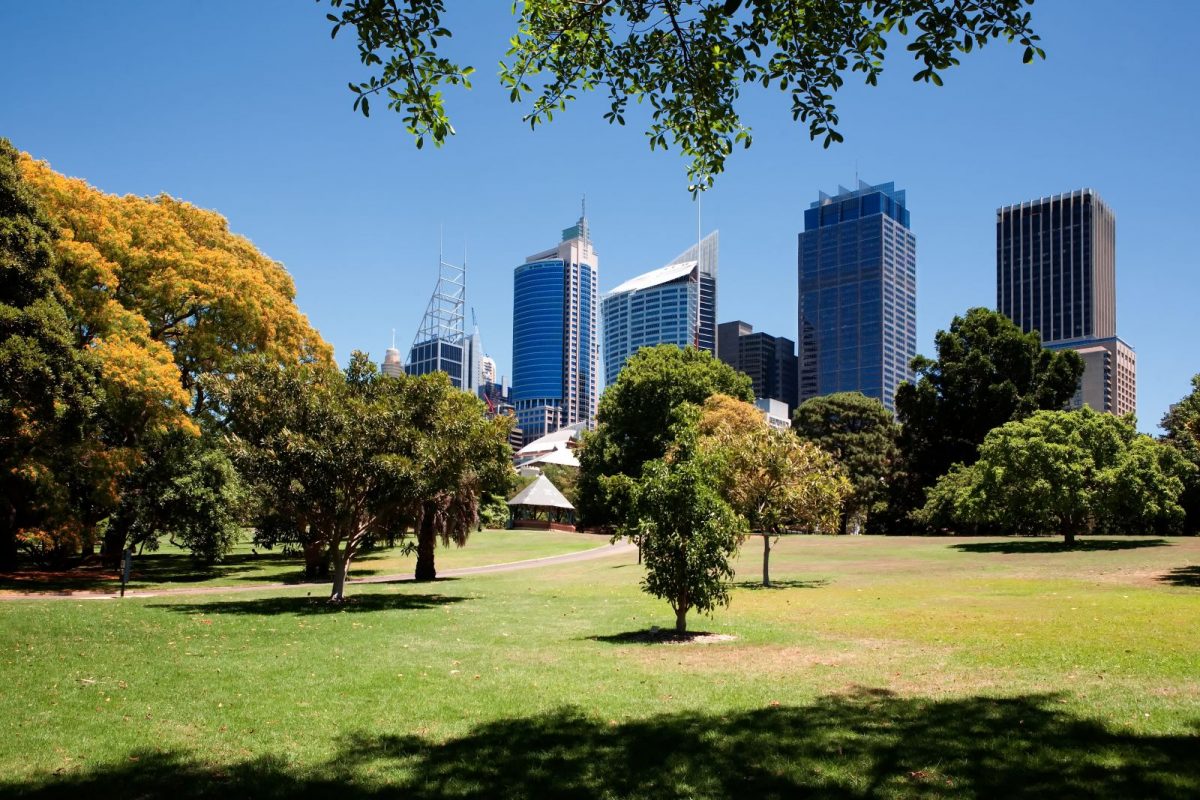
How global high-net-worth investors from China, Hong Kong, Singapore, Japan, Korea, India, the Middle East, the United Kingdom, Australia, Canada, Israel, Germany, and across the world who own office buildings, retail properties, industrial assets, multifamily apartment buildings, hospitality assets, golf courses, marinas, vineyards, and specialist commercial real estate across New York, Los Angeles, San Francisco, Miami, Houston, Dallas, and America's major commercial markets have built significant equity, and how international equity release finance makes that wealth accessible without selling
International high-net-worth investment in American commercial real estate is one of the most significant and most consistently growing components of cross-border capital flows into the United States. For decades, globally mobile high-net-worth investors, from China, Hong Kong, Singapore, Japan, Korea, India, the Middle East, Europe, and Latin America, have recognised that American commercial real estate offers a combination of characteristics that is genuinely rare in the global investment landscape: transparent pricing, deep liquidity in major markets, the protection of English common law property rights, dollar-denominated returns, and a diversity of asset classes and geographies that allows sophisticated international investors to build genuinely diversified commercial real estate portfolios within a single country.
The equity that international high-net-worth owners have built in American commercial real estate, in multifamily apartment buildings in Los Angeles and Houston, in office strata units in Manhattan and San Francisco, in retail properties in Miami and Chicago, in industrial and logistics facilities near the major port and distribution hubs, in hospitality assets across the resort and urban markets, and in specialist assets from golf courses to marinas to vineyards, is substantial. In many cases it has been building for twenty or thirty years. And for the most part it has been as inaccessible through conventional US equity release channels as the residential equity that the broader UNLOCKED IN AMERICA series addresses.
Commercial property equity release for international high-net-worth owners has one significant advantage over residential equity release: the commercial property market assesses lending primarily on the property's income-generating capability, its net operating income, its occupancy, its tenant quality, and its debt service coverage ratio, rather than on the personal income of the borrower. In theory, this should make commercial equity release more accessible to international high-net-worth investors whose personal income is complex, foreign-currency-denominated, or held in structures that US residential mortgage underwriters cannot assess.
In practice, the offshore holding structure barrier, the foreign entity borrower barrier, and the non-US income documentation barrier affect commercial property equity release almost as severely as residential. GMG's asset-led, exit-strategy-led equity release framework addresses all of these barriers directly, for commercial property as it does for residential.
This is the Unlocked in America: Commercial Property guide, part of the Unlocked in America series by Global Mortgage Group and America Mortgages, the only US mortgage lender focused exclusively on overseas borrowers.
Why Commercial Property Equity Release Is Different From Residential
Before covering the specific asset classes and markets, it is worth understanding how commercial property equity release differs from residential, because the differences affect both the opportunity and the approach.
Income-led valuation versus capital-led valuation: Commercial property is valued primarily on its income, the net operating income capitalised at a market-appropriate cap rate, rather than on comparable sales alone. This means that a well-leased commercial property with strong tenants and a long weighted average lease expiry (WALE) can support a larger equity release facility relative to its capital value than a residential property of equivalent value, because the income certainty provides additional credit comfort.
Debt service coverage ratio assessment: Commercial lending assesses the property's ability to service the debt from its own income, the debt service coverage ratio (DSCR). A property generating USD 500,000 of net operating income against a loan requiring USD 300,000 of annual interest has a DSCR of 1.67x, strong coverage that reduces the lender's dependence on the borrower's personal income for repayment. For international high-net-worth owners with complex personal income structures, the DSCR framework is inherently more accommodating than the residential debt-to-income framework.
LLC and entity borrowing is standard: Unlike residential property, where individual borrower assessment is the norm and entity lending is the exception, commercial property is almost universally held in LLC, partnership, or corporate structures. Commercial lenders are accustomed to lending to entities rather than individuals, which means the offshore holding structure barrier that is so acute in residential equity release is somewhat less severe in commercial.
Specialist valuation: Commercial property valuation requires qualified commercial appraisers who assess income, occupancy, lease terms, tenant quality, and comparable transactions in the specific asset class. GMG works with qualified commercial appraisers across all major US markets and asset classes to ensure that equity release facilities are sized appropriately to the full market value of the commercial asset.
1031 Exchange and equity release: Many international high-net-worth commercial property owners use 1031 like-kind exchanges to defer capital gains when selling US investment property. The 1031 exchange requires reinvestment within a strict 45-day identification and 180-day closing timeline, creating situations where equity release against an existing commercial property can provide the bridge capital needed to complete a 1031 exchange acquisition without being forced into a suboptimal replacement property by the timeline pressure.
Part One: Multifamily Residential — The Most Consistent International High-Net-Worth Commercial Investment
Multifamily apartment buildings, properties with five or more residential units held as commercial investment assets, represent the most consistent and most widely held commercial real estate investment category among international high-net-worth buyers in the United States. The combination of steady rental income, appreciation driven by population growth and housing undersupply in major markets, the relative simplicity of the asset class compared to office or retail, and the strong DSCR metrics of well-occupied multifamily assets in supply-constrained markets has made multifamily the preferred entry point for international high-net-worth investors building their first US commercial real estate position.
Los Angeles and Southern California Multifamily
Los Angeles County has one of the most severe housing undersupply conditions of any major US metropolitan area, creating a multifamily rental market with consistently high occupancy rates and strong rental income growth. International high-net-worth investors who acquired Los Angeles multifamily assets in the 2000s and early 2010s have built equity through a combination of rental income, mortgage paydown, and significant capital appreciation.
Chinese and Hong Kong high-net-worth investors are the most significant international buyer community in Los Angeles multifamily, with ownership concentrated in the Westside, the San Fernando Valley, and the communities surrounding USC and UCLA where student housing demand creates consistent occupancy. Korean high-net-worth investors have been among the most historically consistent international multifamily buyers in Los Angeles, with significant ownership in Koreatown and the surrounding communities. Taiwanese high-net-worth investors have concentrated in the San Gabriel Valley multifamily market. Indian high-net-worth investors have been increasingly active in the suburban multifamily market in Orange County and the Inland Empire.
New York Multifamily
New York City's multifamily market, driven by the most severe housing shortage of any major US city and by rent stabilisation laws that create a complex ownership and valuation environment, has attracted significant international high-net-worth investment, particularly from Israeli, British, Chinese, and Middle Eastern buyers who understand the long-term value of owning regulated and market-rate residential assets in a city where supply will never adequately meet demand.
Israeli high-net-worth real estate investors are among the most significant and most historically active international multifamily buyers in New York, with ownership spanning Manhattan, Brooklyn, Queens, and the Bronx in both rent-stabilised and free-market asset classes. Chinese and Hong Kong high-net-worth investors have been increasingly active in New York multifamily, concentrating in the outer boroughs and in communities with established Chinese-American populations. British high-net-worth real estate investors have maintained a consistent New York multifamily presence.
Texas and Sunbelt Multifamily
The Texas and broader Sunbelt multifamily market, driven by extraordinary population growth from domestic and international migration, a business-friendly regulatory environment, and entry prices that remain materially below coastal markets, has attracted significant international high-net-worth investment over the past decade. Canadian high-net-worth investors have been among the most active international buyers in Texas and Sunbelt multifamily, drawn by the value proposition and the absence of state income tax. Chinese and Hong Kong high-net-worth investors have established significant Texas multifamily positions. Middle Eastern high-net-worth investors and family offices have been increasingly active in the high-growth Texas multifamily market.
Part Two: Office — Strata Title and Single-Tenant Buildings
Manhattan Office Strata
Manhattan's strata title office market, individual office floors and suites in major commercial buildings sold to individual investors, has attracted significant international high-net-worth investment, particularly from Chinese, Hong Kong, Singaporean, and Middle Eastern buyers who are familiar with the strata office ownership model from their home markets.
The Hudson Yards development, Manhattan's newest and most significant office and mixed-use development, has attracted Chinese, Korean, and Singaporean high-net-worth investor interest in its commercial strata offerings. The Plaza District and Midtown Manhattan office strata market has attracted Middle Eastern and European high-net-worth investors who value the quality of the tenant base and the liquidity of Manhattan's commercial real estate market.
San Francisco and Silicon Valley Office
The San Francisco CBD and Silicon Valley office market has attracted significant Chinese, Indian, Taiwanese, and Israeli high-net-worth investment, driven by the technology industry's extraordinary office space demand and the premium that technology tenants pay for quality space in supply-constrained markets. Indian high-net-worth technology entrepreneurs who have built careers in Silicon Valley and who understand the office market's fundamentals are among the most consistent buyers.
Medical Office
Medical office buildings, properties leased to medical practices, outpatient surgery centres, and healthcare providers, represent one of the most defensively positioned commercial real estate asset classes and have attracted significant interest from Indian, Chinese, Korean, and Middle Eastern high-net-worth investors. The combination of long lease terms, creditworthy tenants, and recession-resistant demand has made medical office a consistent destination for international high-net-worth capital seeking stable income alongside long-term appreciation.
Indian high-net-worth physicians and healthcare entrepreneurs who have built medical practices in the United States frequently invest in medical office real estate as a complement to their professional activities, owning the buildings in which they and their colleagues practise. This creates a specific and significant equity release opportunity for Indian high-net-worth medical office owners who need capital for practice expansion, personal investment, or family needs.
Part Three: Retail — High Street, Strip Retail, and Mixed-Use
High Street Retail
America's most prestigious high street retail, Fifth Avenue in New York, Rodeo Drive in Beverly Hills, Michigan Avenue in Chicago, Worth Avenue in Palm Beach, Lincoln Road in Miami Beach, has attracted international high-net-worth investment from buyers who understand that the combination of irreplaceable location, global brand tenant demand, and absolute supply constraint creates a retail asset class with characteristics more similar to trophy residential than to conventional retail investment.
Chinese and Hong Kong high-net-worth investors have been among the most active international buyers of New York and Los Angeles high street retail, attracted by the tenant quality and the brand recognition of addresses that are globally known. Middle Eastern high-net-worth investors and sovereign wealth-adjacent family offices have been consistent buyers of premium US retail in major markets. Korean high-net-worth investors, many with retail industry backgrounds from their home market, have been consistent buyers of US retail assets.
Strip Retail and Neighbourhood Retail Centres
Strip retail and neighbourhood retail centres, the community-serving retail infrastructure that provides day-to-day goods and services to residential neighbourhoods, represent one of the most consistent entry-level commercial real estate investments for international high-net-worth buyers making their first US commercial acquisition. The combination of modest entry prices, local market knowledge advantages, and stable income from essential service tenants has made strip retail a favoured asset class for Chinese, Korean, Vietnamese, and Indian high-net-worth investors who have deep knowledge of specific US communities.
Part Four: Industrial and Logistics
The industrial and logistics sector has been the strongest-performing commercial real estate asset class in the United States over the past decade, driven by the explosive growth of e-commerce and the corresponding demand for last-mile distribution, fulfilment, and storage facilities near major population centres.
Chinese and Singaporean high-net-worth investors, many with supply chain and manufacturing backgrounds in their home markets, have been among the most active international buyers of US industrial and logistics real estate, drawn by the fundamental demand drivers and the long-term lease structures that provide income certainty. Middle Eastern sovereign wealth-adjacent family offices and high-net-worth investors have established significant US industrial positions. Korean high-net-worth investors with manufacturing industry backgrounds have been consistent US industrial buyers. Canadian high-net-worth investors have been active in US industrial markets adjacent to the Canadian border.
Key US industrial and logistics markets that have attracted the most international high-net-worth investment include the Inland Empire in Southern California, one of the largest industrial markets in the United States and a critical logistics hub for goods arriving through the ports of Los Angeles and Long Beach, the New Jersey logistics corridor serving the New York metropolitan area, the Dallas-Fort Worth distribution hub, and the Chicago and Memphis intermodal logistics markets.
The equity appreciation in well-located US industrial assets over the past decade has been exceptional. Industrial properties purchased in the 2010 to 2015 window for USD 2 to 5 million are now worth USD 5 to 15 million in the best-located logistics markets, reflecting both the fundamental demand growth and the significant compression in industrial cap rates that has occurred as institutional capital has flowed into the sector.
Part Five: Hospitality — Hotels, Boutique Properties, and Extended Stay
International high-net-worth investment in US hospitality assets, boutique hotels, independent hotels, extended stay properties, and hotel condominiums, represents one of the most complex and most potentially rewarding commercial real estate categories. The combination of real estate appreciation and operating business income creates a dual-return profile that attracts international high-net-worth investors with hospitality industry backgrounds or with investment theses that specifically value the operating income component alongside the capital appreciation.
Chinese and Hong Kong high-net-worth investors have been among the most active international buyers of US hospitality assets over the past two decades, concentrating on mid-market and select-service hotel brands in major metropolitan markets. Indian high-net-worth hospitality entrepreneurs have established a significant and historically important presence in US hospitality, with ownership going back to the Patel community's pioneering role in American motel and budget hotel ownership since the 1970s. Korean high-net-worth investors have been active in boutique hotel and extended stay acquisitions. Middle Eastern high-net-worth investors and family offices have targeted full-service and luxury hospitality assets.
Key US hospitality markets for international high-net-worth investment include New York City, where boutique hotel values have appreciated dramatically and where the supply constraint created by the city's planning restrictions on new hotel development has maintained strong RevPAR growth: Los Angeles, Miami, San Francisco, and the major resort markets including Hawaii, Aspen, and the Florida Gulf Coast.
Part Six: Specialist Commercial Assets
Golf Courses
International high-net-worth ownership of American golf courses is a market with a specific historical significance and a current equity release opportunity that is genuinely significant for a small but high-value owner community.
Japanese high-net-worth investors and Japanese corporations were among the most significant buyers of US golf courses in the late 1980s and early 1990s, a period when the combination of a strong yen, the Japanese golf culture's extraordinary demand for golf club memberships, and the relative accessibility of US golf course real estate compared to Japanese golf course prices drove a wave of Japanese acquisition that at its peak represented ownership of hundreds of US golf courses. Many of those properties remain in Japanese or Japanese-American ownership today, having been held through multiple market cycles and having in many cases appreciated significantly from their original purchase prices.
Korean high-net-worth investors have been consistent US golf course buyers, reflecting Korea's strong golf culture and the Korean high-net-worth community's interest in golf course ownership as both a lifestyle and an investment asset. Chinese high-net-worth investors have been increasingly active in US golf course acquisition, driven by the growing Chinese golf culture and the investment logic of owning supply-constrained recreational land in major metropolitan markets where golf course land represents some of the most valuable open space available for private ownership.
For equity release purposes, golf courses are assessed primarily as land and real estate assets rather than as operating businesses, the land value, the location within a metropolitan area, the potential alternative use value, and the quality of the physical infrastructure are the primary valuation drivers. GMG assesses golf course equity release on a case-by-case basis, working with specialist golf course valuers who understand both the recreational real estate market and the alternative use value of golf course land in major metropolitan areas.
Marinas
International high-net-worth ownership of American marinas, boat storage, slip rental, and waterfront service facilities, is a niche but growing category driven primarily by Japanese, Australian, British, and Scandinavian high-net-worth buyers who combine a passion for recreational boating with the investment logic of owning waterfront commercial real estate in coastal markets where supply is permanently constrained by geography and regulation.
Marina real estate values in the most sought-after coastal markets, Long Island Sound, the Chesapeake Bay, Puget Sound, South Florida, and California's coastal harbours, have appreciated significantly over the past two decades, driven by the growth in recreational boating demand and the absolute constraint on new marina development created by coastal environmental regulations. Marina equity release is assessed by GMG as a specialist waterfront commercial real estate category, working with maritime real estate valuers who understand the specific income and valuation dynamics of the sector.
Vineyards and Wineries
International high-net-worth ownership of American vineyards and winery estates, concentrated primarily in California's Napa Valley and Sonoma County alongside Oregon's Willamette Valley and Washington State's Columbia Valley, represents one of the most lifestyle-integrated commercial real estate investments available in the United States.
French, Italian, and Australian high-net-worth investors with wine industry backgrounds have been the most consistent international buyers of US vineyard and winery assets, driven by the obvious cultural connection and by the investment logic of owning premium agricultural land in the world's most recognised New World wine producing regions. Chinese and Hong Kong ultra-high-net-worth buyers have been increasingly active vineyard and winery acquirers in Napa Valley, reflecting the Chinese high-net-worth community's growing sophistication as wine consumers and collectors and the prestige of winery ownership as a lifestyle asset. German and Swiss high-net-worth buyers have established a consistent presence in the US wine country real estate market.
Vineyard and winery equity release is assessed by GMG as a specialist agricultural and hospitality real estate category, working with qualified agricultural and vineyard valuers who can appropriately assess the combined value of the land, the vine stock, the winery infrastructure, and any associated hospitality or tasting room operations.
Car Washes and Specialist Retail
Car washes, an asset class that has undergone significant professionalisation and consolidation over the past decade, have attracted substantial Chinese, Korean, and Vietnamese high-net-worth investment in California and the broader Sunbelt. The combination of cash-generative operations, relatively simple management requirements, and real estate appreciation in high-traffic suburban commercial corridors has made car washes a consistent investment vehicle for Asian-American entrepreneurs and for internationally mobile high-net-worth investors with retail and service industry backgrounds.
Self-storage facilities, gas stations and convenience stores, and parking garages represent additional specialist commercial categories with significant international high-net-worth ownership, particularly among Chinese, Korean, Indian, and Middle Eastern investors who have entered these asset classes through operational rather than purely investment motivations and who have built equity over extended holding periods.
Part Seven: Key US Commercial Real Estate Markets for International High-Net-Worth Equity Release
New York City
Manhattan's commercial real estate market, across office, retail, multifamily, hospitality, and mixed-use, represents the deepest and most liquid commercial investment market in the United States and the single most significant destination for international high-net-worth commercial real estate capital. The combination of market depth, global tenant demand, and the absolute constraint on new supply created by Manhattan's island geography makes New York commercial real estate, particularly well-leased assets in prime locations, the strongest collateral for commercial equity release in the United States.
California
California's commercial real estate markets, spanning Los Angeles multifamily and retail, San Francisco CBD office and mixed-use, Silicon Valley office and industrial, and the Inland Empire logistics corridor, represent the most diverse and most internationally owned commercial real estate landscape of any US state. The combination of California's extraordinary economic scale (the largest state economy in the United States and the fourth or fifth largest economy in the world), its chronic housing and commercial space undersupply, and its position as the primary gateway for Asian capital into the American market makes California commercial real estate among the most consistently appreciated and most reliably liquid commercial assets available to international high-net-worth investors.
Florida
Florida's commercial real estate market, spanning Miami's office, retail, and mixed-use, South Florida's industrial and logistics, Orlando's hospitality and retail, and the Gulf Coast's resort and lifestyle commercial assets, has been transformed by the migration of financial services from New York and by the sustained Latin American and European capital flows that have characterised the state's international investment landscape for decades.
Texas
Texas's commercial real estate market has delivered some of the strongest commercial real estate returns of any major US state over the past decade, driven by extraordinary population growth, a business-friendly regulatory environment, and the relocation of significant corporate headquarters and operational facilities from higher-cost coastal markets. The industrial, office, and multifamily markets of Austin, Dallas, Houston, and San Antonio have all delivered significant appreciation for international high-net-worth investors who entered the market in the 2010 to 2018 window.
Hawaii
Hawaii's commercial real estate market, concentrated primarily in hospitality, retail, and mixed-use assets on Oahu, Maui, and the Big Island, has attracted significant Japanese, Chinese, Korean, and Australian high-net-worth investment, reflecting the state's position as the primary US destination for Asian tourism and the deep historical relationship between Japanese investment and Hawaiian hospitality real estate.
The Commercial Property Equity Release Barrier for International High-Net-Worth Owners
Despite the theoretical advantages of commercial property's income-led assessment framework, international high-net-worth owners of US commercial real estate face significant barriers when seeking equity release through conventional US commercial lending channels.
Offshore and foreign entity borrower complexity: While commercial lending is more accustomed to entity borrowers than residential, US commercial lenders still face significant compliance and legal complexity when extending equity release facilities to offshore holding companies, BVI entities, Cayman LLCs, Singapore holding companies, Hong Kong companies, Japanese corporations, that do not have US credit histories or US-registered operating presence. GMG's commercial equity release programme is specifically designed to accommodate these structures.
Foreign income documentation in commercial contexts: Even with DSCR-based assessment, US commercial lenders require documentation of the property's rental income and operating expenses in formats that comply with US GAAP accounting standards. For international high-net-worth owners whose property management is handled through offshore management companies or whose rental income flows through non-US banking channels, the documentation challenge is real. GMG works with international high-net-worth commercial property owners to structure the documentation in a way that provides the necessary credit information without requiring full US GAAP compliance.
Specialist asset class complexity: Golf courses, marinas, vineyards, car washes, and other specialist commercial assets require specialist valuers and specialist credit assessment frameworks that most conventional US commercial lenders are not equipped to provide efficiently. GMG's specialist commercial equity release team has experience across the full range of commercial asset classes and works with qualified specialist valuers in each category.
1031 Exchange bridge financing: International high-net-worth commercial property owners who are executing 1031 like-kind exchanges face extremely tight timelines, 45 days to identify a replacement property and 180 days to close. A conventional commercial equity release process cannot reliably be completed within these timelines. GMG's ability to issue a term sheet within 24 to 48 hours and to draw down in 10 to 20 business days makes it one of the very few commercial equity release providers capable of supporting a 1031 exchange timeline.
GMG's Commercial Property Equity Release Solution
Global Mortgage Group provides senior secured equity release facilities against qualifying US commercial real estate for international high-net-worth foreign nationals, overseas investors, and globally mobile high-net-worth commercial property owners, assessed on the property's net operating income, occupancy, lease terms, and asset quality rather than on the personal income documentation of the borrower.
Key equity release parameters for US commercial property:
- Loan size: USD 500,000 to USD 100,000,000+
- Term: 6 to 24 months
- LTV: Up to 60–65% of independently appraised commercial market value
- Note: Commercial LTV varies by asset class, stabilised multifamily and well-leased office in major markets attract the strongest LTV; specialist assets including golf courses, marinas, and vineyards are assessed on a case-by-case basis
- DSCR: Minimum 1.25x debt service coverage from property net operating income in most cases
- Interest: Retained or rolled up, no personal income serviceability constraint
- Security: Multifamily apartment buildings, office strata and single-tenant commercial, retail, industrial and logistics, hospitality, golf courses, marinas, vineyards, car washes, self-storage, and other qualifying US commercial real estate
- Borrower entity: US LLCs, Delaware partnerships, BVI companies, Cayman LLCs, Singapore holding companies, Hong Kong companies, Japanese corporations, Korean entities, Australian companies, and all qualifying international holding structures subject to beneficial ownership due diligence
- Personal guarantee: Required from ultimate beneficial owners in most cases
- 1031 Exchange bridge: Available, GMG's timeline is compatible with 1031 exchange identification and closing requirements
- No personal US income documentation required, property income is the primary assessment criterion
- Timeline: Indicative equity release term sheet 24–48 hours; drawdown 10–20 business days for standard commercial assets; 20–35 business days for specialist assets
For long-term financing after the equity release period, America Mortgages provides DSCR investment property mortgages for multifamily and commercial assets held by overseas borrowers, assessed on property income rather than personal income, available across all 50 US states.
Is Commercial Property Equity Release Right for You?
This solution is most relevant if one or more of the following applies:
- You are an international high-net-worth owner of US commercial real estate, multifamily, office, retail, industrial, hospitality, golf course, marina, vineyard, car wash, self-storage, or other commercial asset class, with significant unrealised equity
- Your US commercial property is held through a US LLC, partnership, BVI company, Cayman LLC, Singapore holding company, Hong Kong company, Japanese corporation, Korean entity, or other international holding structure
- You need capital for a business opportunity, a further property acquisition, a 1031 exchange replacement property, or a personal or family financial need, and the equity in your US commercial property is the most efficient source
- Your US commercial lender has declined your equity release application citing your offshore holding structure, your foreign beneficial ownership, or your non-US income documentation
- You are executing or planning a 1031 like-kind exchange and need bridge capital within the 45-day identification and 180-day closing timeline
- You are Chinese, Hong Kong, Singaporean, Japanese, Korean, Indian, Middle Eastern, British, Australian, Canadian, Israeli, or any other internationally mobile high-net-worth nationality that owns US commercial real estate
Contact Donald Klip
If you are an international high-net-worth owner of US commercial real estate and want to explore equity release against your property, contact Donald Klip directly.
Email: [email protected]
Phone: +65 9773-0273
Website: gmg.asia
America Mortgages: americamortgages.com
To receive an indicative equity release term sheet for US commercial property, we need: property address and asset class, estimated current market value, net operating income and occupancy rate, any existing mortgage balance, approximate equity release amount required, desired loan term, holding entity type and jurisdiction, and a brief description of the intended use of funds and repayment plan.
No personal US income tax returns required. No US credit history required. No Social Security Number required at the initial stage. Learn more.
Continue reading the Unlocked in America series at gmg.asia.