UNLOCKED IN AMERICA — The Complete Equity Release Series for International High-Net-Worth Owners of US Real Estate

International high net worth property owners US real estate equity release

How global high-net-worth investors in New York, Los Angeles, San Francisco, Miami, and the Hamptons are sitting on decades of untapped US property equity — and what international equity release finance does about it

Somewhere in the world right now — in Singapore, in London, in Hong Kong, in São Paulo, in Frankfurt, in Dubai, in Sydney — an international high-net-worth owner of US real estate is doing a calculation that does not add up.

They own property in the United States. In Manhattan, or Beverly Hills, or Miami Beach, or San Francisco, or the Hamptons. They have owned it for years — in many cases for decades. They bought it when the dollar was accessible, or when their child was studying at Harvard or Columbia or UCLA, or when American real estate felt like the most rational and permanent place in the world to anchor a portion of their family's wealth. They followed the logic that global high-net-worth investors have followed for forty years: that US real estate, held long-term, in a market underpinned by the rule of law and the world's deepest property liquidity, was one of the safest and most reliable stores of private wealth available.

The property has done what American real estate has consistently done for that entire period. It has appreciated. The Manhattan apartment purchased by a British family for USD 600,000 in 1996 is worth USD 4.5 million today. The Beverly Hills home acquired by a Hong Kong family for USD 1.8 million in 2001 is worth USD 11 million. The Miami condominium bought by a Brazilian family for USD 450,000 in 1993 is worth USD 3.8 million. The San Francisco flat held by a German family since 1999, purchased for USD 550,000 for a child studying at Berkeley, is worth USD 3.2 million today.

The equity these international high-net-worth property owners have built is real, it is substantial, and it represents — in many cases — one of the most successful long-term investments their family has ever made.

And yet, when they need to access that equity — when a time-sensitive investment appears, when a capital need arises, when a property opportunity will not wait, when a business requires funding — they discover that the American financial system has no practical mechanism to serve them. The US mortgage and home equity lending market was built for a domestic American borrower with a Social Security Number, a W-2 income form, a domestic credit history, and a financial life that exists primarily within the United States. The international high-net-worth owner of US real estate — the foreign national, the globally mobile family, the US expatriate living in Asia or Europe, the overseas investor whose wealth is held in structures the US underwriter cannot process — falls outside the system's parameters entirely.

The equity is there. The system cannot see it.

This is the problem that Global Mortgage Group and America Mortgages built our international equity release and bridging loan programme to solve. And it is the problem that UNLOCKED — our new 11-part content series for international high-net-worth owners of US real estate — exists to address with depth, specificity, and practical information that global property owners and their advisors can actually use.

What Is Unlocked?

UNLOCKED is an 11-part series of in-depth guides covering every major dimension of US property equity release for international high-net-worth investors and globally mobile property owners.

Each article in the series addresses a specific audience, a specific market, or a specific structural challenge that international high-net-worth owners of US real estate face when they try to access the capital their American property has accumulated. Whether you are a European family with a Manhattan apartment held since the 1980s, an Asian high-net-worth investor with a Beverly Hills estate purchased through a Hong Kong company, a US citizen living in Singapore whose foreign income your American bank will not assess, a Latin American family with decades of Miami appreciation you have never been able to touch, or a retired executive whose post-career income no longer satisfies the bank's debt-to-income formula despite your having USD 6 million in residential equity — there is an article in this series written specifically for your situation.

The series is called UNLOCKED because that is precisely what it does. It takes the equity that has been building quietly in American real estate for thirty and forty years — equity that belongs to the international high-net-worth property owners who created it but that the conventional US lending system has made functionally inaccessible — and explains, concretely and practically, how to release it.

The Eleven Parts

Part 1 — The Master Guide

US Property Equity Release for International High-Net-Worth Investors: Everything You Need to Know. The definitive overview that maps the full landscape of international equity release for global owners of US real estate and connects you to the specific article most relevant to your situation.

Part 2 — The Foreign National and Non-Resident Owner

You Own Millions in US Real Estate. The American Banking System Will Not Let You Touch It. For international high-net-worth foreign nationals and non-residents who have no SSN, no US credit history, and income earned and documented outside the United States — and who have been told by every US bank they have approached that the system cannot process them.

Part 3 — The Asset-Rich, Income-Complex Owner

Your US Home Is Worth Millions. Your Bank Knows It. They Still Said No. For high-net-worth business founders taking distributions, self-employed professionals, high earners with variable compensation, and any internationally connected property owner whose income structure does not fit the conventional US underwriting framework.

Part 4 — The European and Global Long-Term Holder

The Apartment Your Family Bought in New York in 1987 Is Now Worth Ten Times What You Paid. Have You Ever Tried to Release That Equity? For British, German, French, Dutch, Scandinavian, Swiss, and globally mobile high-net-worth families who built US property positions over decades and have never once accessed the extraordinary appreciation they have accumulated.

Part 5 — The Education Property Owner

You Bought an Apartment Near Harvard, Columbia, or UCLA for Your Child's Education. Thirty Years Later It Is One of the Most Valuable Things You Own. For the internationally mobile high-net-worth parents who purchased US property to support a child's American university years — and have been holding that quietly appreciating asset ever since.

Part 6 — The Asian High-Net-Worth Buyer in Los Angeles

Asian High-Net-Worth Buyers Built Los Angeles. Now Their Equity Is Trapped and Their Bank Cannot Help. For Chinese, Japanese, Korean, Singaporean, Hong Kong, and Southeast Asian high-net-worth families with decades of equity in Beverly Hills, the Pacific Palisades, Arcadia, San Marino, and Malibu — held through offshore structures that the US lending system will not accommodate.

Part 7 — The Latin American High-Net-Worth Miami Owner

Latin American Families Made Miami. The Equity They Built There Is Still Waiting to Be Released. For Brazilian, Colombian, Venezuelan, Argentine, and Mexican high-net-worth families with decades of appreciation in Fisher Island, Brickell, Coral Gables, Palm Beach, and Miami Beach — and the specific financing challenges created by capital controls, offshore structures, and US income documentation requirements.

Part 8 — The American Expatriate

You Are an American Living Abroad. You Own US Property. Your Own Country's Banks Will Not Lend Against It. For US citizens living in Singapore, London, Hong Kong, Dubai, Sydney, and other global cities whose foreign income and non-resident status make them invisible to the conventional US mortgage system — despite being American citizens who pay US taxes on their worldwide income.

Part 9 — The LLC and Trust Owner

Your US Property Is Held in an LLC or Trust. That Is Why Your Bank Said No — and Here Is What to Do Instead. For high-net-worth international and domestic US property owners whose legitimate legal and tax planning — US LLCs, family trusts, BVI companies, Cayman entities — has become the precise barrier to equity access that no one anticipated when those structures were established.

Part 10 — The Sell-versus-Release Decision

Before You Sell Your US Property, Read This. Equity Release May Be the Smarter Financial Decision. The analytical case for international high-net-worth owners of US real estate who are considering selling to access capital — FIRPTA withholding at 15% of gross proceeds, capital gains tax at combined rates of up to 33% in California and New York, depreciation recapture, agent commissions, and the permanent loss of future appreciation on an asset that has been their best investment.

Part 11 — The Retired High-Net-Worth Wealth Builder

You Spent Forty Years Building Wealth in US Real Estate. Your Bank Will Not Recognise It Now That You Have Retired. For retired and semi-retired high-net-worth property owners — in the United States and internationally — whose post-career income no longer satisfies the conventional US mortgage system despite their having built substantial US real estate wealth over a lifetime.

The Equity Release And Bridging Loan Solution For International High-Net-Worth Owners of US Real Estate

Every article in the UNLOCKED series points to the same practical solution: GMG's international equity release and bridging loan programme, delivered in partnership with America Mortgages — the only US mortgage lender focused exclusively on overseas and internationally mobile borrowers.

The solution is built around a principle that is simple but that the conventional US lending system cannot execute: assess the international high-net-worth property owner on the asset, the equity, and the plan — not on a domestic income form that was never designed for a globally mobile financial life.

In practical terms, this means:

Equity release and bridging loan facilities from USD 500,000 to USD 20,000,000 and above, secured against qualifying US residential and commercial property in all major markets — New York, Los Angeles, San Francisco, Miami, the Hamptons, Boston, and beyond.

Loan terms of 6 to 24 months, with interest retained or rolled up so that there is no monthly repayment obligation during the loan term. The facility is repaid in full at maturity from the exit event — a property sale, a long-term refinancing, the receipt of investment proceeds, or another capital event.

No Social Security Number required. No US credit history required. No US income documentation required at the initial stage. Offshore holding structures — US LLCs, family trusts, BVI companies, Cayman entities, Singapore and Hong Kong holding companies — considered subject to standard due diligence.

Indicative term sheet within 24 to 48 hours of receiving basic property and borrower information. Drawdown typically within 10 to 20 business days. A timeline that matches the real investment and capital deployment decisions that international high-net-worth property owners face.

For international high-net-worth owners of US real estate who want a long-term financing structure after the equity release period, America Mortgages provides the permanent solution — Foreign National mortgages for non-US citizens, DSCR investment property mortgages assessed on rental income rather than personal income, and EXPat mortgages for US citizens living and working abroad — available across all 50 US states.

Why Global Mortgage Group And America Mortgages Built This Programme

I am Donald Klip, Co-Founder of Global Mortgage Group and America Mortgages.

Between the two firms, we have spent the better part of two decades building the international mortgage and property finance infrastructure that the globally mobile high-net-worth community has needed and has not had. GMG operates across more than 23 jurisdictions. America Mortgages is the only US mortgage lender that has made serving international high-net-worth overseas borrowers its exclusive focus — not a side product, not a niche programme within a larger domestic operation, but the entire business.

Together we have structured equity release facilities and mortgage transactions for international high-net-worth clients based in Singapore, Hong Kong, the United Kingdom, Germany, Switzerland, Brazil, the UAE, Australia, Japan, and dozens of other countries — all of whom own US real estate and all of whom the conventional US lending system could not serve.

The UNLOCKED series is the direct result of those client conversations. Every article in it was written because we have sat across from an international high-net-worth owner of US property — or received a message from one — who described exactly the situation that article addresses. The trapped equity. The bank that said no. The opportunity that was passing. The frustration of being wealthy on paper and constrained in practice.

These are solvable problems. UNLOCKED explains how.

A Note On Terminology: Equity Release And Bridging Loans

Throughout this series, you will see the terms equity release and bridging loan used in ways that are closely related and sometimes interchangeable.

Equity release refers to the broader objective — accessing the capital value built up in a US property without selling it. A bridging loan is the specific financial instrument most commonly used to achieve that objective — a senior secured short-term loan, typically between 6 and 24 months, with interest retained or rolled up and a clearly defined exit strategy.

In the United Kingdom, equity release has a specific regulatory meaning associated with lifetime mortgage products for retirees over 55. That is not how the term is used in this series. In the UNLOCKED context, equity release means exactly what it says: releasing the equity that international high-net-worth owners have built in their US real estate and putting it to productive use.

How To Read This Series

If you are new to GMG and America Mortgages, start with Part 1 — the master guide — which maps the full landscape of US property equity release for international high-net-worth investors and will direct you to the specific article most relevant to your situation.

If you already know which article applies to you, go directly to that piece. Each article is complete and self-contained — you do not need to read the others to get full value from any single piece in the series.

If you are a private banker, wealth advisor, family office professional, or international mortgage broker who serves global high-net-worth clients with US property, every article in the UNLOCKED series is relevant to your practice. Each piece represents a client conversation you may already be having — or should be having — and every article ends with a clear path to GMG's equity release and bridging loan solution.

New articles in the UNLOCKED series are published every two days on the GMG blog at gmg.asia. Two articles every two days until all eleven parts are live.

Contact Donald Klip

If you are an international high-net-worth owner of US real estate and want to explore equity release or a bridging loan against your American property, contact Donald Klip directly.

Email: [email protected]
Phone: +65 9773-0273
Website: gmg.asia
America Mortgages: americamortgages.com

To receive an indicative equity release term sheet, we need only: the US property address and type, the estimated current market value, any existing mortgage balance, the approximate equity release amount required, the desired loan term, and a brief description of the intended use of funds and repayment plan.

No tax returns. No W-2 forms. No Social Security Number. No US credit history required at the initial stage.

The initial conversation is about the property, the equity, and the plan.

UNLOCKED starts now.

---

Disclaimer: This article and the UNLOCKED series are for informational purposes only and do not constitute financial, legal, or tax advice. US property law and lending regulation vary by state. All loan terms are indicative and subject to GMG credit assessment and independent US appraisal. America Mortgages, Inc. is a registered US mortgage lender.

© 2025 Global Mortgage Group Pte Ltd | Singapore | gmg.asia

America Mortgages, Inc. | americamortgages.com

The Apartment Your Family Bought In New York In 1987 Is Now Worth Ten Times What You Paid. Have You Ever Tried To Release That Equity?

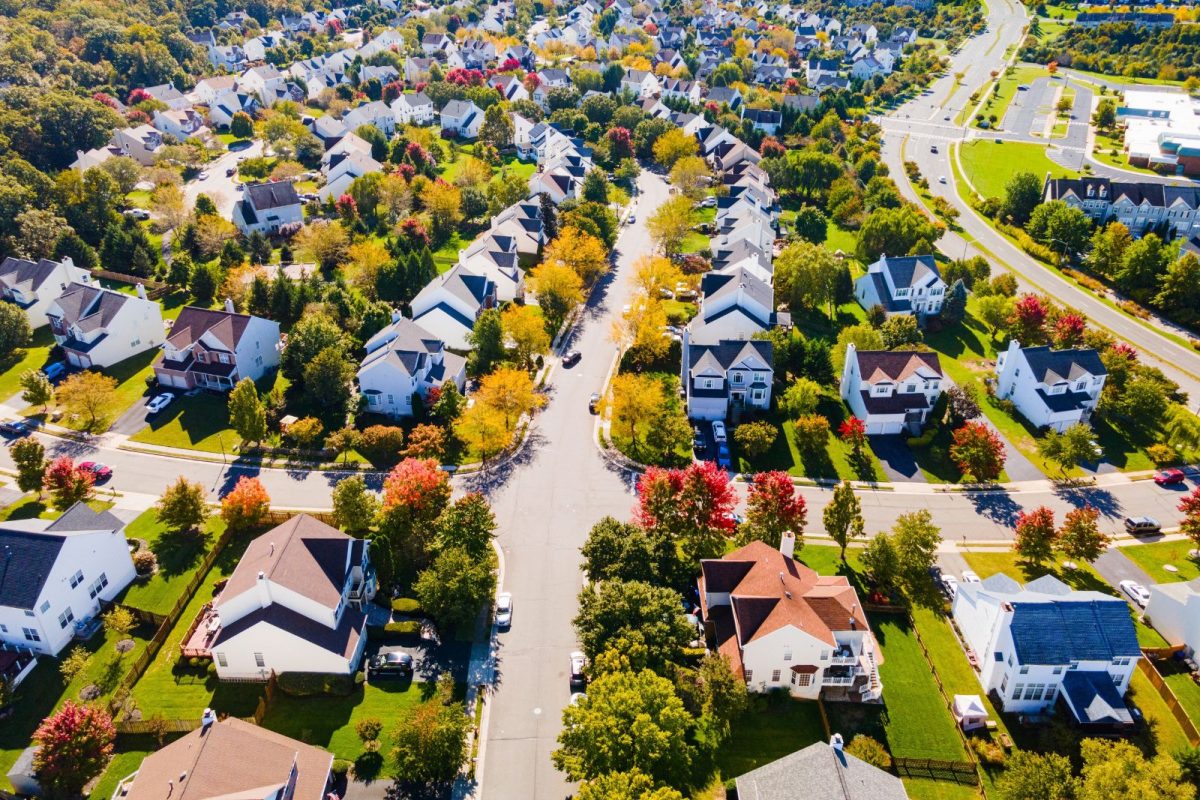
Aerial view of a U.S. residential neighborhood, representing long-term property appreciation and the opportunity to unlock significant equity from real estate held over decades.

Why European and global high-net-worth families with long-held US property in New York, Los Angeles, and Florida are sitting on decades of untapped appreciation — and how international equity release finance is finally making that wealth accessible without selling

There is a particular category of asset that exists in the portfolios of certain European and globally mobile families — an asset that was acquired almost casually, held through multiple market cycles with little attention, and has quietly become one of the most valuable things the family owns.

It is the apartment on the Upper East Side that a German industrialist bought for his daughter when she was studying at Columbia in 1989. It is the condominium on Fisher Island that a French business family acquired during a Miami sailing trip in 1994 because the price seemed reasonable and America felt like a safe place to put capital. It is the house in Beverly Hills that a British media executive purchased in 1997 during a period when Los Angeles felt like the centre of the world and the dollar was weak enough to make the numbers compelling. It is the Hamptons weekend house that a Dutch financial family bought in 2001 for USD 1.8 million because New York had always been their second city and they wanted something within reach of it.

None of these families bought their American property as a speculative trade. They bought it because they had a connection to the United States — professional, personal, educational, cultural — and because American real estate felt like a rational and permanent place to hold a portion of their wealth. They paid what seemed like a significant sum at the time. And then they held. And held. And the American property market did what it has done, with remarkable consistency, across the past four decades.

The apartment bought in 1989 for USD 400,000 is worth USD 3.5 million today. The Fisher Island condominium purchased for USD 650,000 in 1994 is worth USD 4.2 million. The Beverly Hills house acquired for USD 2.1 million in 1997 is worth USD 11 million. The Hamptons weekend house that cost USD 1.8 million in 2001 is worth USD 9 million today.

The equity in these properties — accumulated over thirty and forty years of American real estate appreciation — is extraordinary. And for the overwhelming majority of the European and global HNW families who hold it, that equity has never been touched. It has never been accessed, leveraged, or deployed. It simply sits there, compounding, while the families who own it manage their capital around it as though it were fixed and immovable.

It does not have to be that way.

The European Relationship With American Real Estate: A History Of Quiet, Long-Term Wealth Creation

To understand why so much untapped equity exists in the hands of European and globally mobile HNW families, it helps to understand how that relationship with American property developed and why it has been so durable.

The first significant wave of European HNW investment in American residential real estate began in the late 1970s and accelerated through the 1980s. Several forces converged to make the United States an attractive destination for European private capital during this period. The dollar weakened significantly against European currencies in the late 1970s, making American assets cheap in European terms. New York — despite the fiscal crisis of the mid-1970s and the social challenges that followed — retained its position as the world's pre-eminent financial and cultural capital, and Manhattan real estate prices had not yet begun the long appreciation cycle that would define the following four decades. European families who had children studying at American universities — Columbia, NYU, Harvard, MIT — found that purchasing Manhattan apartments rather than renting made straightforward financial sense, and those purchases became the anchor of long-term American property relationships that in many cases have now extended to a second and third generation.

Miami and South Florida attracted a different wave of European capital, driven partly by the emergence of Miami as the gateway city for Latin American commerce and culture, and partly by the straightforward lifestyle appeal of Florida's climate, coastline, and low tax environment. British, German, Scandinavian, and Dutch families who had established business interests in Latin America found Miami a natural second base. The early condominium developments on Fisher Island, Key Biscayne, and along the barrier islands of Palm Beach County were priced at levels that, in retrospect, look almost impossible to believe — and they were bought by European buyers who valued quality, privacy, and the tangible reality of American property rights above speculative return calculations.

Los Angeles attracted European capital through the entertainment industry's gravitational pull and through the city's position as the natural US terminus of the trans-Pacific trade and cultural relationship. British, French, Italian, and Scandinavian buyers who had professional or personal connections to the film, television, and music industries established footholds in Beverly Hills, Bel Air, and the Hollywood Hills during the 1980s and 1990s. German and Dutch buyers who arrived later — in the 2000s — found that the Pacific Palisades, Malibu, and the Santa Monica corridor offered a combination of lifestyle credentials and capital safety that justified the investment even at prices that had already risen considerably from the 1980s baseline.

What characterises almost all of these acquisitions — across New York, Miami, and Los Angeles — is the intention behind them. These were not trades. They were not speculative positions. They were deliberate, long-term allocations of family capital to what European buyers correctly perceived as one of the world's most stable and legally robust property markets. The families who made these purchases expected to hold them. They have held them. And the holding period — ten, twenty, thirty, in some cases forty years — has produced equity positions that the original buyers could not have imagined when they signed the contracts.

The Numbers: What Four Decades Of American Property Appreciation Have Created

The scale of appreciation that US prime residential markets have delivered for long-term holders is worth examining in detail, because it is the foundation of the equity release opportunity that most European and global HNW families have never engaged with.

New York and Manhattan

Manhattan residential property has appreciated by approximately 600–800% in nominal terms since 1985, with the most sought-after buildings and neighbourhoods outperforming that average substantially. A co-operative apartment on Park Avenue purchased for USD 500,000 in 1985 is worth USD 4–6 million today. A Tribeca loft acquired for USD 300,000 in 1990 — when Tribeca was still considered a marginal neighbourhood by the standards of the day — may now be worth USD 3–5 million. A prime condominium on the Upper West Side bought for USD 800,000 in 1995 is likely worth USD 4–7 million depending on the building and the specific unit.

For European buyers who acquired in US dollars during periods when the dollar was weak against the Deutsche Mark, the Swiss franc, the Dutch guilder, or sterling, the currency appreciation compounds the already significant nominal return. A German family that paid DM 800,000 for a Manhattan apartment in 1989 — when the dollar was at approximately 1.80 Deutsche Marks — converted roughly DM 450,000 into that apartment purchase. The same apartment is now worth USD 3.5 million. The currency-adjusted return is exceptional by any measure.

Miami and South Florida

Miami's transformation from a regional American city to a global financial and lifestyle capital is one of the most dramatic urban stories of the past thirty years, and it has been directly reflected in property values. Fisher Island — the private island community accessible only by ferry, which was developed in the late 1980s and early 1990s and marketed heavily to European and Latin American HNW buyers — has seen values multiply many times over from original purchase prices. Residences that sold for USD 400,000–700,000 in the early 1990s now trade at USD 3–8 million for comparable units, with waterfront positions commanding more.

The broader Palm Beach and Boca Raton market, which has long been popular with British, German, and Scandinavian families who appreciate the combination of warm climate, golf infrastructure, and the proximity to Palm Beach's established social community, has seen consistent long-term appreciation. Properties purchased in the 1990s for USD 500,000–1,500,000 are now frequently worth USD 3–8 million depending on location and specification.

Miami Beach and South Beach, which attracted a wave of European buyers in the 1990s as the Art Deco revival transformed the neighbourhood from derelict to desirable, have seen extraordinary appreciation in the three decades since. A South Beach penthouse purchased for USD 600,000 in 1996 may now be worth USD 5–7 million.

Los Angeles and Southern California

Beverly Hills, Bel Air, and the Westside Los Angeles luxury market have delivered exceptional long-term appreciation. A Beverly Hills home purchased for USD 1.5 million in 1990 is likely worth USD 8–12 million today. A Pacific Palisades property acquired for USD 900,000 in 1995 may now command USD 6–9 million. Malibu's oceanfront — always expensive, but purchased by European buyers in the 1980s and 1990s at prices that seemed high at the time — has seen per-square-foot values exceed USD 10,000 for Carbon Beach positions, representing appreciation of fifteen to twenty times original purchase prices over forty years in some cases.

The Hamptons and the Northeast

For European families with strong New York connections, the Hamptons has served as the natural American country house — the weekend and summer counterpart to the Manhattan pied-a-terre. Southampton and East Hampton properties purchased in the 1990s for USD 1–3 million now regularly achieve USD 8–25 million. The oceanfront estates along Meadow Lane and Further Lane that seemed the preserve of old American money when European buyers first encountered them in the 1980s are now trading at USD 40–100 million — prices that would have been unimaginable to the families who bought the adjacent properties thirty years earlier.

"European families have had a unique and deeply personal relationship with American cities — particularly New York, Miami, and Los Angeles — for four or five decades. Many of them hold property that was purchased at prices that today seem almost historical. The equity that has accumulated in those properties over thirty or forty years of American real estate appreciation is genuinely extraordinary. And most of those families have never once explored what it would mean to release a portion of that equity without selling. That is the conversation we want to have."
— Donald Klip, Co-founder, Head of GMG Capital Advisory

Why This Equity Has Never Been Touched

For all the appreciation that European and global HNW families have seen in their American properties, the equity locked within those assets has in most cases remained entirely inaccessible — not because the families chose not to access it, but because the US financial system was never designed to serve them.

The American mortgage and home equity lending market operates on the assumption that borrowers are US residents with Social Security Numbers, domestic credit histories, and income documented through W-2 forms and US tax returns. The European family that has held a Manhattan apartment for thirty years — that receives income from a German business, a Swiss trust, a British investment portfolio, or a French family company — does not fit any of those parameters. When they have approached US banks to release equity from their American property, the answer has consistently been the same: the system cannot process them.

Some of the most specific barriers European and global HNW families face when seeking US property equity release:

No US credit history: A German or British family that has owned a Manhattan apartment since 1988 but has never lived in the United States, never held a US credit card, and never taken a US loan has no FICO score. Zero. Regardless of their wealth, their creditworthiness in every other jurisdiction, and their thirty-five-year track record of maintaining US property ownership — the American credit scoring system does not know they exist.

Foreign income that US underwriters cannot assess: The income that services a German industrialist's lifestyle — dividends from a private company, returns from a German property portfolio, distributions from a family trust — arrives in euros, is documented in German, and is filed on German tax returns. US mortgage underwriters, trained on W-2 forms and 1040 returns, have neither the mandate nor the methodology to assess this income reliably. The result is that the income is excluded, discounted, or assessed in a way that produces a qualifying income number entirely disconnected from the family's actual financial capacity.

Offshore holding structures: Many European buyers — particularly those who acquired in the 1980s and 1990s with the benefit of legal and tax advice of that era — hold their American property through offshore structures: Cayman Islands companies, British Virgin Islands holding entities, Liechtenstein foundations, or similar vehicles. These structures made excellent legal and tax sense when established, and continue to serve legitimate estate planning and liability management purposes. But they are structures that the vast majority of US conventional lenders will not lend against.

Non-resident status: Fannie Mae and Freddie Mac — the government-sponsored enterprises that underpin the US conforming mortgage market — have specific restrictions on lending to non-resident foreign nationals. Most US banks that have historically offered foreign national home equity programmes have tightened significantly or withdrawn from this market entirely in the post-2008 regulatory environment.

The result is a generation of European and global HNW families who own American property worth many multiples of what they paid for it, who have never once been able to access a dollar of the equity embedded in that appreciation, and who — until now — had no alternative to either holding and leaving the equity dormant or selling an asset with deep personal and historical significance to the family.

The Equity Release Solution: How It Works For European And Global Hnw Families

GMG provides senior secured equity release facilities against qualifying US residential and commercial property for European, Asian, Middle Eastern, and globally mobile HNW families and individuals. America Mortgages — GMG's US subsidiary and the only US mortgage lender focused exclusively on overseas borrowers — provides long-term refinancing solutions for the same borrower profile.

The equity release facility is assessed on the US property value and the exit strategy — not on US income documentation, US credit scores, or Social Security Numbers. The question GMG asks is straightforward: is the equity there, and is there a credible plan for repayment? If the answer to both is yes, the conversation moves forward.

Key parameters:

  • Loan size: USD 500,000 to USD 20,000,000+
  • Term: 6 to 24 months
  • LTV: Up to 65–70% of independently appraised US market value
  • Interest: Retained or rolled up — no monthly payment obligation in most structures
  • Security: US residential (single-family home, condominium, co-operative where lendable, townhouse), commercial, mixed-use
  • Borrower: European nationals, non-US residents, offshore holding companies, family trusts, foundations
  • No SSN, no US credit history, no US income documentation required at the equity release stage
  • Offshore structures: UK SPVs, BVI companies, Cayman entities, family trusts considered subject to due diligence
  • Timeline: Indicative term sheet 24–48 hours; drawdown typically 10–20 business days

The retained interest structure is particularly important for European families whose income is not documented in US-recognisable formats. In a retained interest structure, the total interest for the loan term is calculated upfront and deducted from the loan proceeds. There is no monthly repayment requirement. The facility is repaid in full at maturity from the exit event — a property sale, a long-term refinancing, the receipt of other capital, or a portfolio rebalancing. The monthly income question simply does not arise.

What European And Global Families Do With The Released Equity

The uses of released equity are as varied as the families themselves. The most common applications GMG sees from European and globally mobile HNW clients with long-held US property include:

Funding a property acquisition in another market without liquidating the US asset

The most frequent reason European families want to release equity from a long-held US property is to fund an acquisition elsewhere — in London, in Singapore, in Dubai, or back in their home country — without having to sell the American asset. The US property has sentimental value, family history, and in many cases significant ongoing utility as a pied-a-terre or holiday home. Selling it is not the preferred outcome. Releasing a portion of its equity to fund the next investment is.

Deploying capital into a business opportunity or private investment

Family-owned businesses, private equity co-investments, and private credit opportunities all present themselves on timelines that do not accommodate the US conventional mortgage process. A European family whose US property equity release is the most efficient source of capital for a time-sensitive business opportunity needs the facility arranged in weeks, not months.

Rebalancing family wealth without a forced sale

Long-term holders of American property have, in many cases, seen their US real estate become a disproportionately large percentage of their overall net worth — not through any deliberate decision, but simply through appreciation. Releasing a portion of the equity allows the family to rebalance their portfolio, diversify into other asset classes, and reduce concentration risk without triggering the transaction costs, capital gains implications, and emotional disruption of a property sale.

Funding the next generation's property purchase

European families with American property connections frequently have children or grandchildren who want to establish their own American foothold — a first apartment, a career-stage purchase in New York or Los Angeles — and for whom the family's existing US equity is the most logical and tax-efficient source of capital. Equity release against the family's existing American asset provides the capital for the next generation's purchase without requiring the sale of the family's own holding.

Estate planning and wealth structuring

For families that hold US property in offshore structures established decades ago, there is frequently a need to restructure the ownership as part of broader estate planning — updating the holding vehicle, adding beneficiaries, or simplifying the structure in response to changes in tax law. Equity release finance provides liquidity during the restructuring period, enabling the family to manage the transition without being forced to sell at an inopportune moment.

Is US Property Equity Release Right For Your Family?

This solution is most relevant if one or more of the following describes your situation:

  • Your family owns US property — in New York, Miami, Los Angeles, the Hamptons, Palm Beach, or another major US market — that was purchased ten, twenty, thirty, or more years ago at a fraction of its current value
  • The equity in that US property has never been accessed and represents a significant portion of your family's net worth
  • Your income is earned and documented outside the United States in a way that US mortgage underwriters cannot accommodate
  • Your US property is held through an offshore holding structure, family trust, or foundation
  • You have a capital need — a property acquisition, an investment, a business opportunity, an estate planning requirement — that the equity in your US property could fund
  • You have previously been told by a US bank that they cannot help because you do not have a Social Security Number, a US credit history, or US-documented income
  • You want to access your US equity without selling a property with deep personal or family significance

How To Get Started

The conversation is straightforward. Contact Donald Klip; [email protected] or visit www.gmg.asia. For long-term mortgage solutions through America Mortgages, visit americamortgages.com. Our team covers London, Singapore, Hong Kong, Dubai, and New York time zones and is available for calls, video meetings, and in-person discussions in London and Singapore for qualifying borrowers.

To receive an indicative equity release term sheet, we need only: the US property address and type, the estimated current market value, any existing mortgage balance, the approximate equity release amount required, the desired loan term, and a brief description of the intended use of funds and repayment plan.

No tax returns. No W-2 forms. No US credit history. No Social Security Number. The initial conversation is about the property, the equity, and the plan.

---

Disclaimer: This article is for informational purposes only and does not constitute financial, legal, or tax advice. US property law and lending regulation vary by state. All loan terms are indicative and subject to GMG credit assessment and independent US appraisal. America Mortgages, Inc. is a registered US mortgage lender.

You Own Millions In U.S. Real Estate. The American Banking System Will Not Let You Touch It.

Close-up of a house model against the American flag, symbolizing high-value U.S. real estate holdings and the challenge of accessing equity within the American banking system.

The complete guide to releasing equity from high-value U.S. property as a foreign national, overseas investor, or globally mobile HNW individual — when your bank says no, your income does not fit the form, and the opportunity will not wait

You did not stumble into this situation. You made a deliberate, considered decision to invest in American real estate — one of the world's most liquid, most legally transparent, and historically most appreciating property markets. You bought in Manhattan, or Beverly Hills, or Miami Beach, or the Hamptons. You have owned the property for years, perhaps decades. You have watched the value climb in a way that has materially added to your net worth. The equity is real, it is substantial, and in any rational world it should be accessible.

And then you tried to borrow against it.

If your financial life exists primarily outside the United States — if your income comes from a business in Singapore, a family trust in the Cayman Islands, a portfolio managed from Geneva, a company headquartered in Hong Kong — you already know what happened next. The American mortgage system, built around Social Security Numbers, W-2 income forms, domestic credit scores, and debt-to-income ratios calculated on U.S. tax returns, looked at your financial profile and produced an answer that had no relationship to your actual wealth: declined, or approved for a fraction of what you need, or approved in twelve weeks — long after the opportunity you needed the capital for has closed.

This guide is for you. It explains why the conventional U.S. equity release market fails the internationally mobile property owner, what the real numbers look like in the markets where HNW international buyers have concentrated, and how GMG and America Mortgages provide equity release solutions that work for the financial profiles the mainstream U.S. lending market cannot serve.

The U.S. Property Wealth That Is Sitting Inaccessible

The scale of equity that internationally mobile buyers have accumulated in U.S. prime residential markets is significant by any measure. Over the past twenty to twenty-five years, the appreciation in the markets that have attracted the most international capital has been exceptional.

In Manhattan, buyers who acquired prime condominium units in the late 1990s and early 2000s — Tribeca lofts, Upper West Side co-ops converted to condos, the earliest luxury towers on the West Side — paid prices that now look extraordinary in retrospect. A Tribeca apartment purchased for USD 900,000 in 2001 is likely worth USD 4–6 million today. A unit in one of the Plaza District's white-glove buildings bought for USD 1.5 million in 2003 may now be worth USD 6–9 million. The very top of the Manhattan market — Billionaires' Row, where 432 Park Avenue, One57, and Central Park Tower have set new global benchmarks — has seen per-square-foot values reach USD 5,000–8,000 for the finest units, representing extraordinary appreciation from earlier purchase prices.

In Beverly Hills and the broader Los Angeles luxury market, international buyers who acquired in the 2000s and early 2010s have seen consistent and significant value growth. A Beverly Hills home purchased for USD 3 million in 2005 may now be worth USD 10–15 million. Malibu's Carbon Beach oceanfront properties have crossed USD 10,000 per square foot for the most sought-after positions. Bel Air and Holmby Hills estates have reached USD 30–100 million for the most significant properties, representing multiples of what they sold for twenty years ago.

The Hamptons — Southampton, East Hampton, Bridgehampton, Sagaponack — have seen sustained appreciation driven by the concentration of financial, media, and technology wealth in New York. Oceanfront estates that traded in the early 2000s for USD 8–15 million now regularly command USD 40–80 million. The overall market has been underpinned by a consistent and growing demand that has compressed the gap between asking and achieved prices.

In Miami, the structural transformation of the past five years — driven by the migration of financial services from New York, Latin American capital flows, and the appeal of zero state income tax — has permanently elevated values across Fisher Island, Brickell, South Beach, Palm Beach, and Coral Gables. Properties that were purchased in the 2010–2018 window have in many cases doubled in value.

In San Francisco, Bay Area technology wealth has driven residential values to levels that few could have predicted in the early 2000s. Pacific Heights and Sea Cliff homes purchased for USD 2–3 million before 2010 are now worth USD 8–15 million.

The equity positions are real. The problem is access.

Why The U.S. Mortgage System Cannot Serve The International Property Owner

The United States residential mortgage market is backstopped by Fannie Mae and Freddie Mac — the government-sponsored enterprises whose underwriting guidelines set the standards for the vast majority of U.S. home loans. Those guidelines require three things that the internationally mobile property owner typically cannot provide: a Social Security Number or ITIN, a U.S. credit history, and income that is verifiable through U.S. tax documentation.

These are not suggestions. They are the structural requirements of the system. And for the foreign national property owner — regardless of how wealthy they are, how valuable their property is, or how long they have held it — they create a wall.

Specific barriers faced by international U.S. property owners seeking equity release:

No Social Security Number or established ITIN: Foreign nationals who are not U.S. residents typically do not have an SSN. Obtaining an ITIN (Individual Taxpayer Identification Number) is possible but requires engagement with the IRS and time that may not be available when a capital need is immediate.

No U.S. credit history: The American credit scoring system — FICO scores built from domestic credit card usage, loan payment history, and U.S. financial activity — is meaningless for a buyer whose financial life has existed primarily in Singapore, Hong Kong, London, or Dubai. No U.S. credit activity means no U.S. credit score. No U.S. credit score means automatic disqualification from most conventional U.S. lending products.

Foreign income documentation: U.S. mortgage underwriters are trained to assess W-2 income forms and 1040 tax returns. Income earned from a Singapore business, a Hong Kong family office, a European investment portfolio, or a Cayman trust simply does not map onto these documents. Many U.S. underwriters do not have the mandate or the training to assess foreign income documentation even where it is comprehensive and verifiable.

Non-resident status: Fannie Mae and Freddie Mac have specific restrictions on lending to non-resident foreign nationals, and many U.S. lenders have withdrawn from this segment of the market entirely following risk management changes in the post-2008 period.

Offshore holding structures: A significant proportion of international buyers hold their U.S. property through U.S. LLCs, offshore holding companies, or trust structures — for legitimate tax, estate planning, and liability management reasons. Many conventional U.S. lenders will not extend equity release facilities to borrowers whose U.S. property is held in these structures.

The handful of U.S. banks that have historically offered foreign national equity release or mortgage programmes — HSBC Private Bank, Citibank Private Bank, East West Bank — offer products that are slow (45–90 day timelines in many cases), heavily documented, and in competitive capital deployment situations, completely unusable.

The result: the internationally mobile property owner who needs to access equity from their U.S. real estate is typically left with two options — sell the property, or leave the equity stranded. Neither is acceptable when there is a better solution available.

"The United States is the world's most important real estate market. It is also the market where the conventional lending system is most systematically unhelpful to the foreign national owner who wants to access the equity they have built up. You can own a USD 6 million apartment in Manhattan with no mortgage, have held it for fifteen years, and still find that no mainstream U.S. lender will release equity against it because your income comes from Singapore. That is the problem we built our U.S. equity release programme to solve."
— Donald Klip, Co-Founder, Head of GMG Capital Advisory

How International U.S. Property Equity Release Works

GMG provides senior secured equity release facilities against qualifying U.S. residential and commercial property for foreign nationals, overseas investors, and internationally mobile HNW individuals and family offices. America Mortgages — GMG's U.S. subsidiary and the only U.S. mortgage lender focused exclusively on overseas borrowers — provides long-term refinancing solutions once the immediate equity release need has been met.

The equity release facility is asset-led and exit-strategy-led. The primary assessment criteria are the value of the U.S. property, the loan-to-value ratio, and the credibility of the repayment plan. U.S. income documentation, credit scores, and Social Security Numbers are not the determining factors.

Key parameters:

  • Loan size: USD 500,000 to USD 20,000,000+
  • Term: 6 to 24 months
  • LTV: Up to 65–70% of independently appraised U.S. market value
  • Interest: Retained or rolled up — no monthly payment obligation in most structures
  • Security: U.S. residential (single-family, condominium, townhouse), commercial, mixed-use property in major markets
  • Borrower: Foreign nationals, U.S. expatriates, U.S. LLCs with foreign beneficial owners, offshore holding entities, international trusts
  • Income assessment: Asset and exit-strategy led — Fannie Mae and Freddie Mac income criteria do not apply
  • No SSN or U.S. credit history required at the equity release stage
  • Timeline: Indicative term sheet 24–48 hours; drawdown typically 10–20 business days

The Situations Where International U.S. Equity Release Matters Most

A time-sensitive investment opportunity that requires capital now

For internationally mobile HNW individuals, the most common trigger for U.S. property equity release is an investment opportunity that has a closing deadline. A co-investment alongside a private equity fund. A business requiring capital. A property acquisition in another market. A private credit opportunity closing on a specific date. If the capital is locked in a U.S. property and the only conventional path to releasing it requires twelve weeks of documentation, the opportunity closes. GMG's equity release facility can typically be arranged in 10–20 business days — a timeline that matches real-world investment deadlines.

Acquiring a second or third U.S. property without going through the U.S. mortgage system again

International buyers who already own U.S. property and want to expand their U.S. holdings face the same underwriting barriers they faced the first time — only now with the additional complexity of existing U.S. property debt. Releasing equity from an existing U.S. property provides the capital to fund a new acquisition, enabling the buyer to transact in a competitive U.S. market without returning to a system that was not designed for them.

Funding a non-US acquisition or international business need using U.S. property as security

One of the most powerful and underutilised applications of U.S. property equity release is the deployment of released capital into opportunities entirely outside the United States. A Singapore family office's U.S. property has appreciated. A Southeast Asian investment opportunity has emerged. The logic of releasing U.S. equity to fund an Asian acquisition is sound — the U.S. property is the most appreciated asset, the investment opportunity is in Asia, and the bridge between them is an equity release facility secured against the American real estate. GMG structures exactly these cross-border transactions regularly.

Rebalancing a portfolio without triggering a U.S. property sale and its tax consequences

For long-term U.S. property owners, a forced sale creates a capital gains tax event — often a significant one given the appreciation that has occurred. Equity release allows the owner to access a portion of the property's value without triggering a sale and its associated tax consequences. The property is retained, the equity is released, and the tax event is deferred. This is not tax advice, but it is a structurally important consideration that equity release finance enables in a way that forced selling does not.

Accessing U.S. property equity during a period of personal or business transition

Business sales, inheritance events, divorce settlements, retirement transitions, and career changes all create periods of capital uncertainty where the conventional income assessment process is particularly ill-suited to the borrower's actual position. An equity release facility secured against a high-value U.S. property provides a capital bridge through the transition period without requiring income documentation that accurately reflects neither the past nor the future.

Market By Market: Where International Equity Release Demand Is Strongest

Manhattan and New York City

Manhattan's prime condominium market — where the majority of international buyers are concentrated, given the co-operative sector's board approval requirements that effectively exclude non-resident purchasers — represents the deepest pool of international U.S. property equity. Foreign nationals who bought into Tribeca, Hudson Yards, the Upper West Side, or the Plaza District in the 2000s and 2010s are sitting on equity positions that in many cases exceed USD 2–8 million. GMG's equity release facility is available against Manhattan condominium security with a minimum loan size of USD 500,000.

The Hamptons and Long Island's East End

Hamptons equity positions among the international buyer community are substantial. Asian family offices, European media and finance executives, and Latin American UHNW buyers who acquired in Southampton, East Hampton, and Sagaponack in the 2000s and 2010s have seen consistent and strong appreciation. The seasonal transaction dynamics of the Hamptons market — where the most motivated seller pricing occurs off-season — means that buyers who can access equity quickly have a consistent advantage in acquiring additional Hamptons property.

Los Angeles: Beverly Hills, Bel Air, Malibu, and the Pacific Rim Market

Los Angeles's internationally diverse luxury buyer base — Chinese, Korean, Southeast Asian, Middle Eastern, European, Latin American — has created the largest concentration of foreign national U.S. property equity outside New York. Beverly Hills, Bel Air, and Holmby Hills estate equity positions for buyers who entered in the 2000s and early 2010s are frequently in the USD 5–20 million range. Malibu's Carbon Beach positions are among the most valuable collateral available in U.S. residential real estate. GMG's equity release facility covers the full spectrum of Los Angeles luxury residential property.

Miami and South Florida

Miami's Latin American buyer community — Brazilian, Colombian, Venezuelan, Argentine, Mexican — represents the most consistent and long-standing international equity base in U.S. real estate outside New York. Many of these buyers have held Miami properties for ten or more years and have accumulated equity through both appreciation and mortgage paydown. The ability to release that equity without navigating U.S. income documentation requirements that were never designed for their financial structures is a direct and practical need that GMG addresses.

San Francisco and the Bay Area

Bay Area technology wealth — including a significant international and diaspora component from China, India, Korea, and Southeast Asia — has created a large cohort of equity-rich property owners whose income structures are frequently incompatible with conventional U.S. mortgage underwriting. RSU-heavy compensation, business ownership structures, and non-citizen status create specific barriers that GMG's equity release programme is positioned to address.

The Two-stage Solution: Equity Release Now, Long-term Mortgage Next

For international U.S. property owners, the optimal path to capital efficiency has two stages:

Stage 1 — Equity release now: GMG's international equity release facility provides capital quickly, assessed on the U.S. property value and exit strategy rather than U.S. income documentation. No SSN required, no U.S. credit history required, no Fannie Mae compliance required. Arrange in 10–20 business days.

Stage 2 — Long-term refinancing: Once the immediate capital need is met and the borrower is ready to establish a longer-term U.S. financing structure, America Mortgages — the only U.S. mortgage lender focused exclusively on overseas borrowers — refinances the equity release facility onto a long-term product. Options include:

  • DSCR Mortgage: Investment and rental properties assessed on rental income coverage rather than personal income — the cleanest long-term solution for foreign national property investors
  • Foreign National Mortgage: Personal income-based long-term mortgage assessment for non-US citizens without SSN or U.S. credit history requirement
  • EXPat Mortgage: For U.S. citizens living and working abroad, whose foreign income and asset base make conventional U.S. mortgage qualification difficult

America Mortgages originates across all 50 U.S. states and covers the full spectrum of international borrower profiles. The transition from GMG's equity release facility to America Mortgages' long-term products is a seamless handover within the same group.

Is U.S. Property Equity Release Right For You?

An equity release facility secured against U.S. real estate is most likely the right solution if one or more of the following applies:

  • You own high-value U.S. property — in New York, Los Angeles, Miami, San Francisco, the Hamptons, or another major U.S. market — with significant unrealised equity and need to access capital
  • You are a foreign national or non-US resident whose income structure means conventional American mortgage and equity release underwriting consistently fails you
  • You hold your U.S. property through a U.S. LLC, an offshore holding company, or a trust structure that U.S. banks will not lend against
  • You have a time-sensitive investment or business opportunity that requires capital faster than the conventional U.S. equity release process allows
  • You want to use U.S. property equity to fund an international investment, acquisition, or business need without selling your U.S. asset
  • You want to acquire additional U.S. property using equity from your existing holding without re-engaging with the U.S. mortgage system
  • You want to access your equity without triggering a sale and its associated tax and transaction costs
  • A U.S. bank has declined your equity release application or offered materially less than your property's value justifies

How To Get Started

Contact Donald Klip at [email protected]; +65 9773-0273 or visit www.gmg.asia. For America Mortgages' long-term Foreign National, DSCR, and EXPat mortgage products, visit americamortgages.com.

Our team covers Singapore, Hong Kong, London, and Dubai time zones and is available for calls, video meetings, and in-person discussions for qualifying borrowers.

To receive an indicative equity release term sheet, we need only: U.S. property state and type, estimated current market value, approximate equity release amount required, desired term, and a brief description of the intended use of funds and repayment plan. No SSN, no U.S. credit history, and no U.S. income documentation is required at the initial stage.

---

Disclaimer: This article is for informational purposes only and does not constitute financial, legal, or tax advice. U.S. property law and lending regulation vary by state. All loan terms are indicative and subject to GMG credit assessment and independent U.S. appraisal. America Mortgages, Inc. is a registered U.S. mortgage lender.

Your Australian Property Has Made You Wealthy. Now It Is Time To Put That Equity To Work.

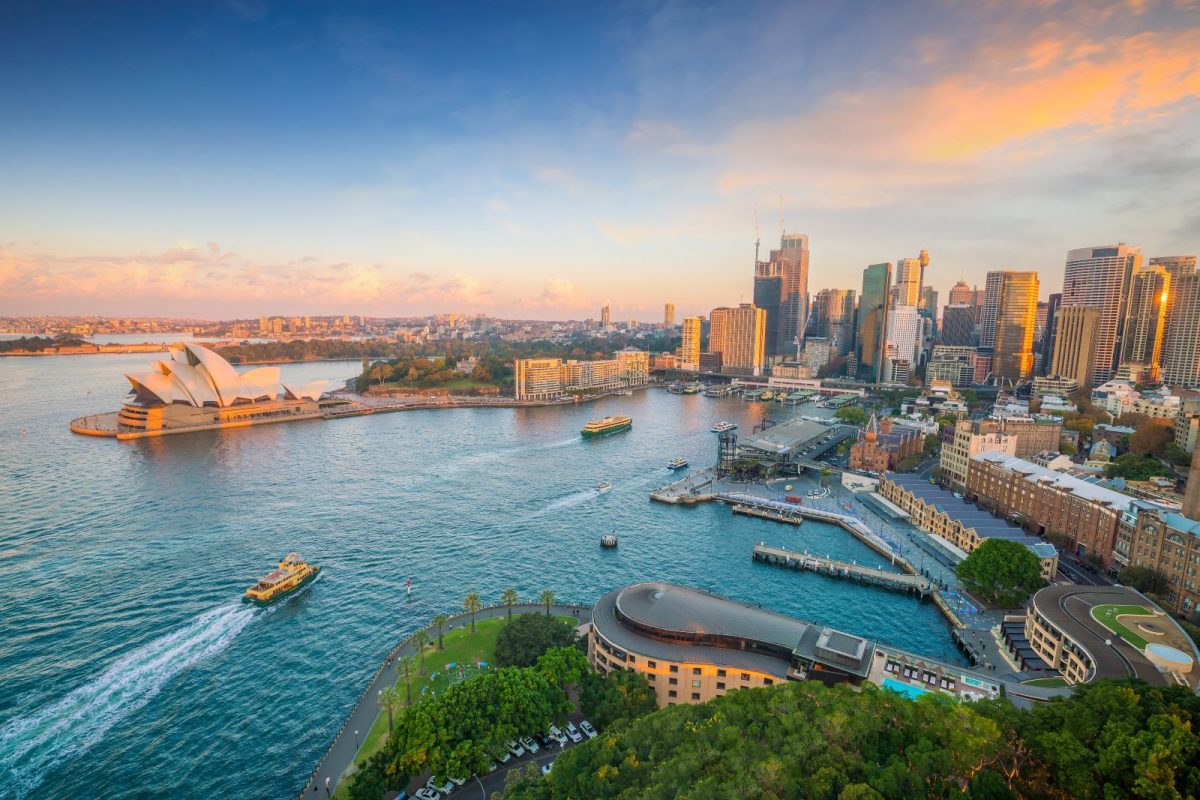
Sydney Harbour skyline with the Opera House at sunset, representing strong Australian property appreciation and using real estate equity to fund new investments and opportunities.

How three decades of extraordinary price growth in Sydney, Melbourne, Brisbane, Perth, and the Gold Coast have created a generation of equity-rich property owners who cannot access their own capital — and how international equity release finance changes that when timing is critical and conventional lending fails you

Here is a situation playing out across Australia right now, in suburbs from Mosman to Toorak to Cottesloe.

You bought a house in Sydney's inner west in 1998 for AUD 380,000. It is worth AUD 2.8 million today. You have paid off the mortgage. The equity is entirely yours. A property has come to market two streets away — the kind of property that only appears once a decade — and the vendor wants exchange within three weeks. Or perhaps it is not a property at all. Perhaps it is a business opportunity, a private investment, a stake in something that requires AUD 800,000 in capital within the month.

You call your bank. Your relationship manager knows you. They know what your house is worth. But the answer that comes back from the credit team is no. Or it is yes, but for AUD 300,000, not AUD 800,000. Or it is yes, but the process will take eight to ten weeks — by which time the property is sold, the investment round is closed, and the opportunity is gone.

You have not done anything wrong. You are not a credit risk. You are, by any reasonable definition, wealthy. But the bank is not assessing your wealth. It is assessing your income. And if you are self-employed, retired, a business owner drawing distributions rather than salary, or a property investor whose income is irregular or held in a company structure — the bank's lending criteria will consistently undervalue what you actually have.

This is the equity trap that is frustrating thousands of Australian property owners in 2025. And it is exactly the problem that international property equity release finance exists to solve.

Three Decades Of Australian Property Appreciation: The Equity You Have Built

To understand why the equity release opportunity is so significant, it is worth looking at what Australian property has actually done over the past thirty years.

In Sydney, the median house price in 1990 was approximately AUD 194,000. By 2024 it had risen to over AUD 1.4 million — more than a sevenfold increase. In prestige suburbs the numbers are more dramatic still. A house in Mosman that sold for AUD 600,000 in 1995 is likely worth AUD 5–7 million today. A Toorak property purchased for AUD 800,000 in the late 1990s may now be worth AUD 6–8 million. In Brisbane, properties that sold for AUD 200,000–300,000 in the early 2000s are worth AUD 1.2–1.8 million today. Perth, which experienced its own extraordinary growth cycle through the mining boom and then again from 2021 onwards, has seen suburb-level appreciation of 300–400% over twenty-five years in established areas like Cottesloe, Claremont, and Nedlands.

The Gold Coast's prestige pocket — Hedges Avenue in Mermaid Beach, Isle of Capri, Hope Island — has seen waterfront values multiply many times over since the early 2000s, as the region has transitioned from a domestic holiday destination to a genuine lifestyle market attracting interstate and international capital.

The collective result is a generation of Australian homeowners — now largely in their 50s, 60s, and 70s — who are sitting on equity positions they could not have imagined when they made their original purchase. For many of them, that equity represents the majority of their net worth. And for many of them, the conventional banking system is the primary obstacle standing between them and the ability to put that equity to productive use.

The question is no longer whether you have equity. Most long-term Australian property owners have substantial equity. The question is whether you can access it — efficiently, quickly, and without being forced to sell an asset you want to keep.

Why Your Australian Bank Cannot Help You Release Your Equity — Even When It Is Enormous

Australian banks operate under a regulatory and risk management framework that assesses lending based primarily on income serviceability — your ability to make monthly repayments — rather than on asset value or overall wealth. The Australian Prudential Regulation Authority (APRA) requires banks to apply a serviceability buffer of at least 3% above the loan interest rate when assessing whether a borrower can afford to repay. At current interest rates, this means a borrower must demonstrate they can service the loan at a rate of around 9–10% per annum.

For a borrower with stable salaried income, this assessment is straightforward. For the equity-rich Australian property owner whose income does not fit that template — and there are many — the system consistently fails:

  • The retiree living off superannuation drawdowns and investment income whose assessable income is a fraction of their actual wealth
  • The business owner who pays themselves a modest salary and takes the rest as dividends or distributions, neither of which counts toward serviceability in the same way
  • The self-employed professional or tradesperson whose income fluctuates year to year and whose most recent tax return does not reflect their longer-term earning capacity
  • The property investor with a portfolio of five or six properties generating strong rental income — but where each property's rental income is assessed at a 20–25% haircut and each existing loan reduces assessable capacity further
  • The overseas Australian — an expatriate working in Singapore, Hong Kong, London, or Dubai — who has maintained their Australian property but whose foreign income is assessed at a discount or excluded entirely by many lenders

In every one of these cases, the borrower's equity position may be substantial and their overall financial position sound. But the bank's lending framework does not have a mechanism to appropriately recognise that. The answer is no, or not enough, or not in time.

The core problem is a structural mismatch: the bank measures income, but the wealth is in the asset. Equity release finance looks at what actually matters — the property value, the loan-to-value ratio, and the plan for repayment.

"The Australian property market has created extraordinary wealth for a generation of homeowners. The tragedy is that so many of them cannot access that equity when it matters — when there is an opportunity in front of them and a bank system behind them that is looking at the wrong thing. We look at the asset, the equity, and the plan. That is what matters."
— Donald Klip, Co-Founder, Global Mortgage Group

When Timing Is Critical: The Situations Where Equity Release Finance Makes The Difference

Buying at auction or under competitive conditions

Australia's auction culture — particularly in Sydney and Melbourne — creates situations where the ability to commit quickly is decisive. A property going to auction requires unconditional exchange at the fall of the hammer. A competitive private treaty sale may have multiple buyers and a vendor who will not wait for financing approval. The equity-rich buyer who cannot demonstrate financial readiness loses to the buyer who can. An equity release facility, with a term sheet available within 24–48 hours and drawdown achievable in 10–15 business days, fundamentally changes the competitive dynamic.

An investment opportunity with a fixed closing date

Private investment opportunities — a stake in a business, a syndicated property deal, a private credit investment, an opportunity to co-invest alongside a fund — come with closing timelines set by the counterparty. They do not wait for bank loan processing. If the equity is in your home and the bank needs ten weeks to access it, the opportunity closes without you. Equity release finance secured against your property can be arranged on a timeline that matches the opportunity, not the bank's process.

Bridging the gap between buying and selling

The classic equity release use case — buying a new property before your existing one is sold — is particularly acute for equity-rich owners who are upgrading or downsizing. Selling first and buying second sounds prudent, but in a competitive market it means searching for a new home with no certainty of what you can afford, renting in the interim, and potentially watching prices move against you. Buying first and selling second means carrying two properties simultaneously. An equity release facility threads this needle: you exchange on the new property, complete the sale of your existing home, and repay from the proceeds — without the stress of either extreme.

Funding an overseas property acquisition

A growing number of Australian property owners use the equity in their Australian home to fund property acquisitions overseas — in London, Singapore, Thailand, New York, or Miami. The logic is sound: diversify the portfolio, deploy a productive asset, gain international exposure. Accessing Australian property equity to fund an offshore acquisition requires a lender who understands cross-border transactions and can move on timelines that match international property markets. GMG operates across 23+ jurisdictions and structures exactly these transactions regularly.

Releasing equity without selling an asset you want to keep

Perhaps the most powerful application of equity release finance is the simplest: you want access to capital, but you do not want to sell your property. You believe in the long-term value of the asset. You want to keep it, but you also want to deploy a portion of the embedded value. Equity release finance makes this possible — you access a loan against the property's value, use the capital for your chosen purpose, and repay when the time is right, from a sale, a refinancing, or another capital event.

Market By Market: Where The Equity Story Is Most Compelling

Sydney: The Prestige Market and the Auction Culture

Sydney's harbourside prestige suburbs — Vaucluse, Point Piper, Mosman, Bellevue Hill, Double Bay — represent some of the most significant concentrations of residential equity in Australia. Homes purchased for AUD 1–2 million in the 1990s and early 2000s are now worth AUD 6–20 million or more. Owners in this cohort are frequently retired, running private businesses, or living off investment portfolios — exactly the income profiles that APRA's serviceability framework handles least well.

Sydney's auction culture adds the timing dimension. In inner east and lower north shore Sydney, competitive properties routinely sell at or above reserve within days of listing. The equity-rich buyer who has arranged finance in advance — who can exchange unconditionally on auction day — is the buyer who competes. GMG can issue an indicative equity release term sheet against a Sydney property profile in 24–48 hours, giving long-term Sydney owners a genuine competitive weapon.

Melbourne: Toorak, Brighton, and the Bayside Equity Corridor

Melbourne's prestige market — Toorak, Brighton, Hawthorn, South Yarra, Malvern — has delivered exceptional long-term capital growth. A Toorak home purchased in the mid-1990s for AUD 900,000 may now be worth AUD 8–12 million. A Brighton property bought for AUD 500,000 in 2000 is likely worth AUD 3–4 million today. Melbourne's property investor community also generates consistent demand for equity release as investors look to recycle capital from one asset into the next without waiting for a full sale process.

Brisbane and the Gold Coast: The Olympic Dividend and the Lifestyle Equity Play

The 2032 Brisbane Olympics has accelerated a structural shift in Queensland property values that was already well underway. Brisbane homeowners who purchased in the 2000s and 2010s have seen values double and in some cases triple. The Gold Coast prestige market — waterfront on Hedges Avenue, canal-front on Isle of Capri — has attracted significant interstate and international capital, pushing values to levels that make long-held properties extraordinarily valuable as equity assets available for release.

Perth: Resources Wealth and the Fastest-Growing Equity Market in Australia

Perth is currently one of the strongest property markets in Australia by capital growth. The Western Australian resources sector has driven a sustained period of high employment, high wages, and acute housing undersupply that has pushed values in established suburbs — Cottesloe, Nedlands, Dalkeith, Claremont — to historic highs. For long-term Perth homeowners, the equity appreciation of the past five years alone has been remarkable. Equity release finance against Perth property gives these owners access to capital that the bank system has been slow to recognise through its standard assessment processes.

How Gmg's Australian Equity Release Facility Works

GMG provides senior secured equity release facilities against Australian residential and commercial property for equity-rich owners, overseas investors, and expatriate Australians. Our credit assessment is led by the value of the security property and the strength of the exit strategy — not by income serviceability.

Key parameters:

  • Loan size: AUD 500,000 to AUD 20,000,000+
  • Term: 3 to 24 months
  • LTV: Up to 60-80% of independently assessed market value
  •  Interest: Retained or rolled up — no monthly repayment required in most structures
  • Security: Residential, commercial, mixed-use Australian property in major capital cities and key regional markets
  • Borrower: Australian residents, non-residents, expatriates, Australian companies and trusts
  • Income assessment: Asset and exit-strategy led — APRA serviceability buffers do not apply
  • Timeline: Indicative term sheet within 24–48 hours; drawdown in 10–15 business days

The retained interest structure is particularly important for equity-rich borrowers whose income profile makes monthly repayments difficult to demonstrate. In a retained interest structure, the interest for the full loan term is calculated upfront and deducted from the loan proceeds at drawdown. There is no monthly payment. The loan — principal plus interest — is repaid in full at maturity from the exit event: a property sale, a refinancing, the receipt of investment proceeds, or another capital event. This is a structurally different product to a conventional mortgage and one that is specifically designed for the asset-rich, income-complex borrower.

Is Equity Release Finance Right For You?

An equity release facility secured against Australian property is most likely the right solution if one or more of the following applies:

  • You own Australian property with significant equity and need to access that capital quickly
  • Your income — business distributions, self-employment, investment returns, superannuation drawdowns, rental income — means conventional bank assessment consistently undervalues your financial position
  • You have a time-sensitive property, investment, or business opportunity that a bank timeline cannot accommodate
  • You are buying before selling and need capital to bridge the gap between your new purchase and your existing property sale
  • You are an overseas investor or expatriate Australian who cannot access Australian bank finance due to residency or income requirements
  • You want to use Australian property equity to fund an overseas acquisition or investment
  • You want to access your equity without selling a property you intend to keep for the long term
  • Your bank has declined your application or offered materially less than your equity position justifies

How To Get Started

Contact Donald Klip at [email protected]; +65 9773-0273 or visit www.gmg.asia. Our Asia-Pacific team operates across Singapore and Australia time zones and is available for calls, video meetings, or in-person discussions for qualifying borrowers.

To receive an indicative term sheet, we need only: property address and type, estimated current market value, approximate loan amount required, desired loan term, and a brief description of the intended use of funds and repayment plan. No formal application, income documentation, or full financial statements are required at this stage.

---

Disclaimer: This article is for informational purposes only and does not constitute financial or legal advice. Australian property lending by GMG operates outside APRA's standard serviceability framework through private credit capital sources. FIRB requirements and state stamp duty obligations remain the responsibility of the borrower and their Australian legal advisors. All loan terms are indicative and subject to GMG credit assessment and independent Australian property valuation.

You Own Property in Thailand Worth Far More Than You Paid. Here Is How to Release That Equity Without Selling.

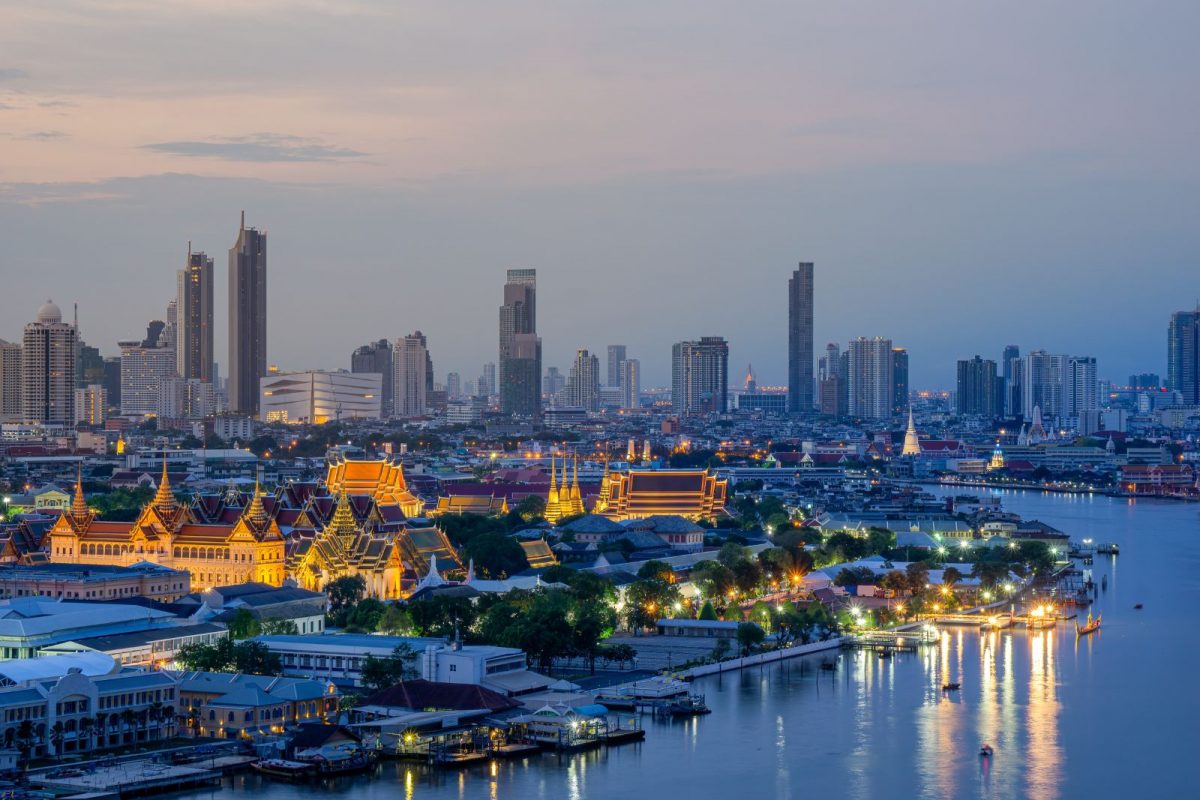
Bangkok skyline at dusk overlooking the Chao Phraya River, symbolizing rising Thailand property values and unlocking equity from high-value real estate without selling.

Why the absence of a conventional mortgage and equity release market for foreign property owners in Thailand is creating one of the most significant financing opportunities in Southeast Asian real estate — and how international equity release finance is changing what is possible for owners in Bangkok, Phuket, Chiang Mai, and Hua Hin

The situation is unique to Thailand, and it frustrates foreign property owners more than almost any other aspect of investing in one of Southeast Asia's most compelling real estate markets.

You purchased a luxury condominium in Bangkok's Sukhumvit corridor in 2015 for USD 280,000. It is worth USD 980,000 today — and the rental income it generates has been consistent throughout. Or you bought a pool villa in Phuket's Surin Beach area in 2012 for USD 650,000. The same villa would now sell for USD 1.4 million or more, driven by a post-pandemic surge in international lifestyle property demand that has fundamentally repriced the top end of the Phuket market.

In both cases, the equity appreciation is real. The asset is high quality. The ownership structure is legally sound. And yet, if you walk into a Thai commercial bank and ask to release equity from that property — to fund a completion payment on another Thai purchase, to invest in a business opportunity, to access the appreciation you have built up over ten or more years — the answer will almost certainly be no.

Not because your asset is not valuable. Because you are a foreigner. And Thailand's banking system, by regulation, does not provide mortgage or equity release finance to foreign nationals in any meaningful or reliable way.

This is not a solvable problem through better paperwork or a more sympathetic branch manager. It is structural. It applies to almost every foreign property owner in Thailand regardless of their wealth, their asset quality, or the size of their equity position. And it is the gap that GMG's Thailand equity release programme exists to fill.

The Thai Property Appreciation Story: What Your Equity Is Worth Today

Thailand's international property market has delivered strong capital growth over the past two decades, particularly in the segments most popular with foreign buyers. The appreciation story is the foundation of the equity release opportunity.

In Bangkok, the super-luxury condominium corridor — Sukhumvit 39 to 49, Sathorn, Lumphini, Riverside — has seen consistent value growth since the mid-2000s. Branded residences and ultra-luxury developments have set new pricing benchmarks: The Residences at Mandarin Oriental Bangkok, Ritz-Carlton Residences at MahaNakhon, Sindhorn Residence, and comparable projects have achieved USD 8,000–15,000 per square metre — multiples of what comparable space sold for a decade ago. For buyers who entered the Bangkok luxury condominium market between 2010 and 2018, the appreciation has been material and the equity position meaningful.

In Phuket, the appreciation story is more dramatic still. Villas in Surin, Layan, Kamala, and Bang Tao that sold for USD 500,000–900,000 before 2019 are now changing hands — where they come to market at all — for USD 1.5–4 million and above. The post-COVID period saw international demand for Phuket lifestyle property surge in a way that permanently repriced the top of the market. The buyer cohort that entered Phuket between 2010 and 2018 — predominantly Singaporean, Hong Kong, Russian, Scandinavian, and British — has seen its investment appreciate dramatically.

Almost none of them can release that equity through conventional means.

Hua Hin's Gulf coast market has seen steady appreciation driven by improving infrastructure and growing European buyer interest. Chiang Mai has attracted lifestyle relocators and retirees whose property values have appreciated consistently as demand for quality northern Thai stock has grown.

The equity is real across all four markets. The mechanism to access it has, until now, simply not existed for foreign nationals.

Why There Is No Conventional Equity Release Market For Foreign Property Owners In Thailand

Banks effectively restrict commercial bank mortgage and equity release lending to Thai nationals and permanent residents. This is not a soft guideline, and the limited alternatives are narrow and impractical for most foreign property owners:

Thai commercial banks will occasionally consider foreign nationals with long-term work permits and Thai-registered income, but this excludes the vast majority of international buyers who own Thai property as an investment or lifestyle asset rather than as a primary residence with accompanying Thai employment. The documentation requirements, LTV restrictions, and currency constraints make these programmes largely unworkable even for the small cohort who technically qualify.

Foreign banks with Thai operations — UOB, HSBC, Bank of China — have historically offered limited programmes for Thai property, but these are heavily documented, geographically restricted to specific property types and locations, and in some cases have been withdrawn from the market entirely as these banks have reassessed their risk appetite for Thai collateral.

Developer payment plans address the off-plan purchase stage but provide absolutely no mechanism for equity release from a completed, held asset.

The result is that foreign nationals who own Thai property — a Bangkok condominium purchased a decade ago, a Phuket villa held through the post-COVID appreciation cycle, a Hua Hin resort residence, a Chiang Mai compound — hold assets that have frequently appreciated significantly and represent a meaningful portion of their net worth. Without an equity release mechanism, the only options are to hold and watch the equity sit idle, or sell and exit the market entirely.

GMG's Thailand equity release programme is a third option.

"Thailand has delivered exceptional returns for international property investors over the past two decades — particularly in Phuket and Bangkok. The frustration has always been that those returns are trapped. You can see the appreciation on paper but the Thai banking system gives you no mechanism to access it without selling. Our Thailand equity release programme exists to solve exactly that problem."
— Donald Klip, Co-Founder, Head of GMG Capital Advisory

When Timing Is Critical: Thai Property Situations Where Equity Release Is The Only Answer

Off-plan completion calls that arrive faster than expected

This is currently the most urgent equity release requirement in the Thai market, particularly in Bangkok. A significant number of foreign buyers who purchased luxury condominium units off-plan between 2018 and 2022 — often at prices that now look very attractive given subsequent market appreciation — are now receiving completion transfer notices from developers. The completion payment, typically 70–90% of the purchase price, falls due within 30–60 days of the transfer notice.

For buyers who planned to fund the completion from savings or other capital that has not materialised on the expected timeline, the completion call creates an immediate financing crisis. An equity release facility from GMG — secured against an existing Thai asset or structured as acquisition finance against the new property — can fund the completion payment and give the buyer time to arrange longer-term capital. This is time-sensitive and the equity release solution is frequently the only available answer.

Accessing equity from an appreciated asset to fund another investment

For foreign nationals who have held Thai property for five years or more and have seen meaningful appreciation, the next logical step is often to deploy a portion of that equity productively — into another Thai asset, an investment in their home market, a business opportunity, or a private market transaction. Without equity release finance, the only mechanism for accessing that value is selling the property. With a GMG equity release facility secured against the Thai asset, the equity can be accessed without a sale, the asset is retained, and the capital is deployed into the next opportunity.

An off-market villa or property acquisition where speed matters

Phuket's top-end villa market operates largely off-market. The best properties change hands through agent relationships and private introductions, with sellers expecting fast transactions from buyers who are ready to move. Foreign buyers who cannot demonstrate financing readiness — because no Thai bank will issue them an equity release or mortgage approval — are at a permanent disadvantage. A GMG equity release facility, with a term sheet available in 24–48 hours, changes that dynamic.

Funding a lifestyle relocation to Thailand from Europe or Australia

A growing cohort of European, Australian, and British buyers are making permanent or semi-permanent lifestyle relocations to Thailand. Many are funding their Thai purchase from the sale of a European or Australian home. But property sales take time, and the right Thai property does not always wait. An equity release facility — secured against an existing Thai property if one is already held, or structured as acquisition finance against the new Thai property with the European or Australian asset providing broader context — gives the buyer the ability to move when the right property surfaces.

Releasing Thai equity to fund an investment outside Thailand

Some of the most interesting equity release transactions GMG structures in the Thai market involve releasing equity from a Thai asset to fund an investment or acquisition entirely outside Thailand — in Singapore, Australia, the UK, or the US. The Thai property has appreciated. The opportunity is elsewhere. The equity release unlocks the Thai asset's value without requiring a sale and deploys it into the next investment.

Market By Market: The Equity And Opportunity Story

Bangkok: The Global City and the Locked-Up Condominium Equity

Bangkok's super-luxury condominium market — anchored by Ritz-Carlton Residences, Mandarin Oriental, and a strong pipeline of comparable branded projects — trades at price points competitive with Singapore and Hong Kong at 40–60% of the cost per square foot. For the investor who entered this market in the 2010–2018 window, the appreciation has been consistent and the equity position is real. GMG's Bangkok equity release capability covers both completion finance for off-plan buyers and equity release for longer-term holders who want to deploy their appreciation productively without selling.

Phuket: Southeast Asia's Villa Market and Its Stranded Appreciation

Phuket represents the single largest concentration of foreign-owned Thai residential equity — and the most acute equity release need. Post-COVID villa appreciation has been dramatic. Owners who purchased in Surin, Layan, Kamala, and Bang Tao between 2010 and 2019 have in many cases seen their investment double or more. Almost none of them can access that appreciation through conventional channels. GMG's Phuket equity release programme directly addresses this. We have direct experience in Phuket's villa and hospitality market — including familiarity with Chanote title structures, lease registrations, and the local valuation ecosystem — that other international lenders lack.

Chiang Mai: The Lifestyle Market and the Relocation Equity Need

Chiang Mai attracts a distinct buyer profile — retirees, long-stay lifestyle seekers, digital entrepreneurs — for whom the equity release need is real but the capital requirement is more modest. Equity release in Chiang Mai most commonly serves buyers who are relocating from Europe, Australia, or North America and need capital before their home country property sale completes, or existing owners who want to access appreciation to fund a further lifestyle investment or personal financial need.

Hua Hin: The Gulf Coast and the European Second Home Equity Story

Hua Hin's established European buyer community — Scandinavian, German, Dutch, and British — represents a consistent source of equity release demand. The profile is typically a buyer in their 50s or 60s who has owned property in Thailand for a decade or more, has seen meaningful appreciation, and either wants to access equity for a further investment or needs capital to fund a lifestyle transition. The golf course communities — Black Mountain, Banyan, Majestic Creek — anchor the premium end of the Hua Hin market and provide high-quality collateral for equity release purposes.

How Gmg's Thailand Equity Release Facility Works

GMG provides senior secured equity release facilities against qualifying Thai property for foreign nationals, overseas investors, and internationally mobile borrowers. Thai bank lending regulations do not apply to GMG's private credit programme.

Key parameters:

  • Loan size: USD 500,000 to USD 20,000,000
  • Term: 6 to 36 months
  • LTV: Up to 50% of independently assessed market value (security type and location dependent)
  • Interest: Retained or rolled up — no monthly repayment required in most structures
  • Security: Freehold condominium and villas (Chanote title),hospitality and commercial assets
  • Borrower: Foreign nationals, Singapore and HK-registered holding companies with non-nominee Thai shareholders 
  • Title requirement: Chanote (full title certificate) as minimum for residential security; Nor Sor 3 Gor considered for commercial and hospitality assets
  • Leasehold: Accepted where registered lease has minimum 15 years remaining beyond loan maturity
  • Currency: USD primary; THB considered
  • Timeline: Indicative term sheet 24–48 hours; drawdown typically 15–25 business days

The exit strategy is central to GMG's Thai equity release credit assessment. In Bangkok, secondary market liquidity for quality condominium stock in the prime corridor is sufficient to support a sale-based exit in most transactions. In Phuket, the strength of international villa demand — particularly from Singapore, Hong Kong, and the Middle East — makes a sale exit credible for well-located quality assets. For lifestyle relocation buyers, the exit is typically the receipt of proceeds from a European or Australian property sale.

Is Thailand Property Equity Release Right For You?

A Thai property equity release facility from GMG is most likely the right solution if one or more of the following applies:

  • You own Thai property — a Bangkok condominium, a Phuket villa, a Hua Hin golf residence — with meaningful appreciation and want to access that equity without selling
  • You are facing an off-plan completion payment in Bangkok or Phuket that you need to fund at short notice
  • You want to acquire another Thai property — or make an investment outside Thailand — using equity from an existing Thai asset
  • You are relocating to Thailand and need capital before a European, Australian, or UK property sale completes
  • You want to deploy the appreciation in your Thai property into a business or investment opportunity
  • A Thai commercial bank has confirmed they cannot help because you are a foreign national

How To Get Started

Contact me at [email protected]+65 9773-0273 or visit www.gmg.asia. Our team is based in Singapore and covers ASEAN, Greater China, Australia, Europe, and Middle East time zones.

To receive an indicative term sheet, we need only: property location and type, estimated current market value in USD or THB, approximate loan amount required, desired loan term, and a brief description of the intended use of funds and exit strategy. No formal application, Thai bank account, or Thai income documentation is required at the initial stage.

---

Disclaimer: This article is for informational purposes only and does not constitute financial or legal advice. Thai property law is complex and foreign ownership structures carry specific legal requirements — always engage a qualified Thai property lawyer before proceeding. Chanote title verification is a mandatory condition of all GMG Thai equity release facilities. All loan terms are indicative and subject to GMG credit assessment and independent Thai property valuation.

You Own Millions In Singapore Property. Your Bank Still Said No.

Wealthy property owner comparing real estate asset value and cash liquidity illustrating accessing equity through Singapore bridging loans

How decades of asset price growth have created a generation of equity-rich Singapore property owners who cannot access their own wealth — and what to do when timing is critical and conventional bank lending fails you

Here is a situation that is more common than most people realise.

You bought a condominium in District 10 in 2001 for S$2,000,000. It is worth S$8.2 million today. You have no mortgage. The equity is yours, unencumbered, sitting in bricks and mortar in one of the most stable property markets in the world. An investment opportunity has emerged — a second property, a business stake, a private credit opportunity — and you need S$4.5 million in capital within the next three to four weeks.

You go to your bank. Your relationship manager is sympathetic. But the answer comes back: declined. Or approved, but for a fraction of what you need. Or approved, but in eight to ten weeks — by which point the opportunity is gone.

You are not a credit risk. You are not overleveraged. You are, by any reasonable measure, wealthy. But the bank's underwriting system does not see wealth. It sees income. And if your income is a business distribution, a pension, an investment return, a director's fee, or any of the other legitimate income structures that characterise the financial lives of Singapore's genuinely wealthy — the system spits out a number that has no relationship to your actual position.

This is the equity trap. And it is one of the most frustrating financial realities facing Singapore's property-owning class in 2025.

The Singapore Property Wealth Story: Three Decades Of Extraordinary Appreciation

To understand the scale of the opportunity — and the frustration — it helps to look at what Singapore property prices have actually done over the past three decades.

A private condominium in the Orchard or River Valley corridor bought in 1995 for S$700,000–S$900,000 now commands S$2.5–S$4 million. A Good Class Bungalow in Nassim or Cluny that changed hands for S$3–S$4 million in the late 1990s is worth S$30–S$60 million or more today.

Singapore's Urban Redevelopment Authority (URA) private residential property price index has risen by more than 200% since 2000. In some prime districts the real appreciation — accounting for actual transacted prices, not index averages — is significantly higher. The owners of this property are, in aggregate, sitting on one of the largest concentrations of privately held real estate wealth in Asia relative to the size of the population.

Much of this wealth belongs to the generation that bought in the 1980s, 1990s, and early 2000s — often before they could have imagined what their property would eventually be worth. They are now in their 50s, 60s, and 70s. They are retired, semi-retired, or running businesses that generate irregular or non-salary income. And they are the cohort most systematically failed by Singapore's conventional bank mortgage system.

Why Your Bank Cannot Help You — And It Is Not Their Fault

Singapore's banks operate under the Monetary Authority of Singapore's Total Debt Servicing Ratio framework, introduced in 2013 and periodically tightened since. The TDSR framework requires lenders to assess a borrower's total monthly debt obligations as a percentage of gross monthly income, subject to a stress-test buffer of 0.5% above prevailing rates.

The framework was designed with a specific borrower in mind: the salaried employee with predictable monthly income and straightforward debt obligations. For that borrower, TDSR works exactly as intended.

But Singapore's genuinely wealthy property owners do not look like that borrower. They look like this:

A retired business founder whose primary income is dividends from a private company — irregular, lumpy, and assessed by the bank at a haircut

A self-employed professional whose income fluctuates year to year and whose most recent year was lower than average due to a deliberate investment in their business

A property investor whose portfolio generates strong rental yields but whose "income" for TDSR purposes is assessed after a 30% haircut applied to rental income

A senior executive who receives the majority of their compensation in bonuses, carried interest, or equity — none of which count toward TDSR in the same way as base salary

A retiree living off investment returns and CPF payouts whose monthly "income" as assessed by the bank bears no relationship to their actual net worth

In every one of these cases, the bank's loan officer may privately acknowledge that the client is clearly creditworthy. But the framework does not give them discretion. The TDSR number is the TDSR number. And if the number does not work, the answer is no.

The result is that Singapore's equity-rich property owners — the very people who have been the most successful participants in one of the world's great property markets — are frequently the least well-served by the conventional lending system when they need capital most.

"Singapore's property owners have built extraordinary wealth over the past three decades. The problem is that most of them cannot access it when it matters. The bank looks at their income and says no. We look at their asset and their plan and say yes. That is the entire difference."
— Donald Klip, Head, GMG Capital Advisors

When Timing Is Critical: The Situations Where Conventional Lending Fails

Beyond the structural income problem, there is a second category of failure: speed. Even when a Singapore bank is willing to lend, the timeline to approval, valuation, legal documentation, and drawdown routinely runs to six to ten weeks for a property-secured loan. In the specific situations where borrowing against property equity is most valuable, six to ten weeks is often too long.

Consider the following scenarios — all of which are common in the Singapore market:

A second property opportunity in a competitive market

The Singapore prime residential market moves fast. A sought-after unit in a prime District 9, 10, or 11 development, a conservation shophouse in Tanjong Pagar, or a landed property in a restricted area can attract multiple buyers within days of coming to market. The buyer who can commit quickly — ideally with proof of financing already in place — is the buyer who wins. A bank that needs six weeks to process a home equity loan is not useful in this context. A bridging facility that can be arranged in ten to fifteen business days is.

An investment that has a closing deadline

Private credit opportunities, business stakes, and co-investment alongside a fund or family office all come with closing timelines that are set by the counterparty, not the borrower. If the round closes on the 30th and your bank cannot process a property-secured loan until the 45th day, the opportunity is gone. The equity in your Singapore property is irrelevant if you cannot mobilise it in time.

An overseas property acquisition where Singapore equity is the funding source

Many Singapore property owners want to use the equity built up in their Singapore home to fund property acquisitions in Australia, the UK, Thailand, or the United States. The logic is sound: diversify the portfolio, deploy a productive asset rather than a dormant one, and maintain Singapore property exposure while adding international exposure. But extracting equity from a Singapore property efficiently, and on a timeline that fits an overseas acquisition, requires a bridge — not a six-week bank process.

What A Singapore Bridging Loan Actually Looks Like

A bridging loan secured against Singapore property is a senior secured short-term loan, typically between three and twenty-four months, where the security is your Singapore property and the assessment is based on the value of that property and the credibility of your repayment plan — not your income.

GMG's Singapore Prime Bridge product — offered in partnership with Dune Delta Pte Ltd — is designed specifically for this market.

The key parameters:

  • Loan size: S$5,000,000 to S$200,000,000+
  • Term: 6to 24 months
  • LTV: Up to 60–70% of independently assessed market value
  • Structure: Outside the MAS TDSR framework — your income is not the primary assessment criterion
  • Security: Good Class Bungalows, landed property, shophouses, prime condominiums (Districts 9, 10, 11), Sentosa Cove landed property, commercial strata, conservation shophouses
  • Interest: Interest-only, retained or rolled up — no monthly repayment required during the loan term in most structures
  • Borrower: Singapore Citizens, Permanent Residents, Employment Pass holders, Singapore-registered companies, Foreign Nationals and Private companies
  • Timeline: Indicative term sheet within 24–48 hours; drawdown typically within 10–20 business days

The critical point on interest structure is worth dwelling on. Most of GMG's Singapore bridging clients choose a retained interest structure — meaning the interest for the full loan term is calculated upfront and deducted from the loan proceeds. There is no monthly payment requirement. The loan is repaid in full at maturity from the exit event: a property sale, a refinance onto a long-term mortgage, the receipt of investment proceeds, or another capital event. For borrowers whose income structure makes monthly debt servicing difficult to demonstrate to a conventional lender, this is a fundamental difference.

The Assets That Qualify: Singapore's Equity-rich Property Stock

Not all Singapore property qualifies as bridging loan security on the same terms. GMG's Singapore Prime Bridge focuses on assets where the collateral quality is strong and the underlying value is clear:

Good Class Bungalows

GCBs represent the pinnacle of Singapore's residential market and the single greatest concentration of long-term capital appreciation in Singapore real estate. A GCB in Nassim, Cluny Hill, or Cornwall Gardens that was purchased in the 1990s for S$3–5 million is now worth S$30–80 million or more. The equity is extraordinary. And yet the GCB owner — typically a business founder or family patriarch in their 60s or 70s, living off business income or investment returns — is precisely the borrower the conventional bank mortgage system handles least well. GMG's credit assessment for GCB transactions focuses on the quality and scarcity of the asset, not the income statement.

Prime Condominium Stock in Districts 9, 10, and 11

The Core Central Region condominium market has delivered sustained appreciation across multiple cycles. Owners who purchased in the Orchard, River Valley, Bukit Timah, and Holland Road corridors in the 1990s and early 2000s are sitting on equity positions of S$1–5 million or more in many cases — often in properties that are fully paid off or carry only a small residual mortgage. This equity is highly accessible as bridging security given the liquidity and transparency of the prime Singapore condominium market.

Conservation Shophouses

Singapore's conservation shophouse market has been the standout investment theme of the past decade. Prime shophouses in Tanjong Pagar, Chinatown, Boat Quay, and Kampong Glam have appreciated from S$1,500–2,000 per square foot a decade ago to S$5,000–6,500 per square foot today in some locations. Owners who purchased shophouses in the 2005–2015 window are sitting on significant unrealised gains. GMG's Singapore Prime Bridge is available against shophouse security for qualifying transactions above S$5 million.

Sentosa Cove Landed Property

Sentosa Cove bungalow owners — many of whom purchased in the 2007–2012 window at prices that have since recovered and in some cases appreciated materially — hold an asset that is both geographically unique (the only location in Singapore where foreigners may own landed residential property) and relatively illiquid in the short term. Bridging finance against Sentosa Cove bungalow security gives owners access to equity without forcing a sale into what can be a thin transaction market.

The Exit Strategy: How The Loan Is Repaid

Every GMG Singapore bridging loan is structured around a clearly defined exit strategy. The most common exits in the Singapore context are:

Sale of the security property — for owners who are ready to sell but need capital in advance of completion, or who are in the process of marketing the property

Refinance onto a long-term mortgage — once the borrower has resolved the income documentation issue (for example, after a business sale, a period of demonstrable income, or a restructuring of their financial affairs) they refinance the bridge onto a conventional bank mortgage

Sale of another asset — investment portfolio liquidation, a business stake, or an overseas property sale that provides the capital to repay the bridge

Receipt of investment or business proceeds — the bridge funds the opportunity; the return from the opportunity repays the bridge

Is A Singapore Bridging Loan Right For You?

A Singapore bridging loan from GMG is most likely the right solution if one or more of the following applies:

You own Singapore property with significant equity and need to access that equity quickly

Your income structure — business distributions, investment returns, retirement income, bonuses, carried interest — means conventional bank TDSR assessment understates your actual financial position

You have a time-sensitive investment or property opportunity that a conventional bank timeline cannot accommodate.

You want to use Singapore property equity to fund an overseas acquisition or investment

bank has declined your application or offered a loan amount that is materially below what your equity position would justify

If any of these scenarios apply, the conversation with GMG starts with a simple question: what is the property, what is the approximate value, and what do you need the capital for? 

From there, we can issue an indicative term sheet within 24 to 48 hours and give you a clear picture of what is possible.

How To Get Started

Contact Donald Klip at [email protected] or +65 9773-072 or visit www.gmg.asia.

We are headquartered in Singapore and available for in-person meetings at our Singapore office for qualifying borrowers.

To receive an indicative term sheet, we need only the following at the initial stage: property address and type, estimated current market value, approximate loan amount required, desired loan term, and a brief description of the intended use of funds and repayment plan. We do not require full financial statements, income documentation, or a formal application at this stage.

---

Disclaimer: This article is for informational purposes only and does not constitute financial or legal advice. Singapore Prime Bridge is offered outside the MAS TDSR framework for qualifying borrowers and transaction types. All loan terms are indicative and subject to GMG credit assessment and independent Singapore-registered valuation. Borrowers should obtain independent legal and financial advice before proceeding.

© 2025 Global Mortgage Group Pte Ltd | Singapore | www.gmg.asia

Your U.S. Property Has Made You Wealthy. The American Lending System Was Not Built For You.

Luxury Manhattan and Miami skyline view representing high-value US real estate equity available for international bridging loan financing.

How decades of extraordinary appreciation in Manhattan, the Hamptons, Los Angeles, San Francisco, Palm Beach, and Miami have created a generation of equity-rich international property owners who cannot access their own capital — and what to do when timing is critical and conventional US mortgage lending fails the overseas investor

Here is a situation that plays out constantly across America's prime property markets.

A Singapore-based family purchased a Manhattan condominium in Tribeca in 2004 for USD 1.1 million. It is worth USD 4.8 million today. They own it outright. The equity is entirely theirs — two decades of New York City appreciation sitting in one of the world's great real estate markets.

Now they want to refinance. Or access equity to fund a second US property acquisition. Or extract capital to invest in a business opportunity that has a four-week closing window. They are creditworthy, wealthy, and entirely capable of repaying any loan secured against an asset worth nearly five times what they paid for it.

They approach a US bank. And they discover, as so many international property owners do, that the American mortgage system was built for a very specific type of borrower: a US citizen with a Social Security Number, a domestic credit history, W-2 income from a US employer, and a financial life that exists primarily within the United States. They are none of those things. And the answer from every conventional US lender is the same: we cannot help you.

The equity is real. The asset is real. The frustration is real. And it is the problem that GMG and America Mortgages — the only US mortgage lender focused exclusively on overseas borrowers — exist to solve.

Two Decades Of U.S. Prime Property Appreciation: The Equity That International Owners Cannot Access

The scale of appreciation that US prime residential markets have delivered over the past twenty to twenty-five years is exceptional even by global standards.

In Manhattan, the median condominium price in 2000 was approximately USD 450,000. By 2024 it had risen to over USD 1.5 million, with premium buildings and neighbourhoods commanding significantly more. Tribeca loft apartments that sold for USD 700,000–1,000,000 in the late 1990s now routinely achieve USD 4–8 million. Units on Billionaires' Row — 432 Park Avenue, One57, Central Park Tower — have set global benchmarks for ultra-prime residential pricing at USD 5,000–8,000 per square foot.

In Los Angeles, the appreciation story in the premium submarkets is equally dramatic. A Beverly Hills home purchased for USD 2 million in 2000 may now be worth USD 8–12 million. Malibu's Carbon Beach — Billionaires' Beach — has seen values exceed USD 10,000 per square foot for oceanfront properties. Bel Air and Holmby Hills estates that changed hands for USD 5–10 million in the 2000s are now trading at USD 30–70 million for the most significant properties.

The Hamptons — Long Island's South Fork, including Southampton, East Hampton, and Sagaponack — has seen consistent and extraordinary appreciation driven by the continued concentration of financial and technology wealth in New York. Oceanfront estates that sold in the early 2000s for USD 10–20 million now regularly transact above USD 50–100 million.

In San Francisco, the technology wealth boom has driven Bay Area residential values to levels that few would have predicted. Pacific Heights homes that were purchased in the early 2000s for USD 2–3 million are now worth USD 8–15 million. The overall Bay Area median house price has risen more than 400% since 2000.

Miami has undergone a structural transformation driven by the migration of financial services from New York, the appeal of zero state income tax, and sustained Latin American capital flows. Prime Miami properties — Fisher Island residences, Brickell penthouses, Palm Beach estates — have appreciated dramatically, with the best-positioned assets doubling or more in value over the past decade alone.

For the international buyer community — Singapore, Hong Kong, mainland China, Europe, Latin America, the Middle East — who have held US prime property through this appreciation cycle, the equity positions are in many cases extraordinary. And the ability to access that equity efficiently, without becoming a casualty of the US mortgage underwriting system, is the central challenge.

"The United States is the world's most important real estate market and also the one where the conventional lending system is most systematically unhelpful to foreign buyers and owners. You can own a USD 5 million apartment in Manhattan with no mortgage, have significant equity built over twenty years, and still not be able to borrow against it from any mainstream US lender. America Mortgages and GMG's bridging programme exist to change that reality permanently."
— Donald Klip, Head of GMG Capital Advisors 

When Timing Is Critical: Us Property Situations Where Conventional Lending Fails

Competing in a market that does not wait

America's top-tier residential markets — Manhattan condominiums, Beverly Hills estates, Hamptons oceanfront, Malibu Colony — operate at a pace that is incompatible with conventional US mortgage timelines. The most sought-after properties receive multiple offers within days. Sellers at the top end of the market can and do discriminate on the basis of offer quality — and an offer with a financing contingency from a foreign buyer who needs 60 days for bank approval is a weaker offer than one with a shorter or no financing contingency. A pre-arranged GMG bridge, with a term sheet issued against the borrower profile in 24–48 hours, fundamentally changes the buyer's competitive position.

An investment or business opportunity with a closing deadline

For internationally mobile HNW individuals and family offices, capital requirements do not always align with property sale or bank loan timelines. A co-investment alongside a US private equity fund. A business requiring capital. A private credit opportunity closing on a specific date. If the capital is stranded in a US property and no conventional US lender will release it in time, the opportunity closes. A GMG bridge against the US property can typically be arranged in 10–20 business days.

Funding a new US acquisition while holding the existing one

International buyers who own one US property and want to acquire a second — either as an additional investment or as an upgrade to their existing holding — face a specific challenge: the US income-based underwriting system will assess them on the same criteria that failed them the first time, often resulting in a declined application or an insufficient loan amount. A bridging loan secured against the existing US property provides the capital to fund the new acquisition without engagement with the conventional US mortgage system.

Using US property equity to fund international investments

A growing number of international property owners are using the equity in their US assets to fund investments in other markets — returning capital to Singapore or Hong Kong for redeployment, funding a Southeast Asian business expansion, participating in a European private credit opportunity. The US property is the largest and most appreciated asset. The investment opportunity is elsewhere. A bridging loan against the US property provides the capital; the exit is the investment return.

Market By Market: Where The Equity And Opportunity Converge

Manhattan: The Global Benchmark and the Foreign Buyer's Dilemma

Manhattan's prime condominium market — Tribeca, the Upper West Side, the Plaza District, Hudson Yards — has delivered consistent long-term appreciation that has created enormous equity for early buyers in the international community. The challenge is that Manhattan's co-operative apartment market — which represents approximately 70–75% of the city's residential stock — is effectively inaccessible to most international buyers, requiring board approval that many non-US-based buyers do not receive. The condominium market is where international buyers have concentrated, and it is where GMG's bridge and America Mortgages' long-term products are focused.

The Hamptons: Trophy Assets and the Speed Premium

The Hamptons is not a market for indecision. The best properties — oceanfront on Further Lane, bayfront in Sag Harbor, tennis estates in Bridgehampton — are sold quickly and often privately. International buyers who have accumulated Hamptons equity over two or three decades are sitting on extraordinary asset positions. Accessing that equity through conventional US channels is rarely possible. GMG's bridge provides a path.

Los Angeles: The Pacific Rim Market and the Entertainment Ecosystem

Beverly Hills, Bel Air, Malibu, and the broader Los Angeles luxury market attract the most internationally diverse buyer base of any US city outside New York. Chinese, Korean, and Southeast Asian buyers are well-represented in the USD 5–20 million Beverly Hills tier. Persian, Israeli, and Iranian buyers have long histories in the Westside markets. Latin American buyers are active across the Santa Monica and Brentwood corridors. For all of them, the absence of conventional US mortgage options for foreign nationals is a consistent friction point that GMG and America Mortgages directly address.

San Francisco and the Bay Area: Technology Wealth and the Asian Diaspora

The Bay Area's technology wealth ecosystem has created a large cohort of internationally mobile, high-net-worth individuals whose income structures — equity compensation, RSUs, carried interest, business distributions from non-US companies — are precisely the income types that US mortgage underwriters handle least well. For this cohort, GMG's asset-led bridge and America Mortgages' DSCR programme — which assesses investment properties on rental income coverage rather than personal income — together represent a complete financing solution.

Miami: Latin American Capital and the Financial Services Migration

Miami's international buyer community — Brazilian, Colombian, Venezuelan, Argentine, Mexican — is the deepest and most consistent in the United States outside of New York. Many of these buyers hold significant Miami equity built over ten or more years. The ability to access that equity without navigating US income documentation requirements that were never designed for their financial structures is a direct and practical need. GMG and America Mortgages serve it directly.

The Two-stage Solution: Bridge To Buy, Refinance To Hold

For most international US property owners, the optimal financing structure has two stages:

Stage 1 — Bridge to buy or access equity: A GMG international bridging loan provides capital quickly, assessed on the property value and exit strategy rather than US income documentation. No SSN, no US credit history, no Fannie Mae compliance required. Close in 10–20 business days.

Stage 2 — Refinance to hold: Once the immediate capital need is met and the borrower has established or is ready to establish a longer-term US financial presence, America Mortgages refinances the bridge onto a long-term product — either a DSCR mortgage assessed on rental income, a Foreign National mortgage assessed on overseas income, or an Expat mortgage for US citizens abroad. The bridge is repaid and a permanent, capital-efficient financing structure is in place.

America Mortgages is the only US mortgage lender focused exclusively on overseas borrowers, originating across all 50 US states. The DSCR, Foreign National, and Expat mortgage products collectively represent the most complete long-term US mortgage suite available to the internationally mobile property owner.

Bridging Loan Parameters For U.S. Property

  • Loan size: USD 500,000 to USD 200,000,000+
  • Term: 6 to 24 months
  • LTV: Up to 65–70% of independently appraised US market value
  • Interest: Retained or rolled up — no monthly payment obligation in most structures
  • Security: Residential (SFR, condominium, townhouse), commercial, mixed-use US property
  • Borrower: Foreign nationals, US expatriates, US LLCs with foreign beneficial owners, offshore holding entities
  • Income assessment: Asset and exit-strategy led — Fannie Mae/Freddie Mac income criteria do not apply
  • Timeline: Indicative term sheet 24–48 hours; drawdown typically 10–20 business days

Is A Us Bridging Loan Right For You?

A bridging loan secured against US property is most likely the right solution if one or more of the following applies:

  • You own US property with significant equity and need to access that capital quickly
  • You are a foreign national or US expatriate whose income structure means conventional US mortgage underwriting consistently declines or underserves you
  • You have a time-sensitive US property acquisition or investment opportunity that a conventional US lender cannot accommodate on the required timeline
  • You are buying a new US property and need to bridge the gap before another asset is sold or capital arrives from offshore
  • You want to use US property equity to fund an international investment or business opportunity
  • Your US bank has declined your mortgage or equity release application, or offered an amount that does not reflect your actual equity position
  • You want to present as a cash buyer in a competitive US market without actually deploying all-cash

How To Get Started

Contact GMG's international team at [email protected] or visit www.gmg.asia. Our team covers Singapore, Hong Kong, London, and Dubai time zones and is available for calls, video meetings, and in-person discussions for qualifying borrowers.

To receive an indicative bridging term sheet, we need only: property state and type, estimated current market value, approximate loan amount required, desired loan term, and a brief description of the intended use of funds and repayment plan. No SSN, no US credit history, and no formal US financial documentation is required at the initial stage.

---

Disclaimer: This article is for informational purposes only and does not constitute financial or legal advice. All loan terms are indicative and subject to GMG credit assessment and independent US appraisal. America Mortgages, Inc. is a registered US mortgage lender.

© 2025 Global Mortgage Group Pte Ltd | Singapore | www.gmg.asia

America Mortgages, Inc. | americamortgages.com

GMG Monthly Bridging Loan Update — March 2026  — United States

A professional financial chart showcasing March 2026 US bridging loan transactions for international investors in major metropolitan real estate markets.

As part of our Global Bridging Loan update for March - we highlight our US loans funded in the month from GMG’s network of client advisors, mortgage brokers, and private bankers globally.  In the US alone, we funded five transactions funded across four major metropolitan markets — San Diego, Santa Monica, San Francisco, Miami, and Boston. All five loans were structured for high net worth, non-US resident borrowers, including foreign nationals, expats, and visa holders, underscoring GMG's position as the only cross-border lending specialist operating at scale in this segment. The portfolio reflects the unprecedented build-up of equity of US real estate from historical international appetite especially in high-barrier coastal markets.

Transaction Summary

MarketTypeAmountLTVTerm
San Diego, CAResidential BridgeUSD 2.8M65%12 months
Santa Monica, CAResidential BridgeUSD 4.1M60%18 months
San Francisco, CACommercial BridgeUSD 5.5M58%24 months
Miami, FLResidential BridgeUSD 3.6M65%12 months
Boston, MAResidential BridgeUSD 2.2M62%12 months
Total5 transactionsUSD 18.2M

San Diego, California — USD 2.8M Residential Bridge | 65% LTV | 12-Month Term

A Singapore-based Indonesian family office acquired a single-family residence in La Jolla as part of a broader US real estate diversification strategy. The borrower required a fast-close bridge facility ahead of a longer-term refinance, with GMG completing the transaction in under 21 days. The property is held via a US LLC structure. Exit via refinance.

Santa Monica, California — USD 4.1M Residential Bridge | 60% LTV | 18-Month Term

A UK-based HNW individual — a green card holder residing in London — completed the purchase of a beachside condominium for personal and occasional rental use. The bridge facility covers a gap between a US probate settlement and an anticipated liquidity event. Interest is fully reserved for the term. Exit via sale or conventional mortgage takeout.

San Francisco, California — USD 5.5M Commercial Bridge | 58% LTV | 24-Month Term

A Hong Kong-domiciled investor group refinanced a mixed-use residential and retail building in the Mission District following a change of ownership and light repositioning. The bridge facility funds completion of interior renovation works and provides working capital ahead of a planned DSCR refinance upon stabilisation. Structured with a 12-month extension option and a 1% exit fee.

Miami, Florida — USD 3.6M Residential Bridge | 65% LTV | 12-Month Term

A Colombian national purchased a luxury condominium in Brickell City Centre as a pied-à-terre and investment asset. The borrower — a business owner with strong domestic income — was unable to access conventional US mortgage financing due to non-resident status. GMG provided a bridge facility with interest fully reserved. Exit via America Mortgages Income+ loan takeout.

Boston, Massachusetts — USD 2.2M Residential Bridge | 62% LTV | 12-Month Term

An Indian national on an H-1B visa — a senior academic at a Boston-area university — purchased a townhouse in Beacon Hill ahead of an anticipated green card approval. Traditional lenders declined on visa status grounds despite strong income and a substantial down payment. GMG's US bridge product provided a clean solution, with exit via America Mortgage’s traditional mortgage upon green card approval.

Total Funded — March 2026: USD 18.2M across 5 transactions

GMG's US bridging loan platform, operated through America Mortgages, is available to foreign nationals, expats, green card holders, and overseas investors seeking fast, flexible real estate financing across all 50 US states. No US credit history or SSN required. Loan amounts from USD 250,000 to USD 25M+. Typical close in 14–21 days.

To discuss a transaction or refer a client, contact us at [email protected]; +65 9773-0273 or visit us at www.gmg.asia.

US Real Estate Bridge Loans: City-by-City Guide for International Investors

International real estate investors reviewing a property model and discussing US bridge loan financing options for fast property acquisition

Manhattan · Miami · Palm Beach · Naples · Los Angeles · San Francisco · Silicon Valley · Palo Alto · Santa Monica · Dallas · Houston · Austin · Boston · Scottsdale · Nashville

Borrowers: Foreign nationals · US expats · HNWIs · Family offices · Private equity · Developers | Loans from USD 500,000 to USD 50,000,000+

Quick Answer: A US real estate bridge loan is a short-term (6–24 month), asset-secured loan that lets international investors close on US property in 7–21 days — with no US tax returns required. GMG and its affiliate America Mortgages arrange bridge loans from USD 500,000 to USD 50,000,000+ across all 50 states, including Manhattan, Miami, Palm Beach, Los Angeles, San Francisco, Dallas, Austin, Boston, and beyond. Foreign nationals are fully eligible. Rates from 8.99% p.a. in 2026.

Introduction

The best US real estate deals do not wait for bank committees. They wait for no one.

In Manhattan, a pre-war co-op or trophy penthouse can attract five competing offers within days of listing. In Miami's Brickell corridor, a waterfront development site with planning consent can move from listing to accepted offer in under a week. On Palm Beach's North End, oceanfront estates change hands quietly, off-market, between buyers who had their financing arranged before they ever made an offer.

For international investors — HNWIs, family offices, private bank clients, and developers based in Asia, the Middle East, Europe, and Latin America — the structural disadvantage has always been the same: financing speed. A conventional US bank mortgage takes 45 to 90 days and requires US tax returns, domestic income verification, and documentation that overseas investors simply cannot produce.

A US real estate bridge loan closes that gap. With close timelines of 7 to 21 days, no US tax return requirement, and asset-based underwriting that prioritises the property over the borrower's paperwork, bridge financing gives international buyers competitive parity with the fastest domestic buyers in the market.

This guide covers the fifteen US markets where GMG and America Mortgages most frequently arrange bridge financing for international clients — organised by market type, with city-specific intelligence on why bridge loans are used, what deal types they finance, and how local market dynamics interact with short-term lending. It is written for overseas investors, family offices, private bank advisors, and client relationship managers who want a single authoritative reference on US bridge lending by market.

What Is a US Real Estate Bridge Loan?

A US bridge loan — also called a transitional loan or hard money loan — is a short-term, first-lien loan secured against US real property. It bridges the gap between an investor's immediate capital need and a longer-term solution: a conventional mortgage, a DSCR loan, or the sale of the asset.

The underwriting is asset-first. The lender's primary questions are: what is the property worth, and what is the exit strategy? The borrower's nationality, tax jurisdiction, and domestic banking relationships are secondary considerations.

Key parameters for 2026:

— Loan size: USD 500,000 to USD 50,000,000+ — Term: 6 to 24 months — LTV: Up to 70–75% (65–70% for foreign nationals) — Interest rate: From 8.99% p.a. (market range: 8%–14.5%) — Origination fee: 1–2 points — Close timeline: 7–21 days — Foreign nationals: Fully eligible — no US tax returns required

Unlike a conventional mortgage, a bridge loan is not assessed on your income, employment history, or IRS filings. It is assessed on the asset and the exit. This makes it uniquely well-suited to international investors, foreign nationals on US work visas, family offices, and anyone who holds wealth outside the US tax system.

The Financing Continuum: Bridge to Permanent

Bridge loans and permanent financing are not alternatives — they are sequential. The optimal strategy for most international investors: close fast with a bridge loan, stabilise or refurbish the asset, then refinance to permanent financing through America Mortgages — the only US mortgage lender focused exclusively on overseas borrowers.

GMG Bridge Loan Close: 7–21 days | Borrowers: All nationalities, foreign nationals fully eligible | Documentation: Asset/equity-based, no US tax returns | Max LTV: Up to 70–75% | Interest: Rolled up or current pay | Best for: Acquire fast, reposition, time-sensitive deals

America Mortgages (Permanent) Close: 30–45 days | Borrowers: US citizens and foreign nationals | Documentation: Income or DSCR | Max LTV: Up to 80% | Interest: Monthly | Best for: Long-term hold for overseas borrowers

Conventional US Mortgage Close: 45–90 days | Borrowers: US citizens and permanent residents preferred | Documentation: Full income verification | Max LTV: Up to 80% | Interest: Monthly | Best for: Long-term hold for domestic borrowers

Who Is Buying US Real Estate Overseas — and Where

Before going city by city, it helps to understand the scale. Foreign buyers purchased USD 56 billion worth of US existing homes between April 2024 and March 2025 — 78,100 transactions representing some of the most significant cross-border capital flows in global real estate. Florida leads all states with 21% of foreign purchases, California is second at 15%, Texas third at 10%, and New York fourth at 7%.

The buyer base spans every major source of global private wealth: Chinese, Hong Kong, and Taiwanese capital in California and New York; Latin American — particularly Brazilian, Argentine, Colombian, and Mexican — capital in Florida and Texas; Canadian buyers across Florida, Arizona, and the Pacific Northwest; Middle Eastern family offices in New York, Los Angeles, and Miami; European buyers across Florida, New York, and the Pacific Coast; and Indian and South Korean buyers increasingly active in Texas and California.

What unites all of these buyer groups in the premium segments is a common financing challenge: they are wealthy, the asset is strong, the deal is good — but they cannot produce the US tax returns and domestic income documentation that American banks require. Bridge financing solves this structurally, not as a workaround, but as the purpose-built product for exactly this borrower profile.

Tier 1: HNWI and Ultra-Wealth Lifestyle Markets

These are the markets where overseas buyers are paying the most, acquiring trophy and lifestyle assets, and prioritising wealth preservation and capital appreciation alongside quality of life. Bridge financing is most commonly used in these markets for speed, competitive positioning, and documentation flexibility.

Manhattan, New York

Manhattan is the global default for ultra-prime US real estate. Trophy condominiums, pied-à-terres, and full-floor residences in buildings such as 432 Park Avenue, 220 Central Park South, and One57 trade from USD 10 million to over USD 100 million. The co-op and condo market attracts sustained capital from Asian buyers — primarily from China, Hong Kong, South Korea, and India — as well as Latin American and European wealth.

New York attracts 7% of all foreign buyer purchases in the US, with the buyer base concentrated primarily in Asia and Latin America. Vacancy rates in Manhattan and Brooklyn remained constrained into 2026, supporting rental yield and long-term appreciation for investment buyers. Foreign families also frequently purchase near NYU, Columbia, and Cornell Tech for children studying in the city, with properties converting to rentals or resale after graduation.

Why bridge financing: Manhattan's co-op board approval process — typically 60 to 120 days — means bridge financing is used to secure purchase contracts and fund the gap while approval is awaited. Foreign nationals overwhelmingly select condos rather than co-ops (co-ops require US tax returns and are effectively inaccessible to overseas buyers), and bridge loans are used to close on condos while permanent financing is arranged. Time-sensitive off-market transactions — common in the USD 5M–50M range — are the primary bridge loan driver.

Common deal types: Ultra-prime condo and co-op acquisition; pre-development site control; 1031 exchange completions; equity release on unencumbered Manhattan assets; short-term liquidity for HNWI buyers awaiting asset liquidation overseas.

Typical loan range: USD 2,000,000 – USD 50,000,000+

Miami, Florida

Miami has established itself as one of the top five global luxury real estate markets, with sustained capital inflows from Latin America, Europe, the Middle East, and Asia. Brickell, Coconut Grove, Miami Beach, Bal Harbour, and Surfside are the primary HNWI submarkets. No state income tax, a USD-denominated asset, and strong short-term rental yields make Miami a natural family office allocation. The foreign buyer share in South Florida is five times larger than the US national average.

The ultra-luxury segment is experiencing significant growth, with Miami on pace to set records for USD 10 million and above home sales. Cash deals dominate, reflecting the confidence of international buyers — and the fact that many overseas buyers simply cannot access conventional financing, making bridge loans the natural instrument for those who want leverage.

GMG has completed transactions in this market including a USD 24 million waterfront bridge loan at 75% LTV, closed in 13 days for a Hong Kong investor who needed liquidity to fund a business acquisition and did not want to wait 45 days for a private bank process.

Why bridge financing: Miami's velocity — particularly for waterfront, pre-construction, and distressed luxury assets — means deals are won or lost on financing speed. The concentration of foreign national buyers in the USD 3M–50M segment makes bridge financing structurally necessary for any leveraged acquisition.

Common deal types: Waterfront residential acquisition; pre-construction deposit bridging; condo portfolio refinancing; distressed luxury asset acquisition; equity release on Miami Beach properties; 1031 exchange completions.

Typical loan range: USD 1,000,000 – USD 50,000,000+

Palm Beach, Florida

Palm Beach is not Miami. It is a structurally different market — smaller, more private, more deliberate — and it deserves its own entry in any serious guide to international HNWI real estate.

Where Miami is a volume market with a broad international buyer base, Palm Beach is a concentration-of-wealth market. Worth Avenue, the North End oceanfront corridor, and the estates flanking the Intracoastal Waterway attract a specific buyer profile: ultra-HNWIs and family offices from Brazil, Argentina, the UK, Switzerland, the Middle East, and increasingly from Asia, acquiring primary residences, winter compounds, and trophy oceanfront estates in the USD 10M–USD 100M+ range.

The post-COVID migration of significant US domestic wealth to Palm Beach — hedge fund managers, private equity principals, technology founders — has driven median prices to levels that now rival Manhattan on a per-square-foot basis for waterfront stock. This has in turn drawn increased international attention from overseas buyers who recognise Palm Beach as a genuinely scarce asset class: a small island, limited new supply, no state income tax, and a buyer community that values privacy and discretion above all else.

Why bridge financing: Palm Beach's off-market nature means that when properties become available — typically through private networks rather than public listings — they move on compressed timelines. Buyers who cannot demonstrate immediate financing capacity are passed over. Bridge loans provide the certainty of close that sellers in this market require.

Common deal types: Oceanfront estate acquisition; trophy residential compound purchase; equity release on unencumbered Palm Beach property; family office US lifestyle asset allocation; 1031 exchange completions from other Florida markets.

Typical loan range: USD 3,000,000 – USD 75,000,000+

Naples, Florida

Naples is the quieter, older-money Florida alternative — and the preferred destination for a specific international buyer profile that has less overlap with Miami's Latin American and young HNWI concentration. European buyers, particularly from the UK, Germany, and Scandinavia, alongside Canadian retirees and Northeastern US domestic wealth, have made Naples one of the most consistent foreign buyer markets in the state.

Port Royal, Aqualane Shores, and the Gulf-front corridor offer ultra-prime waterfront stock at values that, while significant, remain more accessible than Palm Beach's top end. Golf community properties — particularly in exclusive clubs such as Quail West and Grey Oaks — are a distinct asset class attracting international buyers seeking a managed lifestyle property with strong rental income potential during the winter season.

Why bridge financing: European and Canadian buyers in Naples frequently arrive with wealth held in non-US structures — UK trusts, German GmbHs, Canadian holding companies — that cannot be quickly converted to US-format income documentation. Bridge loans accommodate these structures while permanent DSCR financing is arranged.

Common deal types: Gulf-front residential acquisition; golf community estate purchase; seasonal rental investment property; equity release on existing Naples waterfront assets; Canadian and European lifestyle buyer acquisition.

Typical loan range: USD 750,000 – USD 20,000,000+

Los Angeles, California (Bel Air, Beverly Hills, Malibu)

Los Angeles is one of the world's deepest HNWI residential markets. Ultra-prime stock is concentrated in Bel Air, Beverly Hills, Holmby Hills, Malibu, and the Bird Streets. The USD 10M–USD 100M+ residential segment is among the most internationally active in the US, with buyers from China, South Korea, the UK, the Middle East, and Latin America consistently competing for limited supply.

California ranks second nationally for foreign buyer purchases at 15%, with more than half of California's foreign buyers coming from Asia. Los Angeles has at various points ranked ahead of New York as the top US city for total foreign investment by volume, driven by the combination of ultra-prime residential depth and significant commercial real estate activity.

GMG completed a USD 75 million land acquisition bridge loan in the Bel Air area in 14 days for a developer who needed to close before a competing bid from a public REIT was accepted. Traditional construction lenders would not lend on the site without full planning and permits — a process requiring six months or more.

Why bridge financing: The combination of extreme asset values, international buyer concentration, and competitive bidding on ultra-prime stock makes LA one of the most bridge-loan-intensive markets in the US for foreign national buyers. Documentation flexibility is critical: buyers from China, South Korea, and the Middle East cannot produce US income verification.

Common deal types: Ultra-prime residential acquisition; spec home development financing; entitled land acquisition; celebrity estate and compound financing; equity release on unencumbered LA residential assets.

Typical loan range: USD 2,000,000 – USD 75,000,000+

Santa Monica, California

Santa Monica — and the broader Silicon Beach corridor encompassing Venice, Playa Vista, and Marina del Rey — combines LA's HNWI residential depth with a distinct international corporate and technology orientation. Snap, Google, and numerous European and Asian-headquartered firms have established operations here, creating a base of internationally mobile executives and entrepreneurs who frequently arrive in the US without the domestic tax history required for conventional financing.

Beachfront and ocean-view residential stock is structurally constrained. Buyers relocating from Asia or Europe for technology roles close on coastal property immediately with bridge financing, transitioning to permanent mortgages after 12 to 18 months of US income history.

Why bridge financing: International tech executives and entrepreneurs on US work visas cannot access conventional financing without 2 years of US tax returns. Bridge loans close the gap between arrival and eligibility.

Common deal types: Coastal residential acquisition for international executives; beachfront and ocean-view asset purchase; Silicon Beach corporate relocation financing; equity release on Santa Monica property.

Typical loan range: USD 1,500,000 – USD 20,000,000+

Tier 2: High-Growth Investment and Yield Markets

These are the markets where overseas buyers are deploying capital for rental income, capital appreciation, and portfolio diversification — often at price points that are more accessible than Tier 1 while offering superior yield profiles and stronger demographic tailwinds.

San Francisco, California

San Francisco's residential market is defined by extraordinary supply constraint — the city's geography and zoning make new development exceptionally difficult — combined with intense demand from technology sector wealth. Pacific Heights, Noe Valley, the Marina, and Sea Cliff are the primary HNWI neighbourhoods.

The commercial real estate market has undergone significant repricing since 2022, creating opportunistic entry points for value-add international investors who can move quickly. Commercial bridge financing — for office repositioning, mixed-use conversion, and multifamily acquisition — has been particularly active in this repricing environment.

Why bridge financing: Tech founders and startup executives — a significant proportion of whom are foreign nationals on H-1B or O-1 visas — use bridge loans to acquire property while equity positions in private companies remain illiquid. Commercial investors use bridge financing to move on repriced assets before competition intensifies.

Common deal types: Residential acquisition in constrained prime neighbourhoods; commercial real estate opportunistic purchase at discounted valuation; tech founder property purchase pending liquidity event; 1031 exchange completions.

Typical loan range: USD 1,500,000 – USD 30,000,000+

Palo Alto and Silicon Valley, California

Palo Alto consistently ranks among the most expensive residential markets in the United States on a price-per-square-foot basis, with median home prices exceeding USD 3.5 million. The buyer pool is overwhelmingly technology sector: founders, executives, engineers, and venture capitalists, a significant proportion of whom are foreign nationals on US work visas or recent green card holders with non-traditional income documentation.

The non-traditional income profile of Silicon Valley's buyer pool makes bridge financing structurally necessary for a large segment of would-be buyers. Foreign nationals on H-1B, L-1, and EB-5 pathways frequently cannot produce the W-2 employment history or federal tax return sequence required by conventional lenders. Bridge loans — assessed entirely on asset value and exit — allow these buyers to close competitively while documentation normalises.

Why bridge financing: The visa-constrained buyer profile is the defining dynamic. Bridge financing is not a luxury in this market — for a large proportion of the buyer pool, it is the only viable path to leveraged acquisition.

Common deal types: Tech founder and executive residential acquisition; foreign national on-visa home purchase; equity release pending liquidity events (IPO, secondary sale, RSU vesting); 1031 exchange completions.

Typical loan range: USD 1,500,000 – USD 20,000,000+

Dallas, Texas

Dallas has emerged as one of the most active US real estate markets for institutional and private capital, driven by sustained corporate relocation — Toyota, Goldman Sachs, Charles Schwab, and dozens of others have moved headquarters to the Dallas-Fort Worth area — population growth, and a business-friendly regulatory environment with no state income tax.

Texas accounts for 10% of all foreign buyer purchases nationally, with strong demand from buyers in Mexico, India, and increasingly from Asian institutional capital attracted by higher cap rates versus coastal markets. Highland Park, University Park, Preston Hollow, and Uptown are the primary HNWI residential submarkets. The commercial real estate sector — particularly multifamily, industrial, and office repositioning — is highly active.

Why bridge financing: Dallas's growth velocity and commercial market depth make it a natural bridge lending market. Multifamily value-add acquisitions, commercial repositioning plays, and time-sensitive residential purchases in high-demand suburban corridors all drive bridge loan demand.

Common deal types: Multifamily value-add acquisition; commercial real estate repositioning; corporate relocation residential purchase; Highland Park and Preston Hollow luxury residential acquisition; industrial and logistics bridge financing.

Typical loan range: USD 750,000 – USD 30,000,000+

Houston, Texas

Houston is the commercial and industrial complement to Dallas's corporate relocation story. The energy sector, the Texas Medical Center — the largest medical complex in the world — and the Port of Houston create a diversified economic base that supports sustained real estate demand across residential and commercial sectors.

International buyers in Houston skew toward energy sector professionals and executives — many from the Middle East, Latin America, and Southeast Asia — as well as medical professionals and academics associated with the Medical Center. The River Oaks neighbourhood offers Houston's deepest HNWI residential stock.

Why bridge financing: Energy sector buyers — often on assignment visas or transitioning between international postings — frequently arrive without US tax documentation. Bridge financing accommodates these profiles while permanent financing is structured.

Common deal types: Energy executive residential acquisition; River Oaks luxury home purchase; medical professional property financing; multifamily and commercial investment; industrial asset bridge financing.

Typical loan range: USD 500,000 – USD 20,000,000+

Austin, Texas

Austin has undergone one of the most dramatic urban transformations in recent US real estate history. The relocation of Tesla's global headquarters, the expansion of Apple, Samsung, and dozens of technology firms, and sustained migration from California and the Northeast have created structural residential and commercial demand that outpaces supply. Lake Travis, Westlake, and Tarrytown are the primary HNWI residential submarkets.

International investors — particularly from Asia — are increasingly targeting Austin's multifamily sector for what remain attractive yields relative to coastal markets. GMG has completed bridge transactions on Austin multifamily assets for Asian institutional clients who needed to close before competing bids from domestic REITs arrived.

Why bridge financing: Tech-sector buyers on US work visas, international multifamily investors seeking yield, and domestic buyers from California relocating without immediate Texas banking relationships all drive bridge loan demand.

Common deal types: Tech-sector residential acquisition; multifamily value-add bridge financing; foreign national on-visa home purchase; 1031 exchange completions; commercial acquisition during rapid market growth.

Typical loan range: USD 750,000 – USD 25,000,000+

Boston, Massachusetts

Boston is the US centre of the life sciences, biotechnology, and academic institutional economy, with Harvard, MIT, and a dense cluster of world-leading medical and research institutions anchoring sustained demand for high-quality residential and commercial real estate. Beacon Hill, Back Bay, the South End, and Cambridge are the primary HNWI residential submarkets.

Boston's concentration of international academic and research professionals — many on J-1, F-1 OPT, or H-1B visas — creates structural demand for bridge financing among buyers who cannot access conventional mortgage products due to visa-category documentation restrictions. The life sciences commercial real estate market — Kendall Square and the Seaport District — has attracted significant capital from Asia and Europe and is one of the most internationally active commercial sectors in the country.

Why bridge financing: International academics, researchers, and biotech executives on temporary visas cannot produce US tax return sequences. Bridge loans close on asset value and exit alone, making them the natural financing instrument for this buyer profile.

Common deal types: International academic and researcher residential acquisition; life sciences commercial real estate purchase; Beacon Hill and Back Bay luxury residential acquisition; Cambridge investment property financing; biotech executive home purchase.

Typical loan range: USD 1,000,000 – USD 25,000,000+

Scottsdale and Phoenix, Arizona

Arizona accounts for 5% of foreign buyer purchases nationally, with Canadian buyers historically dominant — Scottsdale and the broader Phoenix metro has long been a primary destination for Canadian snowbirds and lifestyle investors seeking warm winters, golf, and lower cost of living than California. This base is now expanding to include Middle Eastern and European buyers attracted by resort lifestyle assets, and Asian investors targeting the multifamily sector.

Scottsdale's luxury residential market — Old Town, Paradise Valley, and the North Scottsdale resort corridor — offers HNWI buyers a genuine lifestyle proposition at price points that remain materially lower than coastal markets. The short-term rental market in the Phoenix metro is among the most active in the country, driven by year-round tourism and major event traffic.

Why bridge financing: Canadian buyers — who often hold wealth in Canadian-structure accounts and cannot produce US income documentation — are the primary bridge loan user in this market. Resort and vacation rental property acquisitions, where speed and competitive positioning matter, are the most common use case.

Common deal types: Canadian buyer lifestyle property acquisition; resort and vacation rental investment; Paradise Valley luxury residential purchase; multifamily acquisition; short-term rental portfolio financing.

Typical loan range: USD 500,000 – USD 15,000,000+

Nashville, Tennessee

Nashville is the emerging market of the group — an city that has moved from regional growth story to legitimate HNWI and institutional real estate destination. No state income tax, strong rental demand driven by sustained in-migration from higher-cost states, a music and entertainment economy that supports short-term rental yields, and improving institutional infrastructure have combined to attract increasing international attention.

International buyers in Nashville remain a smaller proportion of total transaction volume than in the Tier 1 markets, but the trend is clearly directional — and the price points, which remain significantly more accessible than coastal markets, make Nashville an attractive entry point for overseas investors deploying USD 1M–USD 5M into US real estate for the first time.

Why bridge financing: Nashville's market velocity — particularly for well-located single-family, multifamily, and mixed-use assets — rewards buyers who can close fast. International buyers who cannot access conventional financing use bridge loans to compete with the domestic cash buyers who have historically dominated this market.

Common deal types: Single-family and multifamily investment property; short-term rental investment; emerging luxury residential acquisition; commercial mixed-use bridge financing.

Typical loan range: USD 500,000 – USD 10,000,000+

Foreign National Borrowers: What You Actually Need

The most persistent misconception among overseas investors and their advisors: that US bridge financing requires a US bank account, US tax returns, or a domestic credit score.

None of these are required for a US private market bridge loan arranged through GMG.

The US private lending market — encompassing debt funds, mortgage REITs, and non-bank financial institutions — was built specifically to serve borrowers who do not fit the documentation requirements of US commercial banks. Foreign nationals are a core borrower category, not an exception.

What foreign national borrowers need:

— Passport or equivalent government-issued identification — Proof of residential address — Evidence of down payment and liquid reserves (typically 6–12 months of projected loan payments) — Description of the exit strategy — Property information: address, purchase price or estimated value, and intended use

No US tax returns. No US employer verification. No domestic credit score. In many cases, no personal guarantee is required for transactions at 60–65% LTV.

Exit Strategies: The Variable That Determines Everything

In bridge lending, the exit is the underwriting. Every bridge loan is structured around a specific, credible exit event. The four most common for GMG's international client base:

DSCR loan (most common for international investors): Debt Service Coverage Ratio loans are assessed entirely on the rental income of the property — not on the borrower's personal income, tax history, or nationality. Available to foreign nationals across all fifteen markets above through America Mortgages. This is the most common exit for international investors holding the asset as a rental.

Conventional US mortgage: For US citizens and permanent residents who need time to prepare full documentation, or to establish a post-refurbishment appraised value that supports higher leverage on the permanent loan.

Sale of the asset: The fix-and-flip and condo conversion exit. Bridge lenders underwrite on as-completed value and local market absorption rates. Most relevant in LA, Miami, Palm Beach, and Manhattan.

1031 Exchange completion: Bridge financing used to meet the strict 45-day identification and 180-day closing requirements of a Section 1031 like-kind exchange. Common among investors rotating between US markets.

How GMG Arranges US Bridge Financing

Global Mortgage Group is a Singapore-headquartered international real estate financing and advisory firm operating across 23+ jurisdictions. Through our US operations — anchored by America Mortgages, the only US mortgage lender focused exclusively on overseas borrowers — we source, structure, and place US bridge loan facilities for international clients from initial enquiry to close.

Step 1 — Initial consultation: We assess the borrower profile, target asset, loan size, timeline, and exit strategy. For time-sensitive transactions, this can be completed in a single call.

Step 2 — Lender matching: We identify the most appropriate lender from our network of US private lenders, debt funds, and institutional bridge providers — matched to the specific city, asset type, and borrower profile.

Step 3 — Term sheet: Non-binding term sheet presented within 24–72 hours for qualifying transactions.

Step 4 — Underwriting and close: We prepare and submit the loan package, coordinate the US appraisal, and manage all third-party vendors. Standard close: 14–21 days from term sheet acceptance.

Step 5 — Exit planning in parallel: America Mortgages begins DSCR or permanent mortgage pre-qualification in parallel with the bridge loan close, ensuring a seamless transition before the bridge term expires.

We work with individual HNWIs, family offices, private banks, multi-family offices, independent advisors, developers, and real estate private equity sponsors across all fifteen markets above and all 50 US states.

Frequently Asked Questions

Q1: Can a non-US citizen get a bridge loan in any of these cities? 
A:
Yes. All fifteen markets covered in this guide are fully accessible to foreign national borrowers. The underwriting is asset-based — borrower nationality is not a disqualifying factor.

Q2: Which city has the fastest close time? 
A:
Close times are driven by lender process, title complexity, and appraisal availability — not city. GMG has closed in 8 to 13 days in Miami, Los Angeles, and Dallas. Manhattan condo and commercial transactions close on standard timelines; co-op transactions take longer due to board requirements.

Q3: What is the minimum loan size? 
A:
USD 500,000 across all markets through GMG. For smaller residential financing needs, America Mortgages offers DSCR and foreign national mortgage products from lower thresholds.

Q5: Do rates differ between cities? 
A:
Rates are primarily driven by LTV, asset type, borrower profile, and lender appetite — not city. All fifteen markets in this guide are primary or established secondary markets with active lender competition, which supports tighter pricing than rural or tertiary markets.

Q6: Is Palm Beach different from Miami for bridge lending purposes? 
A:
Yes, in practice. Palm Beach transactions tend to be larger, more private, and more frequently off-market. The buyer profile is more concentrated in ultra-HNWI and family office capital. Lenders with experience in this market understand the discrete nature of transactions and are comfortable with the asset values involved.

Q7: Does GMG work with private banks on a referral basis? 
A:
Yes — co-advisory, white-label support, and dedicated relationship management are available across all markets. Please contact our Global Partnerships team directly.

Q8: What is the difference between a hard money loan and a bridge loan? 
A:
The terms are often used interchangeably in the US market. Hard money loans typically refer to shorter-term, higher-rate facilities from asset-based lenders used for fix-and-flip transactions. Bridge loan is the broader term covering both institutional and private lender facilities across residential, commercial, and mixed-use assets. GMG arranges both.

Q9: Can I use a bridge loan for a 1031 exchange? 
A:
Yes. Bridge financing is commonly used to meet the strict 45-day identification and 180-day closing requirements of a Section 1031 like-kind exchange — particularly when the replacement property needs to close faster than conventional financing allows.

Key Takeaways

— Fifteen markets, one platform: GMG arranges bridge financing across Manhattan, Miami, Palm Beach, Naples, Los Angeles, Santa Monica, San Francisco, Palo Alto, Dallas, Houston, Austin, Boston, Scottsdale, Nashville, and all 50 US states.

— Speed is the product: 7–21 day close versus 45–90 days for conventional financing. In competitive markets, this is the margin of victory.

— Foreign nationals fully eligible: No US tax returns, no US credit score, no domestic banking relationship required.

— 2026 rates from 8.99% p.a.: Market range is 9-11%. GMG's institutional lender relationships deliver competitive pricing for qualifying transactions.

— Asset-first underwriting: Lenders assess property value and exit credibility. Borrower nationality and income documentation are secondary.

— Bridge to permanent — seamless: America Mortgages provides DSCR and foreign national permanent mortgage solutions to refinance out of every bridge loan GMG arranges.

— Private banks and family offices welcome: Co-advisory, white-label, and referral arrangements available across all markets.

Ready to Discuss a US Bridge Loan?

Global Mortgage Group arranges US bridge loan facilities for HNWIs, family offices, and international investors across all 50 US states. We work directly with private banks and client advisors on a referral and co-advisory basis.

GMG Global Partnerships: [email protected] | +65 9773 0273

Web: www.gmg.asia | www.americamortgages.com

Term sheet within 24–72 hours for qualifying transactions.