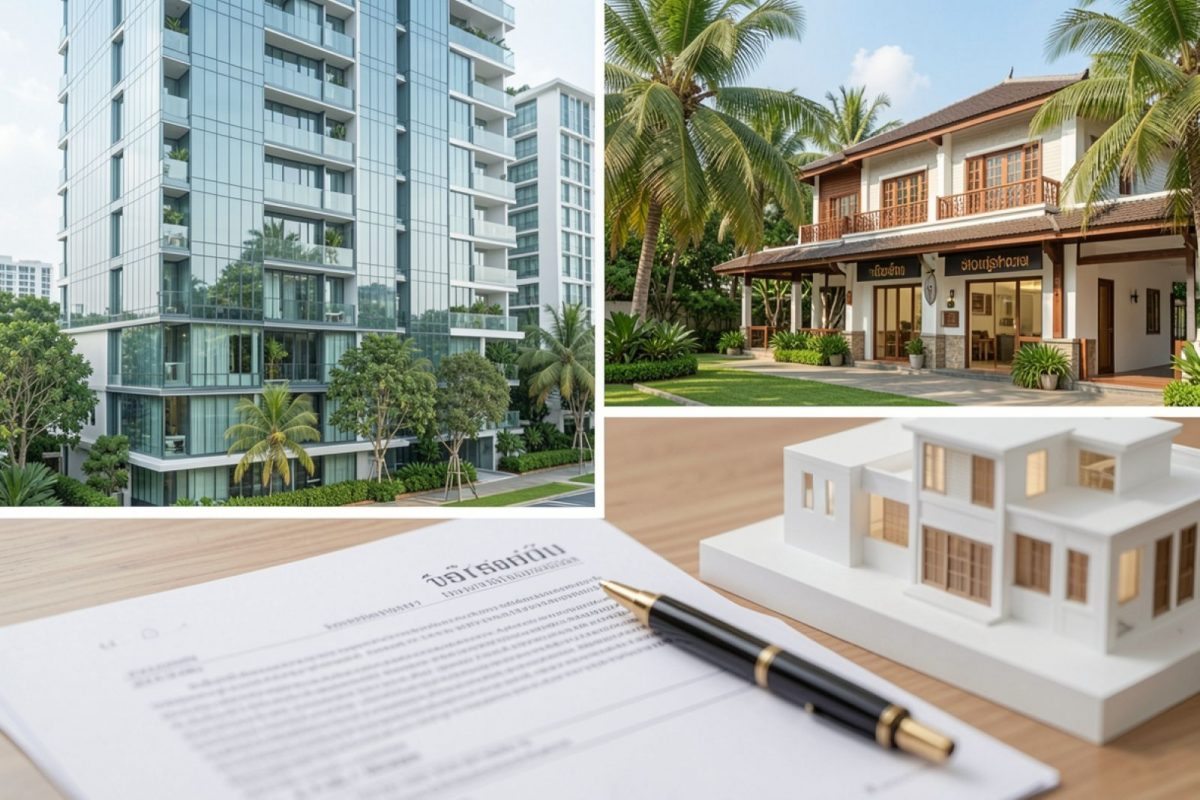
Australia has created one of the most remarkable wealth-building environments in the history of modern real estate. Over the past three decades, property owners in Sydney, Melbourne, Brisbane, Perth, Adelaide, and the Gold Coast have watched their assets compound in value at a pace that has outperformed most financial instruments available to them. A house purchased in Mosman for AUD 600,000 in the mid-1990s is worth AUD 5 to 7 million today. A Brisbane investment property bought for AUD 250,000 in the early 2000s may now command AUD 1.5 million or more. In Perth, values that seemed stretched at the peak of the last resource boom have been surpassed by a wide margin in the current cycle.
The result is a generation of Australians: homeowners, investors, expatriates, retirees, and business owners, sitting on extraordinary wealth. Wealth that, for the most part, is locked inside their properties and doing nothing.
That is the central problem this series exists to solve.
UNLOCKED IN AUSTRALIA is a practical guide to equity release, bridging loans, and bridge financing for Australian property owners who have built significant wealth in property and want to put it to work, without selling assets they have spent decades accumulating.
The Scale of the Opportunity
The numbers are not subtle. According to Cotality data, the national median dwelling value in Australia is now approaching AUD 910,000. In Sydney, the median house price sits near AUD 1.3 million, with prestige suburbs running multiples above that. Perth has recorded annual growth exceeding 24 percent. Brisbane has posted 19 percent. KPMG forecasts national house price growth of 7.7 percent across 2026, with Perth leading at close to 13 percent.
Behind these headline numbers is a structural story that is not going away. Australia faces an accumulated housing shortage estimated at over 200,000 dwellings. Construction costs remain elevated. Labour shortages are persistent. Building approvals are near decade lows. Population growth, driven by net overseas migration at historically high levels, continues to concentrate in Sydney, Melbourne, and Brisbane. New supply is not keeping pace. It will not keep pace for the foreseeable future.
For existing property owners, this is the best possible environment. Every year of undersupply and population pressure is another year of equity compounding inside assets they already own.
The question is not whether Australian property will continue to be valuable. It will. The question is whether that value is working for you, or whether it is sitting dormant, unavailable, locked behind a banking system that was not designed to release it efficiently.
Why the Equity Is Trapped
Australian property owners who attempt to access their equity through conventional bank channels discover the same set of structural problems, regardless of how valuable their assets are.
The first is the income test. Australian lenders, constrained by APRA prudential standards and their own internal credit frameworks, assess borrowing capacity primarily through income. Asset value is secondary. An owner with AUD 4 million in property and minimal traditional income will find that most banks cannot lend them what their equity position justifies. The bank can see the wealth. The lending model cannot access it.
The second is the expat problem. Australia has a large and financially successful expatriate population, Australians living and working in Singapore, Hong Kong, London, Dubai, New York, and across Asia. These borrowers earn strong incomes in major currencies. But Australian lenders apply income shading to foreign earnings, typically accepting only 60 to 80 percent of gross overseas income for serviceability purposes. Many lenders decline entirely. The result is that some of Australia's most financially capable property owners, people earning SGD, HKD, GBP, or USD in global financial centres, cannot access the equity in Australian property they have held for years.
The third is speed. Even when banks will lend, the process takes weeks or months. Investment opportunities, an off-market acquisition, a time-sensitive settlement, a business capital requirement, an offshore property window, do not wait for bank credit committees. By the time conventional refinancing completes, the opportunity has passed.
Bridge financing, equity release through private lending structures, and short-term bridging loans exist precisely to solve all three of these problems.
What Equity Release, Bridging Loans, and Bridge Financing Actually Mean
These three terms describe the same fundamental transaction from different angles, and all three appear throughout this series.
Equity release is the outcome, the act of unlocking capital that is currently embedded in a property asset. It is what the borrower achieves: liquidity from an illiquid asset, without requiring a sale.
A bridging loan is the product, a short-term, asset-secured facility, typically with terms of 3 to 24 months, that provides immediate access to capital against the value of a property. It is structured around loan-to-value ratios rather than income servicing models, which is why it works in situations where conventional bank lending fails.
Bridge financing is the strategic framework, the way sophisticated investors and their advisers describe the use of short-term secured lending as a deliberate capital allocation tool. Bridge financing is not a measure of last resort. It is a precision instrument used by HNW borrowers, family offices, and institutional investors to move capital at the right moment, ahead of longer-term financing solutions.
Throughout this series, all three terms will be used because all three describe real dimensions of the transaction. The goal in every case is the same: help you access the equity your Australian property has generated, on terms that reflect the value of the asset rather than the limitations of your income structure.
"The Australian property market has created extraordinary wealth for a generation of homeowners and investors. The tragedy is that so many of them cannot access that equity when it matters, when there is an opportunity in front of them and a bank system behind them that is looking at the wrong variables. We look at the asset. That is where the answer is."
— Donald Klip, Co-Founder and CIO, Global Mortgage Group
CONTACT DONALD KLIP — GLOBAL MORTGAGE GROUP
Equity Release | Bridging Loans | Bridge Financing | Australian Property
[email protected] | +65 9773-0273 | www.gmg.asia
Who This Series Is For
UNLOCKED IN AUSTRALIA is written for a specific type of reader. If you recognise yourself in any of the following descriptions, this series was written for you.
- You own Australian residential property with significant equity, typically AUD 500,000 or more in net asset value above existing lending, and you want to deploy that equity without selling.
- You are an Australian expatriate living overseas whose foreign income is being shaded or declined by Australian lenders, despite a strong property position and a clear repayment plan.
- You are a property investor who wants to use equity in one property to fund the acquisition of another, without waiting for a lengthy bank refinancing process.
- You are a homeowner or investor who needs to move quickly, buying before selling, capturing an off-market opportunity, meeting a time-sensitive settlement, and conventional lending is too slow.
- You are a business owner whose wealth is in property but whose business income structure does not satisfy standard bank serviceability tests.
- You are a retiree or pre-retiree whose age or income profile limits bank lending capacity, but whose property assets represent genuine, substantial collateral.
- You are an HNW investor or family office seeking to deploy Australian property equity into offshore assets, currency-diversified investments, or cross-border acquisitions.
If you are any of these borrowers, you have likely already encountered the wall. The bank has said no, or not enough, or not in time. This series explains why that happens, and what to do instead.
What the Australian Market Looks Like Right Now
Understanding the current market context matters because it shapes both the equity opportunity and the financing landscape.
Australia's property market in 2026 is a market of divergence. Sydney and Melbourne, the two largest cities, are experiencing moderated growth, with some softening in the first quarter of the year as affordability constraints and higher borrowing costs weigh on sentiment. But the equity positions of long-term owners in these cities remain extraordinary. A property held in inner Sydney or inner Melbourne for ten years or more has, in most cases, more than doubled in value.
Perth, Brisbane, and Adelaide are in a different part of the cycle entirely. Perth has recorded annual growth exceeding 24 percent, driven by resource-sector tailwinds, population growth, and constrained supply. Brisbane continues to benefit from interstate migration and infrastructure investment ahead of the 2032 Olympic Games. Adelaide, long overlooked, is now posting some of the strongest relative growth figures of any capital city.
The Gold Coast and prestige regional markets, Byron Bay, Noosa, the Mornington Peninsula, the Southern Highlands, are in a class of their own. These markets attracted significant capital during the COVID era as high-income earners relocated or acquired lifestyle properties. Many of those owners have never refinanced. They are sitting on equity positions that, in some cases, represent the majority of their net worth, accessible only if they know where to look.
Across all of these markets, the structural driver is the same: supply is not keeping pace with demand, and it will not in any timeframe that matters to an owner making decisions today. Housing approvals remain near decade lows. Construction costs are elevated and rising. Planning processes remain slow. Population inflows continue. The AMP forecasts a national house price increase of 5 to 7 percent for 2026, and major banks including Commonwealth Bank and NAB are broadly aligned with that view even as they moderate from the 8.6 percent growth recorded nationally in 2025.
For existing owners, this environment means one thing above all else: the equity inside Australian property is large, it is growing, and it is available to those who know how to access it.
How GMG Accesses Australian Property Equity
Global Mortgage Group operates across 23 jurisdictions with a specialist focus on cross-border property finance. Our Australian equity release and bridging loan capability is structured around the reality of the Australian market, not around the limitations of the Australian banking system.
We assess lending primarily on asset value and loan-to-value ratios rather than income serviceability models. That means we can provide equity release and bridging finance to borrowers the banks cannot serve: expatriates with foreign income, self-employed borrowers with complex income structures, investors whose portfolio income does not fit standard debt-to-income calculations, and retirees or HNW individuals whose wealth is in assets rather than salary.
We work with a panel of private lenders, non-bank lenders, and specialist credit providers across the Australian market. Loan-to-value ratios typically range from 60 to 70 percent of current market value. Terms run from 3 to 24 months. Interest can in many cases be capitalised, meaning no repayments are required during the bridging period, the interest accrues against the loan and is settled on exit.
Speed is a defining advantage. Where a bank refinance might take 8 to 12 weeks, GMG can in many cases provide a term sheet within 48 to 72 hours of receiving property and borrower information.
We operate across Singapore and Australian time zones, which matters particularly for expatriate borrowers and investors who need a counterparty that can move when they can move.
What This Series Covers
Over the coming weeks, UNLOCKED IN AUSTRALIA will publish across five content categories. Each article is designed to be read standalone, but together they form a complete guide to equity release, bridging loans, and bridge financing across the Australian property market.
- Foundation Series — The mechanics of equity release and bridging finance in Australia: how it works, why banks say no, how to structure a bridging loan, what exit strategies are available.
- City Guides — Market-specific deep dives into Sydney, Melbourne, Brisbane, Perth, Adelaide, the Gold Coast, and the prestige regional markets. Each city guide covers local market data, equity compounding, and the specific equity release opportunities for owners in that market.
- Borrower Profile Articles — Guides written for specific borrower types: the Australian expat, the equity-rich retiree, the property investor, the business owner, and the upsizer in a fast-moving market.
- Nationality Articles — Specific guidance for Singapore-based, Hong Kong and China-based, and UK and European owners of Australian property.
- Strategy Articles — The big-picture framework: how to move up the property wealth ladder using equity, why structural unaffordability is good news for existing owners, and why the global rate divergence creates a specific opportunity to deploy Australian property equity offshore.
Every article in this series is grounded in GMG's actual deal experience across the Australian market and our broader cross-border lending platform. The numbers are current. The structures are real. The opportunities are available now.
If your Australian property has made you wealthy, and for most long-term owners it has, the question worth asking is whether that wealth is working as hard as it could be.
That is what this series is about.
CONTACT DONALD KLIP — GLOBAL MORTGAGE GROUP
Equity Release | Bridging Loans | Bridge Financing | Australian Property