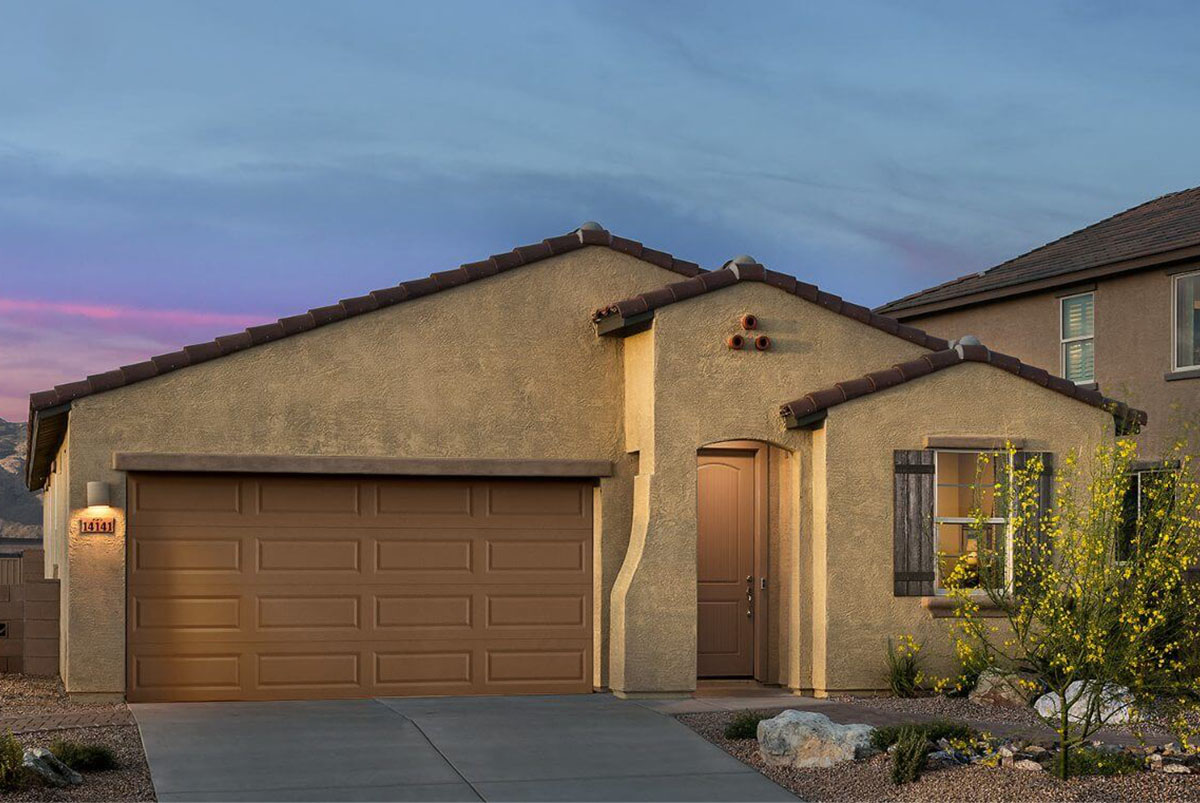
Fast, flexible short-term financing across all 50 US states — purpose-built for HNWIs, family offices, and international investors who need liquidity quickly.
By Global Mortgage Group (GMG) | gmg.asia
Applicable markets: United States — all 50 states | Borrowers: Foreign nationals, US expats, family offices, private equity, HNWIs
Quick Answer: A US real estate bridging loan (also called a bridge loan or swing loan) is a short-term, asset-secured loan — typically 6 to 24 months — that enables investors to acquire, renovate, or refinance US property before longer-term financing is arranged. Global Mortgage Group arranges bridging loans from USD 500,000 to USD 50,000,000+ across all US states for foreign nationals and international investors, with no US tax returns required.
For high-net-worth individuals, family offices, and the private bank clients who advise them, the US real estate market offers an unmatched combination of liquidity, legal transparency, and long-term capital appreciation. But one of the most persistent challenges for international investors is speed — and in US real estate, speed wins deals.
A US bridging loan solves that problem. Where a traditional mortgage can take 60 to 90 days to close, a well-structured bridge facility can fund in as little as seven to 21 days, allowing sophisticated buyers to move decisively on high-quality assets, complete light or heavy refurbishment, and transition to permanent financing on their own timeline.
This guide covers everything international investors, family offices, and private bank client advisors need to know about US real estate bridging loans — how they work, who they are designed for, what to expect in terms of pricing and structure, and how Global Mortgage Group (GMG) sources and arranges bridge financing across all 50 US states.
1. What Is a US Real Estate Bridging Loan?
A US real estate bridging loan — also referred to as a bridge loan, hard money loan (for shorter-term, asset-focused facilities), or transitional loan — is a short-term, first-charge loan secured against US real property. The loan "bridges" the gap between an investor's immediate financing need and a longer-term solution, typically a conventional mortgage, DSCR loan, or outright sale of the asset.
Key Characteristics
- Term: 6 to 24 months, with extensions available
- Loan size: USD 500,000 to USD 50,000,000+, depending on the asset and lender
- Security: First-priority deed of trust or mortgage on US real property
- LTV: Up to 70–75% of the as-is or as-completed value
- Interest: Current pay (monthly) or rolled up (paid on exit)
- Exit: Refinance to permanent financing, DSCR loan, or sale of the asset
Unlike a conventional mortgage, a bridging loan is assessed primarily on the value of the asset and the credibility of the exit strategy — not on the borrower's income history. This makes it particularly well-suited to foreign nationals and international investors who hold wealth outside the US tax system and cannot easily produce the IRS documentation typically required by US banks.
2. Who Is a US Bridging Loan Designed For?
The short answer: investors who need to move faster than a conventional lender can accommodate, or who do not fit the documentation profile that traditional US banks require.
HNWIs and Ultra-HNWIs
Wealthy individuals acquiring US real estate as part of a global portfolio — whether as a primary asset play, a USD-denominated store of value, or a lifestyle purchase — frequently encounter timing mismatches between opportunity and conventional financing. A bridge loan resolves that mismatch, enabling acquisition at speed with a clear path to term financing once the asset is stabilised.
Family Offices
Family offices allocating to US real estate — directly or through club deals — benefit from bridging finance when they are acquiring distressed or off-market assets, executing portfolio repositioning strategies, or deploying capital into value-add opportunities that require refurbishment before conventional lenders will engage. Bridge loans provide the flexibility to structure the acquisition phase separately from the long-term hold.
Private Banks and Client Advisors
For private bankers and independent client advisors managing international wealth, the ability to refer clients to a credible, globally oriented bridge lender is a meaningful service differentiator. GMG works directly with private banks, multi-family offices, and RIAs across Asia, the Middle East, Europe, and Latin America to provide co-branded financing solutions for their US real estate clients.
Developers and Syndicators
Developers acquiring US land or property for refurbishment, ground-up development, or condominium conversion use bridge financing to control sites while planning consent, construction financing, or syndication is arranged. Bridge loans are also commonly used in 1031 exchange transactions where timing requirements would otherwise cause the exchange to fail.
US Expats
American citizens living and working outside the United States frequently encounter difficulty accessing US mortgage financing through domestic banks, due to foreign income, overseas tax filings, and non-US employer documentation. Bridge loans — particularly those arranged through lenders with international borrower expertise — provide a practical entry point for expats acquiring US property.
3. US Bridging Loan vs. Conventional US Mortgage: A Direct Comparison
Understanding the structural differences between bridge financing and conventional financing helps both investors and their advisors select the right instrument for each situation.
| Feature | US Bridging Loan | America Mortgages | Traditional US Mortgage | Home Country Financing |
| Speed to close | 7–21 days | 30–45 days | 45–90 days | 60–120 days |
| Borrower nationality | All — foreign nationals welcome | US citizens & foreign nationals | US citizens/PR preferred | Home country only |
| Income documentation | Asset/equity-based | Income or DSCR | Full income verification | Full income verification |
| Loan-to-value | Up to 70–75% LTV | Up to 80% LTV | Up to 80% LTV | Varies; often lower on US assets |
| Interest servicing | Rolled up or current pay | Monthly payments | Monthly payments required | Monthly payments required |
| Ideal use case | Acquisition, refurbishment, bridge to perm | Long-term hold for overseas borrowers | Long-term hold (domestic) | N/A for US real estate |
Long-term hold | N/A for US real estate
"Bridge financing is not a compromise — it is a strategic instrument. For international investors, it is often the only credible path to competitive participation in the US real estate market." — Global Mortgage Group
4. Loan Structure: What to Expect
Bridge loan structures vary by lender, asset type, and borrower profile. The following parameters reflect the facilities GMG sources for international clients through its network of US private lenders, debt funds, and non-bank financial institutions.
| Parameter | Typical Range |
| Loan size | USD 500,000 – USD 50,000,000+ |
| Loan term | 6 – 24 months |
| Interest rate | From 8.99% p.a. (market-dependent) |
| LTV | Up to 70–75% |
| Interest treatment | Rolled up or current pay |
| Property types | Residential, multifamily, mixed-use, commercial |
| Markets served | All 50 US states |
| Foreign national eligible | Yes — no US tax returns required |
| Exit strategy | Refinance to DSCR/conventional or sale |
Interest Rate Mechanics
US bridging loan rates are typically quoted as an annual percentage rate (APR), but charged on a monthly basis. Most lenders in this space charge between 8.99% and 12.99% per annum depending on LTV, asset quality, borrower profile, and market conditions. Unlike institutional term financing, bridge loan pricing reflects the short-term risk premium and lender cost of capital — not the borrower's long-term creditworthiness.
Rolled-up interest structures (where interest accrues and is repaid on exit alongside principal) are common for borrowers who prefer not to service the loan during refurbishment or stabilisation. Current-pay structures reduce total interest cost and are preferred by borrowers with stable cash flow.
Origination Fees and Costs
Lenders typically charge an origination fee of 1–2 points (1–2% of the loan amount) at closing, in addition to third-party costs including appraisal, title insurance, and legal fees. GMG charges an arrangement fee for sourcing and structuring the facility. All-in costs are disclosed transparently before any commitment is made.
5. Property Types and US Markets
Eligible Property Types
- Single-family residential (SFR): Primary residences, secondary homes, investment properties
- Multifamily: 2–4 unit properties, apartment buildings, mixed-use residential
- Commercial real estate: Office, retail, industrial, self-storage, hospitality
- Land with planning consent or development potential
- Fix-and-flip: Properties requiring light to heavy refurbishment
- New construction: Ground-up residential and commercial projects
Markets Covered
GMG sources bridge financing across all 50 US states. Key markets for international investors include New York, Los Angeles, Miami, Dallas, Houston, Chicago, Atlanta, Nashville, Phoenix, and San Francisco — all of which have active bridge lending ecosystems. Secondary and tertiary markets are also financeable, subject to lender appetite and asset quality.
6. The Exit Strategy: Why It Matters More Than Anything Else
In bridge lending, the exit strategy is the single most important underwriting variable. Lenders evaluate the credibility and timing of the exit above all other factors. A strong exit strategy dramatically improves terms, increases the likelihood of approval, and protects the borrower from forced refinancing under adverse conditions.
Common Exit Routes for International Investors
- Refinance to a DSCR loan: Debt Service Coverage Ratio (DSCR) loans are available to foreign nationals with no US income history and are assessed on the rental income of the property alone. GMG's affiliate, America Mortgages, is a leading provider of DSCR financing for non-US borrowers.
- Refinance to a conventional US mortgage: For US citizens and permanent residents, a bridge loan can provide breathing room to prepare the documentation required for a conventional mortgage, particularly after property improvements have increased the appraised value.
- Sale of the asset: Fix-and-flip investors, developers, and condo converters plan an exit through sale. Bridge lenders underwrite this exit based on the as-completed value and current market absorption rates.
- 1031 Exchange completion: Investors exchanging US real estate assets under Section 1031 of the Internal Revenue Code sometimes use bridge financing to meet the strict 45-day identification and 180-day closing timelines.
7. Foreign National Borrowers: No US Tax Returns Required
One of the most significant misconceptions about US bridging loans is that foreign nationals cannot access them, or that US banking relationships are required. This is not the case.
The US private lending market — which encompasses debt funds, mortgage REITs, and non-bank lenders — was built precisely to serve borrowers who do not fit the documentation requirements of conventional banks. Foreign nationals are welcomed by this ecosystem, provided the following conditions are met:
- The property is located in the United States
- The borrower can evidence the source of the down payment and reserves
- A credible exit strategy is in place
- The LTV does not exceed 65–70% for foreign national borrowers (in most cases)
GMG has deep relationships with US private lenders who actively court international borrower business. In many cases, foreign national bridge loans are processed faster than domestic borrower facilities, because the lender focus is entirely on the asset and the exit — not on months of bank statements and tax filings.
8. How GMG Sources and Arranges US Bridge Financing
Global Mortgage Group is a Singapore-headquartered international real estate financing and advisory firm operating across 23+ jurisdictions. Through our US operations — anchored by subsidiary America Mortgages, the only US mortgage lender and broker focused exclusively on overseas borrowers — we provide end-to-end sourcing, structuring, and placement of US bridge loan facilities for international clients.
Our Process
- Initial consultation: We assess the borrower's profile, the property, the timeline, and the exit strategy.
- Lender identification: We match the deal to the most appropriate lender from our network of US private lenders, debt funds, and institutional bridge providers.
- Term sheet: We negotiate and present a non-binding term sheet within 48–72 hours for qualifying transactions.
- Underwriting support: We prepare and submit the loan package, coordinate the appraisal, and manage third-party vendors.
- Closing: Most transactions close within 14–21 days of term sheet acceptance. Complex or larger transactions may take longer.
- Exit planning: We begin planning the refinance or permanent financing solution in parallel, to ensure a seamless transition before the bridge loan matures.
Who We Work With
- Individual HNWIs and ultra-HNWIs acquiring US property
- Family offices and multi-family offices with US real estate allocations
- Private banks and wealth management firms seeking financing solutions for their US-invested clients
- Independent financial advisors and client advisors managing international wealth
- Developers, syndicators, and real estate private equity sponsors
9. Frequently Asked Questions
Q1: Can a non-US citizen get a bridge loan on US property?
A: Yes. US bridge lenders routinely finance non-US citizens and foreign nationals. The underwriting is asset-based rather than income-based, meaning the borrower's nationality or tax status is not the primary determinant of eligibility.
Q2: What is the minimum loan size GMG can arrange?
A: GMG typically focuses on bridge loans of USD 500,000 and above. For smaller transactions, our affiliate America Mortgages can assist with DSCR and foreign national mortgage products starting at lower thresholds.
Q3: How quickly can a US bridge loan close?
A: Standard timelines are 14 to 21 days from term sheet to funding for straightforward transactions. Transactions requiring additional title work, complex ownership structures, or cross-border asset verification may take longer.
Q4: Are US bridge loans available for commercial real estate?
A: Yes. GMG sources bridge financing for commercial, mixed-use, multifamily, industrial, and hospitality assets in addition to residential properties. Commercial bridge loans are assessed on the same asset-first principles as residential facilities.
Q5: What documentation is required for a foreign national bridge loan?
A: Typical requirements include passport copy, proof of address, evidence of down payment and liquid reserves (typically 6–12 months of loan payments), and a description of the exit strategy. US tax returns are not required. Some lenders may request a bank reference letter.
Q6: Does GMG work with private banks on a referral or co-advisory basis?
A: Yes. GMG actively works with private banks, multi-family offices, and independent client advisors on a co-advisory and referral basis. We provide white-label support, co-branded materials, and dedicated relationship management for institutional partners. Please contact our Global Partnerships team to discuss a partnership arrangement.
10. Key Takeaways
- Bridge loans enable speed: Close in 7–21 days versus 60–90 days for conventional mortgages.
- Foreign nationals are welcome: No US tax returns, no US bank relationship required.
- Asset-based underwriting: Lenders focus on property value and exit credibility, not income history.
- Flexible structures: Rolled-up or current-pay interest, 6–24 month terms, USD 500K to USD 50M+.
- All 50 US states: GMG sources financing nationwide, including major gateway markets and growth markets.
- GMG provides end-to-end execution: From initial consultation and lender matching to closing and exit planning.
Ready to Discuss a US Bridging Loan?
Global Mortgage Group arranges US bridge loan facilities for HNWIs, family offices, and international investors across all 50 US states. We also work directly with private banks and client advisors on a referral and co-advisory basis.
Contact: Donald Klip | [email protected] | +65 9773-0273 | www.gmg.asia
Also visit: www.americamortgages.com for DSCR and foreign national permanent mortgage solutions.